PREV ARTICLE
NEXT ARTICLE
FULL ISSUE
PREV FULL ISSUE
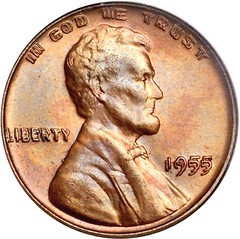
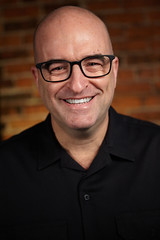
KEN BRESSETT INTERVIEW, PART TWOGreg Bennick's latest interview for the Newman Numismatic Portal is with "Mr. Redbook". Ken Bressett. Here's the second of six parts, where Ken discusses the full story behind the 1955 Doubled Die cent — including his coining of the term. -Editor
The 1955 Doubled Die: Ken Bressett's Expanding World
GREG BENNICK: No, but I would absolutely love to hear the story. You made reference to the fact that there was a story, but I did not hear the story. So please tell me everything that you'd like about them. KEN BRESSETT: (Laughs) Well, I'd be happy to do that. I'll try to make it as brief as I can. GREG BENNICK: Oh, take all the time you like. I love this. KEN BRESSETT: All right, let's set the clock back to 1955. My birthplace is in Keene, New Hampshire, almost on the Massachusetts line in southern New Hampshire. I was quite active in coins back in 1955 and thought that I knew a lot about them. In fact, I did know quite a bit. I would go to coin shows and got to meet a lot of people and see a lot of things. But in one coin club in southern Massachusetts—I would go there quite often—at one time somebody was showing around a brand new penny, 1955. Pardon me if I call them pennies. I know they're cents. GREG BENNICK: I'm certainly not a stickler. Call them whatever you like.
And he said, "Well, we've got a club member here—I know he's got a few of them. I think he's selling them for 25 cents apiece." GREG BENNICK: Wow. KEN BRESSETT: That really sparked my interest. The club member's name was Emil Dwella. GREG BENNICK: Okay. KEN BRESSETT: I looked at one of his coins and thought, "Yeah, it's pretty good, but I'm not going to pay you 25 cents for that!" (Both laugh) I went home and thought about it and said, "I guess it's kind of curious to have a double-struck coin. I know there are lots of different double-struck coins. Guess I'll buy one at the next club meeting." Well, I went and asked him, and he said, "Well, yeah, but the price— everybody wants one—the price is 50 cents each now." So then I'm thinking, "Well, I'm smarter than this guy. I'll find one in change myself or I'll go to my bank and buy some pennies and see if I can find one." Smart move. No, not really! (Laughter) By the end of the year, just before the new coins would come out in 1956, I figured, "I'm just not going to get one of these. And besides that, something's been bothering me." Now I had a chance to look at one. They were not double-struck, because if they were double-struck, they would be doubled on both sides. They'd have a double image on both sides. Has to be. And I hadn't realized that before because I hadn't really looked at one. So I said, "I'm going to get one." The price by then was $10. GREG BENNICK: Ooh! KEN BRESSETT: So I said, "No, no, no, don't you do that!" Then I understood exactly, because by then I had looked at one, examined it carefully, and knew what was going on—something I did not have in my entire collection. Now, poor old Emil Dwella had somehow lucked into several rolls of these brilliant uncirculated 1955 doubled die coins. And he sold most of them for, I think, no more than $10 apiece. The poor guy. It really affected him. He could do nothing but think about the fact that he sold all of those coins. He could be a millionaire by now if he'd saved them. He gave up collecting. He gave up everything, and we never heard from him again. GREG BENNICK: Hmm… KEN BRESSETT: Yeah, it was a sad thing about him. Now, there was another part to this story. As these coins became a little more well-known, Q. David Bowers—who was on top of everything, as you know—found out that a lot of those cents were sold to vending machine companies. They were buying up cents because cigarettes in vending machines cost thirty-seven cents. GREG BENNICK: Okay. KEN BRESSETT: And you had to put in forty cents in change to get your cigarettes to come out. And three cents would be wrapped up in cellophane around the package of cigarettes. GREG BENNICK: Okay. KEN BRESSETT: So Bowers sent out agents and went around and bought up all those packages of cigarettes that he could find. And he did very well selling those later on as doubled die coins. GREG BENNICK: Wow! KEN BRESSETT: (Laughs) So that's not even the end of the story. GREG BENNICK: I love this. I absolutely love this. KEN BRESSETT: (Laughs) Well, by about 1958, people began to want to have these coins and wanted to buy these coins. They were costing around $100 apiece by then. The pressure was on as the editor of the Red Book and manufacturer of coin albums. People were writing to me saying, "When are you going to list these in the Red Book? And when are you going to make a space for them in the coin albums?" So I ran a survey, asking dealers. It was a public notice in Coin World: "Do you have an idea or a suggestion of what we should do with this? Let us know. As a publisher, we'll listen to everybody's view." Which I did, and ran a nice survey. It occurred to both Yeoman and myself that, "Yeah, we've got to do something about these. We'd better recognize them as legitimate collector coins." And so then it was up to me to decide what to call them. They were not double-struck. They were doubled die coins. I coined that term, and I take credit for that. So I was the guy that gave them the name and sent them on their way. GREG BENNICK: So you never owned one? KEN BRESSETT: One. I did own one. I finally bought one. Yeah. GREG BENNICK: I had no idea that you coined the term "doubled die." KEN BRESSETT: Yeah. I did. GREG BENNICK: That is incredible! Were there other names that you were considering other than "doubled die" that didn't make the cut? KEN BRESSETT: Well, everybody else was calling them double-struck. And I had to get away from that. GREG BENNICK: Sure. KEN BRESSETT: I never had any other suggestions, I think beyond that. GREG BENNICK: Wow. That is absolutely unbelievable. Thank you so much for sharing that story. I love it. KEN BRESSETT: (Laughs) Good!
To watch the complete video, see:
To read the earlier E-Sylum article, see:

Wayne Homren, Editor The Numismatic Bibliomania Society is a non-profit organization promoting numismatic literature. See our web site at coinbooks.org. To submit items for publication in The E-Sylum, write to the Editor at this address: whomren@gmail.com To subscribe go to: Subscribe All Rights Reserved. NBS Home Page Contact the NBS webmaster 
|