PREV ARTICLE
NEXT ARTICLE
FULL ISSUE
PREV FULL ISSUE
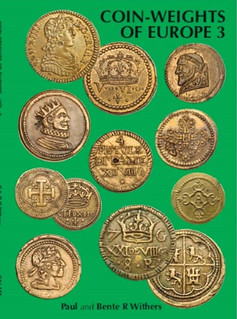
PAUL WITHERS (1942-2026)I was very sorry to learn that numismatist, author and dealer Paul Withers of Galata Coins died earlier this year. Here's the About Us page from the business website, as updated by his widow Bente Withers. -Editor Galata Coins was established in 1971 in Wolverhampton. It sold ancient Greek, Roman and Byzantine coins. It eventually incorporated the coin dealing activities of Paul Withers which included hammered coins, world coins, tokens, medals, numismatic books, etc. Nowadays it is a partnership of Paul and Bente Withers. It all began when Paul gave up teaching in 1973, since when we have been full-time dealers in coins and numismatic books. We like to think of ourselves as being specialists in being non-specialists. Although we do not claim to be specialists in any particular fields, and apart from thinking that we know a little about coin-weights, 19th-century copper tokens, and medieval halfpennies and farthings, we sometimes offer a better selection of some coins than many who do claim to be specialists. Our house, a former pub, my drawing of which can be seen [below], was built before Colombus set sail. It is stuffed with our ever-growing personal library of 5000+ numismatic books. We moved here, to Llanfyllin, in the wilds of Mid-Wales, in 1991, to semi-retire and get away from urban nastiness. Llanfyllin is a tiny town, population around 1400, in Montgomeryshire, one of the most beautiful parts of Wales. 

For many years we used to produce ‘Sacra Moneta' our printed catalogue of new and secondhand numismatic books and ancient and modern coins and tokens for sale. Alas, this has become uneconomic to print and distribute, so these days we operate via this website. We are interested in almost the entire spectrum of numismatics from ancient to modern. We collect : coins of India, coin-weights of the world, weights and scales, 19th-century copper tokens, so-called brothel tokens, numismatic books, books on cookery, and chemist's glass measures. You will find our names in many books, some that we have printed, some that we have designed, or for which we have done the photography, or have helped in other ways. To give one example, take a look at the index to the reprint edition of Forrer's Biographical Dictionary of Medallists. Some people feel happier when they know what the people with whom they are dealing look like. Well, here we are, revealed for all to see. 
Bente and Paul Withers We too are collectors. We are members of the Royal Numismatic Society, British Numismatic Society, Oriental Numismatic Society and the British Art Medal Society. We understand the needs of the collector. Galata Print Ltd also publishes Numismatic Books. We are the authors of many publications on coins and tokens.
Sadly, Paul died on 7 March 2026 after a 3 year battle with cancer. I shall continue to service the website on my own, please bear with me if things sometimes take a little longer. Thank you so much to the many friends, customers and colleagues who have sent condolences and messages of sympathy and encouragement. They have been heartwarming and are greatly appreciated. Here's a (mostly) numismatic-focused excerpt from a lengthy autobiography/obituary Paul penned before his passing, which includes his widow Bente, their life and business together, and tips for reading between the lines of obituaries. Paul was born April 21, 1942 and died March 7, 2026, just short of his 84th birthday. -Editor
PAUL WITHERS. 21/04/1942 - 07/03/2026
A LIFE IN NUMISMATICS The basics: modified from Anglo-Gallic Coins published 2015. Paul Withers. Born 1942. Educated Ebbw Vale County Grammar School. Trained as a teacher before becoming a professional numismatist, author, and dealer in numismatic books. Began collecting coins around 1947. Hobbies include reading, listening to recorded music, preparing and eating interesting food and drinking fine wine and sipping aged single malt whiskys. Married to : Bente Romlund Withers, née Jensen. Born 1950. Educated Ballerup Gymnasium, and the Pharmaceutical High School, Copenhagen, Denmark, before abandoning pharmacy in favour of life in Britain with Paul and numismatics, in 1971. We have one son, Halfdan, born 1973. We currently collect British and European coin-weights, weights, scales, and glass measures and numismatic books, we have the largest and best numismatic library in Wales. We used to spend nine months of the year in Llanfyllin, Powys, in mid Wales, and for the other three lived in our isolated farmhouse in Normandy, where most of the books were escapist literature, there were no coins, and no tedious routine office work to be done! There, as in Wales, we foraged for mushrooms and other goodies such as nettles, fruit and nuts in season. In France we especially loved eating seafood, such as oysters, spider crabs and sea urchins; and regional specialities such as tripes and the other lovely things that most of the British stupidly reject. We strongly deplore the fact that cookery and music are no longer taught in most British schools, and that music is now only for the rich. Occasionally, we spent some time working on one or other of our books. Some of the last paragraph is, alas, no longer true, as we sold, with regrets, our beloved French retreat, as we could no longer make the journey to it, initially due to Covid regulations, and then of infirmity. The name Galata puzzles people, it was chosen by Richard Swan, our late friend and former business partner. ‘Galata' derives from an archaic Greek word describing a shelving shore where you could beach your boat safe from wind and tide. There are several places in the region with this name, but ours specifically refers to the Karaköy neighbourhood of Istanbul, connected to the city by the Galata Bridge. The medieval citadel of Galata, the trading port of Byzantium, was a colony of the Republic of Genoa between 1273 and 1453. The famous Galata Tower was built by the Genoese in 1348 at the northernmost and highest point of the citadel. Please, do not confuse it with the ancient region of Galatia, or an Italian ice cream. One, and probably the only advantage of a diagnosis of terminal disease is that you get to write your own obituary. Obituaries eulogise the life of a person and usually tell you where and when the person was born. Sometimes they tell what the person died of. If it doesn't, the experienced reader of obituaries immediately knows that it was either suicide or an unmentionable dirty disease. In my case, the cause was cancer of the jaw. Alas, chemotherapy does not work for this type of cancer, and radiotherapy would only have given me a little extra time - and in the process, I'd lose my sense of taste and smell. For someone who loves good, tasty food, drinking fine wines and aged single malt whisky, that was a no-no-no! Obituaries in newspapers such as The Times often end with the statement "he never married". From this, the canny reader understands that the person was a member of the LGBTQ community. I have been married twice, the second time for 54 (and counting) years and we're still living and working together 24/7. I am a straight male and have never fancied a bloke. That did not, however, stop me from having good friendships with men, and platonic friendships with some very attractive women. It has been said that you can tell what a person is like from their bookshelves. In 79 years of reading I have read widely. Favourite authors: I read few authors twice: these include Terry Pratchett, Tom Sharpe, Lynda la Plante, Sigrid Undset, J R R Tolkien, George Orwell, P G Wodehouse, Laurie Lee, Evelyn Waugh, D H Lawrence, John Galsworthy, Arthur Conan Doyle and many others. When I was young and didn't need a magnifying glass to read minuscule print I even read sauce bottle labels. Here is the ‘in-between' bit that tells about some of my life and times, including a bit of British social history of the last eight decades thrown in for good measure. It also tells of the influences, literary, cultural and financial that have made me a numismatist, and author and how things have changed in numismatic publishing and printing over the last 50+ years. It includes mentions of numismatists that I/we have known. It also has thoughts and advice on collecting, writing and publishing, buying and selling. I was born prematurely in the Spring of 1942 at the height of WW2. I weighed under 4lbs, and those who saw me said that I looked like a freshly-skinned wild rabbit. I could not be bathed with soap and water, olive oil was used instead. My parents lived in a terraced brick and stone-built, slate-roofed house on the western slope of the narrow Ebbw Valley in South Wales. I was their third child, my siblings were a sister, Jean, aged 14, and a brother, Kevin, aged ten. Albert, my father was an electrician in the local steel works. My stepmother, who arrived shortly after the birth, to see her best friend, said that she thought I was lovely. Gwen, my mother replied, prophetically, "If you want him, you can have him". Exhausted by the effort of giving birth, my mother died of shock just five hours later. I was given to my parents' best friends who were childless. Such a transfer was not unusual at the time. My fathers, step and biological, lived next door to each other as children. There may have been another Clements / Withers connection in that my stepfather's father, Wm Withers Senior, a recently retired RSM from the army in India, took on the job of managing the very small, newly formed electrical department of the Ebbw Vale Steelworks. Together, the sons bought a motorcycle, to go to dances to meet girls. When the two couples married they sometimes took their annual holiday together, in Southsea. Alas, my (step)mother didn't tell me that I was adopted, a fiction that was maintained until I was 14 when my natural father died and I was mentioned in his will, and I had to sign that I had received the bequest. I therefore grew up believing that my father was my uncle and my brother and sister were my cousins. There is a somewhat amusing complication when my natural father remarried, and the woman he married was a relative of my (step)mother, so, theoretically, I became related to myself. For those in my (step)mother's position, a plea: tell the truth as early as you can, otherwise, else when a child becomes adolescent, the shock can be disturbing at a time when life is difficult enough anyway. Was I ever bullied at school? Most children were, but I had a good friend, Tony. We had been put in the pram together as tiny babies and Tony was my protector. He was a big lad with a large head and his reaction to any sort of playground altercation was to lower his head like a Toro Bravo in Madrid's Las Ventas. Only the ultra-stupid tried more than once. However, Tony was not at school one day and Clive Jones, who fancied himself as a pugilist attacked me, I was no match for him physically and unwell with the same cold that afflicted Tony. To provoke me Jones grabbed me by the nose so my instant reaction was to blow it, whether this was due to me having read about a shieldbugs the previous week, I know not. He could have coped with a kick to the shins, or a punch to the solar plexus, but this really caught him off guard and his scream caused his cronies, already forming a circle for a fight to to ensue, burst into laughter. There was no doubt who had won without striking a blow, and there were plenty gathering round me who wanted to be friends with me. From the age of three, I accumulated postage stamps, and coins begged from those who visited overseas countries and relatives, all of whom seemed to have a box of coins in a drawer, or envelopes with stamps from relatives living in the colonies. When I was about five the amount of coins and tokens increased due to soldiers returning from the war. I regularly polished my coins with Brasso, and stuck my stamps into a school exercise book with wallpaper paste! The highlights of my early treasures included a nearly flat George IV 1821 crown, and a bronze medallion depicting Queen Victoria and her male descendants to George V. Aged 8, I was taken to London and the Festival of Britain Exhibition, where I was given a 1951 commemorative crown by my aunt Dilys. I was no longer polishing my coins. At this time there were still bomb-damaged areas in most cities, and I remember, in Oxford, where Dilys lived, there was an enormous spectacular scrapyard with hundreds of Spitfires and other wartime aircraft piled three, four and five high on top of each other. I was fascinated, I had never been so close to an aircraft. Aunt Dilys gave me two bright and shiny 1951 pennies, and for my birthday in 1953, a copy of ‘Casino Royale'; if only I hadn't spent the pennies and not given the book away after I'd read it! I am an avid reader and could read a little before I went to infant school. Later, one of my favourite books was Rudyard Kipling's Jungle Book. I was much impressed by his anthropomorphic view of the law of the jungle and its creatures. In adolescence, I was just as impressed by Dictum meum pactum, (my word is my bond) the motto of the Stock Exchange. It seemed a good ethos for a business and life. I am agnostic, and do not approve of any organised religion, especially Islam, though l am impressed by the lifestyle of Quakers (the Society of Friends). How did I become a dealer? I was always a collector. There was a boom in collecting coins, allegedly started by the scout movement which got their members to collect a century of pennies starting from 1860. Of course, it was soon discovered that some were harder to find than others, some dates didn't exist. This then spread to other denominations. I heard about a recently formed coin collectors club. I went to a meeting where there were people showing their coins in plastic albums. By the next meeting, held in the town library, I had bought some albums, put my duplicate coins in them, and showed them after the next meeting. A crowd formed. People were saying how good my collection was. I said that it wasn't my collection, but my duplicates. There was a rush and people were queuing to buy them. At 9pm we were asked to leave when the library closed, so we went to the nearest pub and trading continued. In less than half an hour I was holding a month's wages in my hands. I was hooked. I had become a dealer. There was now a problem, I had to replace the things I had sold. In those days my principal source was my local bank, from which I obtained bags of silver and copper change to sort through for high-quality specimens and scarce dates. I then discovered that there was a chap called Osmund who worked for the Council and banked all the change taken on Wolverhampton buses - thousands of pounds per day. He became a major source. Shortly after my first marriage, I discovered local auctions, and bought several items that were important for my business, the first was an ex-army electric duplicator and a 1920s large black Barlock typewriter. The duplicator used standard foolscap size stencils and paper. I could now produce lists of coins that I had for sale, and began to sell at local coin fairs. To satisfy my aquisitive instincts, I collected Indian coins. At my first ever coin fair, in Stafford, I went around all the dealers present and bought every Indian coin they had for 30 shillings. I didn't want collecting to conflict with sales, and Indian coins were cheap, not popular, but to me, interesting and challenging. I was later to start collecting Chinese cash coins, and curious currency. Somehow, I'm not exactly sure how, or when, we met Brian Warwick, an accountant, who collected Anglo-Saxon coins of Warwick mint. He seemed a generous benefactor. He bought coins from us and sold coins to us; often leaving coins with us that we could not afford to buy, but could offer and sell on our next list. 

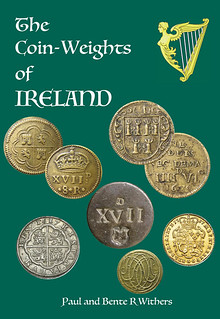
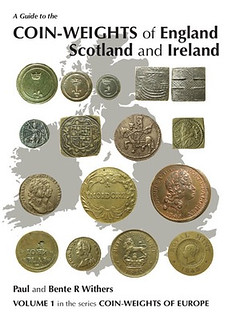
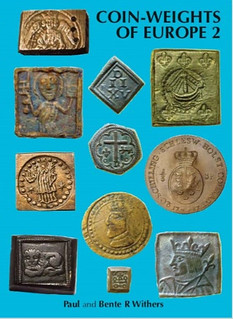
In the early 1970s, we had a visit from Richard Swan, who was studying for a history degree at the local Polytechnic. He wanted to buy some of the coins from our list. He bought quite a lot and exchanged some interesting Greek coins for others. He became a regular visitor, and a friend and in October 1974 became our business partner, forming Galata Coins Ltd., dealing in ancient coins. From February 1975 onwards Galata Coins Ltd., and Paul Withers became linked and offered ancient, medieval and modern coins on a list issued nine times per annum. From October 1976 the name Paul Withers was dropped from the cover. We also bought and sold small Egyptian and other antiquities. The business was profitable, and growing, but my Lloyds bank was still holding me back as we were always needing finance. Richard said that he had an accomodating manager at National Westminster Bank, so we made an appointment to see him to arrange an overdraft facility. Richard thought we'd be lucky to get £2,000. However, the middle-aged, active, smartly dressed tiny man behind the big desk looked at me, and brusquely said "Most people wear a suit, not jeans, when they come to see me." I replied that we wanted to borrow money, not get married. He burst into laughter and said "Oh! Yes, how much do you want?" I presented our accounts and projections and asked for £5,000, to which he agreed immediately. He was to become a lifelong friend as well as a trusted advisor. Many collectors do not realise that some dealers have close business relationships with other dealers, this happens especially in the book world. I had many good book deals with Edward Baldwin. Howard Linecar at Spinks Book Department helped me build my budding library, and that continued under Douglas Saville. I sometimes went to auctions outside of London with his bids and those of several other dealers. I am still in touch with Douglas. I was also friendly with Peter Jones who ran the book department at B A Seaby. Our dealings with him continued after he retired. He would sometimes invite us to stay with him and his wife for the weekend and at the same time invite a visiting foreign dealer at the same time. Their company was convivial, their table was excellent, and their wine good too; a lot of business was done that way. It was also the way that I met Allan Davisson. When I needed two people to nominate me for membership of the British Numismatic Society, two people volunteered, Peter Mitchell of A H Baldwin, and Peter Seaby of B A Seaby. There's much more numismatic and numismatic literature content in the write-up, but I'll stop here for now. Rest in Peace, Paul. -Editor
For more information, see:
To read earlier E-Sylum articles, see:

Wayne Homren, Editor The Numismatic Bibliomania Society is a non-profit organization promoting numismatic literature. See our web site at coinbooks.org. To submit items for publication in The E-Sylum, write to the Editor at this address: whomren@gmail.com To subscribe go to: Subscribe All Rights Reserved. NBS Home Page Contact the NBS webmaster 
|
