Greg Bennick's latest interview for the Newman Numismatic Portal is with Adrian Perez, Vice President of the Young Numismatists of America Adrian Perez. Here's the first part, where Perez talks about his introduction to the hobby, the Young Numismatists of America, and introduces the Rhode Island School of Design's coin collection..
-Garrett
ADRIAN PEREZ
Vice President of the Young Numismatists of America
An interview for The E-Sylum by Greg Bennick
 Greg Bennick
Hi everybody, it's Greg Bennick. I'm back again with yet another interview in my ongoing series with fascinating, amazing, and accomplished numismatists. These are all, of course, on the Newman Numismatic Portal, and if you like this interview, you can look through and find more of my interviews with other interesting people. Today we have another interesting person: Adrian Perez. Adrian is from Rhode Island, and he is vice president — am I right? — of the Young Numismatists of America.
Adrian Perez
Yes.
Greg Bennick
We met at Summer Seminar, and we'll get into all of that, and then the fascinating work he's been doing. But hey, Adrian — thanks for being here today. I appreciate it.
Adrian Perez
Thank you so much, Greg.
Greg Bennick
Awesome. So, tell me, how did you get your start in coins? Let's start with the bare beginnings.
Adrian Perez
Okay — so, my start in coins. I don't want to say it's a little generic, but I started when my great-grandmother gave me twelve Kennedy silver half dollars when I was about seven years old, and ever since I received those, I've been obsessed with coins. I started researching coins and collecting. I started with American coins, but here's where my story diverges a little bit: in seventh grade I began reading ancient Roman history, and I was just fascinated. Starting then, I began collecting Roman coins, and ever since, I've been huge into ancient numismatics.
Greg Bennick
This is great, and it's going to tie in really well to the work you've been doing, which is why we wanted to do this interview. But first, tell us all about the Young Numismatists of America and your role in the organization.
Adrian Perez
Absolutely. The YNA — the Young Numismatists of America — is a nationwide club for YNs, young numismatists, and it has been a really amazing opportunity. It was actually founded a little over a year ago, in early 2025, and this is our second year running now. I'm the second vice president. Our format is monthly Zoom meetings, usually with fifty to a hundred YNs from all across the country, and we have really prominent numismatists speak to the group and give presentations — we hear from a lot of people from the ANA. It's really a great opportunity, and I love serving in it.
Greg Bennick
I love it. I think one of the coolest things about the coin hobby overall is the support we give to young numismatists. You've heard it all the time — that you are the future — but when fifty or a hundred young numismatists get together, the energy must be awesome: the curiosity, the wonder, the learning. So, you're the vice president. How did that come to be?
Adrian Perez
That's a good question. Like I said, I'm the second vice president, and the YNA has elections every December. This past December, I checked, and there was nobody running for vice president. I had been volunteering a bit with the social media, working with some other YNs on it, and I thought: if I run for vice president, maybe I can make a little task force — a group of YNs to do social media. So I decided to run, and I ran unopposed. Since then, I've hit the ground running. We've been doing social media highlights — features on specific YNs and their projects — and it's been great. I don't want to say I was recruited; the opening was there, and I just ran with it.
Greg Bennick
Great — and taking the initiative like that often has amazing results. Very cool. So let's dive in for a second to your specialty, ancient numismatics. What is it about ancient coins that draws your fascination?
Adrian Perez
Definitely the connection to history. It's amazing, because in modern times our coinage will stay in production for years — we have Washington quarters and Franklin halves and Roosevelt dimes — but in ancient times, coinage evolved with every individual emperor in Roman history. Nowadays it's a huge taboo to put a living, active person on coinage — that's associated with monarchy or absolutism — but in ancient times, every emperor had his own coinage, and the coinage often reflected historical events going on in the same period. That's really fascinating to me; I just love that. And beyond that — it's a piece of metal that's been around for two thousand years, and here I am, just some guy, able to research it and see it. I think that's just amazing.
Greg Bennick
I like how you refer to yourself as just some guy — because as we get into the next question, we're going to find out that you're not just some guy. I'd love for you to tell everybody about the collection at the Rhode Island School of Design — RISD for short. Tell me about the RISD collection, what's in it, and why it's significant.
Adrian Perez
Okay. So, as you mentioned, I'm a Rhode Island native, and the RISD Museum is a local institution — an amazing art museum here in Providence. Unbeknownst to me for a long time, they actually have a very large numismatic collection, and a lot of it is ancient. I was unaware of that until very recently. How I got started with it: at my school we have something called the Center for Experiential Learning. They arrange internships and help students explore their interests. I met with the director there and told him about my passion for numismatics, and he said, "I have the perfect person for you to meet." He knew people at the RISD Museum, so we were able to schedule a meeting. I found out very quickly the huge scale of the coin holdings they have there — and the highlight is definitely 25 ancient Roman and Byzantine gold coins.

Greg Bennick
Is it well known that RISD has this collection? I grew up in Connecticut. I'd heard of RISD; I had friends who went there; I collected coins at the time — and no one ever told me about 25 gold coins in the RISD Museum. Did anybody else know about this, or were you one of the first people to really dive into the collection?
Adrian Perez
I don't have a concrete answer, but from what I've researched and seen — not really, to be honest with you. Until my work, the only way to find these coins was to go on the RISD website and search. And you couldn't search the specific denomination or the ruler or anything — you had to search "coin," and scroll through everything they have there, and eventually you'd get to the Roman coins, because they have American and a lot of Greek coins as well. That was the only way to know they were there, because the last time they were exhibited was 1960 — which is actually the same year they were acquired. So it's been a while. Two years ago, if you'd wanted to find them, you could have done a lot of digging and gotten there, but it was definitely much more niche before this, for sure.
Greg Bennick
Even just having to search the term "coin" is unbelievable. It would be like a band called Music with a song called "Song," and I told you to Google it — how long would it take you to find "Song" by the band Music? You'd scroll for the rest of your life. And if you're scrolling through "coins" in hopes of finding these when they're not well documented, that's practically an impossibility. Tell us about the work you did — but maybe first, tell us what you discovered when you first encountered these coins.
Adrian Perez
Yes. So, as I mentioned, through my school I was able to get a meeting there. The RISD staff are absolutely amazing — I love them. And here I am, just some high schooler, right? "Hi, nice to meet you, I'm Adrian." They took me into the archival room in the back of the museum — this beautiful room, colonial, though it was redone in the '50s — where the archives are kept. It's amazing. In the corner of the room, they pulled out a drawer, and in the drawers were all the Roman coins they have. There are a few dozen, but the main highlight, of course, was those gold coins. I've been researching Roman coins for a long time, and I've always loved Roman history — the late Roman gold coin is called the solidus, solidi in the plural — and here there were about 25 of them. It was like, oh my gosh! This was my first time actually seeing them in person — I would later go to the New York International and see more, but this was my first time seeing them in person, and it was just incredible. For them to allow me to come back and interact with the coins like that was really a great opportunity.
Greg Bennick
After you saw these coins and were overwhelmed, amazed, intrigued, and excited by them — what did you do with them? What was your role? You made it sound like they just picked some high schooler, but they did not. They picked you, and they picked you for a reason — your ability and intelligence about these things. So what did you actually do with the coins?
Adrian Perez
Well, first we weighed the coins and recorded all of that information. From there, they gave me full rein. They said, "Adrian, we'd love for you to document these coins." So that's what I did, for three months. A little context: these coins were donated in 1960 by a Swiss auctioneer, and that same year the museum had an exhibit of them. They gave me access to the original note cards — the physical note cards from when the coins were acquired in 1960 — and a spreadsheet connected to the RISD database, and I went through and entered the emperor, the mint, and so on. The coins span from Roman to Byzantine, so for the Roman coins the identification reference is RIC — Roman Imperial Coinage, which is a book series that's also online — and for the Byzantine coins I used Dumbarton Oaks.
See also:
Rhode Island School of Design Coin Catalogue Spreadsheets
(https://tinyurl.com/perezspreadsheet)
Rhode Island School of Design Coin Collection Links and Descriptions
(https://tinyurl.com/RISDancients)
 About the Interviewer
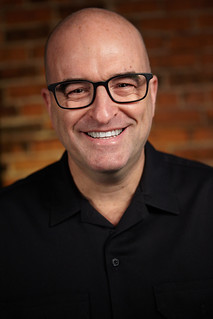
Greg Bennick (www.gregbennick.com) is a keynote speaker and long time coin collector with a focus on major mint error coins and US counterstamps. He is on the board of both CONECA and TAMS and enjoys having in-depth conversations with prominent numismatists from all areas of the hobby. Have ideas for other interviewees? Contact him anytime on the web or via instagram @minterrors. He can also be reached by email at www.gregbennick.com.
Wayne Homren, Editor
The Numismatic Bibliomania Society is a non-profit organization
promoting numismatic literature. See our web site at coinbooks.org.
To submit items for publication in The E-Sylum, write to the Editor
at this address: whomren@gmail.com
To subscribe go to: Subscribe
Copyright © 1998 - 2025 The Numismatic Bibliomania Society (NBS)
All Rights Reserved.
NBS Home Page
Contact the NBS webmaster
|