Greg Bennick's latest interview for the Newman Numismatic Portal is with Adrian Perez, Vice President of the Young Numismatists of America. Here's the second part, where Perez talks about his research and favorite coins from the Rhode Island School of Design collection.
-Garrett
ADRIAN PEREZ
Vice President of the Young Numismatists of America
An interview for The E-Sylum by Greg Bennick
 Greg Bennick
This is fantastic. Would it be possible for you to share your screen and show us some of your research — and tell us about maybe your favorite coins from the group, or ones that differentiated themselves from the others?
Adrian Perez
Absolutely, let me do that right now. Are you picking up everything?
Greg Bennick
Yeah, I'm seeing it right here.
Adrian Perez
Awesome. Okay — we'll start at the top, and I'll run through how everything works. First, these are the images that were already on the website — if you'd searched "coin" two years ago and scrolled down, these are the same images you'd have seen. We haven't gotten to rephotographing yet, but I hope to do that eventually. This column here is the object number. "60" is the year of acquisition — 1960; "48" is part of the accession number — I believe this was the 48th accession they had that year; and then the object number, of course, is first, second, third in that batch.
Culture: Roman, and some are Byzantine as you go later. Title, the way they do it in the RISD database, is the ruler — the emperor featured on the coin. Coin type: these are all gold solidi — I believe there's also a tremissis, which is a third of a solidus, the slightly smaller gold denomination. For date of work, I entered the year if I could narrow the coin down to a confirmed mint year; otherwise, the years of the emperor's reign. Next is the mint. Roman gold coins — especially the early ones — carry a mintmark on the reverse, and I'll show you examples in a moment; most Byzantine coins are almost exclusively from the mint of Constantinople. Material: these are all gold.
And here's where we get into the interesting part — the description. This is the bulk of my work: a description of the obverse and reverse, featuring how the legend is written on the coin — not a translation. As history went on, the Byzantine Empire became progressively Greek, but interestingly, the coinage remained in Latin for an extremely long time. When I got to the Greek coins, my work got a little trickier — Greek is a little harder than Latin for me — but I figured it out. The dimensions are what they had originally; typically for Roman coinage you'd want millimeters, but in 1960 they were done in centimeters. I didn't get to redo that, but maybe we'll get it done sooner or later.
Marks or inscriptions cover any wear you might see on the coin — these were in very good shape; I don't remember any. Condition is self-explanatory. Notes — that came from the original note cards; that's the auctioneer they were acquired from, in Basel, Switzerland. Interestingly, Basel is spelled with "-el" at the end, but on the note card it was "-le," so I had to copy that — maybe that's how they spelled it then. I thought that was very interesting. Publications, self-explanatory; and exhibitions — as I mentioned, there was that exhibit in 1960, and 1961 for some of them as well. Then there's what was included in the original descriptions — which in some cases I had to update or correct, and I'll show an example in a moment — and finally the RIC and Dumbarton Oaks identifications.
Greg Bennick
Amazing. Now, you mentioned publications was self-explanatory. Does that mean publications the coin appeared in, or publications you used as references for your work on the coin?
Adrian Perez
My understanding is that, just as we have RIC today for identification, what was listed under publications on the note cards was their identification at the time — after going through it, I believe it was Cohen, which was essentially their version of RIC back in 1960. I was only able to find one volume of it online, on archive.org, but I confirmed it, and it is accurate. Of course, since 1960 a lot of that information has been updated and things have changed, but I thought it was appropriate to include it.
Greg Bennick
Yeah, it's great.
 Adrian Perez
I'll start with the first one — a little bit of a story. When I started with this collection and had to scroll and look through everything, the first coin I came upon was this one of Emperor Valentinian — but on the original note cards it was listed as Emperor Valentinian III, who ruled about sixty years later. So that was one of the corrections I had to make. It's very important to preserve all this information — as I mentioned, there was that exhibit back in 1960 and '61 — so here's the original description, where the title was listed as Valentinian — Valentinianus in Latin — the third, which was inaccurate. That was one of the corrections that was made. I'll show a highlight from another one I thought was very interesting as well. This collection starts in the late Roman period, in the fourth century. A little quick history: the solidus was introduced by Emperor Constantine as part of his reforms, and as history progressed, the coins became progressively more Christian. Constantine famously legalized Christianity in the Roman Empire, but interestingly, his coins, and those of his immediate successors, still featured heavy pagan imagery. Eventually the two began fusing together into something of a hybrid, and by about the seventh or eighth century you begin seeing hyper-Christian imagery — Jesus Christ on the obverse of the coin. I'll show you a very good example of this: Emperor Basil II. Here's the obverse of the coin — I'll zoom in a little more.
Greg Bennick
Great.
Adrian Perez
This is number 25. Traditionally, in Roman times, the emperor was the center of attention on the coin — he was on the obverse, with all his titles and triumphs listed in the legend. But by the 11th century, it was actually Jesus Christ featured prominently on the obverse, and the emperor was on the reverse instead — which I find fascinating. Another highlight I'll show you: number 22, Emperor Theophilos. Theophilos ruled the Byzantine Empire in the ninth century, and this coin features him on the obverse; the reverse legend reads "Constantine and Michael." Constantine was one of Theophilos's sons, who would die before he could become emperor. But there's a bit of a dispute about who Michael is, because Theophilos's father and his other son were both named Michael: it could be either Michael II the Amorian, his father, or Michael III — called "the Drunkard," and not well written up in the history books — his son. Here's the coin: Emperor Theophilos on the obverse, featuring the patriarchal cross. And as I mentioned earlier, the legends by now are mostly medieval Greek — if you were to go to Greece and speak this language, they probably wouldn't understand you, because it has evolved so much. On the reverse are Constantine and Michael. The original accession sheet said Michael II, his father — but there's a scholarly dispute here, and I believe it's much more likely this is Michael III, because both figures appear younger than Theophilos. So even though the accession note said Michael II, this is most likely his son, Michael III.
Greg Bennick
This is so cool.
Adrian Perez
Going through all these coins, there were so many little stories like that. The original notes were a very good baseline to start from, but there's definitely a lot more research to be done on these coins.
Greg Bennick
And clearly you did a lot of research on each and every one of these coins, which places them more confidently — more accurately — in the RISD collection. Basically, you did the curation, research, and historical and numismatic work that lets them know what they have in their collection. It's pretty brilliant.
Adrian Perez
Yeah, absolutely. From my perspective, it's just so amazing that they let me come in and do this. As you were saying, this is really one of the great things about the numismatic community — that ability to uplift young numismatists to do this kind of work. They didn't hold my hand. They said, "Here's the collection — go crazy." And that freedom was actually the greatest gift they could have given me. I'm so proud of this work, because when I started, the spreadsheet just had the images and the empty columns, and I had to fill everything out. Over those three months it was honestly a blast — every now and then I'd say, okay, let's do another one — and I was able to acquire a few of the physical RIC volumes, which was very helpful. It was just great.
Greg Bennick
That's so cool. And I want to make a note that it wasn't just that you're a young numismatist that got you invited in — you're a knowledgeable numismatist, and that's why they invited you in. Being a young numismatist maybe helped open the door to that first meeting, but once they realized you knew what you were talking about, it was, "Of course — come on in, let's go." I'm just so happy they chose you.
Adrian Perez
Yeah — as soon as they started showing me the coins, we started talking about all the history behind everything, and it was just amazing.
Greg Bennick
That's so cool. Is there anything else on the screen share you wanted to show us? You're welcome to, or you can close the screen share if you like — either way, we'd be happy to hear more stories if there are extras.
Adrian Perez
I'll close the screen share for now, but I will definitely share the link to this, and to the other document I had up earlier, because they're both visible to the public.
Greg Bennick
Great — and people don't have to search "coin" to find them anymore, because of you. So with that said: is this the kind of work you'd want to do more of in the future? Would you be fascinated to do this for other hidden collections — or other prominent collections, for that matter?
See also:
Rhode Island School of Design Coin Catalogue Spreadsheets
(https://tinyurl.com/perezspreadsheet)
Rhode Island School of Design Coin Collection Links and Descriptions
(https://tinyurl.com/RISDancients)
 About the Interviewer
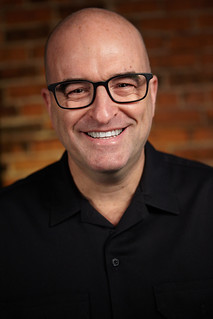
Greg Bennick (www.gregbennick.com) is a keynote speaker and long time coin collector with a focus on major mint error coins and US counterstamps. He is on the board of both CONECA and TAMS and enjoys having in-depth conversations with prominent numismatists from all areas of the hobby. Have ideas for other interviewees? Contact him anytime on the web or via instagram @minterrors. He can also be reached by email at www.gregbennick.com.
To read the earlier E-Sylum article, see:
ADRIAN PEREZ INTERVIEW, PART ONE
(https://www.coinbooks.org/v29/esylum_v29n31a07.html)
Wayne Homren, Editor
The Numismatic Bibliomania Society is a non-profit organization
promoting numismatic literature. See our web site at coinbooks.org.
To submit items for publication in The E-Sylum, write to the Editor
at this address: whomren@gmail.com
To subscribe go to: Subscribe
Copyright © 1998 - 2025 The Numismatic Bibliomania Society (NBS)
All Rights Reserved.
NBS Home Page
Contact the NBS webmaster
|