Visit our NBS Sponsors











About UsThe Numismatic Bibliomania Society is a non-profit association devoted to the study and enjoyment of numismatic literature. For more information please see our web site at coinbooks.org SubscriptionsThose wishing to become new E-Sylum subscribers can go to the following web page
Subscribe
MembershipThere is a membership application available on the web site Membership Application To join, print the application and return it with your check to the address printed on the application. Print/Digital membership is $40 to addresses in the U.S., and $60 elsewhere. A digital-only membership is available for $25. For those without web access, write to: Jeff Dickerson, Treasurer AsylumFor Asylum mailing address changes and other membership questions, contact Jeff at this email address: treasurer@coinbooks.org SubmissionsTo submit items for publication in The E-Sylum, write to the Editor at this address: whomren@gmail.com BUY THE BOOK BEFORE THE COINSale Calendar
|
- WAYNE'S WORDS: THE E-SYLUM MARCH 22, 2026
- WORKMAN'S BOOKS SALE 8
- BOOK REVIEW: OVERDATES
- WILLIAM MARC ROSENBLUM (1945-2026)
- NEWMAN PORTAL ADDS VINTAGE PCNS / CSNA VIDEO
- RESEARCHER SEEKS BOIS DURCI, A NATURAL PLASTIC 1855-1927
- VIDEO: LINCOLN'S 1860 NOMINATION
- HAPPY 250TH EVACUATION DAY!
- CONECA TO EXAMINE ERROR AND VARIETY COINS
- 2026 ANA SUNDMAN LECTURE SPEAKERS SOUGHT
- EUREKA BAR PARTIAL OWNERSHIP OFFERED
- FINEST KNOWN OFFERS SS CENTRAL AMERICA CATALOG
- VOCABULARY TERM: SHRINKAGE
- WORLD-WIDE COIN INVESTMENTS
- DIE ENGRAVING PRODIGY JOHN GREGORY HANCOCK
- ATLAS NUMISMATICS SELECTIONS: MARCH 22, 2026
- NUMISMAGRAM MEDAL SELECTIONS: MARCH 22, 2026
- HERITAGE: MARCH 2026 WORLD PAPER MONEY
- HERITAGE: MARCH 2026 ERROR COINS SHOWCASE
- ST. JAMES AUCTIONS 120
- WAYNE'S NUMISMATIC DIARY: MARCH 22, 2026
- THE MEDIEVAL COINAGE OF GEORGIA
- THE DIME WITHOUT AN OLIVE BRANCH
- THE PROPOSED TRUMP GOLD COIN
- SAMUEL UPHAM'S COUNTERFEITS
- THE REPUBLICA FILIPINA 5 PESOS
- HAWAII'S STORY THROUGH BANKNOTES
- BRITISH BANKNOTES, BEAVERS AND BACKLASH
- LOOSE CHANGE: MARCH 22, 2026
- ABOUT THIS ISSUE: MARCH 22, 2026
Content presented in The E-Sylum is not necessarily researched or independently fact-checked, and views expressed do not necessarily represent those of the Numismatic Bibliomania Society.
WAYNE'S WORDS: THE E-SYLUM MARCH 22, 2026
 New subscribers this week include:
Dr. Ovidio Elizondo-Garza, courtesy Adrián González-Salinas;
Fred Pasternak, courtesy John Ferrari;
Welcome aboard! We now have 6,616 subscribers.
New subscribers this week include:
Dr. Ovidio Elizondo-Garza, courtesy Adrián González-Salinas;
Fred Pasternak, courtesy John Ferrari;
Welcome aboard! We now have 6,616 subscribers.
Thank you for reading The E-Sylum. If you enjoy it, please send me the email addresses of friends you think may enjoy it as well and I'll send them a subscription. Contact me at whomren@gmail.com anytime regarding your subscription, or questions, comments or suggestions about our content.
Would any of our packrat readers have a copy of the May 11, 2008 E-Sylum email they could forward to me? This was the first one where we used HTML to include images and formatting.
This week we open with a numismatic literature sale, a book review, an obituary, updates from the Newman Numismatic Portal, Evacuation Day and more.
Other topics this week include overdates, Bois Durci, Lincoln's nomination, error coins, the SS Central America, shrinkage, World-Wide Coin Investments, John Gregory Hancock, fixed price and auction selections, my numismatic diary, new U.S. coins and coin designs, and Hawaiian and British banknotes.
To learn more about the Denver Area World Numismatists club, the Combined Organizations of Numismatic Error Collectors of America, California saloon tokens, the "Eureka Bar", the 1848 Pattern Florin, the 2002 Special Edition S.S. Central America Red Book, Colorado coal mining notes, Samuel Upham's counterfeits, and why fewer people eat banknotes now, read on. Have a great week, everyone!
Wayne Homren
Editor, The E-Sylum

Image of the week
WORKMAN'S BOOKS SALE 8
If you've seen the E-Sylum ads, you already know Alan Workman has a numismatic literature sale closing April 25, 2026. Here's the announcement with more details. -Editor

A Fine Selection of Numismatic and Treasure Books, Auction Catalogs and Magazines
Workman's Books' eighth bid sale of rare and out-of-print books, auction catalogs and magazines is currently in the final stages of cataloging. The sale will close on Saturday, April 25, 2026 at 10:00 AM EDT. This upcoming sale features an exceptional selection of rare and hard-to-find books, auction sale catalogs, magazines, journals, and other media centered on Latin American, U.S. and world numismatics, shipwrecks, sunken treasure, lost treasure, treasure hunting, lost mines, and treasure in the American West. Highlights include specialized works such as Spanish Coins in Mozambican Waters: The Numismatic Collection of the Sao Jose (1622), The Un-real Reales on counterfeit portrait eight-reales, and The Encyclopedia of Roman Imperial Coins (ERIC).
Collectors of New World treasure will appreciate Spanish Colonial Gold Coins in the Florida Collection, The Milled Columnarios of Central and South America, and multiple works tied to famous shipwrecks including the Nuestra Senora de Atocha and 1715 Plate Fleet. The offering is rounded out with historic material such as an 1817 History of the Wars Occasioned by the French Revolution, auction catalogs, and the comprehensive Numismatica Espanola (1474–2020), making this a well-curated sale for both advanced collectors and researchers alike.

BOOK REVIEW: OVERDATES
Bill Eckberg submitted this review of Kevin Flynn's new book on overdates produced at the U.S. Mint. Thank you! -Editor
 I recently received a copy of "Overdates, The Top U.S. Die Variety," by Kevin Flynn. Like many, I have long been fascinated by overdates and why and how they are/were produced. Some overdates, particularly those from the earliest years of the Mint, are very obvious and were produced by punching a new digit over a preexisting one, often without much, if any attempt to remove the original digit. Some spectacular 20th century overdates, like the 1918/7-D nickel, 1918/7-S quarter and the 1942/1 dime were created by the use of different hubs. Many other overdates require a strong glass and patience to identify.
If you like good pictures of overdates, all of them are clearly illustrated by substantial enlargement. Many are illustrated in color.
But this is not just a book with pretty pictures and descriptions of spectacular coins. It is deeply researched and clearly written. I was particularly happy to see a number of what Flynn calls "refuted" (I would prefer "debunked") overdates. I was pleased to see that he doesn't bow to current auction listings or the Red Book. He spends ten pages explaining convincingly why the alleged 1914/3 Buffalo nickel is NOT an overdate. The first refuted overdate in the book is the so-called 1809/6 or 1809/inverted 9 half cent. The variety is a repunched 9, and I hope that this fact finally makes it into the mainstream with the publication of his book.

WILLIAM MARC ROSENBLUM (1945-2026)
Jeffrey Zarit, Howard Berlin and Aaron Oppenheim alerted me to the passing of dealer Bill Rosenblum on March 10, one month before his 81st birthday. So sorry to hear this news. -Editor
 William Marc Rosenblum, 80, of Littleton, Colorado, passed away on March 10, 2026.
He was born on April 10, 1945, in Orange, New Jersey, to Laura and Carl Rosenblum. The oldest of three boys, Bill grew up in West Orange, where he played ice hockey, delivered newspapers, and developed a life-long appreciation for rock-and-roll.
After graduating from West Orange High School in 1963, Bill headed north to Maine to attend college before landing at the University of Bridgeport in Connecticut. It was there that he met a fair-skinned beauty, the love of his life, Rita Berkowitz. Bill went on to earn his Bachelor of Arts and Science degree in 1971.

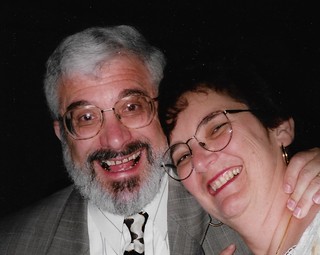 Bill and Rita married in 1967 and soon set off on an adventure westward, settling in Northern California near San Francisco and the Russian River Valley during the height of the counterculture era. On a road trip back east, their van broke down in Denver—an unexpected twist that led them to decide to make the Mile High City their home. Colorado remained Bill's home for the rest of his life. He spent more than 30 years in Conifer and nearly 20 years in Littleton.

NEWMAN PORTAL ADDS VINTAGE PCNS / CSNA VIDEO
The latest addition to the Newman Numismatic Portal is video from the 2001 California State Numismatic Society Symposium. Project Coordinator Len Augsburger provided the following report. -Editor
Newman Portal Adds Vintage PCNS / CSNA Video
Courtesy of Elliot and Michael Wehner, NNP has added video from the 2001 California State Numismatic Society Symposium, which was hosted by the Pacific Coast Numismatic Society. Speakers include Bill Metcalf on "The Mint at Rome," David Lange on Philippine coinage produced by the U.S. Mint, Duane Feisal on California saloon tokens, and Joe Boling on "Counterfeiting Paper Money."
One of our favorite things to do with NNP is leverage NNP itself to add context to new content. In this case, the Winter 2002 edition of the Calcoin News supplies the full particulars regarding these presentations, and we can now associate the when, where, and why with what started as an undigitized videotape. Thanks to Michael Wehner for making this material available to NNP!
RESEARCHER SEEKS BOIS DURCI, A NATURAL PLASTIC 1855-1927
Newman Numismatic Portal Project Coordinator Len Augsburger also passed along the following ask from a researcher. -Editor
 Researcher Seeks Bois Durci, A Natural Plastic 1855-1927
Medals in wood? Indeed, probably just about any solid substance has been die struck, or at least a crude attempt has been made. Bois Durci Un Plastique Naturel, A Natural Plastic 1855-1927, by Gaston Vermosen, documented such pieces made following an 1862 London exhibition. Michelle Lowe-Holder, a UK artist, seeks a copy of this book for research purposes and may be contacted at michelle@lowe-holder.com.
Link to Richard Jewell's review of Bois Durci:
https://www.coinbooks.org/esylum_v11n36a04.html

VIDEO: LINCOLN'S 1860 NOMINATION
The David Lisot Video Library on the Newman Numismatic Portal can be found at:
https://nnp.wustl.edu/library/multimediadetail/522852
We highlight one of his videos each week in The E-Sylum. Here's one from 2026 with Robert I. Girardi speaking about the 1860 nomination of Abraham Lincoln. -Editor
HAPPY 250TH EVACUATION DAY!


On Tuesday John Sallay wrote:
"While many people — especially here in Boston — are celebrating St. Patrick's Day, today is also Evacuation Day, the day George Washington and his Continental soldiers secured an important early victory in the American Revolution. And indeed, this year is the 250th anniversary of that great event on March 17, 1776!
"The scene is depicted on the reverse of the Washington Before Boston Medal, with the legend HOSTIBUS PRIMO FUGATIS, "the enemy for the first time was put to flight".
"For those unfamiliar with the story, Heather Cox Richardson summed it up nicely in her daily email yesterday, at: https://heathercoxrichardson.substack.com/p/march-16-2026 ."

CONECA TO EXAMINE ERROR AND VARIETY COINS
CONECA will be manning tables at upcoming coin shows to examine error and variety coins in the next few months. Here is a press release. -Editor
at Major Coin Shows Across the USA Throughout 2026
 CONECA, the international error coin and variety club, will be offering free examination of error
and variety coins to collectors at educational tables at coin shows across the United States
throughout this year. Everyone is welcome to ask questions and bring coins.
CONECA, the international error coin and variety club, will be offering free examination of error
and variety coins to collectors at educational tables at coin shows across the United States
throughout this year. Everyone is welcome to ask questions and bring coins.
The Combined Organizations of Numismatic Error Collectors of America, is the largest coin specialty club in the United States and has actively been educating collectors about mint error and variety coins for the last five decades.
At their coin show tables, different members of CONECA will offer free examination to collectors who bring coins from their collection to the show with questions. This is offered as a free service to help the hobby grow.

2026 ANA SUNDMAN LECTURE SPEAKERS SOUGHT
E-Sylum readers are a smart and sharing bunch; who would like to share their numismatic knowledge at the Sundman Lecture Series at the ANA World's Fair of Money in Pittsburgh? -Editor
Submissions are being accepted for the Maynard Sundman/Littleton Coin Company Lecture Series, taking place during the American Numismatic Association's (ANA) Pittsburgh World's Fair of Money, August 25-29. The theme this year is "Striking Independence: 250 Years of American Numismatics," which focuses on how money tells the story of the United States from 1776 to today.
Topics can be wide-ranging but should focus on early struggles with coinage and reliance on foreign money to the evolving imagery, language, and innovation found on American coins and paper money. New, original research will be prioritized. Only four proposals will be selected.
EUREKA BAR PARTIAL OWNERSHIP OFFERED
Kagin's will be offering fractional ownership shares in the legendary "Eureka Bar", recovered from the S.S. Central America wreck. -Garrett
For the first time, fractional ownership shares in the legendary "Eureka Bar," a massive 64-pound California Gold Rush sunken treasure gold ingot, are being offered by Kagin's Digital (https://kagins.digital), a subsidiary of Kagin's Inc. of Belvedere Tiburon, California.

"The 933.34 troy ounces gold bar, recovered from the famed 1857 shipwreck of the SS Central America, known as the ‘Ship of Gold,' is widely regarded as the largest surviving gold artifact of the California Gold Rush and one of the most historically significant gold bars ever produced," stated Dr. Donald Kagin, President of Kagin's Digital and author of the reference book Private and Pioneer Gold Coins of the United States 1786-1862.

FINEST KNOWN OFFERS SS CENTRAL AMERICA CATALOG
With the publicity surrounding the release from prison of Tommy Thompson, the leader of the 1980s expedition that recovered treasure from the wreck of the SS Central America, Adam Crum's Finest Known seized the day on Monday to promote its catalog along with a chance to win a free Seated Liberty dime from the famed ship. Here's their emailed offer. Alas, their Friday drawing deadline has already expired. But see my Numismatic Diary elsewhere in this issue for a different offer I took them up on recently to purchase one of these babies along with some free numismatic literature. -Editor

With the recent news of the release from jail of controversial treasure hunter Tommy Thompson, the incredible story of the SS Central America is once again capturing national attention. Thompson, the leader of the 1980s expedition that discovered the wreck nearly 8,000 feet beneath the Atlantic, spent years in federal custody after refusing to disclose the location of certain treasure assets connected to the recovery.
Much of the media coverage surrounding his imprisonment — and now his release — has focused on claims that hundreds of valuable gold coins remain hidden away. Some reports have suggested that as many as 500 coins are secretly stashed somewhere, with dramatic headlines estimating their value at $50 million.
THE BOOK BAZARRE
VOCABULARY TERM: SHRINKAGE
Here's another entry from Dick Johnson's Encyclopedia of Coin and Medal Terminology. -Editor
Shrinkage. A reduction in size particularly in cast objects caused by the cooling of the metal from the original size of the mold. Among the properties of each metal is its rate of contraction (molecules are drawn closer together during cooling usually in uniform rate, but uneven contraction voids are known to exist). In numismatics the most popular casting metal – bronze – can shrink form 1 1/2 to 2% in diameter. For this reason a second generation cast, or any succeeding cast (called an after-cast), can be differentiated from an original by its slightly smaller diameter.
It must be remembered in all cases of shrinkage, however, that if a mold is made from the original medal the mold itself shrinks as it cools. A cast made from that mold would exhibit the combined shrinkage of both mold and cast. Thus there is no precise percentage that a second, or subsequent generation cast, can differ from the original item. Along with the shrinkage there is some loss of definition and sharpness of detail – largely due to the experience of the caster – but the most obvious criterion is the smaller diameter. See cast medals.
WORLD-WIDE COIN INVESTMENTS
E-Sylum Feature Writer and American Numismatic Biographies author Pete Smith submitted this article on two people behind the World-Wide Coin Investments dealership. Thanks! -Editor
World-Wide Coin Investments, Limited
Wayne suggested this as the subject for an article. Like a tree, this topic has many roots and branches that could be the source for another story. I will focus on two people. One built the company while the other ruined it.

World-Wide Coin Investment Inc. was founded in 1962 by John B. Hamrick, Jr. as president and Warren E. Tucker as vice-president. Each drove a Mark IV Lincoln as their company car.
In 1965, World-Wide Coin Investments, was selling copies of Sheldon's Penny-Whimsy from 1201 Fulton Bank Building in Atlanta. In 1968, the firm was operated by Hamrick at 346 Peachtree Street in N. E. Atlanta, Georgia. The company name was shown as World-Wide Coin Investments, Inc. In Apil 1968, the company began regular monthly ads in The Numismatist.

DIE ENGRAVING PRODIGY JOHN GREGORY HANCOCK
Allan Davisson released the following article on die engraving prodigy John Gregory Hancock, whose work is represented in The Harold Welch Collection in Davissons' upcoming Auction 45, closing March 25. -Garrett

Genius can occasionally shine in children whose ages are measured in single digits – Mozart composing and performing from the age of five is perhaps the most widely known. You can google child geniuses and see others. For some reason, John Gregory Hancock did not show up on any of the lists I found but his exceptional talent at the age of seven certainly qualified him to be on the list. Born into a family of engravers including a well known British engraver, Robert Hancock, the young John was exposed to the work and the technology and early in his life produced some amazing copper tokens.


ATLAS NUMISMATICS SELECTIONS: MARCH 22, 2026
Atlas Numismatics has updated their website with 423 new coins, medals, and tokens at fixed prices. Select items are discussed below. -Garrett

1085481 | ROMAN REPUBLICAN. ETRURIA. Populonia. Struck circa 300-250 BC. AV 25 Asses. NGC Ch. MS (Choice Mint State) Strike 5/5 Surface 4/5. 12mm. 1.35gm. ??V (retrograde). Lion's head with tongue protruding, right (Blank). Vecchi, Etruscan Coinage Serie 21, O1; HN 128.
The spiky mane and ferociously curled lips of the lion invite comparison to the bronze Chimaera of Arezzo now in Florence. Traditionally the dating of this issue approximated to that of the statue (c. 400 BC), however its weight standard links it to Rome's Mars/eagle gold issue (after 211 BC) and it has been plausibly suggested that its production was connected to Rome's war with Hannibal. Superb and exceptional.
NUMISMAGRAM MEDAL SELECTIONS: MARCH 22, 2026
Numismagram's Jeremy Bostwick sent along these five medals from his most recent upload of new material to his site. For all of the new items, please visit https://www.numismagram.com/inventory. -Garrett

103308 | UNITED STATES & ITALY. Christopher Columbus/"Civilization" bronze Medal. Issued 1892 for the 400th anniversary of the discovery of America (102mm, 12h). By Ludovico Pogliaghi & Angelo Cappuccio for Stefano Johnson in Milano.
Central medallion reading CRISTOFORO COLOMBO and with robed bust facing slightly left; around, native princess and Columbia clasping outstretched arms; above, globe focused upon the Western hemisphere; below, eagle perched slightly left, head upturned right, with wings spread; all over wreath composed of palm fronds and laurel branches // The fruits of Columbus's first voyage: Winged personification of Civilization facing slightly left, head right, surrounded by Genii representing Education, Commerce, and Industry; to lower right, native chief, maiden, and two warriors crouching defensively; at a distance, coastline with the U.S. Capitol before rising sun; around, border comprised of alternating stars and state shields.

HERITAGE: MARCH 2026 WORLD PAPER MONEY
Heritage Auctions will be hosting their World Paper Money Signature Auction on March 26. Select items are discussed below. -Garrett

Inflationary issues are curious, they speak of desperate times, but also to the resourcefulness of industry to "keep the ball moving." It never ceases to amaze me how "crafty" world-wide, economic systems become to protect their interests, and most importantly to continue spinning the proverbial rat-wheel. Similarly, emergency issues and overprint types, also display ingenious "shortcuts" devised from necessity. This auction is peppered with utterly rare inflationary examples for Austria, Germany, Russia and more. This has become the next frontier, so to speak, evidenced by the recent surge in demand for Eastern European material, for example. This type, although not aesthetically striking, is packed with historical importance and utmost rarity, as it is the first and only PMG graded example. If I were a betting man, I would predict an almost certain excitement for this note come auction day.
HERITAGE: MARCH 2026 ERROR COINS SHOWCASE
Heritage Auctions will be Error Coinage US Coins Showcase Auction on March 23. Select items are discussed below. -Garrett


The off-center 1817 large cent in lot 54002 has caught my eye every time I've perused this auction over the last couple of weeks. Early (screw press) coinage errors are quite scarce compared to the myriad modern errors that one tends to see, so when a dramatic piece like this 30% off-center strike shows up, I have a special appreciation for it. This piece is also well worn, meaning it circulated extensively without being set aside for its unusual nature. Part of this is due to the lack of widespread numismatic interest in the United States that early, but it is also due to the fact that screw press coinage was often imperfect, and many coins still circulated without issue even if they exhibited striking abnormalities.
ST. JAMES AUCTIONS 120
St. James Auctions will be holding its Auction 120 on April 15. Select items are discussed below. -Garrett

Wessex, Alfred the Great (871-899), penny, Phase III, London Monogram type [BMC ix], Tilewine, ælfr ed rex, diademed bust right wearing decorated tunic, rev. londonia monogram, tilevine above, moneta below, wt. 1.50gms. (S.1062; N.646; BMC 116; MacKay B 9.2 [O3/R8], this coin; SCBI Fitzwilliam 549 = MEC 8, 1259, same dies), well struck on a regular flan, minor planchet flaw in reverse field, otherwise good extremely fine and attractively toned, rare
WAYNE'S NUMISMATIC DIARY: MARCH 22, 2026
Tuesday March 17 was the date of the latest dinner meeting of my Northern Virginia numismatic social group, Nummis Nova. Tom Kays attended and submitted this great write-up. He'd asked about a length limit, but with paper and ink free and unlimited online, I told him to go to town, and he did. Thanks!
Tom's Nummis Nova March 2026 Notes
Southern comfort food was on tap at Southside 815 as Nummis Nova dined again. We happily occupied the Alexandria restaurant on St. Patrick's Day, adjacent their noisy bar at full capacity which was hopping with revelers in green. Some of us got the memo about the wearing of the green, and in one case the orange, but for the most part, Nummis Nova assumed a neutral stance on Irish-American displays of festivity-readiness. We are always ready to party.

From left to right are many of the usual suspects including Roger Burdette, Chris Neuzil, Dave Schenkman, Eric Schena, Wayne Homren, Mike Packard., Julian Leidman (presiding head of table), Tom Kays, Robert Hoppensteadt, Mike Markowitz. Jon Radel, Erik Douglas, and Roger's guest Curt Gammer. Steve Bishop is out of frame at the other head of table. Before arrival of preliminary bread baskets with apple butter and peach salsa, the long table was awash with show-and-share items and stories moving in both clock-wise and anti-clock-wise directions simultaneously, making it difficult to know on first glance, who brought what, and why it has a cool backstory. For example, a normal-looking, high-grade, 1850 Seated Liberty dime passed by.
THE MEDIEVAL COINAGE OF GEORGIA
Mike Markowitz wrote an article in CoinWeek on Medieval Coinage of Georgia. Here's an excerpt - see the complete article online. -Garrett
The medieval coinage of Georgia reflects a remarkable intersection of cultures, empires, and religious traditions. Located in the Caucasus region between Europe and Asia, Georgia developed a distinctive monetary system during the Middle Ages. Georgian rulers issued coins influenced by Byzantine, Islamic, Persian, and Mongol traditions.
At the same time, these coins expressed the identity and authority of the Georgian kingdom.
Archaeological evidence shows that the Georgian people have inhabited this region since prehistoric times. Early discoveries include some of the world's oldest evidence of winemaking, gold mining, and textile production.
In the fourth century CE, Georgia adopted Orthodox Christianity, which became a central element of its culture and political identity.
THE DIME WITHOUT AN OLIVE BRANCH
About the dime with the eagle lacking an olive branch - the Washington Post has an article explaining how it came about. Despite the confusion and controversy, I'm glad it has people looking at their coins again instead of blindly spending them. Of course, these days I'm sure there are a lot of people who've never actually seen one yet but already have an opinion because of what they've consumed on social media. When I speak to kids about coins, I encourage them to pick one up and just look at it and notice parts of the design. Then I tell them, "congratulations - you're a numismatist - someone who studies coins." -Editor

The current and commemorative dime reverses
A temporarily new-issued dime that commemorates America's 250th anniversary is drawing criticism for its lack of olive branches — a symbol of peace.
Instead, the back of the dime showcases the Great Seal of the United States, featuring a bald eagle, but it's clutching only arrows, a symbol of war, and lacks the traditional olive branch in its other talon.
The design for the reimagined commemorative dime took shape months before President Donald Trump was reelected and was intended as a nod to the Revolutionary War that created the nation, not modern times. But the dime started going into circulation the same week that Trump seized Venezuelan strongman Nicolás Maduro in early January.
THE PROPOSED TRUMP GOLD COIN
The Washington Post also weighed in with an article about the design of the proposed Trump gold coin. They didn't like it. -Editor
 The making of a coin is like the making of a successful political campaign: The artist must clarify and concentrate a big idea into a symbol or slogan, so simple and telling that even the distracted eye can absorb it in a glance.
It's all about reduction, condensation and distillation. Politicians may get only a few minutes of genuinely undivided attention from their voters, while coin designers must create something iconic on a canvas the size of a thumbnail.
"With coin design, less is more," said Caroline Turco, curator at the American Numismatic Association's Money Museum in Colorado Springs. And coinage, she added, is one of the oldest and most effective forms of political messaging, or propaganda.
SAMUEL UPHAM'S COUNTERFEITS
Here's a short article I came across this week with a short overview of Samuel Upham's counterfeit Confederate currency. See my Numismatic Diary elsewhere in this issue for a circulated example. Found via News & Notes from the Society of Paper Money Collectors (Volume XI, Number 40 March 17, 2026). -Editor

A US stationery store owner began a counterfeiting operation on March 12, 1862, which would crash an entire country's economy.
As the Confederate States of America broke away from the US during the Civil War, the new nation began to print its own banknotes.
One of those notes ended up in the hands of Samuel Upham, a Philadelphia merchant.
With the means to make copies of the new money, Upham began printing his own version to sell as souvenirs to curious northerners.
Unlike in the loyal Northern states, the Confederacy did not have the technology to print high-quality currency.
Instead, it was printed on what was effectively newsprint - cheap, simple and remarkably easy to duplicate.
THE REPUBLICA FILIPINA 5 PESOS
Heritage published the following article in their latest Currency News email entitled Issued in Revolution: The República Filipina 5 Pesos by Olivia Collier. -Garrett


Few banknotes so vividly capture a nation suspended between empires as the República Filipina 5 Pesos. More than a circulating medium of exchange, this note stands as material evidence of a revolutionary government's brief assertion of sovereignty — a fragile republic born in war and extinguished in transition.
HAWAII'S STORY THROUGH BANKNOTES
Heritage also published this article in their latest Currency News email entitled Echoes of a Lost Kingdom: Hawaii's Story Told Through Its Banknotes by Morgan Yount. -Garrett
With the advent of the vernal season, the true countdown begins towards Heritage Auction's March 26, 2026 World Paper Money Signature Auction and its marvelous offering of rare and beautiful banknotes. Among the lineup is a variety of notes from Hawaii, one Republic of Hawaii Specimen and four Kingdom of Hawaii Proprietary Proofs. Proprietary Proofs are modern reprints of the original Proof using the original plates. In this instance, the Hawaii Proprietary Proofs were printed in the 1980s, yet reflect on an incredibly intriguing moment in Hawaiian history. While the enchanting islands often bring recollections of peace and relaxation, the history of Hawaii is one of political puppeteering, cultural reconstruction, and constant shifts in power.
The beautiful Hawaiian archipelago, made up of eight major islands located in the central Pacific Ocean, were first settled between 940 and 1130 CE by Polynesian voyagers traveling from the Marquesas Islands. Over time, the settlers developed a rich cultural landscape shaped by Polynesian traditions, including a hierarchical caste system, the kapu (a complex set of social and religious codes), and deeply rooted spiritual practices. Leadership was organized under island rulers, known as ali‘i nui, and chiefs, or ali‘i ‘aimoku. For several centuries, the islands functioned as independent chiefdoms, largely isolated from the rest of the world.

Hawaii Kingdom Of Hawaii, Department of Finance 20 Dollars Pick 2pp1 Front Proprietary Proof PMG Gem Uncirculated 65 EPQ
BRITISH BANKNOTES, BEAVERS AND BACKLASH
Earlier this month, Kavan Ratnatunga passed along a BBC News article about the Bank of England's plans to replace historical figures on banknotes with images of wildlife. The story has taken on a life of its own, with strong opinions on the issue. -Editor

Four former Tory chancellors have joined a backlash at the Bank of England for ditching Winston Churchill from banknotes in favour of images of wildlife.
George Osborne, Rishi Sunak, Jeremy Hunt and Nadhim Zahawi all hit out at the decision by Threadneedle Street to shake up the designs on paper money.
LOOSE CHANGE: MARCH 22, 2026
Here are some additional items in the media this week that may be of interest. -Editor
In the maybe-better-never-than-late department, states and the Feds are still trying to decide on rules for rounding transactions now that the one cent coin has been discontinued. -Editor
 A bill introduced last year in Congress and passed out of the House financial services committee would apply symmetrical rounding across the country. U.S. Rep. Lisa McClain, R-Mich., said in an email the federal law is important to prevent a "confusing patchwork of state policies."
The bill hasn't been voted on in the House and would still need to move through the U.S. Senate before reaching Trump's desk.
In the meantime, bills to deal with penniless cash transactions have passed both chambers and await the governor's signature in Arizona, Florida, Oregon, Tennessee, Virginia and Washington. Some states are proposing to allow businesses to round cash purchases, while others consider requiring it.
In Indiana, a bill signed into law this month by Republican Gov. Mike Braun tells businesses they must round cash purchases for all transactions that do not end in a zero or five. Lawmakers revised that provision in a second bill that makes rounding optional, which would take effect Sunday if Braun signs it into law.
To read the complete article, see:
(https://www.pbs.org/newshour/economy/without-new-pennies-state-lawmakers-rush-to-set-rounding-rules)
Other topics this week include the Youngest Person Known to Strike a U.S. Coin, and fewer people are eating banknotes. -Editor
ABOUT THIS ISSUE: MARCH 22, 2026
My Numismatic Diary elsewhere in this issue covers Tuesday's dinner meeting of my local numismatic social group. Friday night after work I met up with our daughter and oldest son for a movie night - we saw the new Ryan Gosling film "Hail Mary" based on the book by Andy Weir. Said son had given me a copy of the 2021 book and I'd enjoyed it a lot. Like Weir's "The Martian", the story is driven by science and experimentation, which the film, by necessity, skips or fast-forwards through. Critics describe it as an "upbeat science-fiction fantasy" mixing elements of "The Martian," "E.T." and "Interstellar." Having read the book I was eager to see the film and I liked it, but it came off as more of a sappy buddy comedy in space despite the gravity of the premise - a clock ticking down to the end of the universe.
Spring arrived here this weekend - I took walks outside without a jacket for the first time this season. And short sleeves today!
Finally, here are some interesting non-numismatic articles I came across this week.
The tradition of using three names dates back to ancient Rome. (https://historyfacts.com/world-history/fact/the-tradition-of-using-three-names-dates-back-to-ancient-rome/)
A ‘Hail Mary' for Earth, Built on Solid Science (https://www.nytimes.com/2026/03/18/science/hail-mary-andy-weir.html)
Why Do Some Words Defy Standard Phonetics? (https://wordsmarts.com/spelling-against-phonetics/)
A man let ChatGPT sell his home. It beat every agent's estimate by $100K—and closed in 5 days (https://fortune.com/2026/03/21/florida-man-chatgpt-sells-house-ai-jobs-marketing-pricing/)
Trucks and tractors reflect a bubbling frustration in rural America: The right-to-repair movement (https://www.washingtonpost.com/opinions/2026/03/18/right-to-repair-movement-pickups-tractors/)
Woodstock survivors: What musicians remain from the 1969 festival (https://www.post-gazette.com/ae/music/2026/03/16/woodstock-surviving-musicians/stories/202603110020)
-Editor


Editor Wayne Homren, Assistant Editor Garrett Ziss

|
|
| |