Visit our NBS Sponsors











About UsThe Numismatic Bibliomania Society is a non-profit association devoted to the study and enjoyment of numismatic literature. For more information please see our web site at coinbooks.org SubscriptionsThose wishing to become new E-Sylum subscribers can go to the following web page
Subscribe
MembershipThere is a membership application available on the web site Membership Application To join, print the application and return it with your check to the address printed on the application. Print/Digital membership is $40 to addresses in the U.S., and $60 elsewhere. A digital-only membership is available for $25. For those without web access, write to: Jeff Dickerson, Treasurer AsylumFor Asylum mailing address changes and other membership questions, contact Jeff at this email address: treasurer@coinbooks.org SubmissionsTo submit items for publication in The E-Sylum, write to the Editor at this address: whomren@gmail.com BUY THE BOOK BEFORE THE COINSale Calendar
|
- WAYNE'S WORDS: THE E-SYLUM MARCH 15, 2026
- GUT-LYNT SALE 24 NUMISMATIC LITERATURE
- BRYCE BROWN MARCH 2026 NUMISMATIC LITERATURE SALE
- MCKEE COINS NUMISMATIC LITERATURE SALE
- BOOK AVAILABLE: U.S. PROOF COINS VOL III: SILVER
- NEW BOOK: MISSOURI TRADE TOKENS
- NEW BOOK: THE HISTORY OF PAPER MONEY
- NEW BOOK: HEADS & TALES
- NEW BANKNOTE BOOK CHAPTERS PUBLISHED
- 2026 RED BOOK BREAKS SALES RECORDS
- NNP PUBLISHES CUHAJ ROMAN CATHOLIC MEDALS BOOK
- VIDEO: COLLECTING METAL SAVINGS BANKS
- PHILADELPHIA MINT TOUR RENOVATIONS
- NOTES FROM E-SYLUM READERS: MARCH 15, 2026
- VOCABULARY TERM: SHIELD
- AMERICAN INSTITUTE OF NUMISMATIC RESEARCH
- HERITAGE: MARCH 2026 COLONIAL CURRENCY RESULTS
- HERITAGE: MARCH 2026 U.S. COINS SIGNATURE
- STACK'S BOWERS: MARCH 2026 MANHATTAN SALE
- COINAGE OF PHANES IN DAVISSON'S AUCTION 45
- SIEGEL AUCTION GALLERIES OFFERS ENCASED POSTAGE
- 2026 CENTRAL STATES SHOW PLANS AND SALE HIGHLIGHTS
- LORD ASHCROFT MEDAL COLLECTION FINDS NEW HOME
- SS CENTRAL AMERICA LEADER TOMMY THOMPSON FREED
- RUTHWELL: THE BIRTHPLACE OF BANKING
- LOOSE CHANGE: MARCH 15, 2026
- ABOUT THIS ISSUE: MARCH 15, 2026
Content presented in The E-Sylum is not necessarily researched or independently fact-checked, and views expressed do not necessarily represent those of the Numismatic Bibliomania Society.
WAYNE'S WORDS: THE E-SYLUM MARCH 15, 2026
 New subscribers this week include:
Gary Moeller, courtesy Rich Kelly; and
Cassidy Stroud.
Welcome aboard! We now have 6,634 subscribers.
New subscribers this week include:
Gary Moeller, courtesy Rich Kelly; and
Cassidy Stroud.
Welcome aboard! We now have 6,634 subscribers.
Thank you for reading The E-Sylum. If you enjoy it, please send me the email addresses of friends you think may enjoy it as well and I'll send them a subscription. Contact me at whomren@gmail.com anytime regarding your subscription, or questions, comments or suggestions about our content.
This week we open with three numismatic literature sales, five new books, updates from the Newman Numismatic Portal, Philadelphia Mint exhibit renovations, and more.
Other topics this week include U.S. silver proof coins, Missouri trade tokens, Catholic medals, savings banks, shields, the American Institute of Numismatic Research, auction previews, Lord Ashcroft's medal collection, Tommy Thompson, and the birthplace of banking.
To learn more about electrum coinage, Medallic Portraits of Adolf Hitler, the rise and demise of coins, the earliest-extant Emperor Norton promissory note, the Master at Study, S.S. Central America ingots, the Trinity College Gold Award Medal, coins of Phanes, encased postage stamps, the 1855 Kellogg & Co. $50 Commemorative Restrike, and publishers Wigglesworth & Ghatt, read on. Have a great week, everyone!
Wayne Homren
Editor, The E-Sylum

Image of the week
GUT-LYNT SALE 24 NUMISMATIC LITERATURE
There are a number of numismatic literature lots in the March 21st Gut-Lynt Auction 24. Here are some selections. -Editor




Lots 1 and 2

Lot 4

Lot 6


Lots 15 and 16


Lots 23 and 31


Lots 53 and 59
For more information, or to bid, see:
Katalog - Gut-Lynt Auktion 24
(https://auktionen.gut-lynt.de/de-de/auctions/lots?$page=1&$maxpagesize=20&$sortby=lot_number&$sortdir=asc&cat_id=371#57635)
https://www.gut-lynt.de/home-en
BRYCE BROWN MARCH 2026 NUMISMATIC LITERATURE SALE
Bryce Brown submitted this announcement for his latest sale of numismatic literature, which closes March 25, 2026. -Editor
Auction of Ancient, Medieval, and Modern World Numismatic Literature
Numismatic literature on ancient, medieval, and world coinage is the topic of my current auction, which includes material from the Dr. R. Craig Kammerer and Dick Johnson libraries.
References from the scarce to the common are offered at bargain prices.
These are now open for bidding on eBay, under seller name ancient-numismatic-library. All lots close the evening of Wednesday, March 25, 2026. Link: https://www.ebay.com/usr/ancient-numismatic-library
Any questions can be asked through eBay, or by contacting me at numismatics@att.net.
Here are some selections. -Editor


The Architectural Medal - England in the Nineteenth Century, 1978, Jeremy Taylor
United States Copper Cents 1816-1857, Howard R Newcomb, 1944, WITH RARE ADDENDA


Medallic Portraits of Adolf Hitler (book), 1981, by R.W. Colbert & William Hyder
Florange & Ciani coin auction catalog, March 1924, Collection de Mr X, (plated)


Gustav Fock's Bibliotheca Numismatica NR. 695 - numismatic literature, 1934 RARE
RARCOA's April 1963 coin auction catalog - J.F. Bell Collection of US Gold Coins
To read the complete lot descriptions, see:
ancient-numismatic-library
(https://www.ebay.com/usr/ancient-numismatic-library/)

MCKEE COINS NUMISMATIC LITERATURE SALE
Owen McKee of McKee Coins, Inc., Ottumwa, Iowa has a number of numismatic literature lots in his current online sale, which closes March 27, 2026. Included are a number of Q. David Bowers publications, some quite early. -Editor
Commemorative Coins of the U.S.

1991 ; A Complete Encyclopedia. Q.David Bowers, signed. #863 of 900.
1962 U.S. Half Cents 1793-1857, by Bowers & Ruddy. Die Varieties. Soft cover. 47 pages. Deluxe edition


Special Coin Letters by Q. David Bowers. 80 Issues January 1971 thru November 1996. Not inclusive.
Rare Coin Review: 1956 Bulletin No. 2 -Q. David Bowers, Numismatist. 8 pages. All U.S. Coins


1958-1959 Empire Topics, issues 1 through 6. Library Edition. Limited to 500 copies, Empire Coin
1963 three page flyer entitled "The Unique 1954 English Penny" Empire Coin C., Inc., Johnson City
To read the complete lot description, see:
https://www.proxibid.com/McKee-Coins-Inc/Mckee-Coins-Inc-Live-Auction/event-catalog/293572

BOOK AVAILABLE: U.S. PROOF COINS VOL III: SILVER
John "JD" Dannreuther's new two-part volume on proof silver coinage will soon be shipping. See the earlier article for ordering information, but note that the preorder price has expired. -Editor
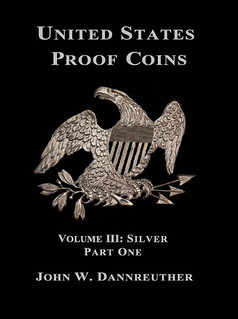

JD writes:
"They are on the truck (6800 pound!) and will arrive here sometime next week. Those who have pre-ordered it can breathe a sigh of relief as they will soon have the nearly 14 pound, two volume set!"
The regular list price is now $375. -Editor
To read the complete article, see:
NEW BOOK: U.S. PROOF COINS VOL III: SILVER
(https://www.coinbooks.org/v28/esylum_v28n49a06.html)

NEW BOOK: MISSOURI TRADE TOKENS
The Missouri Numismatic Society is publishing the first book written on Missouri trade tokens. Here's the pre-publication announcement. -Editor


Missouri organization announces token book publication
The Missouri Numismatic Society is coordinating the release of the first ever book on Missouri trade tokens. Expected to be released around the end of April or early May, the book by Bruce W. Smith is titled Missouri Trade Tokens – Small Business Pocket Change of the Show Me State.
The book relies upon more than four decades of research from the Missouri native, a renowned numismatic researcher.
The hardcover book is projected to be more than 1,000 pages, and will feature select illustrations throughout. The retail price of the book is $75 per book, plus Media Mail shipping and handling based on order quantity. Shipping for one book will cost $10, and each additional book is $5.
The MNS is offering free shipping as a pre-sale discount, for those that lock in their purchase before April 15.


To order the book, visit the MNS website, www.missourinumismaticsociety.org, and use the donate button at the Links page, to send payment via PayPal. Check or USPS money order may also be mailed to the organization at P.O. Box 410652, St. Louis, MO 63141. Potential buyers may direct questions to the organization at missourinumismaticsociety@gmail.com or contact the MNS via its website.

NEW BOOK: THE HISTORY OF PAPER MONEY
A new volume by Dr. Sven Gerhard is a collection of articles examining the history of German and European paper money. Here's a Google-translated version of an article in German from Geldscheine Online. -Editor
 Dr. Sven Gerhard is now well-known in German and international notaphily as the author of highly interesting and well-researched articles, including those on Geldscheine-Online and in the "Geldscheinsammler" section of the magazine "Münzen & Sammeln" (Coins & Collecting). On January 29, 2026, the first volume of his collected articles (over 30 specialist articles) on the history of paper money was published.
This volume contains a selection of articles on the history of German and European paper money in the 20th century, which the author published in various print media and online between 2022 and 2025. All the contributions share the common goal of presenting the issuance and circulation of paper money within the context of the historical circumstances of the time. Anyone who collects historical banknotes is invited to explore the history of their use.
To understand them, you need to know them. The book covers various paper money issues from Germany – especially from the early GDR – as well as from Denmark, Austria, Switzerland, and the former Czechoslovakia.
Those interested can order the book via BoD, Amazon and many other online bookstores as well as in bookstores.
Dr. Sven Gerhard:
Contributions to the history of paper money
Volume 1
Books on Demand, Hamburg, 2026
Hardcover, 17 x 22.5 cm,
182 pages, entirely black and white.
ISBN: 9783695744718
Price: 29.99 EUR
For more information, or to order, see:
Contributions to the history of paper money
Volume 1
(https://buchshop.bod.de/beitraege-zur-papiergeldgeschichte-dr-sven-gerhard-9783695744718)
Beiträge zur Papiergeldgeschichte: Band 1
(https://www.amazon.de/Beitr%C3%A4ge-zur-Papiergeldgeschichte-Band-1/dp/3695744715/ref=sr_1_1)
To read the complete article, see:
Beiträge zur Papiergeldgeschichte: Band 1
(https://www.geldscheine-online.com/post/beitr%C3%A4ge-zur-papiergeldgeschichte-band-1)
NEW BOOK: HEADS & TALES
An article by Andrew Crellin of Sterling & Currency alerted me to a book published last year. -Editor
Heads & Tales: The Rise and Demise of Coins
Granville Allen Mawer
 For some 2700 years we have used them to pay our debts and claim our dues. We have minted trillions of the little metal discs. Even the invention of paper money hardly slowed their proliferation. Indeed, coins made of gold continued to underpin the finances of the world until the twentieth century, but from that
eminence the descent has been precipitous.
For some 2700 years we have used them to pay our debts and claim our dues. We have minted trillions of the little metal discs. Even the invention of paper money hardly slowed their proliferation. Indeed, coins made of gold continued to underpin the finances of the world until the twentieth century, but from that
eminence the descent has been precipitous.
It is safe to predict that sometime in our century coins will cease to circulate as currency. Our pockets will be the lighter but so will our connection to the past. We will have dispensed with something which for half of recorded history has preserved in hard copy, sometimes uniquely, an account of our doings. We should at least say goodbye.
This book is a valedictory survey. It follows the story of coins from conception through substance to shadow. Presenting on average a tale for each generation since the beginning, it celebrates the rise and chronicles the demise of a remarkable invention.
- Release date: 07-2025
- Format: Paperback with flaps
- Pages: 246
- ISBN: 9781923267404
- ISBN10: 192326740X
- Width (mm): 210
- Length (mm): 230
- Category: General
- Author: Granville Allen Mawer
- Publisher: Arden
For more information, or to order, see:
Heads & Tales: The Rise and Demise of Coins
(https://scholarly.info/book/heads-tales-the-rise-and-demise-of-coins/)
Here's an excerpt from a review by Andrew Leigh of the Royal Australian Mint. -Editor
When I first began reading Heads and Tales, I was expecting a survey of coinage. Informative, perhaps even a little weighty. What I found instead was a book that is witty, elegant and delightfully idiosyncratic. A book that wears its learning lightly but never slouches. A book about coins, yes – but also about characters, chaos and the curious things we choose to commemorate in metal. A book with proof-quality scholarship and circulation-level charm.
Granville Allen Mawer has taken a subject that might have seemed numismatic in the narrowest sense, and given us something broader, richer and more alive. He reminds us that coins are not just currency. They are miniature monuments. They tell stories of empires and impostors, of saints and scoundrels, of innovation, inflation and, occasionally, elephants.
This is one of the many joys of Heads and Tales. It doesn't just list coins. It animates them. Each coin becomes a vignette: a parable of power, persuasion or sheer peculiarity. We meet a she-wolf suckling twins, a bronze dagger pretending to be money, an elephant in battle formation, and an emperor whose portrait on a coin tried to claim divine status, while everyone around him quietly rolled their eyes.
There are phrases here that made me laugh out loud, and others that stopped me mid-page. Mawer describes coins as ‘fossils', not in the sense of being obsolete, but as imprints of the societies that made them. He points out that ‘not everything gets to leave a mark', but coins often do – literally and metaphorically. They reflect what societies valued, who held power, and what those in charge wanted you to believe.
In Mawer's hands, coins become the straight men in a long-running comedy about human ambition. They're minted in honour of victories that never quite materialised. They're devalued, demonetised and occasionally demonised. They appear in plays by Aristophanes and policies by Augustus. And through it all, they remain small, circular carriers of big ideas.
Part of what makes this book so compelling is Mawer's voice. It is dry, precise and wonderfully wry. His background in the public service – where understatement is both a virtue and a defence mechanism – gives him the ideal tone for a project like this. He knows when to be exact, when to be elliptical, and when to let the facts speak for themselves, especially when they're absurd.
To read the complete article, see:
Speech - The Heads We Know, the Tales We Didn't - Launching ‘Heads and Tales' by Granville Allen Mawer
(https://www.andrewleigh.com/speech_the_heads_we_know_the_tales_we_didnt)
But are coins on their last legs? Here's an excerpt from Andrew Crellin's review. See the complete article online. -Editor
An excellent book on the history of coins was launched in Canberra in August last year. It took me a while to acquire it, but I'm pleased I did. It covers the history of mankind's use of coinage in a focused and insightful way - more than a hundred different coins are highlighted to depict the evolution of coinage.
I was familiar with a number of the coins that were selected; many others were new to me.
As much as I enjoyed reading and (re-reading) about them, I couldn't help but disagree with the book's subtitle, that coins are suffering a complete demise.
The trouble is, coins (or at least money) serve more than one role - they have more than one job. I have a hypothesis about this - coins are not suffering a complete demise, but the role they're serving is changing.
My own experience tells me that while cash (and by extension, coins) are being used less and less, there is much evidence they are now being used far more often as a store of value than ever before.
I spent several hours wading through the annual reports of the Royal Australian Mint and came up with two tables of statistics - the number of coins struck for circulation each year and the dollar value of the numismatic items sold by the Royal Australian Mint each year. Put both of them side by side, and we can plainly see why my gut tells me that coins are not going to be suffering a demise any time soon.
As the graphs here show, while the Royal Australian Mint struck 333 million for circulation in 2001 to and just 47 million in 2023 ( a fall of around 86%!), sales of their numismatic products rose from $18.9 million in 2001 to $87.7 million in 2023 (a rise of around 363%!). Looking at the trend line in both of those graphs, we can see they're clearly moving in different directions.
These are of course just two points of data, but I believe they show an underlying trend - at the Royal Australian Mint at least, more coins are being produced for use as a store of value than they are as a medium of exchange.
We can see that one form of coin is being called for less and less, while there's an increasing appetite for a different type of coin. To the degree that the staff of the Royal Australian Mint invent and market new coin products that meet that demand, we can expect to see the graph showing numismatic sales to continue to diverge from that showing production of circulating coinage. While the production of circulating coins can only decline so far as zero, I wonder what the limit to the growth in numismatic sales is?
Bullion coins are certainly a store of value, and these likely make a large portion of Mint sales. While some may question the suitability (as a store of value) of commemorative coin and medal products priced well above their bullion value, there is clearly a market for them, and those which are manufactured rarities of limited number clearly also have a healthy aftermarket. Long live coins! -Editor
To read the complete article, see:
The Rise and Demise of Coins? Pffft.
(https://www.sterlingcurrency.com.au/blog/news-research/the-fine-art-of-numismatics/the-rise-and-demise-of-coins-pffft/)
NEW BANKNOTE BOOK CHAPTERS PUBLISHED
Whitman–CDN has published new chapters of The Banknote Book on Germany's Prussia, Lübeck and Anhalt regions. -Editor


CDN is proud to announce the initial publication of the 50-page Prussia catalog covering notes issued by numerous banks from 1766 to 1871.
CDN is proud to announce the initial publication of the 5-page Lübeck catalog covering notes issued by the Privat- Disconto- und Darlehen-Kasse zu Lübeck, Lübecker Privat-Bank, Credit- und Versicherungs Bank in Lübeck, and Commerz-Bank in Lübeck from 1819 to 1865


CDN is proud to announce the initial publication of the 4-page Anhalt catalog covering notes issued by the Anhalt-Dessauische Landesbank and the Herzoglich Anhaltische Staats-Schulden-Verwaltung from 1864 to 1866.
CDN is proud to announce the initial publication of the 4-page Anhalt-Bernburg catalog covering notes issued by the Anhalt-Bernburgische-Staatsschuld-Tilgungs-Commission and the Government from 1850 to 1859.


CDN is proud to announce the initial publication of the 4-page Anhalt-Cöthen catalog covering notes issued by the Anhalt-Cöthensche Rentkammer, Anhalt-Cöthen-Bernburger Eisenbahn-Gesellschaft, and Herzogliche Anhalt-Cöthensche Staats-Schulden-Commission from 1829 to 1856.
CDN is proud to announce the initial publication of the 6-page Anhalt-Dessau catalog covering notes issued by the Anhalt-Dessauische Landesbank, Government, and Herzoglich Anhaltische Staats-Schulden-Verwaltung from 1847 to 1861.
To read the complete articles, see:
Prussia chapter now available
(https://banknotenews.com/?p=49501)
Lübeck chapter now available
(https://banknotenews.com/?p=49540)
Anhalt chapter now available
(https://banknotenews.com/?p=49594)
Anhalt-Bernburg chapter now available
(https://banknotenews.com/?p=49598)
Anhalt-Cöthen chapter now available
(https://banknotenews.com/?p=49601)
Anhalt-Dessau chapter now available
(https://banknotenews.com/?p=49604)

2026 RED BOOK BREAKS SALES RECORDS
In other numismatic literature news, Whitman's iconic Red Book is breaking sales records and has already sold out its initial 2026 print run. Here's the press release. -Editor

Whitman Brands™, a leading full-service provider delivering data solutions, media services, and product distribution to the numismatics and collectibles market, announces a second and third print run of the Official Red Book®: A Guide Book of United States Coins 2026—the all-new, redesigned, and reimagined edition of the hobby's most iconic reference and price guide.
This year's landmark edition, released in April 2025, has already surpassed prior-year Red Book sales volumes across all retail and wholesale channels by more than 30%. Recognized with the Numismatic Literary Guild's 2025 Award for Extraordinary Merit for Best Book on United States Coins, the redesigned edition features new scholarship, expanded pricing data, industry- standard Greysheet values, and a more intuitive, collector-friendly layout—all available in four formats.
"Our goal with the redesign was to take our flagship product to the next level for collectors—making thoughtful enhancements, adding industry-standard Greysheet pricing, and introducing a more intuitive, collector-friendly layout," said John Feigenbaum, Publisher and President/CEO of Whitman Brands. "We're grateful for the enthusiastic response from the collecting community, and it's been incredibly rewarding to see the team's efforts resonate."
Key Enhancements for 2026:
- Larger, more intuitive layout
- More than 12,000 listings for coins, tokens, medals, sets, and other collectibles
- Updated market values in up to nine grades using Greysheet-based pricing and GSID catalog numbers
- Over 2,000 high-resolution images
- Updated research and latest U.S. Mint data
- Articles, essays and case studies

Other new additions for 2026 included fun-fact spotlights, a regular and fully illustrated case study in the "Grading U.S. Coins" section (this edition's focus: Morgan Dollars), and the "Collector's Notebook" which covers a changing array of current issues in the hobby (this edition's subject: Misinformation in Numismatics).
The second and third print runs, featuring various minor technical corrections, will be available as inventory is naturally replenished.
RB27: What's in Store for Collectors in 2027 edition?
Feigenbaum added, "As we shift our sights to layout of the 2027 Red Book, we stay true to our core tenet to always keep the collector in mind." With the next edition scheduled for a summer 2026 release, Whitman will celebrate the 80th anniversary of this iconic reference guide.
In addition to over 1,000 new catalog entries, including Rolls, DMPL Morgan Dollars, and 2026 Semiquincentennial coinage, updated values, fresh insights, and new engaging essays, collectors will experience several major refinements.
- Specific grading guides will return to each series in a given chapter to provide a more comprehensive experience
- Circulation and proof-strike type coin values will be re-integrated into their respective price charts for ease of reference
- Special non-program commemorative gold coins (also commonly referred to as "restrikes") will be relocated from a special "catch-all" section to their denomination based on face value
"We heard (and always welcome) the feedback." Additionally, a special collector's edition with bonus coverage of all 2026 Semiquincentennial coins and a limited-edition leatherette hardcover commemorating an 80-year legacy will be available for purchase.
NNP PUBLISHES CUHAJ ROMAN CATHOLIC MEDALS BOOK
The latest addition to the Newman Numismatic Portal is George Cuhaj's new book medals of the U.S. Roman Catholic Church. Project Coordinator Len Augsburger provided the following report. Thank you. -Editor


George Cuhaj Publishes on Roman Catholic Medals
Sponsored in part by a grant from the Eric P. Newman Numismatic Education Society, George Cuhaj's latest work, Medals of the Hierarchy of the Roman Catholic Church in the United States, is now available on Newman Portal.
Cuhaj's work documents medals issued by Catholic dioceses, archdioceses, and church institutions in the United States from 1789 through 2020. Organized primarily by diocese, the work identifies and describes medals that commemorate bishops, cardinals, cathedrals, jubilees, church anniversaries, and other significant ecclesiastical events. The catalog includes medals ranging from small medalets to large presentation pieces and captures both widely distributed commemoratives and more obscure issues from diocesan archives, collectors, and institutional collections.


The study further situates these medals within the broader development of the Catholic Church in the United States. Beginning with the establishment of the first U.S. diocese in Baltimore in 1789 and the subsequent expansion of dioceses across the country, the book traces how medallic art has been used to commemorate clerical leadership, cathedral construction, anniversaries, and institutional milestones. The result is both a reference guide for collectors and a historical record of American Catholic hierarchy expressed through medallic art.


Link to George Cuhaj books on Newman Portal:
https://nnp.wustl.edu/library/booksbyauthor/521

VIDEO: COLLECTING METAL SAVINGS BANKS
The David Lisot Video Library on the Newman Numismatic Portal can be found at:
https://nnp.wustl.edu/library/multimediadetail/522852
We highlight one of his videos each week in The E-Sylum. Here's one from 2016 about metal savings banks. -Editor
History and examples of metal savings banks.
Speaker: David Hunsicker.
Running time: 25:40.
From the 2016 Central States Numismatic Society convention.

To watch the complete video, see:
Collecting Metal Savings Banks
(https://youtu.be/w3k3tMgLDLU)
Collecting Metal Savings Banks
(https://nnp.wustl.edu/library/book/540206)

PHILADELPHIA MINT TOUR RENOVATIONS
The White House and Kennedy Center aren't the only government facilities undergoing renovations - the Philadelphia Mint is suspending public tours to update exhibit spaces. -Editor
 The United States Mint (Mint) is suspending public tours and access to the gift shop at its Philadelphia facility beginning March 9, as renovations to the building's front entrance are completed. Tours are expected to resume by the end of April.
The renovations will provide visitors with a new entrance experience featuring updated exhibits and a larger assembly space—just in time for the celebration of America's 250th anniversary. During the renovation period, coins and merchandise can be purchased by visiting the Mint's website at www.usmint.gov.
To read the complete press release, see:
Philadelphia Mint to Suspend Public Tours Amid Facility Renovations
(https://www.usmint.gov/news/press-releases/philadelphia-mint-to-suspend-public-tours-amid-facility-renovations)
NOTES FROM E-SYLUM READERS: MARCH 15, 2026
California State Library Emperor Norton Artifacts and Ephemera
John Lumea of the Emperor Norton Trust writes:
"[March 12th] is the 180th anniversary of a pivotal but little-known episode in the "prehistory" of Emperor Norton: Joshua Norton's arrival in Boston on 12 March 1846 — with San Francisco still 3½ years in his future.
Working with The Emperor Norton Trust to amplify this episode, the California State Library produced this video that also highlights items in the Library's collection of Norton-related artifacts and ephemera — including the earliest-extant Emperor Norton promissory note, printed by Cuddy & Hughes, signed and dated 11 November 1870."

Norton is our favorite San Francisco mad eccentric - he declared himself "Emperor of the United States and Protector of Mexico." The city press and residents adopted him as a beloved civic mascot and the city's first genuine tourist attraction. He issued his own "Imperial Bonds," which were handy for separating tourists from some of their pocket change. Today they are rare collectibles. I never managed to add an original note to my collection, but I had a set of reproductions in my ephemera collection. -Editor
To watch the complete Facebook video, see:
https://www.facebook.com/share/v/1DxXjX7jMU/
Here's a Saturday Evening Post video on YouTube with a nice historical overview of Norton's reign. -Editor
To watch the complete video, see:
The Real Story Behind America's Emperor
(https://www.youtube.com/watch?v=tHO4blRmUIc)
Human and AI Transcription
 Regarding last week's discussion of AI-assisted transcription and translation,
Martin Purdy writes:
Regarding last week's discussion of AI-assisted transcription and translation,
Martin Purdy writes:
"Thanks - it's good to see other viewpoints. Humans can be just as wayward as AI systems, too - I participated in a group transcription project once and was horrified at some of the random things that some transcribers had put down which showed they couldn't have been looking at the letter shapes any more closely than ChatGPT does."
To read the earlier E-Sylum article, see:
NOTES FROM E-SYLUM READERS: MARCH 8, 2026 : AI and Charred Ancient Documents
(https://www.coinbooks.org/v29/esylum_v29n10a09.html)
Coins Found in Roman Necropolis in Romania
Leon Saryan passed along this article about a Roman Necropolis found in Romania. Coin were among the artifacts uncovered. -Editor
 Archaeologists in Constan?a, which is built atop the ancient city of Tomis, uncovered skeletons, catacombs, glassware, coins, a Greek inscription, and a piece of a rare ceremonial shield — all dating back to approximately the third century C.E.
According to a statement from the Constan?a Museum of National History and Archaeology, archaeologists uncovered these tombs while excavating the area surrounding Constan?a Municipal Hospital, which is currently undergoing upgrades. Because the hospital is known to stand near a Roman necropolis, experts carried out a series of digs ahead of the relocation of the building's utilities.
In all, the excavations revealed 34 burials dating back to at least the third century C.E., some 200 years before the fall of Rome. Archaeologists also unearthed an intact set of tile stairs leading down into catacombs, along with a trove of well-preserved grave goods.
These artifacts included jewelry, coins, glassware, and even amphorae from North Africa, revealing evidence of trade between the furthest reaches of the Roman Empire.
To read the complete article, see:
Hospital Construction In Romania Just Turned Up A Staircase Leading Down Into Ancient Roman Catacombs Containing 34 Graves
(https://allthatsinteresting.com/romania-ancient-roman-necropolis)
VOCABULARY TERM: SHIELD
Here's another entry from Dick Johnson's Encyclopedia of Coin and Medal Terminology. -Editor
Shield. A form or shape derived from the protective armor carried on the arm in battle. The shield is widely used in heraldry where it is decorated with numerous design elements – as such it is called an escutcheon or coat of arms. Such coat of arms or other heraldry items are frequently employed in coin and medal designs. If more than one shield appears in the design, the center shield is the one of most importance; the French term for this is ecu central, the German is mittelschild. A form of a shield in mythology is called an aegis, a shield or breastplate of Zeus or Athena.
The shield as a form of ART RELIEF was popular at the beginning of the 20th century, most often used as a wall plaque. Any such shield-shaped medallic item is called scutiform. See heraldry, unusual shapes.
To read the complete entry on the Newman Numismatic Portal, see:
Shield
(https://nnp.wustl.edu/library/dictionarydetail/516746)

AMERICAN INSTITUTE OF NUMISMATIC RESEARCH
E-Sylum Feature Writer and American Numismatic Biographies author Pete Smith submitted this article on the impact of numismatic publishers. Thanks - great topic. -Editor
We pay a lot of attention to the authors of books we read. How important is the publisher? With the competing 1980's half cent references, the publisher made a huge difference.
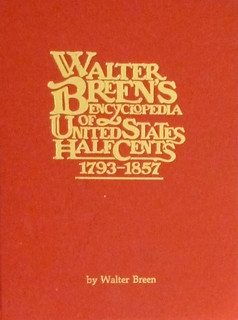
Walter Breen's Encyclopedia of United States Half Cents 1793-1857 was published in 1983 by the American Institute of Numismatic Research of South Gate, California. The name of the publisher sounds impressive and this was probably the intent. They even had a classical logo with an Athenian Owl.

The address was 2840 Indiana Avenue in South Gate, California. This was a modest two-bedroom bungalow where Jack Collins lived with his mother. George F. Kolbe described the library.

"The first time I visited his home, there were seven-foot-high stacks of hardbound volumes of Coin World flanking the entrance to his bedroom. One had to turn sideways to enter and, once inside, one tread very carefully. The walls, and most of the windows, were hidden by bookcases and there were stacks of catalogues on the bed. I recall Jack telling me that he had to move the catalogues to the floor before going to bed in the evening and had to put them back in the morning to clear the narrow pathway out."
 The role of a book publisher is to finance the project, edit the manuscript, do layout and art
design, marketing and distribution or hire others to do those activities. Usually, the printing is
contracted out to a professional printer.
The role of a book publisher is to finance the project, edit the manuscript, do layout and art
design, marketing and distribution or hire others to do those activities. Usually, the printing is
contracted out to a professional printer.
Jack Collins was credited as publisher, designer and photographer. The photo on the first page shows Walter Breen sitting at a desk in front of bookshelves with fine bindings and titled "The Master at Study."

The Master at Study. Image courtesy Bill Eckberg
Three pages later there was a half-page biography followed by a full-page portrait of Breen wearing a medallion as a pendant. Was this some well-deserved literary award? No, it was a generic fur trade medal just serving as a photo prop.
Such a glamorized author photo was new in numismatic publishing, and probably remains unique. Collins created a fanciful setting totally unlike the Breen that I remember. I recall that he often dressed in sandals and a tie-died T-shirt. Collins was trying to give Breen a touch of class.
The book was offered in a full-page ad in The Numismatist issue of January 1982. Pre-issue price was $35. Distribution was by M. Meghrig & Sons. Alan Meghrig was one of the editors and part of the production team.
The December 1984 issue had another full-page ad with the price at $60 and the statement, "This is the FIRST VOLUME IN A SERIES of similar encyclopedias scheduled to be authored over the course of the next decade by Walter Breen. Each and every denomination of United States coinage, paper currency and patterns will be meticulously examined with a depth and scope never before attempted!"
Breen went on to produce other references, but they were not published by The American Institute of Numismatic Research.
Roger S. Cohen, Jr.'s second edition of American Half Cents the "Little Half Sisters" was published in 1982 by Wigglesworth & Ghatt Co. of Arlington, Virginia. Roger signed an autograph for me in 1982. If you can't read the picture, it says, "Roger S. Cohen Jr. / Agent for / Samuel B. T. Wigglesworth III / and / H. Garrison Ghatt / 3/12/82." Wigglesworth was his Saint Bernard and Ghatt was his cat.


The first edition of the Cohen book was self-published in 1971 with the Assistance of Ray Munde and Paul Munson. There are 105 numbered pages. The second edition was also self-published but under a fictitious name. This appears to be more whimsy than deception. There was no photo or biography of the author in the book.
The feud between the two authors has been frequently reported and discussed. I was an active member of Early American Coppers (EAC) in the early 1980's. I knew all the players and I saw the half cent community taking up sides over the Breen/Cohen controversies. I believe there were legitimate issues with the quality and originality of the research. I am not conflicted over which was the better publication.
The second edition of the Cohen book had 131 pages. The Breen book had 501 pages of text and thirteen pages of color plates. The Cohen book looked like it was published by a CPA who was counting every cent. The Breen book had photography of the highest quality and lavish photos of the author. This represented the best efforts of Jack Collins who was a perfectionist and would tolerate no less.
Here are excerpts from Bill Eckberg's E-Sylum article last year summarizing the two books and their current utility. -Editor
Breen :
"The first book is Walter Breen's Encyclopedia of United States Half Cents, 1793-1857 by, obviously, Walter Breen. Published in 1983, it has a LOT of information about coinage deliveries and a pretty good emission sequence. Most of the photos are grayscale, but there are color plates of beautiful examples of each year in the back. Also, lots about errors and how they came about. It offers interesting but limited insight on grading. However, some of the information is out of date."
Cohen :
"A mention needs to be made of Roger Cohen's American Half Cents: the Little Half Sisters, published in two editions, the second in 1983. It was the book that popularized half cent collecting. We still collect half cents by Cohen (C) number, although Cohen's emission sequence has been shown to be wrong in several cases. The book is only of historic interest, as all of the books listed above have rendered it obsolete."
To read the earlier E-Sylum articles, see:
BREEN HALF CENT MANUSCRIPT
(https://www.coinbooks.org/esylum_v06n26a15.html)
RECOMMENDED HALF CENT BOOKS
(https://www.coinbooks.org/v28/esylum_v28n28a08.html)
THE BOOK BAZARRE
HERITAGE: MARCH 2026 COLONIAL CURRENCY RESULTS
Heritage Auctions hosted a successful Winter Colonial Currency Showcase Auction, which ended on March 8. Here is the press release. -Garrett
Heritage Auctions' Winter Colonial Currency Showcase Auction, held March 8, delivered a $255,068 total with spirited results across historically resonant emissions from the American Revolution and the decades leading up to it. Featuring well-preserved Colonial Currency and Continental Currency — notes that document early American fiscal policy, wartime finance and anti-counterfeiting ingenuity — the auction drew strong demand for problem-free survivors and visually compelling designs that continue to define the collecting categories of Revolutionary War currency and Colonial paper money.


Continental Currency April 11, 1778 $4 graded PCGS Banknote About Uncirculated 50
Topping the sale was a Continental Currency April 11, 1778 $4 graded PCGS Banknote About Uncirculated 50, which realized $10,980. Authorized by Acts passed at Yorktown (York, Pennsylvania), the April 11, 1778 emission is widely regarded as the scarcest Continental issue, due in part to extensive counterfeiting efforts intended to undermine confidence in the young nation's paper money. The emblematic boar charging a spear, paired with the Latin motto AUT MORS AUT VITA DECORA ("Either death or an honorable life"), encapsulates the era's urgency and resolve; the reverse's nature print and the Hall & Sellers imprint underscore the period's evolving mechanics of printing and authentication.


Pennsylvania June 18, 1764 3d graded PMG Gem Uncirculated 65 EPQ
From Pennsylvania's celebrated Colonial currency tradition comes a Pennsylvania June 18, 1764 3d graded PMG Gem Uncirculated 65 EPQ, which finished at $9,150. Authorized by the Act of May 30, 1764 as part of an emission of £55,000 in legal tender Bills of Credit, the note carries the British coat of arms at left and includes one of early America's most fascinating security features: the colony's name intentionally misspelled as "Pennsilvania," a hidden diagnostic designed to confound would-be counterfeiters. The reverse's typeset layout bears the enduringly popular printer's imprint of "B. Franklin, and D. Hall," making the note a prime intersection of Colonial history, Benjamin Franklin printing, and elite-condition paper money collecting. With a boldly penned signature of T(homas) Wharton, serial number 73220, deep design embossing, full margins, and complete paper originality, the note exemplified the qualities advanced collectors seek in top-grade Colonial issues.


Massachusetts October 16, 1778 3d graded PMG Choice Uncirculated 63
Massachusetts notes engraved and printed by Paul Revere — cornerstones for collectors of Colonial currency and early American engraved paper — also performed well, as was the case with a Massachusetts October 16, 1778 3d graded PMG Choice Uncirculated 63 that realized $5,124. Issued as part of an £8,000 legal tender emission, this denomination features an engaging codfish vignette at upper center, a design element that speaks to the region's maritime identity and the iconography that distinguishes Massachusetts Colonial notes. The engraved face was printed by Revere, while the reverse was produced by Thomas Fleet, a partnership that places the note at the center of Revolutionary-era printing history.


Massachusetts 1779 4s 6d graded PMG About Uncirculated 50 EPQ
Another Revere-related Massachusetts issue, a Massachusetts 1779 4s 6d graded PMG About Uncirculated 50 EPQ, closed at $4,392. Revere engraved and printed the faces of notes from this emission, with a face depicting the sun rising and a reverse portraying the iconic pine tree — imagery that remains among the most recognizable motifs in Colonial paper money. Printed on bright paper with bold design elements, and bearing a dark, clear signature of Thomas Dawes alongside decent margins, the note presented as a repair-free survivor without meaningful impairments, an increasingly important distinction in the market for Revolutionary War currency.


Continental Currency February 17, 1776 $2/3 graded PMG About Uncirculated 55 EPQ
Rounding out the auction's leading results was a Continental Currency February 17, 1776 $2/3 graded PMG About Uncirculated 55 EPQ, which realized $3,294. With wide margins visible on three sides — and the upper left corner showing a small portion of the neighboring note from the original sheet — this example offered collectors both visual appeal and tangible evidence of period production methods. Signed by Thomas Morris, it represented an attractive, historically grounded Continental note from the earliest, most widely collected phases of the Revolutionary era.
Across the Winter Colonial Currency Showcase Auction, collectors demonstrated continuing preference for notes that combine historic relevance, clear eye appeal, and strong technical preservation. The results further underscore the depth of demand for problem-free survivors and high-grade examples — especially those connected to iconic printers and engravers, and those bearing distinctive emblems, mottos, vignettes and diagnostics that reward close study.
Complete results can be found at HA.com/62427.
HERITAGE: MARCH 2026 U.S. COINS SIGNATURE
Heritage Auctions will be hosting their Dallas U.S. Coins Signature sale from March 26-28, highlighted by a 1796/5 BD-1 Half Eagle and an 1825 BD-2 Quarter Eagle. Here is the press release. -Garrett


1825 BD-2 Quarter Eagle, MS66 NGC
A 1796/5 BD-1 Half Eagle, MS64 NGC, once of the famous "Mr. 1796" collection, and an 1825 BD-2 Quarter Eagle, MS66 NGC will be among the top treasures that will cross the block in Heritage's March 26-28 U.S. Coins Signature® Auction.
The 1796/5 BD-1 half eagle is the second-finest example of 1796-dated half eagles, of which the original mintage was estimated by John Dannreuther to be no more than 2,000 pieces, from which he estimated that between just 80 and 100 remain in all grades. The offered example is the finest ever offered at auction, fully two grade points higher than any other example ever offered previously at Heritage.
The 1825 BD-2 quarter eagle is the third-finest example, and the second-finest available to the collecting community. Quarter eagles of the 1821-34 era are dominated by low-mintage issues, as the denomination was not popular in commerce at the time. They were not used by everyday Americans or favored by banks, which usually opted for the larger face value of half eagles, a preference that required half the number of coins. The BD-2 is the most available of the three die marriages, with a surviving estimated population of 80-100 pieces.
"These are among the finest examples anywhere of two exceptionally important coins in the early U.S. gold series," says Todd Imhof, Executive Vice President of Heritage Auctions. "They are spectacular coins that are among several high-value rarities featured in this auction, an event that will be a perfect bridge between our impressive FUN auction in January and the stellar Central States auction that is coming up in the spring."
Also among the treasures to be found in this auction are a trio of shipwreck gold ingots:
A Kellogg & Humbert Gold Ingot from the S.S. Central America, which weighs in at 26.30 troy ounces, has a serial number that is among the highest for the KH-02 mold from the shipwreck. Many Kellogg & Humbert ingots ended up in the melting pot, either at the San Francisco Mint or after being shipped via steamboat to New York banks. The ingots recovered from the S.S. Central America shipwreck provide a detailed look at this prolific firm's assaying practices.


Kellogg & Humbert Gold Ingot
Also from the S.S. Central America comes a Kellogg & Humbert Gold Ingot that is slightly larger, weighing 26.55 ounces. Of the 343 Kellogg & Humbert ingots recovered from the S.S. Central America during the first salvage expedition, 80 were poured from the KH-02 mold, with varying thickness determined by their individual weights. The 343 Kellogg & Humbert ingots bound for New York aboard the ill-fated sidewheel steamship, including the one offered in this auction, likely were intended to be bank deposits, as assayers in California would not have needed to ship gold bars to the Philadelphia Mint for coinage.


A third ingot from the S.S. Central America will be offered when an 18.60-ounce Justh & Hunter Gold Ingot, PCGS Genuine crosses the auction block. Justh & Hunter ingots comprised the second-largest portion of the private assayer gold bars loaded onto the S.S. Central America at Panama, having made the journey from California. A total of 86 Justh & Hunter ingots were later recovered from the shipwreck off the coast of the Carolinas, ranging in weight from 5.24 to 866.18 ounces. The majority of these ingots — 60 — are attributed to the firm's San Francisco office, while the remaining 26 are from Justh & Hunter's Marysville office. This smaller ingot, from the 15.01- to 25.00-ounce weight class, is one of only a few ingots recovered from the S.S. Central America from this mold.


1879 Flowing Hair Stella, PR65 Cameo NGC
Other top attractions include an 1879 Flowing Hair Stella, PR65 Cameo NGC, a beautiful example of one of the most iconic and avidly collected odd-denomination issues in all of American numismatics. Technically, it is a pattern, but the stella has long transcended that category, embraced by collectors of gold coins, patterns, type coins and legendary rarities alike.


1919-D Quarter, MS66 Full Head PCGS
A 1919-D Quarter, MS66 Full Head PCGS is one of nearly two dozen lots in the auction from The Big Sky Collection of Standing Liberty Quarters, Part I. The finest 1919-D quarters typically available to collectors grade MS66 Full Head, and there are only 12 such coins reported at PCGS and NGC combined (one of which is Plus-designated, and only a single PCGS coin is finer in Full Head), making this Registry-grade rarity a remarkable example of this challenging date. It is believed that this example has not been offered to the collecting community since it was offered at Heritage in 2012. This auction marks just the 11th time, and the fourth time in the last decade, that a 1919-D in this grade has been offered at Heritage.


1920-S Indian Ten, MS63 PCGS
A 1920-S Indian Ten, MS63 PCGS is the most elusive ten in Mint State, ranking among the rarest Indian Head tens in all grades combined, and it has been called the rarest date in the series in Mint State grades of MS63 or finer.


1800 Capped Bust Right Half Eagle, MS64 PCGS. CAC
An 1800 Capped Bust Right Half Eagle, MS64 PCGS. CAC is a spectacular Choice example, with only one carrying a higher grade. It is a magnificent example of the BD-4 variety, of which Dannreuther estimates 5,000-7,500 pieces were included in the original mintage. Of those, an estimated 125-175 are believed to have survived in all grades.


1796 Draped Bust Quarter, XF45 NGC
A 1796 Draped Bust Quarter, XF45 NGC is a premier Guide Book variety and a key issue for its denomination and for silver type. The quarter denomination was authorized by the Mint Act of 1793, but no quarters were struck until 1796. Featuring Robert Scot's Draped Bust design and Small Eagle reverse, the 1796 quarter is among the three final Federal denominations introduced during the year. The 1796 quarter is notable in part because denomination appears on either side. The 1796 Draped Bust design exists as the only 1700s-dated representative of the quarter dollar series and serves as a one-year-only type coin.
Charles Collection
The 85 lots in this collection are all gold, except for a single vibrantly colorful copper pattern, an 1865 Judd-441 Three Dollar, PR63 Brown PCGS. Other top offerings from the collection include, but are not limited to:


Stoebner Family Collection
This assemblage includes 125 lots, a remarkable trove that John Stoebner started in 2019 as a pre-retirement hobby, thanks to the inspiration he took from his brother Donald, who had been a coin collector for most of his life, dating back to the 1950s. Donald Stoebner assembled one of the finest collections of early-date large cents from 1793 to 1814, including several rare Sheldon varieties; his collection was sold at Heritage's 2019 Long Beach auction. John began his silver dollar collection with an example of every Carson City Morgan dollar before expanding his search to include major varieties of both Morgan and Peace dollars. By the time he retired, his 117-coin Morgan dollar collection ranked No. 11 among PCGS Registry Sets of Morgan Dollars with Major Varieties; it now ranks as the No. 27-rated set of all time.
Top offerings in the auction from the Stoebner Family Collection include, but are not limited to:


Lester D. Taylor Collection
Taylor assembled one of the most comprehensive collections of Prooflike Morgan silver dollars, and he recently condensed more than four decades of research into his latest book, Prooflike Morgan Silver Dollars. Highlights of his collection offered in this auction include, but are not limited to:


1904-S Morgan Dollar, MS63 NGC


1904-S Morgan Dollar, MS63 NGC


1903-S Morgan Dollar, MS62 NGC
Zeus Collection
The core of this fine branch-mint silver dollar collection is primarily made up of Morgan dollars from the mints in New Orleans, San Francisco and Carson City. Among the top offerings from the collection:


1895-S Morgan Dollar, MS64 PCGS. VAM-4. CAC


Images and information about all lots in the auction can be found at HA.com/1391.

STACK'S BOWERS: MARCH 2026 MANHATTAN SALE
Stack's Bowers will be hosting their Manhattan Sale of Ancient & World Coins on March 26. Select items are discussed below. -Garrett

DENMARK. 2 Speciedaler, 1747. Copenhagen Mint. Frederik V. NGC MS-65?. KM-563; Dav-1298; Hede-26; Sieg-17; Schou-11. Weight: 57.80 gms. Mintmaster: Ingeborg Maria Wineke. Engraver: Magnus Gustavus Arbien (A). A wonderful Gem with all the qualities of a true gemstone with multicolored flashes of beauty practically leaping from the superlatively lustrous surfaces; a scarce and impressive Double Taler in an unparalleled condition that is bound to excite competition.
Although this type is often referred to as a coronation type, this is incorrect; following the introduction of absolute monarchy in 1660, Danish kings were not crowned, based on the principle that only God could crown the King. Instead, this type was struck to commemorate the King's anointing, which took place in the Chapel of Frederiksborg Castle on September 4, 1747.
To read the complete item description, see:
DENMARK. 2 Speciedaler, 1747. Copenhagen Mint. Frederik V. NGC MS-65?.
(https://auctions.stacksbowers.com/lots/view/3-1QTSIT/-denmark-2-speciedaler-1747-copenhagen-mint-frederik-v-ngc-ms-65)

GERMANY. Bavaria. Gold 20 Mark Pattern, 1914-D. Munich Mint. Ludwig III. PCGS SPECIMEN-67. Sch-202/G2. EXTREMELY RARE in gold, this pattern issue has survived in absolutely stunning quality, with surfaces that are not only bursting with exceptional brilliance, but also present a charming cameo affect, pairing expertly frosted design motifs with highly gleaming fields. Not surprisingly, the single finest example of this issue certified by PCGS or NGC, and considering its near-flawless appearance, likely the single finest extant of this issue in gold.
To read the complete item description, see:
GERMANY. Bavaria. Gold 20 Mark Pattern, 1914-D. Munich Mint. Ludwig III. PCGS SPECIMEN-67.
(https://auctions.stacksbowers.com/lots/view/3-1QTTEV/germany-bavaria-gold-20-mark-pattern-1914-d-munich-mint-ludwig-iii-pcgs-specimen-67)

GREAT BRITAIN. Penny, ND (1135-45). Nottingham Mint; Swein, moneyer. Stephen. PCGS AU-50. S-1286. Legends on both sides erased from the dies. Sharply struck centers display full details to Stephen's portrait and reverse cross moline. Just a trace of wear, this is a particularly high grade and very attractive example of this rarity.
Ex: Richard Plant Collection; Classical Numismatic Group (2021); The John P. Burnham Collection.
To read the complete item description, see:
GREAT BRITAIN. Penny, ND (1135-45). Nottingham Mint; Swein, moneyer. Stephen. PCGS AU-50.
(https://auctions.stacksbowers.com/lots/view/3-1QTTYT/great-britain-penny-nd-1135-45-nottingham-mint-swein-moneyer-stephen-pcgs-au-50)

GREAT BRITAIN. George III/Board of Agriculture Gold Award Medal, 1815. London Mint. PCGS SPECIMEN-61. BHM-Unlisted; Eimer-853. By C. H. Kuechler. Diameter: 48mm; Weight: 97.04 gms. Engraved and awarded to Charles Duncombe, Esq. Obverse: Laureate head of George III right; scroll below; all within wreath of laurel branches and grain ears; Reverse: Female personification standing right, holding serpent-entwined spade and mirror; pastoral scene in background with farm implements. A VERY RARE and exceedingly impressive large-sized gold award medal, this specimen was presented to the awarded by vote on 17 March 1815. Highly lustrous and prooflike, with an engaging cameo nature.
Ex: Stack's (4/1989) Lot # 406; The John P. Burnham Collection.
To read the complete item description, see:
GREAT BRITAIN. George III/Board of Agriculture Gold Award Medal, 1815. London Mint. PCGS SPECIMEN-61.
(https://auctions.stacksbowers.com/lots/view/3-1QTV4H/great-britain-george-iiiboard-of-agriculture-gold-award-medal-1815-london-mint-pcgs-specimen-61)
GREAT BRITAIN. Gold Ducat (100 Pence) Pattern, 1867. London Mint. NGC PROOF-66? Ultra Cameo. KM-PnH115; W&R-388 (R4). By L.C. Wyon. A true marvel to behold, this pattern Ducat sits at the summit of desirability for many reasons. Not only is it EXTREMELY RARE with a mintage estimate below 20 (and the only example certified with the Ultra Cameo designation!), but its quality is very likely unsurpassed as well. Add to that that it's a pattern for an exceptionally popular denomination that was never used by Great Britain and was issued during the reign of one of the most beloved monarchs in European history, and you reach a level of desirability that is almost never matched. As far as its presentation, it is truly world-class, with exquisite definition and refinement through the designs and consistent reflectivity in the fields that imparts a sublime gleam when rotated beneath a light. Faint traces of tone attest to the originality. Overall, a monumental item in all regards, and one that could certainly sit as the capstone of an elite collection of British coins, ducats, or gold types.
Struck in response to the first International Monetary Conference that was held in Paris in 1867 with hopeful intent of uniting currencies throughout much of Europe and beyond on a single gold standard. Participants included Austria, Baden. Bavaria, Belgium, Denmark, Greece, France, Italy, the Netherlands, the Ottoman Empire, Portugal, Prussia, Russia, Spain, Sweden, Switzerland, the United Kingdom, the United States and Wurttemberg. While the initial takeaways of the conference were positive, the obstacles of integration ultimately became insurmountable.
To read the complete item description, see:
GREAT BRITAIN. Gold Ducat (100 Pence) Pattern, 1867. London Mint. NGC PROOF-66? Ultra Cameo.
(https://auctions.stacksbowers.com/lots/view/3-1QTV9A/great-britain-gold-ducat-100-pence-pattern-1867-london-mint-ngc-proof-66-ultra-cameo)

IRELAND. Dublin. Trinity College Gold Award Medal, 1909. PCGS SPECIMEN-65. cf. MI-158/138 (for an earlier version of the award); cf. Eimer-1453A (same). By West & Son. Weight: 31.05 gms. Engraved and awarded to Richard Cussen for ethics and logic. Obverse: Crowned and mantled bust of Elizabeth I facing slightly right, wearing elaborately ruffled collar; Reverse: Coat-of-arms of Trinity College; engraving around, including awardee's Latinized name: RICARDUS C. CUSSEN 1909. Staggeringly attractive and vibrant, this remarkable example do doubt deserves its Gem designation. Includes original box of issue.
The Greystones Collection.
To read the complete item description, see:
IRELAND. Dublin. Trinity College Gold Award Medal, 1909. PCGS SPECIMEN-65.
(https://auctions.stacksbowers.com/lots/view/3-1QTVS7/ireland-dublin-trinity-college-gold-award-medal-1909-pcgs-specimen-65)

ITALY. Sardinia. 5 Lire, 1836-P. Turin Mint. Carlo Alberto. NGC MS-65? Prooflike. Dav-136; KM-130; Pagani-240; Mont-114. NGC TOP POP. Engraver: Giuseppe Ferraris. This exceptional coin of scarcer date has strong, untouched details and a deep-blue patina over a mirrorlike luster - almost like looking into the ocean.
Carlo Alberto was the penultimate king to bear the title, 'King of Jerusalem', a title going back to the Crusades.
To read the complete item description, see:
ITALY. Sardinia. 5 Lire, 1836-P. Turin Mint. Carlo Alberto. NGC MS-65? Prooflike.
(https://auctions.stacksbowers.com/lots/view/3-1QTW6K/-italy-sardinia-5-lire-1836-p-turin-mint-carlo-alberto-ngc-ms-65-prooflike)

POLAND. Danzig. Taler, 1644-GR. Danzig Mint. Ladislaus IV. PCGS EF-45. H-Cz-9727. Struck with 10 Ducat dies. Featuring a wondrous veduta, or city view, of Danzig on the reverse, this lightly circulated crown presents an enchanting wholesome nature with only lightly scattered marks. Some deeper cabinet toning is present nearer the peripheries, allowing for great eye appeal. In addition, it stands as a great and impressive RARITY, on account of its donative aspect and manufacture using 10 Ducat dies rather than those normally used for the Talers. For a type that is certainly lacking from many advanced Polish cabinets, this exalted offering should generate tremendous enthusiasm and interest.
To read the complete item description, see:
POLAND. Danzig. Taler, 1644-GR. Danzig Mint. Ladislaus IV. PCGS EF-45.
(https://auctions.stacksbowers.com/lots/view/3-1QTWMI/poland-danzig-taler-1644-gr-danzig-mint-ladislaus-iv-pcgs-ef-45)

TRANSYLVANIA. Taler, 1595. Nagybanya Mint. Sigismund Bathori. PCGS MS-61. Dav-8804. An ever-popular type, representing one of the most fascinating locations in Europe. Scarce in all grades, but especially so in Mint State, this is the sole MS-61 graded at PCGS, and there are just four graded higher at this service, three in MS-62 and an absolute gem MS-66+ (a remarkable survivor). The presently offered example offers a strong strike, almost mirroring the strength the portrait of Prince Sigismund Bathori presents. A half length armored bust shows the leader holding a scepter on the obverse and crowned arms on the reverse. Soft antique silver surfaces are generally smooth and pleasing for the assigned grade, though we note a scattered mark or two on the obverse. RARE so fine, this is a lovely coin that will take a position of prominence in the next collection it graces.
The year 1595 was a busy one for Sigismund Bathori. Between executing as many members of the Diet as he could get his hands on and pursuing a war against the Turks, it's doubtful he had much time for social activities.
Ex: The Greyhound Collection.
To read the complete item description, see:
TRANSYLVANIA. Taler, 1595. Nagybanya Mint. Sigismund Bathori. PCGS MS-61.
(https://auctions.stacksbowers.com/lots/view/3-1QTXZM/transylvania-taler-1595-nagybanya-mint-sigismund-bathori-pcgs-ms-61)

COINAGE OF PHANES IN DAVISSON'S AUCTION 45
Allan Davisson wrote this overview of the Peter Bartlett Collection, focusing on the coins of Phanes, in his firm's Auction 45, which closes on March 25. Select items are discussed afterwards. -Garrett

The celebrated coins of Phanes are among the earliest of Greek coins, and are the first coins to bear a legend.
The Phanes coinage consists of seven denominations, from a full stater down to 1/96 stater, with some slight variation within denominations (the stag facing in different directions, and sometimes with the addition of a pentagram or a triad of pellets). Only the two largest denominations bear the name of Phanes. The staters carry the legend F????S ??? S??? (or similar) ("I am the badge of Phanes"), and the trites (1/3 staters, such as this one) bear the name F????S ("of Phanes").


Though the punches look rough and random, there is a clear method in how they are applied to the varying denominations, indicating the mint in charge was well-organized and experienced. Fischer-Bossert notes the spots on the stag's coat were recut multiple times during the life of the die.
The Phanes who issued these coins is otherwise unattested in the historical record. Scholars have over time suggested a wide range of possible issuers: a city (Ephesos or Phanai), a temple (the Artemision of Ephesos), the community of a deity (the god Phanes), a leader of mercenaries hired by the Persian king Cambyses (a certain Phanes who is mentioned by Herodotus), and various persons of that name who are not attested in written sources: dynasts, merchants, owners of gold mines, bankers, and officials of various authorities.
The use of a personal name at this early point in the development of coinage suggests responsibility for the issue was personal (whether the issuer was an official or a private individual), rather than collective (the city as a whole).


A hemihekte (1/12 stater) of the issue was found in the famous foundation deposit of the temple of Artemis at Ephesos. It is this find spot, along with the design of the grazing stag (an animal associated with Artemis, and which was used on later issues of Ephesos), that has suggested Ephesos as the mint.
The Peter Bartlett Collection contains five of the seven denominations issued by Phanes, missing only the largest (stater) and smallest (1/96th stater). The first listed here, a trite or 1/3rd stater and the largest of the five, is an example of one of the most rare and historic coins in existence.
(For a summary of the current scholarship see W. Fischer-Bossert. "Phanes: A Die Study" in White Gold: Studies in Early Electrum Coinage. American Numismatic Society. New York. 2020.)
SIEGEL AUCTION GALLERIES OFFERS ENCASED POSTAGE
An extensive collection of U.S. Civil War encased postage stamps is being offered by Robert Siegel Auction Galleries. Here are just a few selections. These were a specialty of mine for many years. One has a connection for numismatic bibliophiles. -Editor

Aerated Bread Co., New York, 1c Blue (EP1). Stamp with fresh color, slight mica wrinkling and lamination at left
VERY FINE. AN EXCEPTIONAL EXAMPLE OF THE VERY RARE AERATED BREAD COMPANY ONE-CENT ENCASED POSTAGE.
The Aerated Bread Co. was located on the corner of Lafayette Place and 4th Street in New York City. The firm was based on the novel "aerated" bread process, but it folded after two years. Aerated Bread Co. produced only two denominations of encased postage -- 1c and 5c -- but the 5c is believed to be unique; therefore, the only practical way to represent this firm is with one of the 11-15 examples of the 1c value.

Ayer's Cathartic Pills, Lowell Mass., 12c Black, Long Arrows (EP6). Stamp well-positioned, some mica faults and small dent in rim nick about eleven o'clock on reverse
VERY FINE. A CHOICE EXAMPLE OF THIS RARE AYER'S 12-CENT "LONG ARROWS" VARIETY
Fewer than ten examples of the Ayer's Cathartic Pill's 12c are reported. The Ford sale catalogue (Stack's 6/23/2004, lot 346) reported as few as two or three of the Long Arrows variety. Ex "Summit" and Drs. Dauer.

G. G. Evans, Philadelphia, 1c Blue (EP84). Stamp with rich color, few mica flaws, otherwise Very Fine and rare, George G. Evans was a Philadelphia publisher, bookseller and, briefly, a marketer of California wines. He also authored the Illustrated History of the United States Mint, published in 1885. Evans ordered 10,000 encased postage stamps for his new business selling California wine, but the crop failure in 1862 brought a swift end to this venture. Evans' encasements are unusual in that the Gault patent line is omitted, which has led some researchers to attribute manufacture to a firm other than Scovill.
To read the complete lot descriptions, see:
https://auction.siegelauctions.com/sale/1373?PageNo=21
2026 CENTRAL STATES SHOW PLANS AND SALE HIGHLIGHTS
The Central States Numismatic Society will be hosting their annual convention from April 22-25, 2026. Here is the press release, discussing exciting speakers at the convention, including U.S. Mint Director Paul Hollis, and more. -Garrett

More than 400 dealers buying and selling, informative exhibits from museums and collectors, a visit by the new director of the United States Mint (https://www.usmint.gov/about/leadership/director), and a thousand free souvenir coins will be among the enticing attractions during the Central States Numismatic Society (www.CSNS.org) 87th Anniversary Convention Coin Show.
The event will be April 23-25, 2026, with PNG Dealer Day and early bird entry on April 22 at the Renaissance Schaumburg Convention Center, 1551 North Thoreau Drive, in the Chicago suburb of Schaumburg, Illinois.
 United States Mint Director and life-long collector Paul Hollis is scheduled to attend on opening day, April 23, and he will be the featured speaker at an educational seminar that day.
"The recently sworn-in 41st United States Mint Director, Paul Hollis, will present at 10:30 AM on Thursday, April 23, as part of the Newman Numismatic Portal Symposium," said NNP Project Coordinator Leonard Augsburger.
Additional speakers on the symposium schedule include Jeff Garrett, editor of A Guide Book of United States Coins; Dr. Ute Wartenberg Kagan, executive director of the American Numismatic Society; and Lawrence Brown, former member and Chair of the Citizens Coinage Advisory Committee. The complete schedule of presenters will be available on the NNP symposium website (www.NNPsymposium.org).
"This year's convention will recognize Missouri as part of a continuing multi-year program to honor all 13 states that comprise the organization's geographical area. We've been encouraging collectors to exhibit Missouri-related numismatic items, and two museums will also have educational displays," said CSNS President Mitch Ernst.
"We will be giving away 1,000 of the 2017-dated Ozark National Scenic Riverways quarters that commemorate the 134 miles of rivers in southeastern Missouri. While supplies last, they'll be available, one per visitor, at the CSNS club tables (A2 and A3). Littleton Coin Company (www.LittletonCoin.com) has graciously donated these 2017 Denver Mint America the Beautiful Quarters® Program coins," said Ernst.
"To add even more excitement to the giveaway, one lucky free coin recipient will receive a 2017 San Francisco Mint silver proof Ozark quarter," he added.

The Higgins Museum of National Bank Notes (www.TheHigginsMuseum.org), located in Okoboji, Iowa, will display examples of uncut sheets of large and small-size National Bank Notes from Missouri.
"We will also exhibit a selection of type notes from the First Charter period of the 1860s through the Small Size Type 1 and Type 2 issues of the 1929-1935 period," explained Museum Curator George Cuhaj.
In addition to Missouri-related items, The Durham Museum (www.DurhamMuseum.org) in Omaha, Nebraska will showcase information and illustrations in conjunction with the 1976-2026 semiquincentennial of the Declaration of Independence, including an image of a September 6, 1799 letter written and signed by Thomas Jefferson. The museum is home to the permanent loan of the famous Byron Reed Collection.

"We will display copies of documents Reed collected related to the signers of the Declaration of Independence, in celebration of the 250th anniversary of the signing. Reed is most well-known for his coin collection, but he also collected books and manuscripts, with a keen interest in autographs. He aimed to collect signatures from all singers of the Declaration, presidents, and Civil War generals," said Museum Collection Manager Kristen Rowley.
Specially crafted tokens depicting the linking rings of the famous 1776 Continental Currency dollar on one side and the St. Louis arch on the other side will be available for sale while supplies last. The designs symbolize the USA's semiquincentennial of independence and Missouri as this year's CSNS convention theme. The tokens will be struck on a rolling mill at the show by engraver Joe Paonessa of The Root River Mint in Racine, Wisconsin.
Heritage Auctions (www.HA.com) (booth #800) will conduct an auction featuring U.S. coins and banknotes as well as world and ancient coins.
"Heritage Auctions is honored to serve as the Official Auctioneer of the 2026 Central States Numismatic Society convention, a marquee event on the numismatic calendar. Our partnership with CSNS spans more than three decades, producing unprecedented price records and bidder participation in recent years, helping cement Heritage's status as the premier auctioneer of coins and currency, from the United States and around the world," stated Heritage President Greg Rohan.
"This year's auctions will include several landmark collections, including The Presidio Collection, Part II, The Alamo Collection of U.S. Colonial Issues, The Vila Rica Collection of Brazilian Gold Coins, Part I, The Charles River Collection of Massachusetts Obsolete Banknotes, and The Westchester Collection of high-denomination Federal Reserve Notes," explained Rohan.
Among the many highlights will be:
U.S. coins
- 1933 Indian Eagle, MS65 PCGS CAC
- 1879 Coiled Hair Stella, PR67 Cameo NGC
- 1880 Coiled Hair Stella, PR62 NGC
U.S. currency
- Serial Number 1 Denver, CO (Territory) - $20 Original Fr. 426 The First National Bank Ch. # 1016. PMG Very Fine 25
- T1 $1,000 1861 PMG Choice About Unc 58 EPQ
- Pittsburgh, PA - $50 1875 Fr. 446 The Union National Bank Ch. # 705 PMG Choice Extremely Fine 45
World & ancient coins


Pernambuco. Dutch Colony - Geoctroyeede West-Indische Compagnie (GWC) gold Klippe 12 Guilders (Florins) 1646 MS61 NGC
The Professional Numismatists Guild (www.PNGdealers.org) will host PNG Dealer Day, a dealer-only event, on Wednesday, April 22, 2026. It will be open to all PNG and CSNS member-dealers. Admission is free for PNG members, and $100 for non-member dealers. Dealers who do not have tables at the show must show proof of their tax identification number to purchase admission for PNG Dealer Day.
Early bird admission passes for the late afternoon of April 22 and early admission on April 23-25 will be available for $150.
General admission to the convention during public hours, April 23-25, is only $15 per day or $30 for a three-day pass. CSNS members and visitors 17 and under are admitted free. Visitors can save time and get a $5 discount by ordering their admission tickets in advance online at www.CSNS.org/events/87th-anniversary-convention-coin-show.
Additional information about the CSNS 87th annual convention will be announced in the coming weeks and posted online at www.CSNS.org/convention. Information is also available by contacting Convention Manager Wibker by phone at 407-221-8737 or by email at convention@CSNS.org.

LORD ASHCROFT MEDAL COLLECTION FINDS NEW HOME
For some time now we've been following the dust-up over the eviction of Lord Ashcroft's massive exhibit of Victoria Cross and George Cross medals from the Imperial War Museum in London. As hoped and expected, the collection now has a new home - here's an excerpt from the press release published yesterday. -Editor

Lord Ashcroft's collection of Victoria Crosses and George Crosses is to have a new home at the National Army Museum in London.
The collection is the largest of its kind in the world. It has been built up by Lord Ashcroft over the past 40 years and includes nearly 250 VCs and a smaller number of GCs. It was previously housed at the Imperial War Museum, London, which closed the Lord Ashcroft Gallery in September last year after 15 years.
Lord Ashcroft spoke today of his delight at the news: "I am thrilled to have found such a superb location for this unique collection of gallantry medals. I am so pleased that these VCs and GCs, spanning many major wars and conflicts of the past two centuries, will now be enjoyed by the public once again.
 "The National Army Museum shares my passion for the decorations themselves and also to tell the incredible stories of bravery that go with them. I look forward to a long and happy partnership with the Museum for many years to come."
Justin Maciejewski, the Director of the National Army Museum, said: "We are honoured to be entrusted with these VCs and GCs from the Lord Ashcroft Medal Collection. We are grateful to Lord Ashcroft for his continued generosity and commitment in championing these stories of extraordinary courage.
"The National Army Museum shares the history and heritage of our soldiers across the globe and down the centuries. Within that wider narrative, these medals, and the individual acts of extraordinary bravery and valour they represent, form a powerful part of the Army's story."
Chris Finney, a Trustee of the National Army Museum and the Chair of the VC and GC Association, said: "This rare and expansive collection spans centuries of military service, sacrifice, and extraordinary bravery across the Armed Forces.
"We are privileged to be given the opportunity to share these medals—and the inspiring personal stories they represent—with visitors, and online for the wider public, where they can continue to inspire people of all ages for generations to come."
Lord Ashcroft began his collection of VCs in 1986 with the purchase of a single medal group at auction. The VC, instituted by Queen Victoria in 1856, is Britain and the Commonwealth's most prestigious decoration for valour in the presence of the enemy. The GC, created by George VI in 1940, is Britain and the Commonwealth's most prestigious decoration for gallantry not in the presence of the enemy and it has been awarded to several civilians for acts of valour.
Lord Ashcroft's VCs and GCs are part of the wider Lord Ashcroft Medal Collection, which includes Special Forces decorations and medals for valour in the skies and at sea. Lord Ashcroft's long passion for gallantry awards was initially inspired by his late father, Eric, who as a young officer took part in the D-Day Landings on June 6 1944.
Following the closure of the previous gallery, Lord Ashcroft has made his collection accessible digitally through his website. This new partnership with the National Army Museum will allow the public to visit the collection and be inspired by the remarkable stories they represent.
The VC and GC collection will go on display at the National Army Museum within the next two years. In the meantime, from July onwards some of Lord Ashcroft's medals will go on display at the museum, including pop-up exhibitions.
To read the complete press release, see:
Lord Ashcroft's VCs and GCs to have a new home at the National Army Museum
(https://www.prnewswire.com/in/news-releases/lord-ashcrofts-vcs-and-gcs-to-have-a-new-home-at-the-national-army-museum-302712679.html)
See also:
Michael Ashcroft: Collection of Victoria Crosses and George Crosses to be displayed at National Army Museum
(https://tradersunion.com/news/billionaires/show/1697287-ashcroft-medal-collection-display/)
The Lord Ashcroft Medal Collection
(https://lordashcroftmedalcollection.com/)
SS CENTRAL AMERICA LEADER TOMMY THOMPSON FREED
The biggest news to hit the wires this week was the release from jail of Tommy Thompson, the leader of the SS Central America shipwreck recovery who'd been held on contempt of court charges over the disappearance of 500 medals made from gold recovered from the ship. I first saw the news in this Associated Press article. The story was picked up many media outlets around the world. See the links below for more coverage. -Editor
 A former deep-sea treasure hunter who made one of the greatest shipwreck discoveries in American history and spent the past decade in prison after refusing to disclose the whereabouts of some of its missing gold coins is now free, federal records show.
Tommy Thompson, who in 1988 located what was known as the Ship of Gold off the coast of South Carolina, was released last Wednesday, according to federal Bureau of Prisons records reviewed by The Associated Press.
Thompson, an Ohio-born research scientist, was hailed as a hero after finding the S.S. Central America and its thousands of pounds of sunken treasure that sat at the bottom of the Atlantic Ocean for more than 150 years.
But in the decades that followed, he battled with investors who accused him of cheating them out of millions and then spent years on the run as a fugitive before being sent to prison over rebuffing court orders while contending he didn't know what happened to 500 coins minted from the ship's gold.
The Central America was filled with a big haul from the California Gold Rush when it sank in a hurricane in 1857. Four hundred and twenty-five people drowned, and thousands of pounds of gold were lost, contributing to an economic panic.
Investors who backed Thompson's venture sued him in 2005, saying they had yet to receive any money from the $50 million sale of more than 500 gold bars and thousands of coins — just part of the ship's booty.
Thompson, who was living in Florida, went into seclusion and then later became a fugitive when an Ohio federal judge issued a warrant for his arrest in 2012 after he failed to show up in court.
Authorities tracked Thompson to a Florida hotel three years later. The judge then held him in contempt and sent Thompson to prison at the end of 2015 for refusing to answer questions about the location of missing coins.

The SS Central America saga is one that never seems to end.
Coincidentally, this week brought me a package from Adam Crum's Finest Known containing a nice Liberty Seated dime recovered from the wreck, along with some related books. I'm really happy with my purchase. I'll discuss this more in my Numismatic Diary next week.
Back to the article - Dwight Manley of the California Gold Marketing Group was quoted on Thompson's unusually long prison stay. -Editor
Dwight Manley, a California coin dealer who bought and sold nearly the entire fortune, said Monday that Thompson paid a heavy price over what he said amounted to a business dispute.
"Going to prison for 10 years over a business dispute is not America," Manley said. "People kill people and get out in half the time."
Sentences in civil contempt cases are somewhat indefinite, but they shouldn't go on forever, said Ryan Scott, a University of Florida law professor who researches contempt law and worked to secure Thompson's release.
"It's very unusual to go on 10 years," Scott said.
Thanks to Len Augsburger, Dick Hanscom, Aaron Oppenheim, Arthur Shippee, and others for passing the story along.
So where is Thompson now? FWIW, the missing medals (containing 1,250 oz of gold, worth over $6M today) look like this: -Editor


1855 Kellogg & Co. $50 Commemorative Restrike
To read the complete article, see:
Ship of gold treasure hunter released from prison, but 500 gold coins remain unaccounted for
(https://www.msn.com/en-us/news/crime/ship-of-gold-treasure-hunter-released-from-prison-but-500-gold-coins-remain-unaccounted-for/ar-AA1XUMuY)
See also:
Treasure hunter who refused to disclose location of shipwreck's 500 gold coins is released from prison after a decade
(https://www.cbsnews.com/news/tommy-thompson-treasure-hunter-ship-of-gold-missing-coins-released-prison/)
Treasure hunter is RELEASED from prison after refusing to share location of 500 gold coins
(https://www.dailymail.co.uk/news/article-15632985/Treasure-hunter-RELEASED-prison-refusing-location-500-gold-coins.html)
Treasure Hunter Released From Prison After Refusing to Turn Over Gold Coins
(https://www.nytimes.com/2026/03/12/us/tommy-thompson-jail-released-gold-coins.html)
Treasure hunter freed from prison after 10 years but location of gold coins still unknown
(https://www.theguardian.com/us-news/2026/mar/15/treasure-hunter-gold-coins-shipwreck)
Tommy Thompson's 10-year imprisonment exposed a flawed legal system | Column
(https://www.tampabay.com/viewpoints/2026/03/12/tommy-thompsons-10-year-imprisonment-exposed-flawed-legal-system-column/)
Treasure hunter freed from jail after refusing to turn over shipwreck gold
(https://www.bbc.com/news/articles/cg4g7kn99q3o)
Ohio treasure hunter Tommy Thompson released from prison, still mum on gold
(https://www.dispatch.com/story/news/local/2026/03/10/tommy-thompson-ohio-treasure-hunter-prison-release/89089008007/)
To read the earlier E-Sylum article, see:
BOB EVANS ON THE DISPOSITION OF THE S.S. CENTRAL AMERICA TREASURE
(https://www.coinbooks.org/esylum_v16n16a32.html)
RUTHWELL: THE BIRTHPLACE OF BANKING
In the leave-it-to-a-thrifty-Scotsman department, here's a story about the world's first savings bank. Found via News & Notes from the Society of Paper Money Collectors (Volume XI, Number 37, February 24, 2026). -Editor
 Tucked away in the village of Ruthwell, Scotland, lies an unassuming cottage that holds a monumental place in history. This is the Henry Duncan Savings Banks Museum, the birthplace of a concept that revolutionised the lives of ordinary people around the world – the savings bank.
While the name Henry Duncan might not be familiar to everyone, his impact resonates to this very day. This remarkable 19th-century minister, writer, and social reformer didn't simply preach about helping the poor – he created a system to empower them. In 1810, Duncan established the world's first savings bank for his parishioners, encouraging them to save small amounts for future security. His idea was a spark that lit a global fire, leading to the establishment of countless savings banks worldwide and transforming the way people managed their finances.
Stepping inside the museum is like traveling back in time, where you can witness the humble beginnings of a revolutionary idea. See the ledgers documenting those first modest deposits and imagine the hopes and dreams they represented. Learn about Duncan's multifaceted life – a man of faith, science, and art, whose influence extended far beyond finance. You'll see his geological discoveries, admire his artwork, and even get the chance to make your own mark.
The Henry Duncan Savings Banks Museum isn't just about history; it's a testament to the power of one person's vision. Whether you're a finance buff, a history lover, or simply curious about the seeds of change, this little museum offers an unexpectedly rich, thought-provoking, and hands-on experience.

Of course, there are other much older banks such as the Bank of England, founded in 1694, but these serviced wealthy merchants, landowners and governments. Savings banks were for the rest of us. -Editor
To read the complete article, see:
A hidden gem in Ruthwell: The birthplace of banking
(https://www.thewestmorlandgazette.co.uk/news/25878924.hidden-gem-ruthwell-birthplace-banking/)
LOOSE CHANGE: MARCH 15, 2026
Here are some additional items in the media this week that may be of interest. -Editor
Roger Burdette published an article on CoinWeek about Philadelphia Mint Superintendent A. Loudon Snowden. Here's an excerpt - see the complete article online. -Editor
 Archibald Loudon Snowden stood at the center of American coinage for nearly three decades. He mastered Mint operations. He modernized production. And in 1885, he chose principle over power.
His resignation as Superintendent of the Philadelphia Mint marked a decisive moment in U.S. Mint history. The letter reproduced below, discovered in National Archives records in 2026, provides rare insight into the politics of the Mint Bureau during the Cleveland administration. As far as the author is aware, this letter has never before been published.
Archibald Loudon Snowden began his Mint career on May 7, 1857, when he received appointment as Register of Deposits in the Treasurer's Office at the Philadelphia Mint.
He was the nephew of former Mint Director James Ross Snowden and had graduated from Jefferson College the previous year.
He worked alongside future Mint leaders and technical experts, including Henry R. Linderman, Robert Patterson, Die Forger George Eckfeldt, Assayer Fred Eckfeldt, William Steele, Engraver James Longacre, Assistant Engraver Anthony Paquet, and Machinist Robert Jefferson. These associations shaped his technical foundation and administrative skill.
When the Civil War erupted in 1861, Snowden left the Mint to organize a Pennsylvania volunteer regiment. He succeeded and was elected Lieutenant Colonel by the men. However, once federal authorities mustered the regiment into service, officials divided the companies among established units. Snowden received no command.
Mint Director James Pollock soon invited him back to Philadelphia. Snowden returned carrying the honorary title "Colonel," which remained attached to his name thereafter.
To read the complete article, see:
Superintendent Snowden's 1885 Resignation
(https://coinweek.com/superintendent-snowdens-1885-resignation/)
Eric Brothers published a Greysheet article on the 1870-S Seated Liberty half dollar. Here's an excerpt - see the complete article online. -Editor

There are coins that collectors, coin dealers, and numismatic authors know to be rare. Such coins are featured in books, magazine and website articles, and at dealers' booths at coin shows both big and small.
On the other hand, there are coins that have no business being rare, based on their substantial mintages. Collectors, for the most part, are not familiar with such coins. Even dealers are not always aware of the rarity of these issues. Additionally, numismatic authors can be baffled by rare coins that have no business being rare. Among such coins is the 1870-S Seated Liberty half dollar.
In this article, we shall briefly analyze one coin that is rare: the 1870-CC Seated Liberty half dollar (mintage 54,617); and discuss in-depth one that has no business being rare: the 1870-S Seated Liberty half dollar (mintage 1,004,000). How many survivors are there of those coins? Carson City specialist Rusty Goe has determined that there are 145–165 pieces today of the 1870-CC, while Coin World puts the figure at around 200. There is no source that has estimated the survival rate of the 1870-S half dollar. And why should they—with its mintage of 1,004,000?
But here's the rub. We discover something interesting when examining the population reports of PCGS and NGC. In total, the grading services have authenticated and graded 302 examples of the 1870-CC half dollar. However, examining the 1870-S half dollar, we see that the services have graded 296 of them. There are six more graded examples of the 1870-CC than the 1870-S. So, a coin with over 18 times the mintage has less graded pieces than an issue that Ron Guth writes (in PCGS Coinfacts), "the 1870-CC Half Dollar is one of the toughest of all the dates" of the Carson City half dollar series, and that "it remains a great rarity today."
To read the complete article, see:
A Rare Coin that has No Business Being Rare
(https://www.greysheet.com/news/story/a-rare-coin-that-has-no-business-being-rare)
In an email to customers, Bruun Rasmussen highlighted three gold medals honoring the influential 16th-century Denmark woman Birgitte Gøye. -Editor


1557 Gold Bracteate of Herluf Trolle and Birgitte Gøye
At Bruun Rasmussen, we are currently focusing on "Fantastic Women" in the world of art. In numismatics, too, one finds significant women – among them Birgitte Gøye. In the Danish Ministry of Culture's new report "More Women in Art in Public Spaces," she is included on the list of 100 Danish women who deserve a statue — and with good reason.
Birgitte Gøye was one of the wealthiest and most influential women during a turbulent period in 16th-century Denmark. Together with her husband, the naval hero Herluf Trolle, she founded the school Herlufsholm and became its first headmistress.
Her home served as a natural gathering place for Danish noblewomen, whom she educated according to her steadfast worldview — Christian humanism.
Birgitte Gøye's motto was "Fear God and do right," and these words, along with her initials, were immortalized on gold medals that today exist in only a few specimens, but which can now be purchased at auction.
To read the complete lot descriptions, see:
https://bruun-rasmussen.dk/m/collections/BirgitteGoye?status=sold&utm_campaign=Coins_2611_BirgitteG%C3%B8ye_EN_15032026
Not sure what all is going on here, but interesting... -Editor

A senior general of Hungary's National Tax and Customs Administration (NAV) was reportedly found dead after attending an exclusive celebration on the same night authorities seized a Ukrainian cash-transport convoy, which he was a key figure of, according to investigative journalist Szabolcs Panyi.
The event was held at the Zselicvölgy Leisure Farm and reportedly had an exclusive guest list of more than one hundred invitees. Around eighty people are said to have attended, including senior NAV officials, generals, state secretaries and at least one member of parliament from the ruling Fidesz party.
Security cameras reportedly captured the deceased general shortly before midnight. His body was later recovered from a lake on the property, and reports say head injuries were found. Sources cited by the journalist claim authorities consider the incident a tragic accident following a night of celebrations, with no other explanations currently under consideration.
In case you missed the operation: Ukrainian bank staff detained in Hungary, Kyiv alleges "hostage-taking", Budapest launches money-laundering probe. The Ukrainian bank demands return of millions of dollars, euros and gold seized by Hungary. Also, there's a huge controversy regarding the cash convoy, since Orbán ally's firm transported billions to Ukraine for years.
To read the complete article, see:
Senior general found dead in Hungary the same day the Ukrainian cash convoy was seized
(https://dailynewshungary.com/general-found-dead-hungary-ukraine-convoy/)
ABOUT THIS ISSUE: MARCH 15, 2026
As an Official Old Guy (OOG), this week was one of medical appointments, all thankfully uneventful. On Tuesday a surgeon successfully removed a pea-sized spot of facial skin cancer below my left eye. On Thursday afternoon I visited the oral surgeon working on two dental implants, and on Friday I had another colonoscopy and I'm good for another five years there. Tomorrow morning will be a trip to my eye doctor. I'll be happy to get back to a normal work schedule for a while.
Seen on the interwebs: "My insurance plan doesn't cover GLP-1 medication, so my doctor gave me an exercise regimen he guarantees will help me lose weight. I just have to move my head from left to right anytime someone offers me food."
Finally, here are some interesting non-numismatic articles I came across this week. Check out the cool data-driven quizzes to see how rare your qualities and traits are compared to the rest of humanity. And... would you distract a 1,500 pound bull while wearing clown makeup? That's probably rare and likely getting rarer by the hour...

How Rare Are You? (https://www.howrareami.org/)
New 3D images show wreck of USS Monitor, iconic Civil War ship that sank in 1862 (https://www.cbsnews.com/news/shipwreck-3d-images-uss-monitor-civil-war/)
Man Finds Ancestor's Freedom Papers While Cleaning Out His Mom's Home. Discovery Called 'Treasure' by Expert (https://people.com/man-finds-ancestors-freedom-papers-while-cleaning-mothers-home-11917504)
Philogelos: The World's Oldest Surviving Joke Book from Ancient Greece (https://greekreporter.com/2026/03/09/philogelos-ancient-greece-joke-book/)
Ornamental Hermits Were 18th-Century England's Must-Have Garden Accessory (https://www.smithsonianmag.com/history/ornamental-hermits-were-18th-century-englands-must-have-garden-accessory-180982469/)
Big Optimism: Who you gonna call? Or, "The Girl-Less, Cuss-Less Telephone" (https://www.understandably.com/p/big-optimism-who-you-gonna-call)
Sculptor Thaddeus Mosley, who found international fame in his 90s, is dead (https://www.washingtonpost.com/obituaries/2026/03/14/thaddeus-mosley-dead-sculptor/)
The Periodic Table of Cognition (https://kevinkelly.substack.com/p/the-periodic-table-of-cognition)
The Skills That Will Matter When AI Can Do Almost Everything (https://www.singularityweblog.com/human-skills-ai/)
The audacious plan to refill the Great Salt Lake (https://www.nbcnews.com/science/environment/utah-refill-great-salt-lake-us-olympics-2034-rescue-project-rcna261422)
In a clown's shoes: How bull fighters and barrelmen protect cowboys at the Houston rodeo (https://www.houstonpublicmedia.org/articles/events/houston-livestock-show-and-rodeo/2026/03/09/545548/houston-rodeo-cowboys-bull-riding-clown-fighter/)
-Editor


Editor Wayne Homren, Assistant Editor Garrett Ziss
Wayne Homren
Wayne Homren is the founding editor of The E-Sylum and a consultant for the Newman Numismatic Portal. His collecting interests at various times included U.S. Encased Postage Stamps, merchant counterstamps, Pittsburgh Obsolete paper money, Civil War tokens and scrip, Carnegie Hero Medals, charge coins and numismatic literature. He also collects and has given presentations on the work of Money Artist J.S.G. Boggs. In the non-numismatic world he's worked in artificial intelligence, data science, and as a Program Manager for the U.S. Department of Defense.
Garrett Ziss
Garrett Ziss is a numismatic collector and researcher, with a focus on American paper money and early U.S. silver and copper coins. He is also a part-time U.S. coin cataloger for Heritage Auctions. Garrett assists Editor Wayne Homren by editing and formatting a selection of articles and images each week. When he's not engaged in numismatics, Garrett is pursuing a Master's Degree in Quantitative Economics at the University of Pittsburgh.

Contributors Pete Smith and Greg Bennick
Pete Smith
Numismatic researcher and author Pete Smith of Minnesota has written about early American coppers, Vermont coinage, numismatic literature, tokens and medals, the history of the U.S. Mint and much more. Author of American Numismatic Biographies, he contributes original articles to The E-Sylum often highlighting interesting figures in American numismatic history.
Greg Bennick
Greg Bennick (www.gregbennick.com) is a keynote speaker and long time coin collector with a focus on major mint error coins and US counterstamps. He is on the board of both CONECA and TAMS and enjoys having in-depth conversations with prominent numismatists from all areas of the hobby. Have ideas for other interviewees? Contact him anytime on the web or via instagram
@minterrors.


Website host John Nebel and webmaster Bruce Perdue
John Nebel
Numismatist, photographer, and ANS Board member and Fellow John Nebel of Boulder, CO helped the ANA and other clubs like NBS get online in the early days of the internet, hosting websites gratis through his Computer Systems Design Co. To this day he hosts some 50 ANA member club sites along with our
coinbooks.org site, making the club and our E-Sylum archive available to collectors and researchers worldwide.
Bruce Perdue
Encased coinage collector (encasedcoins.info) Bruce Perdue of Aurora, Illinois has been the volunteer NBS webmaster from its early days and works each week to add the latest E-Sylum issue to our archive and send out the email announcement.

|
|
The E-Sylum is an electronic publication of the Numismatic Bibliomania Society Copyright © 1998 - 2026 | |