Visit our NBS Sponsors









About UsThe Numismatic Bibliomania Society is a non-profit association devoted to the study and enjoyment of numismatic literature. For more information please see our web site at coinbooks.org SubscriptionsThose wishing to become new E-Sylum subscribers can go to the following web page
Subscribe
MembershipThere is a membership application available on the web site Membership Application To join, print the application and return it with your check to the address printed on the application. Print/Digital membership is $40 to addresses in the U.S., and $60 elsewhere. A digital-only membership is available for $25. For those without web access, write to: Jeff Dickerson, Treasurer AsylumFor Asylum mailing address changes and other membership questions, contact Jeff at this email address: treasurer@coinbooks.org SubmissionsTo submit items for publication in The E-Sylum, write to the Editor at this address: whomren@gmail.com BUY THE BOOK BEFORE THE COIN |
- WAYNE'S WORDS: THE E-SYLUM AUGUST 2, 2026
- NEW BOOK: HALF A DOLLAR OF HISTORY
- NEW BOOK: GOLD COINS OF ANCIENT ROME, 2ND ED.
- NEW BOOK: ROMAN COIN HOARDS ACROSS FRONTIERS
- NEW BOOK: THE COINAGE OF REIMS
- NEW BOOK: BRITISH CORONATION MEDALS
- ADRIAN PEREZ INTERVIEW, PART ONE
- VIDEO: MURIEL EYMERY JOINS SPINK
- 10,000TH NEBRASKA NATIONAL BANK NOTE RECORDED
- NOTES FROM E-SYLUM READERS: AUGUST 2, 2026
- MARY SAUVAIN NAMED ACEF EXECUTIVE DIRECTOR
- ANA TO RECOGNIZE 2026 HOBBY CONTRIBUTORS
- 1913 LIBERTY HEAD NICKEL PAINTING OFFERED
- U.S. MINT TO DISPLAY 1933 DOUBLE EAGLES
- VOCABULARY TERM: STOCK DESIGN
- ROSA AMERICANA COLONIAL COINS PRICE LIST #29
- HERITAGE: AUGUST 2026 CALIFORNIA FRACTIONAL GOLD
- HERITAGE: AUGUST 2026 GREAT BRITAIN SHOWCASE
- 1715 FLEET SOCIETY: COIN CLUMP
- THE LITTLE CIDER MILL CARDBOARD SCRIP
- INDIA TO TRIAL POLYMER BANKNOTES
- EURO BANKNOTE DESIGN PROPOSALS
- SHOW ME THE TUBMANS
- LOOSE CHANGE: AUGUST 2, 2026
- ABOUT THIS ISSUE: AUGUST 2, 2026
Content presented in The E-Sylum is not necessarily researched or independently fact-checked, and views expressed do not necessarily represent those of the Numismatic Bibliomania Society.
WAYNE'S WORDS: THE E-SYLUM AUGUST 2, 2026
 Thank you for reading The E-Sylum. If you enjoy it, please send me the email addresses of friends you think may enjoy it as well and I'll send them a subscription. Contact me at whomren@gmail.com anytime regarding your subscription, or questions, comments or suggestions about our content.
This week we open with four new books, a new interview and other updates from the Newman Numismatic Portal, notes from readers, and more.
Other topics this week include the Twelve Caesars, Roman coin hoards, British Coronation medals, National Bank Notes, the Anti-Counterfeiting Educational Foundation, stock designs, fixed price and auction offerings, cardboard scrip, and polymer banknotes.
To learn more about the coinage of Reims, Adrian Perez, Muriel Eymery, John Hickman, the Miserable Mill, Mary Sauvain, coin provenance, the Commonwealth Shilling, coin clumps, the Janvier reducing machine, the currency of Ober Ost, coin necklaces, the Drunkard, demonyms and the Year of Madness, read on. Have a great week, everyone!
Wayne Homren
Editor, The E-Sylum

Image of the week
NEW BOOK: HALF A DOLLAR OF HISTORY
A new book on classic U.S. Silver Commemoratives has been announced. -Editor
 A special edition of a new book about silver United States early commemorative coins is now available.
Marcin Rotocki's Half A Dollar of History, subtitled Classic U.S. Silver Commemorative Coins, The Complete Collector's Guide – 50 Types 1892-1954, debuted in late June. The book is available via print-on-demand through Amazon.com in either a paperback or hardback version.
A special edition of a new book about silver United States early commemorative coins is now available.
Marcin Rotocki's Half A Dollar of History, subtitled Classic U.S. Silver Commemorative Coins, The Complete Collector's Guide – 50 Types 1892-1954, debuted in late June. The book is available via print-on-demand through Amazon.com in either a paperback or hardback version.
Rotocki has partnered with numismatic bookseller Jeff Starck in the United States to offer 100 limited edition examples with signed and numbered bookplates. To add to the excitement of the offer, each of the bookplates feature the obverse of one of the 50 types featured in the book.
Sales of the limited-edition book were launched through coin groups on Facebook, and now sales are being opened to readers of The E-Sylum. The books are 272 pages, with full color images provided by Professional Coin Grading Service.
 As of press time Aug. 2, about 89 examples remain available. Collectors may request a certificate with a specific number or a certificate with a specific commemorative coin, but buyers are advised to add backup options as 11 books are already sold (and Starck chose to keep No. 1.)
Rotocki's book is geared to the beginner to intermediate collector of commemorative coins, with each chapter on each program historical background and legislative context, as well as explaining grading and strike characteristics for each issue, and highlighting three different approaches to collecting each type. "If you are a seasoned expert or a veteran commem collector, you likely won't find groundbreaking new discoveries here," Rotocki said. "However, if you are someone who is just looking to start their adventure with commemoratives, or you want a solid, organized reference guide to the history and details of these 50 beautiful designs, I truly believe this book will be a fantastic resource for you." Softcover books are available through Amazon for about $40, with hardcover examples selling for about $60, though Amazon may change the price at varying times.
Here are more details from the Amazon listing. -Editor
Half a Dollar of History is the most comprehensive single-volume guide to the classic U.S. silver commemorative half dollar series (1892–1954). Written from the perspective of a serious collector building the 50-Piece Type Set, it covers every issue in the series — from the Columbian Exposition Half Dollar of 1892 to the final Carver-Washington issues of 1954 — with equal attention to history, design, grading, and strategy.
What you'll find inside
- 50 chapters — one per coin type, each with full historical background, legislative context, and design analysis
- Specification tables for every issue: mintage, designer, physical parameters, market tier
- Grading guides — strike quality, toning characteristics, and the exact weak points to examine on each type
- Set-building strategy across three budget tiers: MS-63, MS-65, and MS-65/66+CAC
- Auction values — MS-65 median prices, April 2026
- Special appendix on the 1925 Norse-American Centennial Medal
- Coin photography courtesy of PCGS
- Glossary of Anglo-American numismatic terminology
The Year of Madness, the Drip Strategy, and the coins that survived both The classic commemorative series is not just a collection of beautiful silver — it is the story of how Congress, dealers, and speculators nearly destroyed collector trust in the 1930s. This book names names: the monopolization schemes, the fictitious anniversaries, the multi-mint drip strategies that created artificial scarcity. Understanding that history is what separates a collector who builds a great set from one who overpays for overgraded coins.
Publisher ? : ? Marcin Rotocki
Publication date ? : ? June 19, 2026
Language ? : ? English
Print length ? : ? 275 pages
ISBN-10 ? : ? 839817952X
ISBN-13 ? : ? 978-8398179522
Item Weight ? : ? 1.06 pounds
Dimensions ? : ? 6 x 0.65 x 9 inches
The limited-edition book retails for $80, and for E-Sylum readers includes free Media Mail shipping. Multiple payment methods are accepted, including Zelle, Venmo, PayPal, USPS money order, check or cashapp. To get payment details and to order the book, email Starck at jeffstarck@hotmail.com, or write to P.O. Box 190214, St. Louis, MO 63119.
For more information, or to order, see:
Half a Dollar of History: Classic U.S. Silver Commemorative Coins — The Complete Collector's Guide · 50 Types · 1892–1954
(https://www.amazon.com/Half-Dollar-History-Commemorative-Collectors/dp/839817952X/ref=sr_1_1)
NEW BOOK: GOLD COINS OF ANCIENT ROME, 2ND ED.
A second edition of Adam Crum's book on gold coins of ancient Rome has been published. -Editor
Adam writes:
"For more than 30 years, I have studied, bought, sold, and researched the greatest gold coins of Ancient Rome. I'm proud to announce that the 2nd Edition of Gold Coins of Ancient Rome: Featuring the Coins of the Twelve Caesars is now available."
Gold Coins of Ancient Rome, 2nd Edition
by Adam J. Crum
$79.00
 The long-awaited Second Edition of Gold Coins of Ancient Rome: Featuring the Coins of the Twelve Caesars is complete and ready to ship
Now expanded to 270+ pages, this edition offers a deeper, sharper look at the gold coinage spanning 49 BC through the Flavian Dynasty (AD 96)—where history, power, and money converge.
What's New Inside
- Comprehensive coverage of key Roman gold issues
- Updated census data and 20 years of market prices realized
- Dozens of newly added coins and high-quality images
- Rich historical context and expert commentary
Ancient Roman coinage remains one of the most overlooked sectors in tangible assets—blending rarity, history, and long-term upside. This is more than a book; it's a gateway into the market.
Commentary by Mark Salzberg, Founder of Certified Collectibles Group
When I first held an ancient coin in my hand, I felt the power it carried in the palm of my hand. That moment stayed with me. Over many years of collecting ancient coins, they have brought me extraordinary joy. Not only have they proven rewarding as investments, but psychologically and intellectually they have surpassed anything else I have ever collected.
As we worked at NGC Ancients to develop a shared language and consistent standards for describing these coins, our goal was to make the ancient coin market more transparent, trustworthy, and accessible for collectors around the world. Certification has helped unlock the vitality of this remarkable field. Today the ancient coin market is more vibrant than ever.
Adam Crum's book is a natural extension of that mission. This book will be the big step in a journey that brings history, discovery, and lasting fulfillment. The ancient world is vast and complex that it can feel almost impossible to fully grasp. Adam has done a wonderful job to make Roman coinage accessible, offering clarity, context, and a pathway into a deeply rewarding pursuit.
Early buyers receive a free replica of the legendary Brutus "Eid Mar" denarius. -Editor


For more information, or to order, see:
2026 Book: Gold Coins of Ancient Rome – 2nd Edition
(https://finestknown.com/product/2026-book-gold-coins-of-ancient-rome-2nd-edition/)

NEW BOOK: ROMAN COIN HOARDS ACROSS FRONTIERS
Oxford University Press has published a new book on the hoarding of Roman coin outside the Roman Empire from c. 30 BC to AD 518 (and later). -Editor
Roman Coin Hoards Across Frontiers
Benjamin D R Hellings (ed.), Marguerite Spoerri Butcher (ed.), Chris Howgego (ed.)
Published: 28 May 2026
Available in print: 26 June 2026
Online ISBN: 9780198986478
Print ISBN: 9780198986447
Publisher: Oxford University Press
 The book presents an introduction and thirteen other chapters on the hoarding of Roman coin outside the Roman Empire from c. 30 bc to ad 518, and later where appropriate. It rests upon data gathered for the Coin Hoards of the Roman Empire Project, which is creating an online database of all known Roman coin hoards for this period.
The introductory chapter draws out the thematic cohesion of the book around the topics of the export, use, and deposition of Roman coin beyond the Empire, while also enhancing awareness of the geographical and chronological disparities in the data, and identifying various proxies for the movement of coin where hoards do not survive.
The later chapters are grouped into four parts. The first contains select studies on some aspects of deposition within the Empire, as to understand what goes on beyond the frontiers, one also needs to grasp behaviour within. The second part presents regional studies from north, central, and eastern Europe, focusing on southern Scandinavia, Germany, and eastern Europe. The third part is devoted to the east, both close to, and far away from, the Empire. The chapters range from the eastern part of the Roman Empire and its adjacent regions, including Caucasian Iberia and Armenia, to India. The fourth part expands explanatory frameworks by looking outside the Roman hoard evidence itself, offering insights from a later period and from metallurgy. A final chapter presents an analysis of the key textual evidence for the export of coin outside the Empire.
For more information, or to order, see:
Roman Coin Hoards Across Frontiers
(https://academic.oup.com/book/62940)
NEW BOOK: THE COINAGE OF REIMS
A new book on the coinage of Reims has been published by Maison Gadoury Numismatique. -Editor
 La monnaie de Reims de la fin du IXe au XIVe siècle
The Coinage of Reims from the Late 9th to the 14th Century
59,00 €
Author: Pierre Crinon
Publisher: Maison Gadoury Numismatique
Year: 2026
Language: fr
A new publication devoted to one of the most fascinating medieval French coinages.
The result of many years of research and observation, this work by Pierre Crinon provides an in-depth study of the coinage of Reims, from the reign of Emperor Charles the Bald (875–877) to the episcopate of Jean de Craon (1355–1374).
A true labour of passion, this typological catalogue brings together and analyses several centuries of coin production in Reims. It offers collectors, researchers and enthusiasts of monetary history an invaluable reference for the identification, classification and study of these often rare and little-known issues.
We are delighted to offer this new title to our customers and to support the publication of high-quality works by dedicated authors, whose research continues to enrich numismatic literature year after year.
For more information, or to order, see:
La monnaie de Reims de la fin du IXe au XIVe siècle
(https://www.gadoury.com/en/books/la-monnaie-de-reims-de-la-fin-du-ixe-au-xive-siecle)

NEW BOOK: BRITISH CORONATION MEDALS
A monograph on Official British Coronation Medals, 1603-1937 by David Schenkman has been published by the Token and Medal Society as a Supplement to the July-August, 2026 TAMS Journal issue. See below for ordering information.
The Supplement is card-covered, printed on glossy 8.5 x 11 paper as with the TAMS Journal. There are 56 pages with multiple images on each page. While these medals have been catalogued elsewhere, this may be the first monograph devoted exclusively to them, with both sides of each medal prominently pictured.
For background, here's is an excerpt from the Introduction. -Editor
 An article titled "The History of
Coronations in the United Kingdom"
on the website of the Royal Mint
informs readers that "For the various
monarchs who have reigned through
out British history, their coronations,
adorned with pomp and pageantry,
have marked the culmination of their
individual journeys to the throne. A
symbolic occasion signaling the official crowning of a new king or queen,
coronations have been a fundamental
part of the British monarchy for more
than a thousand years." And, for a period spanning more than three hundred
years, medals were an integral part of
these historic events.
An article titled "The History of
Coronations in the United Kingdom"
on the website of the Royal Mint
informs readers that "For the various
monarchs who have reigned through
out British history, their coronations,
adorned with pomp and pageantry,
have marked the culmination of their
individual journeys to the throne. A
symbolic occasion signaling the official crowning of a new king or queen,
coronations have been a fundamental
part of the British monarchy for more
than a thousand years." And, for a period spanning more than three hundred
years, medals were an integral part of
these historic events.
The practice of distributing medals at British coronations originated in 1603 with the coronation of James I. A rare medal was issued in 1547 for the coronation of Edward VI, and while neither its purpose nor its manufacturer has been unquestionably established, its 60mm size would have precluded its distribution at the coronation ceremony. Therefore, it is not included here as part of the series of official medals.
The last ceremony for which an official medal was struck was the 1937 coronation of George VI. Numerous medals have been produced for more recent coronations, but they were struck by private mints for various reasons. Therefore they are not considered part of the series of medals cataloged herein.


The earliest medals were between 28 mm and 32 mm in diameter, but by the 1685 coronation the size had increased to between 33 mm and 35 mm. For the three twentieth century coronations, medals were struck in two sizes; approximately 31 mm and 56 mm (or 51 mm in the case of the large 1911 George V medal). Nearly all of the official coronation medals were struck by the Royal Mint.
Space precludes detailed descriptions of the coronation ceremonies or an in-depth discussion of the rulers in this article, and in any event it would be redundant to include them, since numerous accounts can readily be found on the internet. It should be understood that this is not intended to be a detailed catalog of all known varieties of each token, although some varieties have been illustrated. Rather, it will describe and discuss each of the medals that comprise the series.


The exact inscription on each medal is given in capital letters, with lower case lettering used to provide descriptive information. Inscriptions on the medals are in Latin, with the exception of the one struck in 1831 for William IV and the three twentieth century coronations. Following the medal's description, which includes a rough translation of its Latin inscription, the metal(s) it was struck in is given, with the mintage in each metal, when known, in parenthesis. The sizes, which are given in millimeters, are of the medals in my collection, and it should be understood that sizes can vary, so differences of less than one millimeter should not be considered significant.
To order:
TAMS Journal editor Greg Burns writes:
"There are two sources for the purchase. TAMS has a limited stock and Wayne Herndon of Wizard Coin Supply (WCS) also has a few copies for resale."
Ordering from TAMS
TAMS Secretary Donna Moon writes:
"The TAMS price is $20 plus $6 shipping. People that are ordering from me can either email me at this address fun_dmoon@yahoo.com or go to the TAMS website Token and Medals Society (TAMS) using the Contact tab and send me a message with payment being completed using PayPal. Of course, if they need to send a check that would go to the treasurer at this address: Token and Medal Society, PO Box 20196, El Cajon, CA 92001."
Ordering from Wizard Coin Supply
See:
Official British Coronation Medals, 1603-1937
(https://www.wizardcoinsupply.com/official-british-coronation-medals-1603-1937)

ADRIAN PEREZ INTERVIEW, PART ONE
Greg Bennick's latest interview for the Newman Numismatic Portal is with Adrian Perez, Vice President of the Young Numismatists of America Adrian Perez. Here's the first part, where Perez talks about his introduction to the hobby, the Young Numismatists of America, and introduces the Rhode Island School of Design's coin collection.. -Garrett
Vice President of the Young Numismatists of America
An interview for The E-Sylum by Greg Bennick
 Greg Bennick
Hi everybody, it's Greg Bennick. I'm back again with yet another interview in my ongoing series with fascinating, amazing, and accomplished numismatists. These are all, of course, on the Newman Numismatic Portal, and if you like this interview, you can look through and find more of my interviews with other interesting people. Today we have another interesting person: Adrian Perez. Adrian is from Rhode Island, and he is vice president — am I right? — of the Young Numismatists of America.
Adrian Perez
Yes.
Greg Bennick
We met at Summer Seminar, and we'll get into all of that, and then the fascinating work he's been doing. But hey, Adrian — thanks for being here today. I appreciate it.
Adrian Perez
Thank you so much, Greg.
Greg Bennick
Awesome. So, tell me, how did you get your start in coins? Let's start with the bare beginnings.
Adrian Perez
Okay — so, my start in coins. I don't want to say it's a little generic, but I started when my great-grandmother gave me twelve Kennedy silver half dollars when I was about seven years old, and ever since I received those, I've been obsessed with coins. I started researching coins and collecting. I started with American coins, but here's where my story diverges a little bit: in seventh grade I began reading ancient Roman history, and I was just fascinated. Starting then, I began collecting Roman coins, and ever since, I've been huge into ancient numismatics.
Greg Bennick
This is great, and it's going to tie in really well to the work you've been doing, which is why we wanted to do this interview. But first, tell us all about the Young Numismatists of America and your role in the organization.
Adrian Perez
Absolutely. The YNA — the Young Numismatists of America — is a nationwide club for YNs, young numismatists, and it has been a really amazing opportunity. It was actually founded a little over a year ago, in early 2025, and this is our second year running now. I'm the second vice president. Our format is monthly Zoom meetings, usually with fifty to a hundred YNs from all across the country, and we have really prominent numismatists speak to the group and give presentations — we hear from a lot of people from the ANA. It's really a great opportunity, and I love serving in it.
Greg Bennick
I love it. I think one of the coolest things about the coin hobby overall is the support we give to young numismatists. You've heard it all the time — that you are the future — but when fifty or a hundred young numismatists get together, the energy must be awesome: the curiosity, the wonder, the learning. So, you're the vice president. How did that come to be?
Adrian Perez
That's a good question. Like I said, I'm the second vice president, and the YNA has elections every December. This past December, I checked, and there was nobody running for vice president. I had been volunteering a bit with the social media, working with some other YNs on it, and I thought: if I run for vice president, maybe I can make a little task force — a group of YNs to do social media. So I decided to run, and I ran unopposed. Since then, I've hit the ground running. We've been doing social media highlights — features on specific YNs and their projects — and it's been great. I don't want to say I was recruited; the opening was there, and I just ran with it.
Greg Bennick
Great — and taking the initiative like that often has amazing results. Very cool. So let's dive in for a second to your specialty, ancient numismatics. What is it about ancient coins that draws your fascination?
Adrian Perez
Definitely the connection to history. It's amazing, because in modern times our coinage will stay in production for years — we have Washington quarters and Franklin halves and Roosevelt dimes — but in ancient times, coinage evolved with every individual emperor in Roman history. Nowadays it's a huge taboo to put a living, active person on coinage — that's associated with monarchy or absolutism — but in ancient times, every emperor had his own coinage, and the coinage often reflected historical events going on in the same period. That's really fascinating to me; I just love that. And beyond that — it's a piece of metal that's been around for two thousand years, and here I am, just some guy, able to research it and see it. I think that's just amazing.
Greg Bennick
I like how you refer to yourself as just some guy — because as we get into the next question, we're going to find out that you're not just some guy. I'd love for you to tell everybody about the collection at the Rhode Island School of Design — RISD for short. Tell me about the RISD collection, what's in it, and why it's significant.
Adrian Perez
Okay. So, as you mentioned, I'm a Rhode Island native, and the RISD Museum is a local institution — an amazing art museum here in Providence. Unbeknownst to me for a long time, they actually have a very large numismatic collection, and a lot of it is ancient. I was unaware of that until very recently. How I got started with it: at my school we have something called the Center for Experiential Learning. They arrange internships and help students explore their interests. I met with the director there and told him about my passion for numismatics, and he said, "I have the perfect person for you to meet." He knew people at the RISD Museum, so we were able to schedule a meeting. I found out very quickly the huge scale of the coin holdings they have there — and the highlight is definitely 25 ancient Roman and Byzantine gold coins.

Greg Bennick
Is it well known that RISD has this collection? I grew up in Connecticut. I'd heard of RISD; I had friends who went there; I collected coins at the time — and no one ever told me about 25 gold coins in the RISD Museum. Did anybody else know about this, or were you one of the first people to really dive into the collection?
Adrian Perez
I don't have a concrete answer, but from what I've researched and seen — not really, to be honest with you. Until my work, the only way to find these coins was to go on the RISD website and search. And you couldn't search the specific denomination or the ruler or anything — you had to search "coin," and scroll through everything they have there, and eventually you'd get to the Roman coins, because they have American and a lot of Greek coins as well. That was the only way to know they were there, because the last time they were exhibited was 1960 — which is actually the same year they were acquired. So it's been a while. Two years ago, if you'd wanted to find them, you could have done a lot of digging and gotten there, but it was definitely much more niche before this, for sure.
Greg Bennick
Even just having to search the term "coin" is unbelievable. It would be like a band called Music with a song called "Song," and I told you to Google it — how long would it take you to find "Song" by the band Music? You'd scroll for the rest of your life. And if you're scrolling through "coins" in hopes of finding these when they're not well documented, that's practically an impossibility. Tell us about the work you did — but maybe first, tell us what you discovered when you first encountered these coins.
Adrian Perez
Yes. So, as I mentioned, through my school I was able to get a meeting there. The RISD staff are absolutely amazing — I love them. And here I am, just some high schooler, right? "Hi, nice to meet you, I'm Adrian." They took me into the archival room in the back of the museum — this beautiful room, colonial, though it was redone in the '50s — where the archives are kept. It's amazing. In the corner of the room, they pulled out a drawer, and in the drawers were all the Roman coins they have. There are a few dozen, but the main highlight, of course, was those gold coins. I've been researching Roman coins for a long time, and I've always loved Roman history — the late Roman gold coin is called the solidus, solidi in the plural — and here there were about 25 of them. It was like, oh my gosh! This was my first time actually seeing them in person — I would later go to the New York International and see more, but this was my first time seeing them in person, and it was just incredible. For them to allow me to come back and interact with the coins like that was really a great opportunity.
Greg Bennick
After you saw these coins and were overwhelmed, amazed, intrigued, and excited by them — what did you do with them? What was your role? You made it sound like they just picked some high schooler, but they did not. They picked you, and they picked you for a reason — your ability and intelligence about these things. So what did you actually do with the coins?
Adrian Perez
Well, first we weighed the coins and recorded all of that information. From there, they gave me full rein. They said, "Adrian, we'd love for you to document these coins." So that's what I did, for three months. A little context: these coins were donated in 1960 by a Swiss auctioneer, and that same year the museum had an exhibit of them. They gave me access to the original note cards — the physical note cards from when the coins were acquired in 1960 — and a spreadsheet connected to the RISD database, and I went through and entered the emperor, the mint, and so on. The coins span from Roman to Byzantine, so for the Roman coins the identification reference is RIC — Roman Imperial Coinage, which is a book series that's also online — and for the Byzantine coins I used Dumbarton Oaks.
See also:
Rhode Island School of Design Coin Catalogue Spreadsheets
(https://tinyurl.com/perezspreadsheet)
Rhode Island School of Design Coin Collection Links and Descriptions
(https://tinyurl.com/RISDancients)
 About the Interviewer
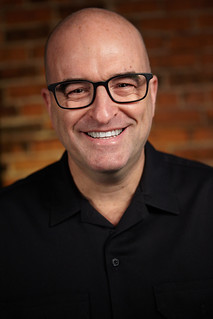
Greg Bennick (www.gregbennick.com) is a keynote speaker and long time coin collector with a focus on major mint error coins and US counterstamps. He is on the board of both CONECA and TAMS and enjoys having in-depth conversations with prominent numismatists from all areas of the hobby. Have ideas for other interviewees? Contact him anytime on the web or via instagram @minterrors. He can also be reached by email at www.gregbennick.com.

VIDEO: MURIEL EYMERY JOINS SPINK
The David Lisot Video Library on the Newman Numismatic Portal can be found at:
https://nnp.wustl.edu/library/multimediadetail/522852
We highlight one of his videos each week in The E-Sylum. Here's one from 2016 with David interviewing Muriel Eymery of Spink. -Editor
One of the most well-known numismatic specialists joins Spink's on London. Speakers: Muriel Eymery, Spink. Interviewer: David Lisot, CoinTelevision.com. Running time: 2:36.
To watch the complete video, see:
Muriel Eymery Joins Spink
(https://youtu.be/F0_LZfXCcdc)
Muriel Eymery Joins Spink
(https://nnp.wustl.edu/library/book/540343)
To read an earlier E-Sylum article, see:
MURIEL ELIZABETH EYMERY (1966-2022)
(https://www.coinbooks.org/v25/esylum_v25n03a10.html)
10,000TH NEBRASKA NATIONAL BANK NOTE RECORDED
National Bank Note researcher Matt Hanson submitted this announcement of a new milestone in recording known examples of Nebraska national bank notes. -Editor
THE NATIONAL BANK NOTE CENSUS
August 1, 2026, marked a significant milestone when the 10,000th Nebraska national bank note was officially entered into the National Currency Foundation's National Bank Note Census (https://nbncensus.com).

Figure 1: Series of 1929 Type 1 $20 note from Charter 2848, The Fremont, National Bank, Fremont, Nebraska. This note was the 10,000th Nebraska national bank note to be reported to the National Bank Note Census. (Image credit: Don Mark, 2026)
That note, pictured here, is a Series of 1929 Type 1 $20 from Charter 2848 The Fremont, National Bank of Fremont, Nebraska. It was spotted at an auction in Red Oak, Iowa, by Don Mark of Adel, Iowa. Don is a member of the board of directors of the Higgins Museum of National Bank Notes in Okoboji, Iowa (https://thehigginsmuseum.org) which opened in 1978 and is "purposed with the acquisition, preservation and display of the notes, related artifacts and pertinent reference materials relating to the National Bank Note issuance era." The Higgins Museum's first curator, John Hickman, was responsible for beginning the systematic gathering of national bank note census data back in the late 1960s. That effort was continued by collector/dealer Don C. Kelly, and is now managed by Andrew Shiva's National Currency Foundation.
 Hickman believed that every national bank note represented a true miracle of
survival and deserved to be treated with respect regardless of condition. When
referring to nationals in particularly poor grades, he is famously remembered to have
said "Halitosis [bad breath] is better than no breath at all!". So it is entirely appropriate
that that the 10,000th Nebraska national bank note to turn up would be one befitting
Hickman's description.
Hickman believed that every national bank note represented a true miracle of
survival and deserved to be treated with respect regardless of condition. When
referring to nationals in particularly poor grades, he is famously remembered to have
said "Halitosis [bad breath] is better than no breath at all!". So it is entirely appropriate
that that the 10,000th Nebraska national bank note to turn up would be one befitting
Hickman's description.
Figure 2: Image of John T. Hickman (1927 – 1995). John is credited with starting to collect the national bank notes census data that eventually became the National Bank Note Census. (Image credit: Peter Huntoon, 1973)
14,348 national banks were chartered in the United States between 1863 and 1935, and 12,631 of them issued national bank notes. The National Bank Note Census actively collects information and images of notes from each of these issuing charters. The total number of national bank notes reported for the entire country currently stands at 483,548 notes; a number that is continuing to grow daily.
For more on Nebraska National Bank Notes, see Matt Hansen's presentation at the 2025 Newman Portal Symposium on the Gerome Walton Collection. -Editor
To watch the complete video, see:
The Gerome Walton Collection of Nebraska National Bank Notes and its Digital Preservation
(https://www.youtube.com/watch?v=_Nyc0w8J4Iw)
The Gerome Walton Collection of Nebraska National Bank Notes and its Digital Preservation
(https://nnp.wustl.edu/library/book/647560)
For more information, see:
The Higgins Museum
(https://thehigginsmuseum.org/)
National Currency Foundation
(http://www.nationalcurrencyfoundation.org/)
National Bank Note Census
(https://nbncensus.com/)

NOTES FROM E-SYLUM READERS: AUGUST 2, 2026
Canadian Numismatic Literature Resources
Eric Jensen writes:
 "I really appreciate you including my interview with Greg Bennick in recent issues of E-Sylum. I enjoyed and appreciated Greg's enthusiasm for Canadian numismatics and exonumia. My main goal in agreeing to do the interview was to promote the J. Douglas Ferguson sponsored Geoffrey Bell Canadian Numismatic Resources – Geoffrey Bell ressources numismatiques canadiennes (
cnr-rnc.ca) website. It is a tremendous resource for Canadian numismatic literature.
"I really appreciate you including my interview with Greg Bennick in recent issues of E-Sylum. I enjoyed and appreciated Greg's enthusiasm for Canadian numismatics and exonumia. My main goal in agreeing to do the interview was to promote the J. Douglas Ferguson sponsored Geoffrey Bell Canadian Numismatic Resources – Geoffrey Bell ressources numismatiques canadiennes (
cnr-rnc.ca) website. It is a tremendous resource for Canadian numismatic literature.
"Other individuals I mentioned in the interview, who also have contributed to the website, are Len Buth (not Booth as previously pointed out) who has his An Alphabetical Listing Of The W.R. McColl 1903 Sales List Of Canadian Medals And Business Cards posted ( https://cnr-rnc.ca/buth-len/) and Ronald Greene (not Green) who has included his British Columbia Database and Yukon Token Database ( https://cnr-rnc.ca/greene-ronald/) as well as articles from his Greene Frogge Press website ( http://greenefrogge.ca/).
"I look forward to receiving and reading each issue of the E-Sylum. A great digital publication."
All great websites - click through and check them out!
We've updated our own website archive to correct the name spellings of Len Buth and Ronald Greene. -Editor
To read the earlier E-Sylum articles, see:
ERIC JENSEN INTERVIEW, PART ONE
(https://www.coinbooks.org/v29/esylum_v29n28a12.html)
ERIC JENSEN INTERVIEW, PART TWO
(https://www.coinbooks.org/v29/esylum_v29n29a12.html)
ERIC JENSEN INTERVIEW, PART THREE
(https://www.coinbooks.org/v29/esylum_v29n30a13.html)
Thoughts on Grading
Bill Eckberg writes:
"Two things in yesterday's edition struck me. First, Justin Hinh's comments on AI grading were spot on. I agree with him that an AI system could probably be trained for technical grading, but that isn't what the market wants anymore.
"Second, I couldn't help but look at the two Draped Bust half dimes in the Heritage sale. One is graded Fine and the other AG details. No question that the one graded AG is damaged, but I can't see much difference in the amount of detail between the two. I am by no means an expert in half dimes, but perhaps someone could enlighten me as to why the large difference in sharpness grade between the two?"
TPG gradeflation upended everything I used to know about grading, so I have no clue. But here are the coin images and grades. -Editor

Fine 12 PCGS

Damaged -- PCGS Genuine. AG Details
To read the earlier E-Sylum articles, see:
JUSTIN HINH ON THE BUSINESS OF COIN GRADING
(https://www.coinbooks.org/v29/esylum_v29n30a15.html)
HERITAGE: JULY 2026 BUST COINAGE SHOWCASE
(https://www.coinbooks.org/v29/esylum_v29n30a17.html)
More on Quantitative Collectors Group
On another grading front, I reached out to Michigan-based entrepreneur Richard Colonna, the Founder and CEO of Quantitative Collectors Group (QCG) for an update. -Editor

Richard writes:
"Yes, we have many updates that your readers may be interested in as we will also be at the ANA show in August, Booth 242.
As for the updates:
1) We will be running another Indiegogo Campaign with the Kickoff August 25 to October 8.
2) Response to our first Campaign was very positive with over 85 orders, 400 people on a waitlist and over 29,000 page views.
3) We plan to ship our first 100 units in December of this year.
4) And, lastly we would encourage your readers to visit our Indiegogo Campaign early as it will be in preview mode August 10, Our campaign offers more insight and pictures on what quantitative coin grading will be bringing to the coin collecting world."
Please understand that QCG is not trying to replace subjective 3rd Party Graders, but rather to provide a calibrated instrument that gives quantitative information about a coin that is currently not available, and is completely transparent and 100% repeatable.
Their table is already on my list, and I hope E-Sylum readers also stop by to learn more about their coin grading technology device. -Editor

To visit the new campaign preview, see:
https://www.indiegogo.com/projects/1052rick/computer-coin-grading-machine
To read the earlier E-Sylum articles, see:
DIGITAL COIN GRADING MICROSCOPE LAUNCHES
(https://www.coinbooks.org/v29/esylum_v29n05a08.html)
MORE ON QUANTITATIVE COLLECTORS GROUP
(https://www.coinbooks.org/v29/esylum_v29n06a17.html)
NOTES FROM E-SYLUM READERS: FEBRUARY 15, 2026 : Quantitative Coin Grading Indiegogo Campaign
(https://www.coinbooks.org/v29/esylum_v29n07a12.html)
Proof Set Prices
Dick Hanscom writes:
"Boycott the mint over the Trump Dollar? There is a better reason. Prices. We have customers that we will disappoint this year because we will not be buying the regular proof sets (or any other product other than the bullions eagles) because of the outrageous price.
"The annual proof set is a traditional gift for many, but at $107 for base metal coins... we will take a pass."

I haven't ordered these since I was a kid. They always seemed pricey, but even accounting for inflation, that's a crazy number. -Editor
To order a 2026 Proof Set, see:
Semiquincentennial Proof Set 2026
(https://www.usmint.gov/semiquincentennial-proof-set-2026-26RG.html)
To read the earlier E-Sylum article, see:
NOTES FROM E-SYLUM READERS: JULY 26, 2026 : Trump Dollar Coin Design Reactions
(https://www.coinbooks.org/v29/esylum_v29n30a11.html)
Murder the Miserable Mill
David Gladfelter writes:
"What's that faraway cheer I hear about the Common Cents Act story? Why it's the spirit of Dick Johnson, of course, who argued for years against the wasteful production of the cent.
 "While we're at it, why not start a Murder the Miserable Mill Movement? The persistence of the mill in retail gasoline pricing today is beyond stupid. It may have made some sense in the 1930s when the price at the pump held steady at 16 cents and a cut of a mill or two may have actually given the cheaper retailer a competitive advantage. Today, 9 mills times 30 gallons puts 27 additional cents in the retailer's pocket. Chump change? Maybe for you but not for some penny watchers. This won't take an act of Congress to bring about.
"End of sermon."
Yes, Dick railed against the cent for years - a selection of articles is linked below. -Editor
To read the earlier E-Sylum articles, see:
DICK JOHNSON's DRAMATIC SOLUTION TO THE RISING COST OF CENTS
(https://www.coinbooks.org/esylum_v09n39a13.html)
HUMOR COLUMNIST TACKLES THE U.S. CENT
(https://coinbooks.org/esylum_v11n17a16.html)
DICK JOHNSON: CANADA ABOLISHES CENT
(https://www.coinbooks.org/esylum_v15n14a22.html)
DICK JOHNSON ON THE CURRENCY OPTIMIZATION ACT
(https://www.coinbooks.org/v20/esylum_v20n20a20.html)
LOOSE CHANGE: JULY 26, 2026 : Common Cents Act Passes House
(https://www.coinbooks.org/v29/esylum_v29n30a24.html)
More on the McCune & Peters Cardboard Chits

Julia Casey is on the case! An accomplished genealogical sleuth, Julia turned up additional information about the issuer of cardboard scrip discussed by Dave Schenkman in our last issue (in an article republished from the Civil War Token Society journal Civil War Era Numismatics). She located the firm in tiny Bloomville, NY (2020 population, 173 souls), and one of the proprietors in almost-as-tiny Hobart, NY (2020 population, 351). The issuing store's owners were Samuel McCune and William Blakely Peters. -Editor
 Julia writes:
"I jumped right on the E-Sylum reprint article about the McCune & Peters cardboard chits. I got a hit in the FultonHistory newspaper database in the scans of the Bloomville Mirror. A firm by this name was in the tiny village of Bloomville, Delaware County, NY c. 1858 +.
"Then, in the Nov 5, 1904 Hobart Independent, there is a story about one of the proprietors - William Blakely Peters- which gives some additional history."
Thanks, Julia! She sent all the details of her finds to Dave. Love it when E-Sylum readers can help solve a numismatic mystery. -Editor

To read the earlier E-Sylum article, see:
SEATED LIBERTY DIME CARDBOARD SCRIP
(https://www.coinbooks.org/v29/esylum_v29n30a21.html)
Heritage Starlust Columbian Exposition Sale
Steve Starlust passed along this reminder about the upcoming Heritage sale of selections from his collection of Columbian Exposition material. If you're at the ANA show in Pittsburgh, visit the Heritage Auctions booth to preview lots and say hello to Steve who will be there with copies of his book on the topic. -Editor
Heritage's World's Columbian Exposition Showcase Auction #63365 set to open for bidding on Oct. 9th through Nov. 9th. It will include over 200 super rare items specially selected from the Starlust Collection.
 Live Previews include the ANA Money Show Pittsburgh on August 25 - 29th, and full lot viewing at the Great American Coin & Collectible Show in Rosemont near Chicago Sept. 30th - Nov. 3rd.
- Heritage Auctions has decided to do an exclusive "Steve Starlust Showcase Auction" selling cherry-picked items from his Columbian Exposition collection and will be previewing NGC graded medals, and over 75 rare badges, tickets, and souvenirs in the auction. Over 250 rare collectibles include many Rarity R-9 items.
- NGC has printed a "first-ever" slab label insert for the World's Columbian Expo designed by Steve and the NGC art department. This limited edition label features the Ferris Wheel and "Steve Starlust Collection". He has submitted 300 items to be graded. NGC may be adopting some of his exclusive reference numbers from his book on their attributions.
For more information on this premier showcase auction, or to order the new "Preview Deluxe" edition of "Referencing Columbiana", contact Steve at stevestarlust@gmail.com or call him at (631) 374 - 4483.
To read earlier E-Sylum articles, see:
NEW BOOK: REFERENCING COLUMBIANA
(https://www.coinbooks.org/v28/esylum_v28n10a04.html)
HERITAGE TO SELL STARLUST COLUMBIANA
(https://www.coinbooks.org/v29/esylum_v29n27a18.html)
Sorry, No Cents
I've written before about my travails with arithmetic-challenged cashiers flummoxed when I offer coins to round out the change I'm due. This joke from the Good Clean Funnies List offers another take on the situation. -Editor
Since my purchases came to $19.06, I handed the cashier a twenty.
"Do you have six cents?" she asked.
"Sorry," I said after fishing around my pockets, "I have no cents."
"Finally," she muttered, "a man who can admit it."
To read the complete article, see:
Six Cents
(https://gcfl.net/archive.php?funny=9428)
MARY SAUVAIN NAMED ACEF EXECUTIVE DIRECTOR
Mary Sauvain has been named the new executive director of the Anti-Counterfeiting Educational Foundation, effective August 1. Here is the press release. -Garrett
 Mary Sauvain has been named the new executive director of the Anti-Counterfeiting Educational Foundation, effective Aug. 1. She succeeds Beth Deisher, who is stepping down after serving in the executive role since April of 2024.
"The ACEF Board of Directors welcomes Mary in her new capacity and thanks Beth for her leadership and work during the past two-plus years," said ACEF President Barry Stuppler. "Beth will serve as a consultant for a month as needed to ensure a smooth transition," Stuppler added.
The new executive director will represent ACEF at the upcoming World's Fair of Money in Pittsburgh and be located at a section of Great Collections on the bourse – tables 1001, 1003, 1005, 1100, 1102 and 1104.
Since January 2024 Sauvain has served on the ACEF Board of Directors. An expert in counterfeit detection, she is a long-time leader in the numismatic community, both as an educator and as a professional numismatist.
Sauvain began her career in 1979 at Kagins's. In 1984 she joined the staff of ANACS, then located at the American Numismatic Association's headquarters in Colorado Springs. At first, she was grader; then became a grader/authenticator; and later worked as a grader/authenticator/finalizer.
She has taught courses in authentication and grading for many years both at the ANA's Summer Seminar and at various coin shows and coin clubs throughout the nation. She has written numerous counterfeit detection articles for The Numismatist and authored the monthly column "Coin Detective," published in Coin World for a number of years.
Upon leaving ANACS in 1990, Sauvain formed her own company, Mary Sauvain Numismatic Services (MSNS), specializing in Early American Coinage, primarily Colonials.
She is a Life Member of the American Numismatic Association, was one of three founding members of Women In Numismatics (WIN), was a member of the formation steering committee of the Colonial Coin Collectors Club (C4) and is a past regional representative of C4. She is a life member of the National Silver Dollar Roundtable, and has held memberships in the Central States Numismatic Society, Florida United Numismatists, the American Numismatic Society, the Professional Numismatist Guild, the Numismatic Literary Guild, Early American Coppers, Inc., and C4.
Awards she has received from the ANA include: Glenn Smedley Memorial Award, 2000; Presidential Award, 2003; Honorary Doctorate of Numismatics, 2009; and Medal of Merit, 2011. In 2003 the NSDR named her Woman of the Year and in 2016 she received the Numismatic News Ambassador Award.
ACEF is a 501(C)(3) non-profit corporation with Public Charity status. It is funded entirely by donations. For news and informative articles, as well as donating, visit ACEF's website, www.acefonline.org.

ANA TO RECOGNIZE 2026 HOBBY CONTRIBUTORS
The ANA will recognize the Outstanding Adult Advisor, Outstanding District Representative, and ANA Dealer of the Year during the Pittsburgh World's Fair of Money. Here is the press release. -Garrett
The American Numismatic Association (ANA) is recognizing leading role models in the numismatic community that have exhibited an influential, and positive presence. The Outstanding Adult Advisor and Outstanding District Representative will be awarded during the Pittsburgh World's Fair of Money® Member Awards and Donor Celebration, Thursday, August 27 from 3-4:30 p.m. at the David L. Lawrence Convention Center. The ANA Dealer of the Year will be awarded at the convention's 135th Anniversary Awards Banquet, Friday, August 28 from 7-10 p.m. at the Westin Pittsburgh Hotel.
 Abigail Zechman is the recipient of the ANA's 2026 Lawrence J. Gentile Sr. Memorial Award for Outstanding Adult Advisor. Passionate about education, Zechman serves as a counselor for the ANA's Young Numismatists of America and at Summer Seminar. As the Professional Coin Grading Service's program manager of Numismatic Education and Development, she seizes daily opportunities to connect with kids about coins. She has also served on the board of the Florida United Numismatists (FUN) and helped organize FUN's coin shows.
 Outstanding District Representative Bob Jones has been a dedicated volunteer for many years. Serving as a district representative, and educator, he supports collectors and coin clubs throughout Kentucky, West Virginia, and Tennessee. Through his leadership, he has promoted collector education, strengthened local clubs, and expanded ANA membership. His outreach efforts at the Kentucky State Fair alone resulted in 73 new ANA members. Whether at coin shows, state fairs, or club meetings, Jones's enthusiasm, dependability, and commitment to numismatics continue to make a lasting impact on the hobby.
 The 2026 Harry J. Forman Dealer of the Year is Laura Sperber. The award recognizes a professional numismatist who shows uncommon dedication to strengthening the hobby and the ANA; exhibits high ethical standards and integrity; and is committed to treating customers fairly and consistently.
Sperber has been a professional coin dealer since 1959, forming Legend Numismatics and Legend Auctions. Some of her longest-lasting accomplishments lie in the collections she has built for her customers. Her legendary assemblages focus on grade and quality, such as the renowned Bob R. Simpson Collection of U.S. patterns and gold coins. Sperber has built arguably more No. 1 PCGS Set Registry collections than any other dealer and has brought many outsiders into the hobby as a result.
A fixture at every major coin show for many years, Sperber is an expert in her field and has introduced numismatics to numerous newcomers with exquisite taste.
1913 LIBERTY HEAD NICKEL PAINTING OFFERED
Another coin painting by Laura Verschoore is coming to market in a charity auction run by DLRC. Here's the lot description. -Editor

Extraordinary painting of the ANA's Bebee Specimen legendary 1913 Liberty Head Nickel, created by NFP.io and Laura Verschoore to benefit the American Numismatic Association (ANA) during the celebration of America's 250th Anniversary. This is the inaugural large-format work of fine art created using NFP.io's proprietary and patented secure substrate authentication technology. Developed to protect high-security documents and banknote materials, this breakthrough is being applied to a museum-quality work of art for the first time, creating an object whose authenticity is inextricably bound to the artwork itself.
During manufacture, UV-reactive stochastic markers are permanently embedded throughout the three-dimensional structure of the canvas. Their naturally random arrangement creates a unique physical identity that can be neither duplicated nor replicated. Much like a fingerprint or DNA, the resulting forensic signature belongs exclusively to this artwork and remains with it for its lifetime. This allows for embedded, counterfeit-proof authentication. The dimensions of this piece are 14.5" x 20.5" (22 1/6' x 28 1/16' with frame included).
 This is a Charity Auction with 100% of the proceeds going to the ANA!
The painting can be delivered at the ANA World's Fair of Money upon completion of the auction, or shipped at the buyer's expense.
This is a Charity Auction with 100% of the proceeds going to the ANA!
The painting can be delivered at the ANA World's Fair of Money upon completion of the auction, or shipped at the buyer's expense.
For more information, or to bid, see:
Laura Verschoore Painting of ANA's 1913 5C Liberty Nickel Created by NFP.IO
(https://davidlawrence.com/auctions/lot/918357)
For more information on Yury Shapshal's NFP.io, see:
https://nfp.io/
To read about last year's sale of a painting of ANA's 1804 Dollar, see:
The End of Art Forgery? Revolutionary NFP.io AI-powered Technology Protects Investments at Upcoming Auction
(https://nfp.io/en/news/1804-dollar-art)
Art of 1804 dollar offers security for collector
(https://www.coinworld.com/news/us-coins/art-of-1804-dollar-offers-security-for-collector)

U.S. MINT TO DISPLAY 1933 DOUBLE EAGLES
The U.S. Mint will display all eleven 1933 double eagles recovered from a Philadelphia jeweler at the upcoming World's Fair of Money. Here is the press release. -Garrett
Ten 1933 Double Eagles that surfaced in 2004
United States Mint (Mint) Director Paul Hollis today announced that the Mint will display all 11 of its 1933 Double Eagle gold coins together for the first time at the upcoming American Numismatic Association World's Fair of Money in Pittsburgh on August 28.
"Mint history is American history," said Director Hollis. "As America celebrates its Semiquincentennial, we reflect on our Nation's storied past. These 11 coins were minted during a time of hardship and strife, yet nearly a century later, they endure as treasured emblems of growth, resilience, and opportunity."
In March 1933, as one of the many measures designed to address the Great Depression, President Franklin Delano Roosevelt issued a Proclamation (followed by subsequent Executive Orders, Regulations of the Secretary of the Treasury, and statutes) prohibiting payment of gold coins. This resulted in the subsequent melting of 445,500 1933-dated Double Eagles struck at the Philadelphia Mint but never issued or released to the public as legal tender. The only 1933-dated specimens to leave the Mint lawfully were two 1933 Double Eagles given to the Smithsonian Institution for preservation in the National Numismatics collection.
A Secret Service investigation in 1944 led to the discovery and recovery over the next 10 years of nine stolen pieces that also were melted. A 10th piece was recovered in 1996, with that case ending in a unique settlement under which that single coin was monetized and issued by the United States Mint and sold at auction in 2002 for millions of dollars with an additional $20 paid in cash to monetize the piece and render it legal to own. The anonymous purchaser sold the coin again at auction on June 8, 2021, establishing a new record for the world's most valuable coin.
Ten more specimens surfaced in 2004, this time in the possession of the family of the Philadelphia jeweler who had facilitated the distribution of the stolen Double Eagles in the 1930s. Litigation ensued, and in 2011, after a two-week trial, a jury unanimously found in favor of the government.
The judge subsequently issued a declaratory judgment that the 1933 Double Eagles were not lawfully removed from the United States Mint, and as a matter of law, remain the property of the United States.
The Mint's 11th 1933 Double Eagle, displayed here for the first time with the Mint's other 10 specimens, was voluntarily and unconditionally surrendered to the government following the 2011 jury trial by a private citizen who acquired the coin on the open market and, to the government's knowledge, was unaware at the time that private ownership of the piece was unlawful. Like all other 1933 Double Eagles recovered by the United States since 1944, this specimen traces its provenance to that same Philadelphia jeweler.
To read the complete article, see:
Eleven Legendary 1933 Double Eagles Will Appear Together for the First Time
(https://coinweek.com/eleven-legendary-1933-double-eagles-will-appear-together-for-the-first-time/)
Len Augsburger adds:
"Greg Weinman, US Mint counsel, will be presenting on this topic at the ANA, from the US Mint booth at 2pm Thursday and again at 11am on Friday. Also appearing will be Stephen Fenton and David Tripp. The Mint and ANA have granted permission for NNP to videotape the presentation."
Here's video from the May 2018 Pennsylvania Association of Numismatists (PAN) show with U.S. Mint Senior Counsel Greg Weinman speaking on the 1933 Double Eagles. -Editor
The ANA published a press release as well, adding information about the show. -Editor
The 2026 convention is taking place at the David L. Lawrence Convention Center at 1000 Fort Duquesne Blvd., Pittsburgh, PA, 15222. The show will be open to the public on Tuesday, August 25 from 1 p.m. to 5 p.m.; Wednesday through Friday, August 26-28, from 10 a.m. to 5 p.m.; and Saturday, August 29, from 10 a.m. to 3 p.m.
Admission is free for ANA members and children 12 and under, and $10 for non-member adults Tuesday through Friday. Admission is free for everyone on Saturday.
Additional information about the convention and hotels in the area can be found online at WorldsFairOfMoney.com.
The American Numismatic Association is a congressionally chartered, nonprofit educational organization dedicated to encouraging the study and collection of coins and related items. The ANA helps its members and the public discover and explore the world of money through its vast array of educational and outreach programs, to include its museum, library, publications, conventions and webinars. For more information, call 719-632-2646 or visit money.org.
To read earlier E-Sylum articles, see:
SWITT FAMILY SUES MINT FOR RETURN OF 1933 DOUBLE EAGLES
(https://coinbooks.org/esylum_v09n50a17.html)
MORE ON THE SWITT FAMILY 1933 DOUBLE EAGLES DECISION
(https://coinbooks.org/esylum_v15n39a15.html)
SUPREME COURT DECLINES 1933 DOUBLE EAGLE CASE
(https://www.coinbooks.org/v20/esylum_v20n17a21.html)
VIDEO: MINT'S WEINMAN ON THE 1933 DOUBLE EAGLE
(https://www.coinbooks.org/v21/esylum_v21n19a07.html)

VOCABULARY TERM: STOCK DESIGN
Here's another entry from Dick Johnson's Encyclopedia of Coin and Medal Terminology. -Editor
Stock Design. A bas-relief design for a medallic item which can be ordered by anyone and made into a medallic item. The stock design can be in any form, from plaster model, galvano pattern, hub, die, or even completed medals sitting on a shelf for immediate use. Stock designs may be complete with both obverse and reverse, or one side only, or may be custom fabricated by adding additional parts (as a center emblem).
Every medallic manufacturer has some stock designs available. Usually stock designs are wreaths or similar designs for reverses needing only some further embellishment and/or lettering and to be mated with a custom obverse to complete the medallic item. Such stock designs reduce the cost of original art work and modeling, as the cost of these have already been borne by the medallic company or amortized by previous users.
Infrequently, the available design is a rejected design – one prepared on speculation and unaccepted – or more often, a portion copied from an obsolete medal. Once a medal is no longer being issued its design elements are susceptible to being adapted by later designers. The Paris Mint, for example, has over 100 such stock wreath designs available. In America the Medallic Art Company had over a dozen (one is named the Gaines Wreath – not after a designer named Gaines – but rather the dog food company that sponsored the Gaines Research Award Medal, now obsolete).
Some medallic companies deal almost entirely in stock designs. All the sports and religious medal companies make only medals of stock designs and produce these continuously. This includes American companies like Dieges & Clust, Robert Stoll, Wendells, and Disanza Brothers. These are in contrast to medallic companies which made only customized medals, like Medallic Art Company, Whitehead and Hoag, Greenduck, Metal Arts, Robbins (and the jewelry firms whose medallic production were offshoots of their jewelry business, like Tiffany & Co, Gorham, Bailey, Banks & Biddle – or the later "mints" of popular proof surface medals, as Franklin, Lincoln, Hamilton and such).
Stock design histories. Some stock designs can be traced through a number of later issues back to the earliest original issue. This activity is somewhat to the delight of collectors and is often a serious pursuit of the art historian specializing in medal histories.
Example: an attractive Washington portrait has been utilized for decades as a stock design by the Robbins Company of Attleboro, Massachusetts. It had been issued as a medal in 1929 (for a Boston convention), in 1932 (for the Washington sesquicentennial), in 1939 (for New York World's Fair) and later issues – always muled with a different reverse. But its original use can be traced back to 1925 when it was first issued for the Sons of American Revolution 36th Annual Congress Medal (unless, of course, some even more obscure medal can be found to predate this 1925 issue!).
To read the complete entry on the Newman Numismatic Portal, see:
Stock Design
(https://nnp.wustl.edu/library/dictionarydetail/516820)

ROSA AMERICANA COLONIAL COINS PRICE LIST #29
E-Sylum supporter Jeff Rock of Rosa Americana, LTD has issued a new fixed price list of U.S. colonial coins. To get your copy, contact Jeff at rosaamltd@gmail.com. Here's his introduction and a couple items that caught my eye. -Editor
The right provenance could add hundreds or thousands of dollars in value to a coin, not (solely) because of the desire to own something from a famous past collection, but because we know that most collectors buy the best examples they can find and afford, which gives us some reassurance that the coin is likely to be nice for both the price and grade – and when a coin has been in multiple famous collections, it is likely to be one of the best known of the variety. Coins traced back to the most famous early collectors – think Crosby, Parmelee, Bushnell, the Garrett family and others – quite often found their way into the major collections of today when they were last sold, and many of them will, again, be locked up for decades more. More than most collectible areas (fine art being the obvious exception), numismatics has always privileged provenance. While few of the earliest auction catalogues bothered to name previous owners, even of notable coins, as the hobby grew so too did the desire to cite and preserve provenance. Today, auction houses like Stack's Bowers will list this detail on colonial coins – even those of minor value, because that history is important. Specialists and researchers have become adept at using plated or named auction catalogues, articles in journals or newspapers, archival letters, old coin envelopes and more to piece together provenance chains for rare varieties – which is vitally important, not just for a "Who's Who" listing of owners, but to get an accurate idea of how many examples of a variety actually exist. 30 auction records of 30 different coins is a very different thing from 30 auction records of just 5 different coins that have periodically reappeared for sale, and provenance tracking allows us to tell the difference.
I've enjoyed doing themed price lists recently – all NJ coppers, pretty coins only, rare varieties only, coins under $500 only – so for this list I decided to pull coins from my inventory and a few consignments which all have provenance to famous collections. With the recent sales of parts of the Anton collection, and all of Syd Martin and Richard August's collections that has certainly become easier, because those holdings are famous in their own right – and Syd collected so much and saved every detail of where and when he bought things, that large numbers of coins owned by past collectors were scooped up by him, and have now passed along to new owners.
VARIETY OF THE 1722 ROSA AMERICANA PENNY
The Phillip W. Keller Specimen, New Netherlands Coin Co.

6. 1722 Rosa Americana Penny. Martin 2.1-A.1, W-1256, the VTILE DVLCI reverse. Rarity-6. NGC graded VF30. This is the Phillip W. Keller specimen of this rare variety and distinct type coin, and appeared as Lot 3029 in the Heritage Auctions October, 2010 sale of his collection where it was plated and described as follows: "Several varieties of the 1722 Rosa Americana penny are known, with this specimen representing the rare W-1256 type. Note that NGC has mistakenly called this piece the UTILE DULCI variety on the holder, but the spelling on the coin is definitely VTILE DVLCI, with GEORGIUS in the obverse legend. Moderate, even wear shows on the devices of this coin, but the planchet was well produced, with no areas of granularity. Listed on page 40 of the 2011 Guide Book. MRB VF25. Ex: MANA Convention Sale (New Netherlands, 10/1953). From The W. Philip Keller Collection of U.S. Colonials."
This example brought $1,150 at that auction over 15 years ago, a telling comment on the rarity and desirability of this major type coin, which is Redbook listed, though underpriced there in relation to more recent auction records – a VF20 sold in the 2012 C4 sale for $3,220, while a F12 from the Syd Martin collection brought $1080 in September 2023; in that sale it was noted that Syd had only seen 8 examples and that a High R-6 rarity was probably a more accurate rating, a claim we also agree with. As noted in the Heritage description the NCG holder incorrectly identifies this as the UTILE DULCI type; this should likely be regraded, and we suspect it would actually grade 5-10 points higher today, as it is nicer than the 30s that we have seen in recent years. Accompanying the piece is Keller's original typed and handwritten envelope, with extensive notations on both sides (pics of the envelope sent on request). Keller bought this rarity from New Netherlands Coin Co in 1953, in the era that firm was handling much of the F.C.C. Boyd and Virgil Brand material, and this likely comes from one of those collections as well, a potential further provenance worth investigating. With a price realized at auction of $1,150 for this exact coin a decade ago, and nearly $1,100 for Syd's inferior specimen just a few years back, this has to be a great buy today at just slightly more money…………………………….….$1,300
In an NGC slab, accompanied by Keller's original typed and handwritten envelope.
The only Harp Left Farthing Issue
Ex Colonel E. H. R. Green – Taylor-Vlack-Syd Martin

7. 1722 Wood's Hibernia Farthing. Martin 1.1-A.1. High Rarity-6. PCGS Graded VG Details, edge damaged. This is a Syd Martin coin, appearing as Lot 96007 of the December 2023 sale of a portion of his collection, described there as "52.1 grains. A very scarce early issue by William Wood, the only farthing in his series intended for Ireland to show the seated figure with harp at left and use the abbreviated obverse legend GEORGIUS. D:G :REX.
The present example offers an outstanding numismatic provenance and will appeal to many specialists. Provenance: From the Sydney F. Martin Collection. Earlier ex "Colonel" E.H.R. Green; our (Bowers and Merena's) sale of the Frederick B. Taylor Collection, March 1987, lot 2011; Robert A. Vlack, March 18, 2000." Almost certainly a pattern issue, this is the only farthing for the date, the only farthing obverse die to feature the D:G: REX abbreviation (this same obverse also used with a 1723-dated reverse), and the only farthing to have the harp at the left of the seated figure. Clearly only a small number were struck, as only a dozen or so survive today, and the majority of those exist in the higher grades expected of a pattern issue – though a few, like this, certainly did escape into circulation.
Inexplicably given an R-5 rating in Syd Martin's reference book, which was likely a typo, as he was only able to trace 8 specimens of the variety (and given the unique date and designs, this variety would always be correctly identified at auction). The high-grade survivors include three graded MS65, one in MS64, two graded MS 63, one graded Unc details, and one in choice EF. An additional pair in VF and Fine, and this VG round out the ENTIRE roster of specimens in the Stack's Bowers and Heritage archive; with those extant in museum collections the High R-6 rating given here is accurate. The MS63-5 examples have brought low five-figures at auction, the two nicest each breaking the $20,000 barrier; the Norweb-Dick August MS65 brought $15,600 late last year. This kind of price point leaves the type out of the reach of most collectors, but this example, with exceptional provenance back to the Colonel E.H.R. Green and Frederick Taylor collections offers a more affordable option. The first example of the variety we have handled in over a decade…………………………......$1,250
In the special PCGS holder for the Syd Martin collection, accompanied by Syd's handwritten envelope, and the original lot ticket from the 1987 Taylor sale.
For more information, or to place an order, contact Jeff at:
rosaamltd@gmail.com
HERITAGE: AUGUST 2026 CALIFORNIA FRACTIONAL GOLD
Heritage Auctions will be hosting their California Fractional Gold US Coins Showcase Auction on August 3. Select items are discussed below. -Garrett


1854 25C Liberty Octagonal 25 Cents, BG-109, High R.5, MS66 NGC.
To read the complete item description, see:
1854 25C Liberty Octagonal 25 Cents, BG-109, High R.5, MS66
NGC.
(https://coins.ha.com/itm/california-fractional-gold/1854-25c-liberty-octagonal-25-cents-bg-109-high-r5-ms66-ngc-ngc-census-3-in-66-0-finer-2-26-/a/60558-53003.s?ctrack=200071&type=featured-1-coinus-news-tem072826)


(1853) 25C Liberty Round 25 Cents, BG-222, R.2, MS65 PCGS.
To read the complete item description, see:
(1853) 25C Liberty Round 25 Cents, BG-222, R.2, MS65 PCGS.
(https://coins.ha.com/itm/california-fractional-gold/-1853-25c-liberty-round-25-cents-bg-222-r2-ms65-pcgs-pcgs-population-21-in-65-2-in-65-3-finer-2-26-/a/60558-53006.s?ctrack=200071&type=featured-2-coinus-news-tem072826)

1852 50C Liberty Round 50 Cents, BG-427, Low R.6, MS61 PCGS.
To read the complete item description, see:
1852 50C Liberty Round 50 Cents, BG-427, Low R.6, MS61 PCGS.
(https://coins.ha.com/itm/california-fractional-gold/1852-50c-liberty-round-50-cents-bg-427-low-r6-ms61-pcgs-pcgs-population-5-in-61-7-finer-5-26-/a/60558-53013.s?ctrack=200071&type=featured-4-coinus-news-tem072826)

1854 25C Liberty Octagonal 25 Cents, BG-104, R.4, -- Cleaned -- PCGS Genuine. Unc Details.
To read the complete item description, see:
1854 25C Liberty Octagonal 25 Cents, BG-104, R.4, -- Cleaned --
PCGS Genuine. Unc Details.
(https://coins.ha.com/itm/california-fractional-gold/1854-25c-liberty-octagonal-25-cents-bg-104-r4-cleaned-pcgs-genuine-unc-details-pcgs-10373-/a/60558-53001.s?ic4=GalleryView-ShortDescription-071515)


(1853) 25C Liberty Round 25 Cents, BG-204, R.5 -- Cleaned -- NGC Details. Unc.
To read the complete item description, see:
(1853) 25C Liberty Round 25 Cents, BG-204, R.5 -- Cleaned -- NGC
Details. Unc.
(https://coins.ha.com/itm/california-fractional-gold/-1853-25c-liberty-round-25-cents-bg-204-r5-cleaned-ngc-details-unc-pcgs-10389-/a/60558-53005.s?ic4=GalleryView-ShortDescription-071515)


1856 25C Liberty Round 25 Cents, BG-229, R.4, MS64 Prooflike NGC.
a
To read the complete item description, see:
1856 25C Liberty Round 25 Cents, BG-229, R.4, MS64 Prooflike
NGC.
(https://coins.ha.com/itm/california-fractional-gold/1856-25c-liberty-round-25-cents-bg-229-r4-ms64-prooflike-ngc-ngc-census-4-in-64-3-finer-3-26-pcgs-/a/60558-53007.s?ic4=GalleryView-ShortDescription-071515)


1854 50C Liberty Octagonal, BG-306, R.4, MS63 PCGS. Ex: Di Pierro Collection.
To read the complete item description, see:
1854 50C Liberty Octagonal, BG-306, R.4, MS63 PCGS.
(https://coins.ha.com/itm/california-fractional-gold/1854-50c-liberty-octagonal-bg-306-r4-ms63-pcgs-ex-di-pierro-collection-pcgs-population-26-in-63-23-finer-11-25-/a/60558-53009.s?ic4=GalleryView-ShortDescription-071515)
HERITAGE: AUGUST 2026 GREAT BRITAIN SHOWCASE
Heritage Auctions will be hosting their Great Britain & British Colonies World Coins Showcase Auction on August 3. Select items are discussed below. -Garrett


Charles I gold Unite ND (1625) AU Details (Obverse Scratched) NGC, Tower mint, Lis mm, KM150, S-2685, Fr-246. 8.88gm. First bust. A pleasing shimmer graces this popular full Unite, which bears the bust of Charles I who would later be executed in 1649. Accompanied by an Eastern Numismatics tag.
Metal: Gold
Weight: 9g
AGW: 0.2653oz
Melt Value: $1,088.53
Gold Spot: $4,103/oz (08-01-2026 1:50PM CT)
To read the complete item description, see:
Charles I gold Unite ND (1625) AU Details (Obverse Scratched)
NGC,
(https://coins.ha.com/itm/great-britain/great-britain-charles-i-gold-unite-nd-1625-au-details-obverse-scratched-ngc-/a/61642-24032.s?ic4=GalleryView-ShortDescription-071515)


Commonwealth Shilling 1651 AU58 NGC, Tower mint, Sun mm, KM390.1, S-3217. 6.06gm. An abundance of highly pleasing iridescent toning graces this issue, a type infrequently found in this grade or higher.
Metal: Silver
To read the complete item description, see:
Commonwealth Shilling 1651 AU58 NGC,
(https://coins.ha.com/itm/great-britain/great-britain-commonwealth-shilling-1651-au58-ngc-/a/61642-24034.s?ic4=GalleryView-ShortDescription-071515)

Commonwealth Crown 1656/4 VF35 PCGS, Tower mint, Sun mm, KM392, S-3214, N-2721. Even when found in the lower rungs of preservation this Crown type remains coveted, displaying the shield of St. George on a nicely-sized flan.
Metal: Silver
Diameter: 38.61mm
To read the complete item description, see:
Commonwealth Crown 1656/4 VF35 PCGS,
(https://coins.ha.com/itm/great-britain/great-britain-commonwealth-crown-1656-4-vf35-pcgs-/a/61642-24036.s?ic4=GalleryView-ShortDescription-071515)

Charles II gold Guinea 1679 VF25 PCGS, KM440.2, S-3345. With elephant and castle. A desirable and attractive type seldom encountered on the auction block, the specialist well-versed in British numismatics will be very pleased to see this issue come to market. The highest grade among the very limited certified population at both NGC and PCGS.
Metal: Gold
Diameter: 25.00mm
Weight: 8.35g
AGW: 0.2462oz
Melt Value: $1,010.16
Gold Spot: $4,103/oz (08-01-2026 1:09PM CT)
To read the complete item description, see:
Charles II gold Guinea 1679 VF25 PCGS,
(https://coins.ha.com/itm/great-britain/great-britain-charles-ii-gold-guinea-1679-vf25-pcgs-/a/61642-24045.s?ic4=GalleryView-ShortDescription-071515)

James II gold Guinea 1688 XF Details (Cleaned) PCGS, KM453.1, S-3402. Second laureate bust. These Guineas continues to garner ample interest in the James II Guinea series even in the lower rungs of preservation. This is a charming gold example, struck here in the last year of the three-year type.
Metal: Gold
Diameter: 25.00mm
Weight: 8.35g
AGW: 0.2462oz
To read the complete item description, see:
James II gold Guinea 1688 XF Details (Cleaned) PCGS,
(https://coins.ha.com/itm/great-britain/great-britain-james-ii-gold-guinea-1688-xf-details-cleaned-pcgs-/a/61642-24050.s?ic4=GalleryView-ShortDescription-071515)

George III gold Sovereign 1817 AU55 PCGS, KM674, S-3785. The first year of the 'modern' Sovereign, a desirable type celebrated in any state of preservation. Gleaming, goldenrod surfaces that approach Mint State provide the perfect canvas for crisp details and the iconic St. George design.
Metal: Gold
Diameter: 22.05mm
Weight: 7.9881g
AGW: 0.2355oz
Mintage: 3,235,000
To read the complete item description, see:
George III gold Sovereign 1817 AU55 PCGS,
(https://coins.ha.com/itm/great-britain/great-britain-george-iii-gold-sovereign-1817-au55-pcgs-/a/61642-24121.s?ic4=GalleryView-ShortDescription-071515)

George IV Proof Crown 1826 AU Details (Mount Removed) PCGS, KM699, S-3806. SEPTIMO edge. Proof-only issue. A highly attractive and desirable type due to its rarity at all levels, with incredibly intricate and frosty details on its reverse that have been precisely rendered. From a minuscule mintage of 150 pieces, every collector of British coinage will be well-aware of this spectacular type with a stellar and instantly recognizable design by W. Wyon of a dignified George IV.
Metal: Silver
Diameter: 38.61mm
Weight: 28.276g
ASW: 0.8409oz
To read the complete item description, see:
George IV Proof Crown 1826 AU Details (Mount Removed) PCGS,
(https://coins.ha.com/itm/great-britain/great-britain-george-iv-proof-crown-1826-au-details-mount-removed-pcgs-/a/61642-24142.s?ic4=GalleryView-ShortDescription-071515)


George IV 4-Piece Certified Maundy Set 1822 MS66 NGC,
1) 4 Pence, KM686, S-3817
2) 3 Pence, KM685.1, S-3819
3) 2 Pence, KM684, S-3820
4) Penny, KM683, S-3821
KM-MDS66. Set mintage: 2,970.
From the Jessica & Amanda Collection
Metal: Silver
Aggregate ASW: 0.1401oz
To read the complete item description, see:
George IV 4-Piece Certified Maundy Set 1822 MS66 NGC,
(https://coins.ha.com/itm/great-britain/great-britain-george-iv-4-piece-certified-maundy-set-1822-ms66-ngc-total-4-coins-/a/61642-24144.s?ic4=GalleryView-ShortDescription-071515)
1715 FLEET SOCIETY: COIN CLUMP
The 1715 Fleet Society's August 2026 Treasure of the Month is a clump of coins that apparently were contained in a small sack that came to rest on the ocean floor. -Editor
 Our Treasure of the Month for August is another in a long line of clumps, aggregates, conglomerates, and encrusted objects (EO's) that we have showcased in the past. Found in June 2026 by the crew of the Mighty Mo, our featured treasure is a nearly fist-sized aggregate, or "clump" if you prefer, that contains a number of silver coins as well as a silver buckle.
Mike Perna (Member #217), Captain of the Mighty Mo, gave us a firsthand account of this latest recovery:
"This beautiful clump appears to be the remains of a small sack of mixed-denomination silver coins and two gold-washed silver buckles. After the storm, these belongings found their resting place on the ocean floor. As the presumably leather bag began to deteriorate, eleven of the coins and one of the two buckles managed to fall out, while the remaining coins and matching buckle fused themselves into this stunning conglomerate. Weighing just over a pound, these artifacts likely represent a common person's or sailor's worldly possessions acquired during their tenure in the New World. What an amazing discovery. Congratulations to the crew of the Mighty Mo."

The clump with coins and buckle found nearby
Below is an image of another aggregate that we featured in February 2015. It also weighs about a pound and consists of approximately one hundred one reale and half reale coins. By its shape (rounded and nearly fist-sized), these coins were most likely in a small bag when lost, much like our Treasure of the Month.

Over the years we have featured several other clumps, aggregates, conglomerates, and encrusted objects as Treasures of the Month. For more information about these items, please see February 2012, May 2014, January 2015, February 2015, October 2015, April 2018, May 2020, March 2021, November 2021, May 2022, May 2023, June 2024, and September 2024.
Special thanks to Captain Mike Perna (Member #217), who furnished the images and text for our Treasure of the Month, and to Sal Guttuso (Member #226), Director of Operations for 1715 Fleet — Queens Jewels, LLC.
To read the complete article, see:
August 2026 — Treasure of the Month
(https://1715fleetsociety.com/august-2026-treasure-of-the-month/)
For more information on the 1715 Fleet Society, see:
https://1715fleetsociety.com/

THE LITTLE CIDER MILL CARDBOARD SCRIP
Dave Schenkman publishes regularly in the Civil War Token Society journal Civil War Era Numismatics. With permission, we're republishing this article from the Summer 2026 issue on some interesting Civil War era cardboard scrip. -Editor
As I've pointed out in previous columns, attributing cardboard chits can be a very frustrating experience. Unlike Civil War tokens, a large percentage of which are dated, very few chits have a date. To compound the problem, it is unusual to encounter one with the issuer's city and state in its inscription. Fortunately, a street address is often present, and that often simplifies the task.
Recently I purchased a collection of 44 chits, nearly all of whom were issued by merchants in New York City. Researching them will be a lengthy process, but it will give me subjects for many columns, including this one.


The chit's obverse inscription is GOOD FOR / 1 CENT. / THE LITTLE CIDER MILL, / 728 SIXTH AVENUE. Printed on salmon colored stock, it is 25x39mm. The back is blank except for J S CLAPP, which is signed in ink. The collection also included a 2 CENTS denomination which is otherwise identical. It is printed on yellow cardboard.


The signature proved to be the key to identifying the chits. I had searched the New York City business directories of the 1860s, but found nothing for the Little Cider Mill, so I decided to search for a J. S. Clapp at the address on the chits. Bingo! I found John S. Clapp at the 728 Sixth Avenue address.
The earliest listing for Clapp was in the 1859-60 NYC directory, where he is listed as a confectioner at 728 Sixth Avenue. The next year's directory lists him as a dealer in candy on Sixth Avenue, and in the 1861-2 edition his establishment is listed as an eating house. The 1862-3 directory describes his business as liquors, suggesting that Clapp was having problems finding his niche.
In 1863-4, Clapp is back to being an eating house, and the next directory has the same listing, but at 748 Sixth Avenue. Although this might have been an error on the part of the directory's compiler, it is possible that the addresses on Sixth Avenue were renumbered. This was Clapp's last listing; in the June 28, 1864 New York Daily Herald he ran a small advertisement offering his business for sale. The 1865-6 directory only lists a residence address for him.

As the information above indicates, Clapp's chits were issued in New York City during the Civil War years, to help facilitate trade during the shortage of official currency.
Comments and questions regarding cardboard chits may be sent to dschenkman@verizon.net.
For more information on the Civil War Token Society, see:
https://www.cwtsociety.com/
THE BOOK BAZARRE
INDIA TO TRIAL POLYMER BANKNOTES
The Times of India reported that the Reserve Bank of India may soon print polymer banknotes for field trials. -Editor

The RBI has recently floated a tender to procure material for polymer banknotes, reviving a proposal that has been under consideration for nearly two decades.
Minister of State for Finance Pankaj Chaudhary told the Lok Sabha that the RBI will print one billion Rs 10 notes and one billion Rs 20 notes. These denominations are often in short supply. He also clarified that there is no proposal to replace paper currency entirely with polymer banknotes, and that both types of currency will continue to circulate together.
If implemented, the move would mark the first use of polymer banknotes in India, where currency has been printed on specialised paper for almost a century.
The new notes will first be used for field trials before being introduced into regular circulation.
The plan was approved alongside an expansion of the country's currency printing infrastructure, which had been facing capacity limitations.
To read the complete article, see:
India may soon get plastic notes: Why they are being introduced and what happens to paper money
(https://timesofindia.indiatimes.com/business/india-business/india-may-soon-get-plastic-notes-rbi-polymer-notes-why-they-are-being-introduced-and-what-happens-to-paper-money/articleshow/132702311.cms)
EURO BANKNOTE DESIGN PROPOSALS
The European Central Bank (ECB) presented design proposals for the next series of euro banknotes, based on the themes "European Culture" and "Rivers and Birds." Geldscheine Online published an article showing all the candidate designs. Here are a few that caught my eye - see the complete image gallery online. Click each note on the Geldscheine page to see a higher-resolution version. -Editor


To read the complete article, see:
Die Entwürfe der dritten Euro-Serie 2026
(https://www.geldscheine-online.com/ausstellungen/die-entw%C3%BCrfe-der-neuen-euro-serie-2026)
SHOW ME THE TUBMANS
We didn't discuss the Treasury Department's recent pronouncement that progress on a Harriet Tubman $20 bill was halted, but we'll catch up today with the backlash in Congress. I like the "Show Me The Tubmans" sign in the below photo, but that's old news, too - taken in 2019. -Editor

U.S. Rep. Ayanna Pressley (D-MA) poses for a photograph before a rally with fellow House Democrats June 27, 2019
U.S. Democratic senators are urging the Trump administration to revive plans to place abolitionist Harriet Tubman on the $20 bill after Treasury Secretary Scott Bessent said the department is no longer pursuing the redesign, according to Reuters.
The backstory:
The Obama administration announced in 2016 that Tubman — who was born into slavery in the early 1820s and later helped hundreds of enslaved people escape through the Underground Railroad — would replace President Andrew Jackson on the $20 bill. Earlier this month, however, Bessent said the Treasury Department was "not at present" planning to move forward with the redesign. Had the change been made, Tubman would have become the first Black American featured on U.S. paper currency, Reuters reported.
What they're saying:
"The process to celebrate Tubman through our currency included extensive public engagement and bipartisan recognition of her extraordinary contributions to our nation, but your recent decision ignores that and abandons years of work at Treasury to honor her legacy," a group of senators led by Jeanne Shaheen of New Hampshire and Chris Van Hollen of Maryland wrote in a letter to Bessent obtained by Reuters.
"We urge you to immediately reconsider and resume plans to create the new bill without further delay," the senators wrote, also asking Bessent to explain what informed the decision, Reuters reported.
To read the complete articles, see:
Harriet Tubman $20 bill redesign faces renewed push from Democratic senators
(https://www.fox26houston.com/money/harriet-tubman-20-dollar-bill-plan)
Shaheen, Van Hollen Call on Treasury Secretary Bessent to Explain Inaction on Long Overdue Harriet Tubman $20 Bill Redesign
(https://www.shaheen.senate.gov/news/press/shaheen-van-hollen-call-on-treasury-secretary-bessent-to-explain-inaction-on-long-overdue-harriet-tubman-20-bill-redesign)
The Tubman story has a significant Canadian dimension, as discussed in a Canadian Coin News article. -Editor
After escaping slavery in Maryland in 1849, Tubman crossed into Canada West (now Ontario), eventually making St. Catharines her home. She lived in the city for approximately a decade, from 1851 until the early years of the American Civil War.
During that time, St. Catharines became one of the most important centres of the Underground Railroad. Thousands of formerly enslaved African Americans found freedom in the Niagara region after crossing the Niagara River from the U.S.
To read the complete article, see:
Harriet Tubman $20 bill redesign delayed again
(https://canadiancoinnews.com/harriet-tubman-20-bill-redesign-delayed-again/)

LOOSE CHANGE: AUGUST 2, 2026
Here are some additional items in the media this week that may be of interest. -Editor
Numismatic News published Part 5 of Sophia Mattimiro's series on the evolution of minting. -Editor

Janvier reducing machine at the Royal Mint circa 1934
While the 19th century brought steam-powered presses, which established a mechanized method of coin production, the century that followed brought automation, electronics, and computer controls, allowing mints to strike billions of coins with speed and precision.
In the 1890s, Victor Janvier developed and released the Janvier Reducing Machine, which allowed engravers to create a large plaster model of a coin design and mechanically reduce it to the size needed for a die. Before this, coin dies were often engraved by hand, making consistency between dies difficult to achieve. Additionally, the more complex the design, the more specialized engravers were needed.
The Reducing Machine made it so artists could work on larger plaster models and multiple working dies could be made from a single plaster model. Artistic detail and realism also improved significantly.
To read the complete article, see:
The Evolution of Minting Technology–Part 5
(https://www.numismaticnews.net/the-evolution-of-mintingtechnology-part-5)
A Numismatic News article by Roberto Menchaca García discusses an unusual currency system during Germany's occupation of Eastern Europe during World War I. I was unaware of this currency. See the complete article online for more information. -Editor

 Ober Ost, was a German-occupied territory comprising Poland, Belarus, Russia, and the Baltic States during World War I (1914–1918). The Ober Ost was established in November 1914 by Kaiser Wilhelm II and was subsequently ruled by field marshals Paul von Hindenburg and Prince Leopold of Bavaria. Various attempts at Germanization were carried out in these territories, including the implementation of mandatory German-language classes in schools. A military order issued on June 7, 1916, gave the Ober Ost autonomy over economic matters, jurisdiction, customs duties, and its own currency.
Until September 1918, not only military but also civilian matters affecting the Ober Ost were decided upon by the German military authority. A civilian administration led by German politicians was then introduced, with responsibility for non-military affairs. This was short-lived, since the Ober Ost was gradually abandoned by the Germans at the end of 1918 and into 1919 following the end of World War I and the subsequent collapse of the German Empire.
This article explores the currency that was specifically created by the German authorities for circulation in these occupied territories. In April 1916, the Poznan-based Ostbank für Handel und Gewerbe (Eastern Bank for Trade and Industry), one of the largest banks in Eastern Germany, was instructed by the Germans to set up a temporary issuing institution, the Darlehnskasse Ost (Eastern Lending Bank), that would be in charge of producing the money for circulation in the occupied territories.
To read the complete article, see:
The Currency of the Ober Ost
(https://www.numismaticnews.net/the-currency-of-the-ober-ost)
The Spanish Royal Mint wasted no time in creating a coin to honor their World Cup champions. -Editor


Spain's Royal Mint will issue a 5-euro silver coin in honour of the men's football team winning the 2026 FIFA World Cup in New Jersey earlier this month. Ten days after Ferran Torres sealed Spain's second star with an extra-time goal in the World Cup football final against Argentina, the Spanish Royal Mint has decided that the feat should also be struck on a coin. The obverse, or main side, contrary to what early distributor information suggested, does not feature the trophy: it carries a left-profile portrait of Spain's King Felipe VI, with the circular legend "Felipe VI rey de España" at the top and the year 2026 between two dots at the bottom, all surrounded by a beaded border. It is the reverse that concentrates the World Cup iconography: at the top, the FIFA World Cup 26 logo; at the bottom, in capitals, "World Champions"; in the centre, in colour, the tournament's official trophy. On the right, a five-pointed star appears over the colours of the Spanish flag and, underneath, the face value on two lines: 5 Euro. On the left, the mint mark and another identical star. The composition sits on a background that cuts out part of the silhouette of the World Cup's official branding.
To read the complete article, see:
By royal command: Spain mints new euro coin to mark World Cup football success
(https://www.euronews.com/culture/2026/07/29/spain-mints-coin-for-second-star-the-piece-that-crowns-2026-world-cup-champions)
The Bank of England Museum published an article on early debit cards. -Editor
 Each card had a fixed value, usually £20, which the machine would provide once the card had been entered, and the user had entered their PIN. However, unlike modern machines, the machine kept the card. Each night, a Bank worker then had to manually update the user's account in a ledger, and then return the card to them in the post. Hence why several cards were provided to each account holder!
These cards use a ‘punch card' system which is where the computer reads the holes and interprets the data. It's based on the works of Joseph Marie Jacquard (who developed a fully automatic loom using these punch cards in the 1800s) and Charles Babbage (who built on Jacquard's theories and used a similar approach for his calculating engine in the 1830s)
The cards became more secure once ATMs started using commercial microprocessors as part of the design. This change enabled the cards to have magnetic strips rather than punch holes and meant that the new magnetic strip cards could be returned to the customer once they had been used.
To read the complete article, see:
Object in focus: the Williams and Glyn card
(https://www.bankofengland.co.uk/museum/online-collections/blog/the-williams-and-glyn-card)
Everyone loves a good flea-market find story (and secretly hopes the lightning strikes them someday). Sotheby's posted and oldie-but-goodie story of a ten-pound diamond score. -Editor
Occasionally, you might even discover an actual treasure... whether you realize it or not.
In the late 80s, this is exactly what happened to one woman browsing through a car boot sale in Isleworth, West London. Spotting some interesting bangles in a box of costume jewels, she paid no attention to a cocktail ring made up of a single clear stone. It might have been a gobstopper of a gem but it didn't sparkle like one: sitting in a rusty, old setting, it looked dull and filthy – certainly nothing special. The seller was offloading the lot for £12—our heroine haggled her down to £10. The bangles— and the ring—went home with her.
It was only in 2017, thirty years after that unremarkable car boot sale, that the owner thought to have the ring appraised. Over the years, she had worn it as one might wear a cocktail ring—regularly—thinking that it couldn't possibly be worth anything.
 The Sotheby's team sent the piece to the Gemological Institute of America for evaluation. It came back with quite the report: the cushion-cut diamond is enormous, weighing in at 26.27 carats, bears a color grade of I and an impressive clarity grade of VVS2. Once Sotheby's had the diamond confirmed as genuine, the story of the car boot sale find—suitably nicknamed the "Tenner" diamond—went viral, making international headlines. When it entered the Fine Jewels Sale in June 2017, the high estimate was listed as £350,000.
After some frenzied bidding, the stone ultimately sold for £656,750, a life-changing sum for the owner.
To read the complete article, see:
The "Tenner" Diamond: How a Flea Market Find Became a Six-Figure Sensation
(https://www.sothebys.com/en/articles/editorial-a-rare-diamond-discovered-at-a-car-boot-sale)
And speaking of jewelry, Glamour reports on the latest resurgence of coin jewelry. -Editor
 You don't have to sit through three hours of The Odyssey in Imax 70mm to understand the power of a Grecian gold coin necklace.
Dating back to ancient Rome and the Byzantine Empire, coin jewelry crops up in a variety of cultures across the globe as a symbol of wealth and protection, often depicting Indian or Greek gods and goddesses, Christian idols, and other symbolic imagery. In modern history, coin necklaces have become intrinsic with the '70s boho aesthetic, wading in and out of style with the natural course of cyclical jewelry trends, but rarely washing away completely.
In fact, the gold coin necklace trend was already experiencing a resurgence this past fall, as boho trends and heirloom-inspired jewelry seeped their way into celebrity street style and new jewelry collections. Then came the press run for The Odyssey to fully cement the coin necklace trend for summer.
As noted earlier, I went to see The Odyssey recently with our daughter and one of her brothers. At dinner this week the topic of my wife and daughter's upcoming trip to Walt Disney World came up. They're planning to drive our daughter's car rather than my wife's older van. I said, "Yeah, it's a good idea to take Hannah's car - if you take the Odyssey you might not get home for twenty years..." -Editor
To read the complete article, see:
The Gold Coin Necklace Trend Channels The Odyssey Without Going Full Greek Goddess
(https://www.glamour.com/story/gold-coin-necklace-trend-2026)
ABOUT THIS ISSUE: AUGUST 2, 2026
Retirement is suiting me well so far. Haven't done a thing out of the ordinary yet, but I'm looking forward to and prepping nearly every day for events at the upcoming ANA in Pittsburgh. It's shaping up to be a heck of a show for the exhibits and educational programs alone. Be sure to stop by the NBS table and attend the Symposium and General Meeting. Otherwise numismatics this week has been mostly confined to working on The E-Sylum and helping people use the Newman Numismatic Portal to answer their research questions.
I've always been an explorer, so I've been experimenting with new walking routes in an around our neighborhood. Here are a couple recent photos.


The second one is from along the Washington and Old Dominion Trail, "Virginia's Skinniest Park". A couple kids passed me on electric bikes. These are seen all over now. In a sad accident that was waiting to happen, an area 9-year-old riding one of these things without a helmet crashed into the back of a van and was killed. Up ahead of me on the trail, one of the boys who'd passed me tipped over down an embankment. He was OK, but what I heard from his friend as I passed gave me some faith in the younger generation. He was admonishing his friend, saying "that's a ten-foot drop, you could have literally been killed! Safety first!"
Dog Money
On Thursday I drove over to the nearby town of Leesburg to visit the Loudoun Museum, and was delighted to find a numismatic exhibit right inside the front door.


And in an adjoining room was this classic cash register, which had been in use at a local business for 60 years.


Found online:
- If my name was David and I had a boy, I would name him Harley, so he could introduce himself as "I'm Harley, David's son."
When I find catchy phrases online they're usually snarky jokes. Here's one I think rings true: "illusory superiority", as in how nearly every driver believes they are above average.
Another encountered phrase is "Pessimists sound smart. Optimists make money." "... smart-sounding people explain why something can't work… right up until someone builds it anyway."
Here are some interesting non-numismatic things I came across this week. Check out the video of Pittsburgh's Commercial Street Bridge Project. Those of us who took the shuttle to the May 2026 PAN Show banquet rode over that bridge. Building the new bridge took two years, but without a major traffic disruption. This month they blew up the old bridge and slid into place the new one they'd built right beside it. The switcheroo was completed in just 17 days, a week ahead of schedule.
And did you know there's a word for the words we use to describe people from a specific country, state, or city? demonym. Almost as scary as pyrocumulonimbus.
Commercial Street Bridge Project - Demolition & Slide Footage (https://www.youtube.com/watch?v=qzSvTMIjflI)
Governor Shapiro, Lt. Governor Davis, and Secretary Carroll Announce Reopening of Interstate 376 Commercial Street Bridge a Full Week Ahead of Schedule (https://www.pa.gov/governor/newsroom/2026-press-releases/gov-shapiro-announces-reopening-of-interstate-376-commercial-str)
No. 1 on the Fortune Global 500: Amazon's Jeff Bezos on how his garage startup became the largest company in the world by revenue (https://fortune.com/2026/07/28/amazon-jeff-bezos-andy-jassy-ecommerce-ai-big-tech-global-500/)
Anduril takes its first Ohio victory lap (https://www.axios.com/local/columbus/2026/07/27/anduril-ohio-fury-defense-drone-iran-war)
The Microchip Era Is About to End. Data centers will be the size of a box. (https://www.wsj.com/opinion/the-microchip-era-is-about-to-end-e71eb66a)
The Correct Terms To Call Locals From All 50 States (https://wordsmarts.com/state-demonyms/)
What is a ‘fire cloud', and how have they worsened wildfires in Europe? (https://www.theguardian.com/world/2026/jul/27/what-is-a-fire-cloud-pyrocumulonimbus-pyrocb-france-spain-wildfires)
The World's First Vending Machine Dispensed Holy Water (https://www.mentalfloss.com/history/worlds-first-vending-machine-dispensed-holy-water)
The Fake Ancient Theater in Italy That Fooled Ticket Buyers for a Decade (https://weirditaly.com/2026/07/25/the-fake-roman-theater-that-fooled-ticket-buyers-for-a-decade/)
This 19th-Century Diary Written by an Enslaved Maryland Man Is a Crucial Record of His Life and Family History—and the Only One of Its Kind Found in the United States (https://www.smithsonianmag.com/smithsonian-institution/this-19th-century-diary-written-by-an-enslaved-maryland-man-is-a-crucial-record-of-his-life-and-family-historyand-the-only-one-of-its-kind-found-in-the-united-states-180989146/)
PBS and NPR: Still here (https://www.cnn.com/newsletters/reliable-sources-07-28-26-110431)
Pluralistic: Discernment (28 Jul 2026) (https://pluralistic.net/2026/07/28/hitl-ers/)
The twisty economics of amusement parks (https://thehustle.co/originals/the-twisty-economics-of-amusement-parks)
The rise of ‘conspicuous waiting': The 19th-century economic theory that explains why Gen Z posts their place in line (https://fortune.com/2026/07/31/conspicuous-waiting-why-gen-z-posts-in-line/)
Where do you fit in the political typology? (https://www.pewresearch.org/politics/quiz/political-typology/)
Bird droppings were a foundation of modern agriculture and American empire (https://theconversation.com/bird-droppings-were-a-foundation-of-modern-agriculture-and-american-empire-287441)
-Editor


Editor Wayne Homren, Assistant Editor Garrett Ziss
Wayne Homren
Wayne Homren is the founding editor of The E-Sylum and a consultant for the Newman Numismatic Portal. His collecting interests at various times included U.S. Encased Postage Stamps, merchant counterstamps, Pittsburgh Obsolete paper money, Civil War tokens and scrip, Carnegie Hero Medals, charge coins and numismatic literature. He also collects and has given presentations on the work of Money Artist J.S.G. Boggs. In the non-numismatic world he's worked in artificial intelligence, data science, and as a Program Manager for the U.S. Department of Defense.
Garrett Ziss
Garrett Ziss is a numismatic collector and researcher, with a focus on American paper money and early U.S. silver and copper coins. He is also a part-time U.S. coin cataloger for Heritage Auctions. Garrett assists Editor Wayne Homren by editing and formatting a selection of articles and images each week. When he's not engaged in numismatics, Garrett is pursuing a Master's Degree in Quantitative Economics at the University of Pittsburgh.

Contributors Pete Smith and Greg Bennick
Pete Smith
Numismatic researcher and author Pete Smith of Minnesota has written about early American coppers, Vermont coinage, numismatic literature, tokens and medals, the history of the U.S. Mint and much more. Author of American Numismatic Biographies, he contributes original articles to The E-Sylum often highlighting interesting figures in American numismatic history.
Greg Bennick
Greg Bennick (www.gregbennick.com) is a keynote speaker and long time coin collector with a focus on major mint error coins and US counterstamps. He is on the board of both CONECA and TAMS and enjoys having in-depth conversations with prominent numismatists from all areas of the hobby. Have ideas for other interviewees? Contact him anytime
via instagram @minterrors.
He can also be reached by email at
minterrors@gmail.com.


Website host John Nebel and webmaster Bruce Perdue
John Nebel
Numismatist, photographer, and ANS Board member and Fellow John Nebel of Boulder, CO helped the ANA and other clubs like NBS get online in the early days of the internet, hosting websites gratis through his Computer Systems Design Co. To this day he hosts some 50 ANA member club sites along with our
coinbooks.org site, making the club and our E-Sylum archive available to collectors and researchers worldwide.
Bruce Perdue
Encased coinage collector (encasedcoins.info) Bruce Perdue of Aurora, Illinois has been the volunteer NBS webmaster from its early days and works each week to add the latest E-Sylum issue to our archive and send out the email announcement.

|
|
The E-Sylum is an electronic publication of the Numismatic Bibliomania Society Copyright © 1998 - 2026 | |