Visit our NBS Sponsors











About UsThe Numismatic Bibliomania Society is a non-profit association devoted to the study and enjoyment of numismatic literature. For more information please see our web site at coinbooks.org SubscriptionsThose wishing to become new E-Sylum subscribers can go to the following web page
Subscribe
MembershipThere is a membership application available on the web site Membership Application To join, print the application and return it with your check to the address printed on the application. Print/Digital membership is $40 to addresses in the U.S., and $60 elsewhere. A digital-only membership is available for $25. For those without web access, write to: Jeff Dickerson, Treasurer AsylumFor Asylum mailing address changes and other membership questions, contact Jeff at this email address: treasurer@coinbooks.org SubmissionsTo submit items for publication in The E-Sylum, write to the Editor at this address: whomren@gmail.com BUY THE BOOK BEFORE THE COINSale Calendar
|
- WAYNE'S WORDS: THE E-SYLUM JUNE 14, 2026
- NEW BOOK: MEDALS OF MEXICO, VOLUME 2 (1821-1971)
- NEW BOOK: BANKNOTES SALVAGED, 2026
- ERMANNO A. ARSLAN (1940-2026)
- WILLIAM TILDEN GIBBS (1954-2026)
- NEWMAN PORTAL MOVES TO QUARTEX
- VIDEO: WWII ALLIED PRISONER OF WAR SCRIP
- MUSEUM OF AMERICAN FINANCE OPENS IN BOSTON
- 2026 HIGGINS MUSEUM SEMINAR
- NOTES FROM E-SYLUM READERS: JUNE 14, 2026
- DENNIS TUCKER JOINS CSNS BOARD
- VOCABULARY TERM: SPLASH STRIKING
- FRANK ELMER ELLIS (1861-1937)
- KEN BRESSETT INTERVIEW, PART THREE
- HERITAGE: NORTH STAR COLLECTION OF HALF EAGLES
- HERITAGE: SWITZERLAND SHOWCASE
- HERITAGE: HKINF WORLD & ANCIENTS
- STACK'S BOWERS: MEDICUS PRESIDENTIAL INAUGURAL MEDALS
- 1715 FLEET: SILVER REALE PROVENANCE SEARCH
- THE ROMANO-WARSHAW SILVER CONTINENTAL DOLLAR
- THE 1863 PATTERN POSTAGE CURRENCY DIME
- WHY DO COINS HAVE RIDGES?
- THE ANS SEMIQUINCENTENNIAL PURSUIT OF HAPPINESS MEDAL
- MICHIGAN DEALER THWARTS GOLD CON
- LOOSE CHANGE: JUNE 14, 2026
- FEATURED WEBSITE: BLACK MONEY EXHIBIT
- ABOUT THIS ISSUE: JUNE 14, 2026
Content presented in The E-Sylum is not necessarily researched or independently fact-checked, and views expressed do not necessarily represent those of the Numismatic Bibliomania Society.
WAYNE'S WORDS: THE E-SYLUM JUNE 14, 2026
 New subscribers this week include:
Nikolaos Laskaris, and
Brad Spontak.
Welcome aboard! We now have 6,459 subscribers.
New subscribers this week include:
Nikolaos Laskaris, and
Brad Spontak.
Welcome aboard! We now have 6,459 subscribers.
Thank you for reading The E-Sylum. If you enjoy it, please send me the email addresses of friends you think may enjoy it as well and I'll send them a subscription. Contact me at whomren@gmail.com anytime regarding your subscription, or questions, comments or suggestions about our content.
This week we open with two new books, two obituaries, updates from the Newman Numismatic Portal, exhibits, seminars and more.
Other topics this week include medals of Mexico, the Museum of American Finance, the Higgins Museum, splash strikings, dealer Frank Ellis, auction previews, the silver Continental dollars, why coins have ridges, and the Black Money exhibit.
To learn more about banknotes lost in transit, WWII Allied Prisoner of War Scrip, National Bank Notes, Tinnahs as a symbol of wealth, the Zotz amulet, uncashed U.S. Treasury Checks, Dr. Sheldon, the Pure Silver Cake 1 Tael, Presidential Inaugural Medals, Postage Currency pattern dime, and the Pursuit of Happiness medal, read on. Have a great week, everyone!
Wayne Homren
Editor, The E-Sylum

Image of the week
NEW BOOK: MEDALS OF MEXICO, VOLUME 2 (1821-1971)
Publisher Matthew Ruttley submitted this announcement of the 2nd volume in his project to bring Frank Grove's Medals of Mexico back into print. Thank you - great news. -Editor
GROVE'S MEDALS OF MEXICO, VOLUME 2 (1821-1971)
 Back in print after more than 40 years, in hardcover, with the permission of the Grove family and the support of Professional Coin Grading Service (PCGS)
- Volume 2 available now, covering the medals of Mexico struck from independence in 1821 through 1971, across the 19th and 20th centuries
- Includes the complete Iturbide and Maximilian imperial medals, two of the most prized areas of the series
- A foreword by PCGS President Stephanie Sabin
- A PCGS catalog number printed alongside every medal entry, for direct cross-reference with PCGS.com, the PCGS Set Registry, auction archives and dealer listings
- Close to 2,000 medals updated, with new full-colour plates wherever an example has surfaced at auction; the rarest pieces, unseen since the 1970s, are still shown using the original photographs and sketches
- The standard reference used by grading companies and major auction houses
- A companion to the colonial-era Volume 1, already available, with further volumes planned

NEW BOOK: BANKNOTES SALVAGED, 2026
Roland Rollins has published an update to his book on banknotes salvaged, looted, or lost in transit. Here's his announcement. Congratulations! This is an expansion of scope - previous editions focused on shipwrecks only. -Editor
 In early March this year, several paper money collectors alerted me to the crash of a Lockheed C-130
Hercules in Bolivia with a consignment of 10, 20, & 50 Bolivianos on board. A frenzy of about 20,000
people attempted to cart off some of some the 60,000+ banknotes spewed about La Paz airport wreck site.
In early March this year, several paper money collectors alerted me to the crash of a Lockheed C-130
Hercules in Bolivia with a consignment of 10, 20, & 50 Bolivianos on board. A frenzy of about 20,000
people attempted to cart off some of some the 60,000+ banknotes spewed about La Paz airport wreck site.
The question universally asked was "Do you want to add this to "Banknotes Salvaged, Looted, or Lost by Shipwreck"? The fascinating story of the Bolivian loss was too much and I jumped down the rabbit hole! The number of losses logged had now grown from 36 in 2022 to now 57 and it was time to release a updated book with an updated title to include any form of transit.

ERMANNO A. ARSLAN (1940-2026)
Georges Depeyrot notified me of the passing of late Roman and early medieval coinage expert Ermanno Arslan. Here's a Google-translated obituary. -Editor
 Within the complex framework of ancient Italian studies, Ermanno A. Arslan (Verona, August 15, 1940 – Milan, May 31, 2026) represents the Northern perspective, characterized by close connections with other European archaeologies and a strong multidisciplinary approach. His education was fundamentally influenced by the Universities of Milan, Pavia, and Turin, where he studied under the guidance of fellow Lincean scholars Guido Achille Mansuelli and Giorgio Gullini, and later under the historian Mario Attilio Levi at the CeSdIR in Milan.
His intense cultural promotion and scientific research activities have flourished within Lombardy's most important museums, first at the Roman Museum in Brescia, then as Director of the Civic Numismatic Collections and the Civic Art Collections in Milan, and finally in the demanding role of Superintendent of the Sforza Castle from 1999 to 2005. In more recent years, he has served as Director of the Bagatti Valsecchi Museum in Milan, one of Europe's most extraordinary house-museums, which houses prestigious art collections while maintaining its character as a high-class residence. In this field, E. Arslan has achieved outstanding results in organizing countless exhibitions and scientific conferences, attested by over 500 publications.
THE BOOK BAZARRE
WILLIAM TILDEN GIBBS (1954-2026)
Former Coin World Managing Editor Bill Gibbs has passed. Coin World Senior Editor Paul Gilkes provided this information for our readers. -Editor
 Retired Coin World Managing Editor William Tilden "Bill" Gibbs, who dedicated his entire 47-year
professional journalistic career to the publication, passed away June 9 at age 72 in Upper Valley
Medical, Center in Troy, Ohio.
Retired Coin World Managing Editor William Tilden "Bill" Gibbs, who dedicated his entire 47-year
professional journalistic career to the publication, passed away June 9 at age 72 in Upper Valley
Medical, Center in Troy, Ohio.
Gibbs left his personal imprint on each of the publications issued by Amos Media and its predecessor iterations, including the weekly print newspaper, topical magazines, and all eight editions of the Coin World Almanac, among others.
Amos Media Chairman Rick Amos, said of Gibbs: "He joined Coin World in 1976, fresh out of Bowling Green State University with a journalism degree and a lifelong love of coins. He'd been a Coin World subscriber as a teenager and dreamed of working here. He did, for nearly 50 years — eventually serving as managing editor until his retirement in December 2023.

NEWMAN PORTAL MOVES TO QUARTEX
Newman Numismatic Portal is Project Coordinator Len Augsburger submitted the following report. -Editor
Newman Portal Moves to AM Quartex Digital Repository
 Originally built on proprietary software, Newman Portal has been migrating content since last fall onto AM Quartex, a digital asset management and collection publishing platform supported by Adam Matthew AM, a UK-based firm. Quartex is used widely by libraries, archives, museums, and other institutions to host, present, and preserve digital assets.
Most of the NNP collection has already been migrated to the new platform, and we envision a soft launch on August 1. The new and old sites will run in parallel for one to two months, at which point the current URLs (NewmanPortal.org, nnp.wustl.edu) will be reconfigured to point to the new site. The user interface to the site will be familiar to current users, while the underlying repository will be completely new. Further announcements will be made as we approach the soft launch date.

VIDEO: WWII ALLIED PRISONER OF WAR SCRIP
The David Lisot Video Library on the Newman Numismatic Portal can be found at:
https://nnp.wustl.edu/library/multimediadetail/522852
We highlight one of his videos each week in The E-Sylum. Here's one from the 2016 International Paper Money Show with Dave Frank speaking about WWII Allied Prisoner of War Scrip. -Editor


MUSEUM OF AMERICAN FINANCE OPENS IN BOSTON
The Museum of American Finance opens its doors at its new location it Boston on the eve of the semiquincentennial. Who will be the first reader to visit and report back on the exhibits? -Editor
 The Museum of American Finance will open to the public in its new exhibit headquarters on Commonwealth Pier in the Boston Seaport on Friday, July 3. Admission to the 5,400 sq ft Museum is free of charge, reflecting its core mission of making financial education accessible to all. The Museum, an affiliate of the Smithsonian Institution, will feature seven inaugural exhibits in Boston:

2026 HIGGINS MUSEUM SEMINAR
Higgins Museum Curator George Cuhaj submitted this announcement of their August seminar. Thank you. Nice lineup. -Editor
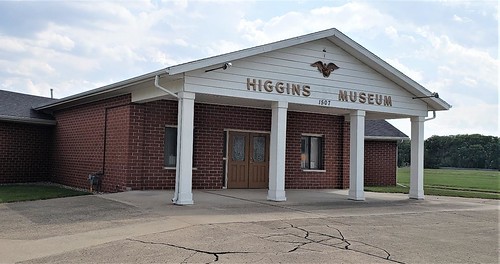
Higgins Museum Seminar, 2026
The Higgins Museum of National Bank Notes will host a seminar on August 12-13 , 2026.
The event will start with a welcoming reception at the museum on the late afternoon of August 12th, followed by a by a speaker's dinner. The program for Thursday August 13th will begin at 8:30. The speakers (alphabetically) will be:
NOTES FROM E-SYLUM READERS: JUNE 14, 2026
More QR Codes on Coins
Jeff Starck writes:
 "In the May 24 edition, you report about a new coin from the Philippines with a QR code.
In a stroke of good timing, the March 2026 issue of World Coin News features a story about QR codes on coins.
The Netherlands issued the first coins to include a QR code back in 2011.
"In the May 24 edition, you report about a new coin from the Philippines with a QR code.
In a stroke of good timing, the March 2026 issue of World Coin News features a story about QR codes on coins.
The Netherlands issued the first coins to include a QR code back in 2011.
"The full story is available to subscribers to World Coin News, or Numismaster.com."
Thanks. Sorry for the delay in posting this - I've been working through a backlog of email. -Editor
To read the earlier E-Sylum article, see:
2026 PHILIPPINES 10 PISO ASEAN COIN
(https://www.coinbooks.org/v29/esylum_v29n21a20.html)
Other topics this week include the Royal Mint's 2024 D-Day commemorative coin, Pat McBride, and the movie Zotz. -Editor
DENNIS TUCKER JOINS CSNS BOARD
Award-winning numismatist Dennis Tucker has joined the Central States Numismatic Society (CSNS) Board of Governors, succeeding Carrie Meyer. -Garrett
 Award-winning numismatist Dennis Tucker has joined the Central States Numismatic Society (www.CSNS.org) Board of Governors. He succeeds Carrie Meyer, who stepped down from the board voluntarily due to the increased demands of her expanded responsibilities as a college professor and administrator.
?Meyer is a former curator of the famous Byron Reed Collection at The Durham Museum in Omaha, Nebraska. She is now an Associate Professor and Associate Dean of the Department of Special Collections and Archives of the Health Sciences Library at the University of Nebraska Medical Center in Omaha.
"On behalf of the Central States Numismatic Society, I extend our sincere thanks to Carrie Meyer for her service on the Board of Governors. During her tenure, Carrie generously shared her time, talents, and perspective in support of the Society and its mission. Her contributions helped strengthen CSNS and will have a lasting impact on the organization. We are grateful for her dedication and wish her continued success in all her future endeavors," stated CSNS President Mitch Ernst.

VOCABULARY TERM: SPLASH STRIKING
Here's another entry from Dick Johnson's Encyclopedia of Coin and Medal Terminology. -Editor
Splash Striking. Striking medallic items in a press with no collar to restrain the outward flow of metal between the dies. In one case a somewhat oversize blank is used and when struck the extruded metal from between the dies merges with metal of the perimeter of the blank that often forms a slightly buckled border. In another case a blank with a purposely irregular shape is used to form an indistinct, irregularly shaped, slightly raised border as intended. Normally such extruded material when struck without a collar -- called flash -- is later removed by trimming.
In America splash striking applies only to the use of coinage dies without the collar to strike such pieces. In England splash striking has a wider meaning. It is a term for all striking with open face dies. Not only is the term different but open face dies are called box dies in England.
FRANK ELMER ELLIS (1861-1937)
E-Sylum Feature Writer and American Numismatic Biographies author Pete Smith submitted this article on St. Louis coin dealer Frank Ellis and his successor Burdette Johnson. Thank you. Great hobby history. -Editor
I recently wrote about the Clemens collection. formed in St. Louis before there was any coin dealer in town. I wonder who was the first coin dealer in town. It may have been Frank Elmer Ellis.
Frank was born in Pennsylvania on September 5, 1861, the son of John Ellis and Henrietta Corley.
Ellis was a stamp dealer working out of his home at 817 Sixth Avenue in Cedar Rapids, Iowa. He advertised as a coin dealer in the February 1897 issue of The Philatelic West. He eventually established a full-page ad inside the front cover of The Philatelic West.

KEN BRESSETT INTERVIEW, PART THREE
Greg Bennick's latest interview for the Newman Numismatic Portal is with "Mr. Redbook". Ken Bressett. Here's the third of six parts, where Ken discusses his interactions with Walter Breen, William Sheldon, Dorothy Paschal, and his work photographing coins for Penny Whimsy. -Editor
GREG BENNICK: So, around the same era, I know that you had an interaction in 1948 with Walter Breen, who was playing piano, I think, at an ANA convention?
 KEN BRESSETT: I didn't really interact with him, but that was where I
first met him. I joined the ANA in 1947, and my first ANA show was in
Boston in 1948, that following year. That was the same for Walter Breen.
He joined the same time, and that was his first convention. I didn't
interact with him really. He was like the star of the convention. He was
a brilliant pianist, and he'd sit in a conspicuous place and play the
piano and everybody was saying, "What a prodigy this is, and he's going
to make a great collector and all that." I just think that was an
interesting thing to see, and later in life to know how he turned out,
which was not very well.
KEN BRESSETT: I didn't really interact with him, but that was where I
first met him. I joined the ANA in 1947, and my first ANA show was in
Boston in 1948, that following year. That was the same for Walter Breen.
He joined the same time, and that was his first convention. I didn't
interact with him really. He was like the star of the convention. He was
a brilliant pianist, and he'd sit in a conspicuous place and play the
piano and everybody was saying, "What a prodigy this is, and he's going
to make a great collector and all that." I just think that was an
interesting thing to see, and later in life to know how he turned out,
which was not very well.
GREG BENNICK: Sure. Absolutely. Well, it's interesting that you met him in a different context, or that you first interacted with him in a very different context.
KEN BRESSETT: Yes. And we remained what you call friends over the years. We always had good conversations about coins and different opinions about different things. I knew him in that regard.

HERITAGE: NORTH STAR COLLECTION OF HALF EAGLES
Heritage Auctions will be selling The North Star Collection of $5 Gold US Coins on June 15. Select items are discussed below. -Garrett


1809/8 $5 BD-1, High R.3, AU55 PCGS. Bass-Dannreuther Die
State b/b. BD-1 is the sole 1809 variety, traditionally described
an overdate, although researchers are divided about the underdigit.
Some suggest an 8, while others believe it is a misplaced 9, and
still others are unconvinced either way. This is a Choice About
Uncirculated example, sharply defined, with still-vibrant
greenish-gold color. Marks are minimal, while plentiful mint luster
remains.
Ex: Dallas Signature (Heritage, 12/2019), lot 3292; Long Beach
Signature (Heritage, 6/2020), lot 3197.
From The North Star Collection of $5 Gold.

HERITAGE: SWITZERLAND SHOWCASE
Heritage Auctions will be hosting their Switzerland World Coins Showcase Auction on June 15. Select items are discussed below. -Garrett


Basel. City silver Medallic "Hen" 1/4 Taler ND (1650) MS63 NGC, Friedlander-1167. An elusive and contested medallic type, known colloquially as the "Hen Medal". Many slight variations exist, this one pairing the highly popular imagery of an obverse city view with a protective mother hen watching over her chicks. This imagery of the hen guarding her chicks was representative of the city's Grand Council seeing to the protection of the citizens.

HERITAGE: HKINF WORLD & ANCIENTS
Heritage Auctions will be hosting their HKINF World & Ancient Coins Platinum Auction from June 17-19. The Curators' Picks are discussed below. -Garrett


There is perhaps nothing more fascinating than working with material that is both beautiful, historically rich, and numismatically rare. This remarkable pattern Tael immediately captured my attention, as it undoubtedly has for many collectors and scholars, and is further distinguished by the controversy surrounding its creation. Produced at a pivotal moment in Chinese history, only a few years after the conclusion of the Second Opium War, the inclusion of Queen Victoria's effigy made the design particularly sensitive and politically charged. The pattern was reportedly rejected a number of times before finally being accepted, and its ultimate production was exceedingly limited. If this wasn't all enough the overall preservation is extremely impressive, standing as a testament to the care this highly-desirable selection has received over the decades. Truly a piece that has inspired me with absolute awe, and continue to grip the numismatic audience with both its history and rarity.
STACK'S BOWERS: MEDICUS PRESIDENTIAL INAUGURAL MEDALS
Stack's Bowers will be selling the Medicus Collection of Presidential Inaugural Medals as part of their June 2026 Showcase Auction, held from June 15-22. Select items are discussed below. -Garrett


Undated (ca. 1872) Ulysses S. Grant Presidential Medal. Julian PR-14. Silver. MS-63 (PCGS). 45.6 mm. 650.7 grains. Both sides are deep gray in color with lovely iridescent blue and rose toning. Extremely rare: Carl Carlson's research suggests only eight were struck in this metallic composition. We can only recall handling two since the turn of the 21st century, the primary Ford specimen, reoffered here, and Mr. Ford's second example that reappeared in our March 2021 Auction, where it realized $5,040 in a PCGS Specimen-64 holder.
Provenance: From the Medicus Collection of Presidential Inaugural and Related Medals. Earlier ex Wayte Raymond estate; John J. Ford, Jr.; our (Stack's) sale of the John J. Ford, Jr. Collection, Part IX, May 2005, lot 19.

1715 FLEET: SILVER REALE PROVENANCE SEARCH
The 1715 Fleet Society is a non-profit organization that is "dedicated to researching the history of the 1715 Fleet, its loss, rediscovery, and recovery." The 1715 fleet was part of the Spanish New World Treasure Fleets that funded Spain's activities as a world leader.
Each month the group highlights a "Treasure of the Month". This month's piece is a 1715-dated 8 reale and the article details a provenance search that bibliophiles and numismatic researchers will appreciate. Here's an excerpt - see the complete article online for much more. -Editor

Our Treasure of the Month for June was recently featured as Lot #364 in the Sedwick & Associates, LLC Auction #39 earlier this month. This 25.8 gram silver reale from the Spanish colonial mint at Mexico City has a broad, squarish flan with no corrosion and a bold "15" date.

THE ROMANO-WARSHAW SILVER CONTINENTAL DOLLAR
The origin of the 1776-dated Continental Dollars continues to be debated. The latest interpretation of the evidence will appear in Rob Rodriguez's forthcoming book from Whitman Publishing, The Continental Dollar, A Journey of Discovery. While we await the official publication announcement, the lot description of a Continental Dollar in silver in Heritage's June 25th Liberty & Legacy sale provides a preview. Here's an excerpt - see the complete lot description online. -Editor


1776 $1 Continental Dollar, CURENCY, Silver, Newman 1-C, Breen-1091, Hodder 1-A.3, W-8450, R.8, VF35 NGC. CAC. 373.3 grains. Four silver Continental Currency coins are known, and those four coins were struck from two die combinations attributed as Newman 1-C and 3-D. Numismatic author Q. David Bowers identifies these pieces as W-8450 and W-8470 in the Whitman Encyclopedia of Colonial and Early American Coins, 2nd Edition. Two examples are known from each die combination. Each of the silver Continental Currency coins was struck over a Spanish 8 reales coin from the Mexico City Mint.
Our Enigmatic First Dollar Coins
The Continental Currency coins have been the subject of much speculation over the years, with talented numismatists reaching very different conclusions. These disagreements primarily center on the origins of these pieces: were they intended to be coins or medals? If coins, were they authorized or should they be considered private issues? Where were they made and by whom? Ultimately, the evidence we are left to sift is that which we can glean from the coins themselves and the scant literary record.
John Kleeberg, in the December 2018 issue of the Journal of Early American Numismatics, provided an overview of the controversies and the specific areas of disagreement. Kleeberg's own conclusions, which are examined in detail in his article, are summarized here:
THE 1863 PATTERN POSTAGE CURRENCY DIME
Elliot Eng of Stack's Bowers published an article on their upcoming sale of the Eliasberg-Cassel specimen of the extremely rare Postage Currency pattern dime. -Editor

We are pleased to present the Eliasberg-Cassel specimen of the extremely rare Judd 331 pattern dime in lot 2297 of our June 2026 Showcase Rarities Night session. One of only five known 1863 Pattern Postage Currency dimes, this coin is sure to be an integral part of any advanced cabinet. The early 1860s were dominated by the Civil War, which went hand in hand with a coin shortage of small change along the eastern seaboard, as uncertainty because of the war, economic conditions, and inflationary paper currency led the public to hoard silver coinage. Because silver was scarce in commerce, the Philadelphia Mint managed a paltry mintage of only 11,000 dimes in 1863, down from over 12 million a decade prior. Additionally, the New Orleans Mint was appropriated by the state of Louisiana and utilized by the CSA in April and May of 1861 before being shuttered. It would reopen in 1879.
The state of California outlawed the use of paper money early in the Civil War and, while the Legal Tender Act of 1862 authorized the federal government to issue $150 million in "greenbacks," Californians refused to use paper money until 1870, when the Currency Act of July 12, 1870 allowed special National Gold Banks to issue paper notes directly redeemable in gold coin. As such, the San Francisco Mint continued to run at its pre-war capacity since conditions remained largely unchanged. Nevertheless, the eastern seaboard was home to most of the banking and economic centers in the country. Something was needed to help stabilize the economy and facilitate everyday commerce.
WHY DO COINS HAVE RIDGES?
When I speak to young numismatists, I often ask "Why are coins round?" A similar back-to-basics question is "Why Do Coins Have Ridges?" This week I came across a 2011 Mental Floss article that's a great explainer on the topic. Here's an excerpt - see the complete article online. -Editor
 The stylish rims you might have noticed on U.S. dimes, quarters, half dollars and some dollar coins are called reeded edges. They've been on American currency almost since day one as a way of keeping people honest.
Reeded edges served a two-fold security purpose for silver coins. One, they added an additional, intricate element to the coins that made them more difficult to counterfeit. Two, they prevented fraud.
THE ANS SEMIQUINCENTENNIAL PURSUIT OF HAPPINESS MEDAL
Bronze and silver versions of the Semiquincentennial Medal commissioned by the ANS are available for ordering. Nice concept. Thanks to Jon Radel for passing this along. -Editor


The American Numismatic Society has commissioned a medal to celebrate the 250th anniversary of our nation's independence. The Pursuit of Happiness Through Enterprise by Chris Kunk, features an allegorical representation of Liberty in pursuit of the enterprise that built this country on the obverse, while the reverse represents the unbridled spirit that drives America. It is the newest edition to the list of over 60 medals commissioned by the ANS throughout its 167 year history.
The medals will be sold on a first come, first serve basis, with priority given to ANS members. They will be produced by Medalcraft Mint, with the goal of delivery in fall 2026.
MICHIGAN DEALER THWARTS GOLD CON
Len Augsburger passed along this story from Michigan about a dealer who stepped in to save a woman's $700,000 savings. He notes, "Score one for the good guys." Indeed. Thanks. -Editor
 A 79-year-old widow in Michigan received a sudden phone call informing her that her Social Security funds were being misused to support terrorism, and to stop that, she was asked to buy $700,000 in gold and give it to a person they would send. An old script to polish off one's savings but here entered Ben Soldaat, the owner of Grand Rapids Coins, from whom the widow wanted to purchase the gold.
Soldaat knew it was a scam and alerted the authorities. When the man who was supposed to rescue the woman from the 'terrorism scam' arrived to collect the money, he got a bag of chocolate gold coins and eventually a pair of 20-year felonies.
LOOSE CHANGE: JUNE 14, 2026
Here are some additional items in the media this week that may be of interest. -Editor
In other reflecting pool news, the latest batch of coins has been removed from the World Celebration reflecting pool at Disney World's EPCOT park. -Editor

The reflecting pool floor covered with coins
Disney has removed the coins from a World Celebration reflecting pool that was recently drained.
Previously, the concrete floor of the pool was littered with coins, small works, and other small debris.
Coins from Cinderella's Wishing Well at Magic Kingdom and other fountains and waterways throughout Walt Disney World—including this one—are collected periodically and donated to Make-A-Wish and Give Kids The World Village.
To read the complete article, see:
Coins Removed From World Celebration Reflecting Pool at EPCOT
(https://wdwnt.com/2026/06/coins-removed-from-world-celebration-reflecting-pool-at-epcot/)
Other topics this week include the Black Money Exhibit. -Editor
FEATURED WEBSITE: BLACK MONEY EXHIBIT
This week's Featured Website is Dr. Harcourt Fuller's Black Money Exhibit.

The Black Money Exhibit is an engaging "forest of money trees" laden with over 300 rare, obsolete, and currently circulating banknotes (paper money). The brainchild of Dr. Harcourt Fuller, this traveling exhibit includes currencies and related objects from more than 80 countries in Africa, Europe, and the Americas, and illustrates 10,000 years of Black history. Each note is beautifully designed – its own work of art.
Dr. Fuller conceived the Black Money Exhibit as a way to expose audiences to the importance of money – not just as something to spend, but also as a visual source of knowledge about world histories and cultures. A 1,000 Dinars Algerian banknote, for example, has images of prehistoric rock art dating to at least 8,000 BCE and shows thriving African civilizations in a fertile Sahara Desert. The oldest banknotes in the exhibit were issued by U.S. southern states in the 1850's before the Confederacy. Most recently, a $10 bill issued by the Bank of Canada in 2018 features a successful Black businessperson and civil rights activist as the first Canadian woman to appear on a regularly circulating bank note.
https://www.blackmoneyexhibit.com/
ABOUT THIS ISSUE: JUNE 14, 2026
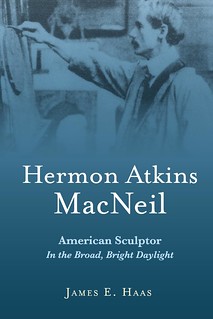
On Friday I stepped out of the office to have nice lunch with Jim Haas, author of Hermon Atkins MacNeil: American Sculptor in the Broad, Bright Daylight, about the creator of the Standing Liberty Quarter and multiple medals. We shared a small table for two at a place called The Hideaway, hidden away in a corner of Maryland. We discussed a number of topics, including my impending day-job retirement.
Here's the cover of his book, and the covers of three others in my current reading queue.


Seen on the interwebs:
- "He's like a bowl in a china shop."
- "Do not use your eyebrow trimmer if you've been drinking."
Finally, here are some interesting non-numismatic articles I came across this week.
Historian John Steele Gordon on America's economic values (https://wng.org/articles/a-free-market-empire-1780040961)
Places disappear. Their stories don't have to. (https://www.lastseen.city/)
Love Language: The undying dream of Esperanto (https://harpers.org/archive/2026/06/love-language-katie-thornton-esperanto/)
Drink Like a Founder: 7 Bars That Are as Old as America (https://www.nytimes.com/2026/06/10/travel/american-revolution-bars-places-to-drink.html)
There's a Wave of Historic Landmarks Reopening Across the US—Here's Why (https://www.newsweek.com/theres-a-wave-of-historic-landmarks-reopening-across-the-usheres-why-12047483)
Cleve Moler, Who Unlocked the Power of Computing for Millions, Dies at 86 (https://www.nytimes.com/2026/06/11/science/cleve-moler-dead.html)
Collector Scours Flea Markets for Vintage Photos of Women in Trees (https://petapixel.com/2026/06/09/collector-scours-flea-markets-for-vintage-photos-of-women-in-trees/)
Man fleeing DWI stop attacked by alligator after jumping into swamp, state police say (https://www.wwltv.com/article/news/crime/man-fleeing-dwi-stop-attacked-by-alligator-after-jumping-into-swamp-state-police-say/289-fe3297f4-5996-4f8c-9be9-d159e0df8c3e)
-Editor


Editor Wayne Homren, Assistant Editor Garrett Ziss

|
|
| |