Visit our NBS Sponsors










About UsThe Numismatic Bibliomania Society is a non-profit association devoted to the study and enjoyment of numismatic literature. For more information please see our web site at coinbooks.org SubscriptionsThose wishing to become new E-Sylum subscribers can go to the following web page
Subscribe
MembershipThere is a membership application available on the web site Membership Application To join, print the application and return it with your check to the address printed on the application. Print/Digital membership is $40 to addresses in the U.S., and $60 elsewhere. A digital-only membership is available for $25. For those without web access, write to: Jeff Dickerson, Treasurer AsylumFor Asylum mailing address changes and other membership questions, contact Jeff at this email address: treasurer@coinbooks.org SubmissionsTo submit items for publication in The E-Sylum, write to the Editor at this address: whomren@gmail.com BUY THE BOOK BEFORE THE COIN |
- WAYNE'S WORDS: THE E-SYLUM OCTOBER 18, 2026
- WORKMAN'S BOOKS SALE 9 SELECTIONS
- THE W.J. NOBLE NUMISMATIC LIBRARY OFFERED
- NEW BOOK: COINAGE OF BRUNSWICK-CALENBERG-HANNOVER
- NEW BOOK: BANKNOTES OF THE LEVANT
- NEW BOOK: ARKANSAS WAR BONDS
- PERIODICAL: NUMISMATIQUE ASIATIQUE NO. 59
- 2026 ANA WFOM NUMISMATIC LITERATURE EXHIBITS
- NNP ADDS BAD METAL NEWS
- VIDEO: PAPER CURRENCY DOCTORING
- GEORGE HUBBARD CLAPP LECTURE
- NOTES FROM E-SYLUM READERS: OCTOBER 18, 2026
- ANA HONORS EXCELLENCE IN NUMISMATIC ART AND WRITING
- ANS BREAKS GROUND ON TOLEDO HEADQUARTERS
- VOCABULARY TERM: SUNKEN DIE
- HEAD OF COPPER, FEET OF CLAY
- HERITAGE: BUST COINAGE SHOWCASE
- STACK'S BOWERS: WORLD PAPER MONEY AUCTION
- HOLABIRD JACK HADDOCK COLLECTION SELECTIONS
- HOLABIRD JACK HADDOCK NEVADA TOKENS, PART 2
- KUENKER AUCTION SALE 447
- MATTHEW SCHAFER'S 2026 PITTSBURGH ANA DIARY
- WAYNE'S NUMISMATIC DIARY: SAWHILL COLLECTION
- WAYNE'S NUMISMATIC DIARY: CIVIL WAR MONEY
- TRUMP DOLLAR ERROR
- GETTYSBURG ADDRESS QUARTER LAUNCH CEREMONY
- THE 1897 CUBAN SOUVENIR PESO
- LOOSE CHANGE: OCTOBER 18, 2026
- ABOUT THIS ISSUE: OCTOBER 18, 2026
Content presented in The E-Sylum is not necessarily researched or independently fact-checked, and views expressed do not necessarily represent those of the Numismatic Bibliomania Society.
WAYNE'S WORDS: THE E-SYLUM OCTOBER 18, 2026
 New subscribers this week include:
Russ West, courtesy Al Raddi; and
Agostino Ricucci.
Welcome aboard! We now have 6,323 subscribers.
Thank you for reading The E-Sylum. If you enjoy it, please send me the email addresses of friends you think may enjoy it as well and I'll send them a subscription. Contact me at whomren@gmail.com anytime regarding your subscription, or questions, comments or suggestions about our content.
We have another new sponsor this week - Boardwalk Numismatics. Thank you for your support! When you're out at coin shows or shopping online and encounter one of our advertisers, please thank them for supporting our weekly effort - we wouldn't be able to deliver our publication at this scale and frequency without their assistance.
This week we open with more selections from the Workman's Books sale, the W. J. Noble library, three new books and a periodical, updates from the Newman Numismatic Portal, and more.
Other topics this week include Arkansas War Bonds, banknotes of the Levant, George Clapp, notes from readers, updates from the ANA and ANS, sunken dies, Nevada tokens, auction previews, Gettysburg quarters, Trump dollars, and Cuban souvenir pesos.
To learn more about coin collection of Pablo Gerber Moser, coinage of the House of Brunswick-Calenberg-Hannover, the Buddhist amulets of Cambodia, award-winning numismatic literature exhibits, paper currency doctoring, highly oxidized manganese ingots, mystery "ANA" pins, Dr. William H. Sheldon, Walter Breen, Francis Worcester Doughty, Fred's Bar, the Sawhill and John Quincy Adams collections, and the Other Washington Gold Medal, read on. Have a great week, everyone!
Wayne Homren
Editor, The E-Sylum

Image of the week
WORKMAN'S BOOKS SALE 9 SELECTIONS
Here are more selections from Alan Workman's numismatic literature sale closing November 1, 2026. -Editor

Workman's Books would like to remind collectors that our ninth bid sale closes in approximately two weeks, beginning at 10:00 AM Eastern Time on Sunday, November 1, 2026. This single-session sale features 850 lots of rare, vintage, and out-of-print books, auction catalogs, magazines and journals, postcards, VHS tapes, DVDs, and related material covering Spanish and Spanish American, Mexican, United States, Canadian, British, Ancient, and World numismatics; banks and banking history; diving and undersea exploration; buried and sunken treasure; metal detecting; underwater archaeology; and privateers, buccaneers, and piracy.

THE W.J. NOBLE NUMISMATIC LIBRARY OFFERED
Here's a great opportunity for numismatic bibliophiles and dealers - the entire W.J. Noble Numismatic Library is being offered intact from Australia. Here's the press release. -Editor
INTERNATIONAL EXPRESSIONS OF INTEREST INVITED
Entire Collection Offered as One Lot
Collection Overview
 The W.J. Noble Numismatic Library comprises an extensive collection of reference books, journals and catalogues covering ancient Greek, Roman, Byzantine, Celtic, medieval and Islamic coinage, together with British, European, Latin American, North American, Southeast Asian, Chinese, Japanese, Indian and Australasian coins, medals and tokens.
The British token references and catalogues, particularly those relating to the Conder series, are considered among the most comprehensive encountered, as are the references relating to Presbyterian Communion Tokens.

NEW BOOK: COINAGE OF BRUNSWICK-CALENBERG-HANNOVER
Here's a book we haven't mentioned before. Found via the 2026 IAPN Book Prize Nominations. -Editor
The Coinage of the House of Brunswick-Calenberg-Hannover during the period 1714–1837
By Richard Smith
 More than ten years ago, Richard Smith published the book "The Coinage of the Anglo-Hanoverian Personal Union 1714–1837." In it, he addressed the politics of the succession to George I on the British throne and the history of the ruling family. He also listed all the coins issued between 1714 and 1837. The book's publication significantly stimulated interest in this numismatic period. New discoveries and types came to light, new issue years were identified, and several numismatic mysteries were solved.
Richard Smith decided to publish a further book dedicated solely to coinage; however, he passed away in 2021 and was unable to complete his work. The Frankfurt Coin Shop is now publishing his second work on the royal coinage of the Duchy of Brunswick-Lüneburg during the personal union with Great Britain, based on Smith's extensive notes and his collection of coins and medals.

NEW BOOK: BANKNOTES OF THE LEVANT
Here's another book found via the 2026 IAPN Book Prize Nominations. -Editor
The Banknotes of the Levant: Lebanon and Syria
 This lavishly illustrated 396 page book is a spectacular showcase of the Lebanese and Syrian Banknote Collections put together by Ibrahim Salem. The remarkable collection, spanning over 100 years of Levantine history, is certainly one of the finest ever assembled, and the book has illustrations of both sides of every note, in addition to providing a wealth of information on the notes and the wider history of the region.
Distributed by Noonans Mayfair on behalf of Ibrahim Salem, this book is certain to be a prize addition to any numismatic library.
For more information, or to order, see:
The Banknotes of the Levant: Lebanon and Syria
(https://www.noonans.co.uk/features/ibrahim-salem-collection/)

NEW BOOK: ARKANSAS WAR BONDS
Charles Derby has published a new book on Arkansas War Bonds and Treasury Warrants. -Editor
History of Their Origins and a New Catalog of Types
 The currency issued by the state of Arkansas during the Civil War, called War Bonds (WBs) and
Treasury Warrants (TWs), has confounded collectors due to its vast diversity. Several numismatists have
cataloged them including most recently Grover Criswell in his 1980 book Confederate and Southern States
Bonds and Hugh Shull in his 2007 book A Guide Book of Southern States Currency. However, even their
catalogs are unwieldy and unsatisfying in giving order to and an understanding of the diversity of this
currency.
To make sense of their diversity, I have analyzed Arkansas TWs and WBs in three ways. First was to create a database with over 1,500 TWs and over 360 WBs. Second was to consider this information in light of actions of Arkansas's legislature and treasury and the ordinances that led to the production of and changes to this currency, and events during the war that caused these changes. Third was to study the men behind the money: engravers and printers who produced unissued TWs and WBs, treasury employees who signed and issued currency, and receivers of the currency. This analysis yields a clear narrative on the production of and relationship among these WBs and TWs and the Auditor's Warrants (AWs) on which they were issued, and how they were used to support Arkansas's war efforts. The product of this research is a new book, Arkansas War Bonds and Treasury Warrants: History of Their Origins and a New Catalog of Types, which allows numismatists and historians to better understand this currency including new ways to collect it.

PERIODICAL: NUMISMATIQUE ASIATIQUE NO. 59
Here are the contents of the latest issue of Numismatique Asiatique. -Editor
 Numismatique Asiatique
No. 59 | September 2026
The coin-shaped amulets of Cambodia
CENTRAL ASIA: A Study on the Origin of the Inscription
"Xu Xing": The Construction of Political Culture in Early Qara Khitai and a New Investigation into the Mintage Period
of Xu Xing yuan bao
by Liu Jingyi
RUSSIA: A Juchid dirham with Tibetan legend
by V. A. Belyaev, I.V. Evstratov

2026 ANA WFOM NUMISMATIC LITERATURE EXHIBITS
While at the American Numismatic Association's World's Fair of Money™ in Pittsburgh a month or so ago, I took these photos of the exhibits in the Numismatic Literature category. The winner names have since been reported by the ANA in the October Numismatist. Many thanks to the exhibitors - these were all nice exhibits. Apologies for the glare from the overhead lights. -Editor

First Place: A Selected Numismatic Literature Collection & Anti-Counterfeiting (Erwin Brauer)

NNP ADDS BAD METAL NEWS
The latest addition to the Newman Numismatic Portal is Winston Zack's Bad Metal News. Project Coordinator Len Augsburger provided the following report. -Editor
NNP Adds Bad Metal News
 With permission of Winston Zack, Newman Portal now includes Winston's Bad Metal News. This newsletter is devoted to the study and collecting of contemporary counterfeit coins, particularly counterfeit United States coinage of the eighteenth, nineteenth, and early twentieth centuries. The publication reports newly discovered counterfeit varieties, die marriages, manufacturing techniques, and unusual specimens, with particular emphasis on Capped Bust half dollars and other early American denominations.
Illustrated articles document counterfeit coins, counterfeiting technology, and ongoing attribution research, often incorporating discoveries and contributions from fellow collectors. Additional content includes updates on the Bad Metal reference book series, research projects, numismatic events, and newly available collectible material.

VIDEO: PAPER CURRENCY DOCTORING
The David Lisot Video Library on the Newman Numismatic Portal can be found at:
https://nnp.wustl.edu/library/multimediadetail/522852
We highlight one of his videos each week in The E-Sylum. Here's one from 2016 with Jeffrey Paunicka speaking about Paper Currency Doctoring. -Editor


GEORGE HUBBARD CLAPP LECTURE
The University of Pittsburgh Nationality Rooms and Intercultural Exchange Programs have announced a free lecture on the life of George Hubbard Clapp, well known to numismatists as an author and collector of early U.S. Large Cents. The event takes place Saturday, October 24th, the same weekend as the upcoming PAN Show. -Editor
A Life of Curiosity, Collecting, and Contributions
Cathedral of Learning, Room 332
 George Hubbard Clapp, longtime Board Member of the University of Pittsburgh, supporter of the school through its transition to Oakland, was a Renaissance-man who endowed public collections with his wide-ranging interests in mollusk shells, coins, art, and the preservation of history. The commemorative lecture will highlight George Hubbard Clapp's many contributions to the liberal arts and sciences in Pittsburgh and reveal a man whose drive was one of abundant curiosity and support.
George Hubbard Clapp donated the Early American Room to the University of Pittsburgh in the late 1930's. Mr. Hubbard Clapp also gave funding support to each of the Nationality and Heritage Rooms that were being constructed during that time period.
At 2:00 pm, Michael Walter, Manager of Education Programs for the Nationality Rooms and Intercultural Exchange Programs, will share details on the life and contributions of George Hubbard Clapp.

NOTES FROM E-SYLUM READERS: OCTOBER 18, 2026
More on Why WWII Nickels Laminate
Here's a response to last week's discussion of why WWII Jefferson Nickels laminate. Vocabulary note: 'warnix' = War Nickels. -Editor
Tom DeLorey writes:
While I was at Coin World's Collectors Clearinghouse in the mid 1970's, I was updating a chart with the weights, diameters, thicknesses, contents and Specific Gravities for all U.S. Coins that had been created by my mentor there, Ed Fleischmann. We found it very handy when identifying wrong planchet coin errors, and counterfeits. Versions of this chart have appeared in many places over the years.
Most values were given expected numbers, but the S.G. for the warnix was given as a range that Ed had observed over the years via testing specimens. He attributed this to the laminations so commonly seen on warnix.
I was curious as to what the expected S.G. should be, so I wrote to Dr. Goldman at the Mint Lab in Washington, D.C. Over the years he had always been very helpful in responding to our inquiries, unlike the current Mint administration. I also asked him why so many warnix were found laminated.
He gave me an expected figure, but said that the range we used was probably more accurate because of the lamination problems. As to the cause of the laminations, he said basically this:
 'I was working at the Philadelphia Mint during the War. We were so busy striking coins for domestic and foreign use that ingots of non-precious metals were stored outdoors in the open courtyard of the building, where they were exposed to the elements. The manganese ingots especially became highly oxidized. We should have scaled them (i.e., scoured them with coarse wire brushes-TD) before using them, but we were just too busy. The manganese oxide went into the melts, where it did not bond well.'
So, sometimes an easy answer is the correct one.
Thank you! Interesting history. -Editor
To read the earlier E-Sylum article, see:
WHY WWII JEFFERSON NICKELS LAMINATE
(https://www.coinbooks.org/v29/esylum_v29n41a13.html)
Other topics this week include Indian Peace Medals, the Banker Who Made America, and a coin provenance question. -Editor

ANA HONORS EXCELLENCE IN NUMISMATIC ART AND WRITING
Here's the ANA press release announcing the recent Medallic Art and Burnett Anderson Memorial awards. Congratulations to both winners! -Editor
Celebrated at World's Fair of Money® in Pittsburgh
 During the 2026 American Numismatic Association's (ANA) World's Fair of Money, hosted in Pittsburgh, members who have contributed to the hobby in profound ways were recognized. The Numismatic Art Award for Excellence in Medallic Sculpture and the Burnett Anderson Memorial Award for Excellence in Numismatic Writing were presented during the 135th Anniversary Awards Banquet.
The ANA's Numismatic Art Award for Excellence in Medallic Sculpture is an annual honor given to an artist whose lifetime work in the field rises above all others. The 2026 recipient is Latvian sculptor and graphic designer Janis Strupulis, who has helped shape Latvia's national identity through his currency art. Born in 1949, Strupulis graduated from the Art Academy of Latvia in 1973. He is a member of several artistic organizations, including the Artists' Union of Latvia and FIDEM, and serves as president of the Latvian Arts Medal Club.

ANS BREAKS GROUND ON TOLEDO HEADQUARTERS
On October 5, the ANS broke ground on their new headquarters in Toledo, OH. Here is the press release. -Garrett

On October 5, we were delighted to hold a groundbreaking ceremony at our future headquarters building in Toledo, Ohio. Renovations have now begun at the Professional Arts Building, which will become the Society's new museum and headquarters, with the project led by Roncelli Inc.

VOCABULARY TERM: SUNKEN DIE
Here's another entry from Dick Johnson's Encyclopedia of Coin and Medal Terminology. -Editor
Sunken Die. A die deteriorated by a portion of its striking surface being compacted and recessed. The sinking is due to long use, poor quality steel and improper hardening. It is never known in advance when a die will sink, if it will sink, or how severe the form of sinking will be. It is a very gradual process and usually occurs in dies after long time, particularly over intermittent periods of use. It is characteristic of an old die.
Pieces struck from a sunken die obviously will exhibit the sunken condition. The effect is quite slight in the beginning of the die's deterioration, gradually worsening with continued use. If the sinking is greatest in the center and grading to the edge the sunken condition of the die will result in a domed effect on the struck piece. The dome increases with subsequent strikes as the continued force of striking takes its toll on the impaired die. All relief and detail is affected rising from the domed table or field of the struck piece. More likely the sinking is not uniform and the effect is more wavy or buckled, as a portion of the die's surface sinks faster than an adjacent area.

HEAD OF COPPER, FEET OF CLAY
E-Sylum Feature Writer and American Numismatic Biographies author Pete Smith submitted this article on a common theme among three numismatic authors. Thank you. -Editor
Several stories with a common theme


1. Walter Breen submitted an article to the November 15, 1984, issue of Penny-Wise titled, "HEAD OF COPPER, FEET OF CLAY, referring to Dr. William H. Sheldon. Walter considered Sheldon as a mentor, both for the study of coins and for the study of human physiology.
Sheldon wrote the standard reference on the early date (1793-1814) large cent series in Early American Cents and the revised Penny Whimsy. He developed the "science of cent values" and the 70-point grading scale.
Breen correctly observed that Sheldon's methods for valuing coins did not work while Sheldon continued to try to modify his methods to fit the data.

HERITAGE: BUST COINAGE SHOWCASE
Heritage Auctions will be hosting their Bust Coinage Showcase Auction on October 26. Select items are discussed below. -Garrett


STACK'S BOWERS: WORLD PAPER MONEY AUCTION
Stack's Bowers will be hosting their November 2026 Premier Collectors Choice Auction of World Paper Money on November 2. Select items are discussed below. -Garrett

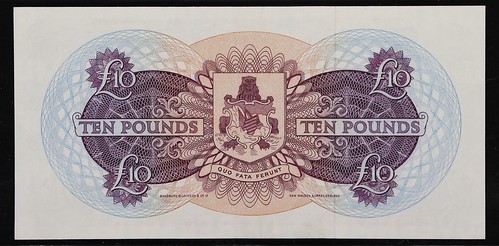
BERMUDA. Bermuda Government. 10 Pounds, 28.7.1964. P-22. PCGS Banknote Choice About Uncirculated 58. Just a touch of circulation is seen on the highest denomination from the predecimal series of Bermuda. Scarce at this grade level and popular.
HOLABIRD JACK HADDOCK COLLECTION SELECTIONS
Here are some selected lots from the Jack Haddock Nevada Town Token Collection Auction by Holabird Americana. -Garrett

Mineral Hill was a heck of a mining and milling community. In the 1860s, ores owned by the Manhattan Silver Mining Co. were mined and processed there. Early records of the mining camp are scarce, but a saloon known as Walker's Saloon ran from about 1880-1886, then became Thompson's Saloon, c 1886-1890, when a dead period hit the camp until about 1906 when a saloon again poured the magic liquid by R. Johnson. By 1912, the saloon had changed hands to Frank Pacini and Ross Plummer, then shortly after to Victor Venturino as proprietor, part of a long time eastern Nevada family. In mid-1912, Victor had the region's voting polling place at his house. In July that year, he bought the mineral rights of the Mineral Hill Consol. M.C. for $250. This is a great token from a very important 19th century Nevada mining camp. Pop in 1990: 6.

HOLABIRD JACK HADDOCK NEVADA TOKENS, PART 2
While Fred Holabird has retired and closed his auction business, he left the door open some special private sales from time to time. One of those will take place November 6, 2026 when Holabird offers the Nevada Town token collection of Jack Haddock. The sale announcement is far more than just that - Fred delves into the history of Nevada token collecting, research and rarity as well as new digging and detecting techniques and advanced digital research platforms. It's lengthy and quite useful. Here's the second of four parts. -Editor

The authors of the Nevada Token Book each had specific collections: John Schilling, collected Reno. Hal Dunn, Sheriff of Carson City, collected Carson and everything Carson City Mint. Len Hoskins collected Elko and surrounds. Jack Haddock collected towns. Another advanced collector, Bill Wright, collected everything Nevada.
As the years went on, Jack put together five versions and revisions of The Nevada Token Book from 2011 to 2022. Each step of the way, he added new material and recorded as many sales as found in the public record, helping to develop hundreds of new collectors.
No one has ever put together a complete collection of Nevada tokens. There are simply too many unique pieces.

KUENKER AUCTION SALE 447
Künker will hold three auction sales featuring exclusively coins from the ancient world in early November 2026. On November 2 and 3, 2026, the floor auction sale will take place in Osnabrück, featuring more than 1,300 lots from various collections. -Garrett
Auction 447: Coins of the Ancient World
November 2–3, 2026 (Floor Auction Sales)
1,300 lots of coins from the ancient world will be offered during the Künker floor auction sale from November 2 to 3, 2026. The auction sale covers the entire spectrum of ancient numismatics: from Celtic, Greek, and Roman coins to those of the Byzantine era. The selection is rounded out by several pieces from the Migration Period and Islamic numismatics.
No fewer than five significant specialized collections will be sold as part of the auction sale, namely:
• the Walter Louwet Collection
• the Antissa Collection
• a private collection from southern Germany
• a collection of ancient coins spanning two generations
• the collection of a Hanseatic lover of Roman antiquity
These collections complement each other perfectly. Whether you're interested in refined Greek style, Roman history, ancient provenance, or rarities, this auction has something for every lover of ancient coins.
THE BOOK BAZARRE
MATTHEW SCHAFER'S 2026 PITTSBURGH ANA DIARY
Matthew Schafer writes:
"I appreciated Wayne's recent informative comments about touring Pittsburgh after the ANA Show. I was born in Bethel Park but raised in the Minneapolis area where I am an ANA Member of the NorthWest Coin Club. My trip to Pittsburgh included the ANA show and visiting cousins and cemeteries chronicling family ancestry.
There is so much to do at The World's Fair of Money: Seeing the eleven 1933 double eagles at the US Mint booth, The Tyrant Collection, 1857 SS Central America shipwreck display, hearing club member Bill Daehn speak, and getting exhibit ideas as I am our club's chair for displaying exhibits at our twice-annual Money Show.
No trip to the area is complete without a stop at scenic Mount Washington. A surprise destination was going to the VDB-designed fountain in Schenley Park near Pitt after receiving the copper medal at the show from Minted Assets. See you in Chicago at next year's World's Fair of Money! Thank you for the issues of the E-Sylum."
Thanks! Here are Matthew's photos. -Editor

WAYNE'S NUMISMATIC DIARY: SAWHILL COLLECTION
On September 8, 2026 I attended the monthly meeting of the Fairfax Coin Club. From the meeting announcement:
We have special guest speakers. Dr. Jason Forsyth (Curator of Coins for the Madison Art Collection) and Ms. Virginia "Ginny" Soenksen (Director of the Madison Art Collection) will present on the Sawhill Collection of Ancient Coins at James Madison University. Donated in 1976, the collection of Dr. John Sawhill is a numismatic treasure of over 400 ancient Greek and Roman coins collected with provenances back to the 1920s and pieces from notable collections such as President John Quincy Adams and Descendants and Lestranges Collection (1909).
While remaining idle since the mid-90s, the collection has seen renewed interest over the last three years with modern numismatic research to re-attribute the collection, 3D modeling to facilitate exhibits and outreach, and artificial intelligence tools to automatically recover lost provenance. The presenters will display a selection of coins and will discuss avenues in which collectors and members of the public may contribute to these efforts.
Additional details of their work can be found at: https://www.recoveringsawhill.com/

WAYNE'S NUMISMATIC DIARY: CIVIL WAR MONEY
 On October 14, 2026 I attended the lecture given by Rick Lank and Rebecca Rush at Shepherdstown University. Here's an excerpt from the earlier announcement.
TRUMP DOLLAR ERROR
An error of the Trump Dollar has been certified, with the obverse missing the clad layer. Here's an excerpt - see the complete article online. -Garrett

A new Trump dollar error gives collectors two sharply different views of the same coin. The portrait side shows exposed copper. Turn it over, however, and the Presidential Seal retains the dollar's usual golden color.
The difference comes from an entire missing outer metal layer. MintErrorNews reports that NGC authenticated the 1776–2026 dollar, graded it MS 65, and awarded its Advance Releases™ designation.
GETTYSBURG ADDRESS QUARTER LAUNCH CEREMONY
The launch ceremony for the new Gettysburg Address Quarter will take place Wednesday at the Gettysburg National Military Park. Great opportunity to participate in numismatic history on hallowed ground. I'm scheduled to travel elsewhere that day or I'd be there myself. Here's the press release from the National Park Service. -Editor

On Oct. 21, 2026, Gettysburg National Military Park, in partnership with the United States Mint and the Gettysburg Foundation, will host a public ceremony at the Gettysburg Museum and Visitor Center at 11 a.m. to celebrate the release of the Gettysburg Address Quarter as part of the nation's 250th anniversary commemoration.
The event will feature remarks by U.S. Treasurer Brandon Beach, U.S. Mint Director Paul Hollis, Gettysburg National Military Park Superintendent Stephanie Stephens, and Gettysburg Foundation Acting President Barbara Sardella.
THE 1897 CUBAN SOUVENIR PESO
Stack's Bowers Senior Numismatist Justin Katz published an article about the 1897 Cuba Souvenir Peso. Interesting - I wasn't aware of this piece. -Editor

In 1897, Cuban revolutionaries based in New York City sought to raise funds to support that island's struggle for independence from Spain. To accomplish this, they arranged for a commemorative coin to be produced and sold. As the United States maintained diplomatic relations with Spain at the time, the coin was produced by a private company rather than the U.S. Mint (which has historically produced coins for foreign countries as well as the United States). The coin's inscription reads "Souvenir" instead of "Peso," and collectors commonly refer to it today as the 1897 Cuba Souvenir Peso.
LOOSE CHANGE: OCTOBER 18, 2026
Here are some additional items in the media this week that may be of interest. -Editor
Eric Hodge passed along this British Numismatic Society Research Blog article about the history of coin edge imaging, including the latest parabolic mirror techniques. Thank you! I've seen other discussions of the topic, but forget where - can anyone point us to other articles or monographs on the subject? -Editor
High-resolution images of the obverse and reverse of most coins are now widely available, either online
or in printed catalogues. Images of the edges of the coins, in contrast, are either absent or show only a
limited section.
For coins with a grained or plain edge, this is of little consequence. But where an edge inscription is present, the lack of photographs showing the entire circumference in a single view is a major obstacle to the researcher and collector.
This post reviews and compares currently available techniques for coin edge imaging at minimal cost.
Before the advent of digital photography, the solution was to roll the edge of the coin in a length of plasticine, producing a mirror-image of the inscription. This could then be cast in plaster to produce a right-reading model.
This appears to be the technique used by Linecar and Stone in English Proof and Pattern Crown-Size Pieces 1658–1960 (London: Spink & Son, 1968) to reproduce the edges of the Petition and Reddite crowns (see next page). This gives a satisfactory result in the case of the four-word inscription on the Reddite crown, but the 34 words arranged in two lines on the Petition crown are scarcely legible.
To read the complete article, see:
The forgotten die: experiments in coin edge imaging
(https://britnumsoc.blog/wp-content/uploads/2026/10/the-forgotten-die-experiments-in-coin-edge-imaging-1.pdf)
Other topics this week include Martha Washington's gold medal, and four books that changed the world. -Editor
ABOUT THIS ISSUE: OCTOBER 18, 2026
In the cash-is-back-in department, more and more businesses are tacking on percentage-based fees for accepting credit cards. My wife and I both are finding that our doctors are now charging these fees for copays paid with credit cards. This practice was once pretty rare. I refused to go back to one restaurant once they surprised me with a fee. We're a little more understanding of a favorite local Mom-and-Pop restaurant and I try to have cash ready when we go there. But it gets ugly when the car dealership springs this fee on you for a four-figure repair, which happened to my wife a couple weeks ago. They'll happily tell you that "for convenience" they'll accept debit cards or cash, and neither option is the least bit convenient. Quick - do you know exactly how much of your current checking account balance is unaccounted for? Luckily I had time to go home and check and move some funds to ensure a debit transaction wouldn't lead to multiple other failed transactions. And where is an open branch of your bank when you need one? ATMs have daily withdrawal limits, so even if you have enough funds in your account, getting a larger amount of cash in a hurry is problematic.
This week one of my doctors' offices sprung this fee on me, and said they could alternately take an debit card or cash. I giddily opened my wallet and took out the $100 bill I keep handy for that restaurant. So then they tell me they can't make change. Now I count up the rest of the bills and fall short. I was pissed and paid with a debit card under protest.
As it happened, I had to go back to the same office for a different appointment later in the afternoon. At lunch I was delighted that (a different) restaurant was willing to take my hundred and give me change. On my way out of the appointment I learned that my charge was more than I'd expected - $100. I madly counted up the bills in my wallet and again came up short. One more debit card transaction to deal with.
Now I was actually quite happy with my experience otherwise - I'd gotten a fresh hearing test and had my hearing aids adjusted to a much better level. I was delighted, actually. But that nuisance credit card fee left a bad taste in my mouth.
Speaking of my mouth, I've gotten a new one since retiring. The overall process took many months, but I replaced two missing molars with dental implants. With my new bionic teeth, I can chew through prison bars.
I've had the opportunity to see more films since retiring. I always look for numismatic scenes and connections, but don't always find one. Saturday I attended a screening of a new documentary - Occupational Hazard: The First Coral Reefers, about the early members of Jimmy Buffett's Coral Reefer Band. I'm no Parrot Head, but went with neighbors to a Buffet concert in August 2022, just a year before Buffett died. We had a great time, and as a history buff I was curious to see the film. It was interesting, with archival footage and interviews with band members, managers and friends who were there when it all happened. Not a single numismatic connection, but plenty of fun nonetheless. See https://occupationalhazardfilm.com/ .
Finally, here are a few interesting non-numismatic articles I came across this week.
8 Things Invented by People You Never Would've Guessed (https://interestingfacts.com/things-invented-by-famous-people-you-wouldnt-expect/)
He reached the Americas centuries before Columbus. Why doesn't he get more credit? (https://www.washingtonpost.com/world/2026/10/12/leif-erikson-reached-americas-before-columbus-why-doesnt-he-get-more-credit/)
Boomers Didn't Always Have It So Easy (https://www.nytimes.com/2026/10/10/opinion/millennial-boomer-young-adult.html)
-Editor

Editor Wayne Homren, Assistant Editor Garrett Ziss

|
|
| |