Visit our NBS Sponsors










About UsThe Numismatic Bibliomania Society is a non-profit association devoted to the study and enjoyment of numismatic literature. For more information please see our web site at coinbooks.org SubscriptionsThose wishing to become new E-Sylum subscribers can go to the following web page
Subscribe
MembershipThere is a membership application available on the web site Membership Application To join, print the application and return it with your check to the address printed on the application. Print/Digital membership is $40 to addresses in the U.S., and $60 elsewhere. A digital-only membership is available for $25. For those without web access, write to: Jeff Dickerson, Treasurer AsylumFor Asylum mailing address changes and other membership questions, contact Jeff at this email address: treasurer@coinbooks.org SubmissionsTo submit items for publication in The E-Sylum, write to the Editor at this address: whomren@gmail.com BUY THE BOOK BEFORE THE COIN |
- WAYNE'S WORDS: THE E-SYLUM OCTOBER 25, 2026
- KOLBE & FANNING WEB SALE NUMBER 7
- NEW BOOK: CLASSICAL AND HELLENISTIC EQUINE CURRENCY
- NEW BOOK: COINAGE OF HAIDAR ALI AND TIPU SULTAN
- NEW BOOK: UMAYYAD POST-REFORM GOLD COINAGE
- NEW BOOK: THE COINAGE OF COLONIAL AFRICA
- NEW BOOK: INDEPENDENT STATE OF CROATIA BANKNOTES
- NNP ADDS BARNSLEY SCRAPBOOKS ON NEW JERSEY COINAGE
- VIDEO: HOWARD FRANKLIN BOWKER
- EXHIBIT: DECLARING INDEPENDENCE USA 250
- IAPN BEST NUMISMATIC PUBLICATION CEREMONY
- NOTES FROM E-SYLUM READERS: OCTOBER 25, 2026
- DANSCO, FRANKLIN MINT AND NORMAN ROCKWELL
- MACQUARIE UNIVERSITY'S ANCIENT COIN COLLECTION
- QUEENS COLLEGE ANCIENT COIN LAB
- VOCABULARY TERM: SUPPORT POINTS
- COMMENTS ON ILLUSTRATIONS
- NUMISMAGRAM MEDAL SELECTIONS: OCTOBER 25, 2026
- HOLABIRD JACK HADDOCK NEVADA TOKENS, PART 3
- KUENKER AUCTION SALE 448
- NAC NOVEMBER AUCTIONS 169, 170, 171
- WAYNE'S NUMISMATIC DIARY: OCTOBER 25, 2026
- ANCIENT CARIA: WHERE EMPIRES COLLIDED
- CELTIC QUINARII UNEARTHED IN GERMANY
- SBG: BENITO JUAREZ'S STORY THROUGH COINS
- ARGENTINE CHACHOS QUASI-CURRENCY RETURNS
- FIRST WELSH SIGNATURE ON UK BANKNOTES
- LOOSE CHANGE: OCTOBER 25, 2026
- ABOUT THIS ISSUE: OCTOBER 25, 2026
Content presented in The E-Sylum is not necessarily researched or independently fact-checked, and views expressed do not necessarily represent those of the Numismatic Bibliomania Society.
WAYNE'S WORDS: THE E-SYLUM OCTOBER 25, 2026
 New subscribers this week include:
Vincenzo Fazeli,
Scott Dittus, and
Michael Hallihan.
Welcome aboard! We now have 6,316 subscribers.
Thank you for reading The E-Sylum. If you enjoy it, please send me the email addresses of friends you think may enjoy it as well and I'll send them a subscription. Contact me at whomren@gmail.com anytime regarding your subscription, or questions, comments or suggestions about our content.
This week we open with a numismatic literature sale, five new books, updates from the Newman Numismatic Portal, the George Washington Indian Peace medal, and more.
Other topics this week include equine currency, coinage of colonial Africa and banknotes of the Independent State of Croatia, updates from the Newman Portal, IAPN, Macquarie University and Queens College, fixed price and auction selections, Celtic quinarii and Argentine Chachos.
To learn more about Hispano-Arab numismatics, award medals issued by the Russian state, Howard Franklin Bowker, the Heeren Brothers, new $100 bills in Sri Lanka, Dansco and Norman Rockwell, support points, the Plague of Locusts silver medal, Nevada tokens, my numismatic diary, John Roots Bitters, SS Republic half dollars, the PAN Banquet, Ancient Caria, Benito Juárez, a 1660 Irish Marriage Locket, the Wabanaki Confederacy and a reverse "Castaing machine" for edge images, read on. Have a great week, everyone!
Wayne Homren
Editor, The E-Sylum

Image of the week
KOLBE & FANNING WEB SALE NUMBER 7
Numismatic Booksellers Kolbe & Fanning will hold a new web sale on Wednesday, November 4, 2026. Here's the announcement. -Editor

We will be holding Web Sale #7 of Numismatic Books on Wednesday, November 4, starting at 12:00 PM Eastern. This sale focuses on inexpensive but useful books, catalogues and other publications on coins from all times and places. It will take place live online and all lots in the Web Sale will begin at a very low $10 opening bid.
The sale is notable for including many books on Islamic and Russian numismatics from the respective libraries of Michael Bates and Igor Shneyderov.
Bidders may register for the sale, browse lots, and place absentee bids beginning immediately at bid.numislit.com.

NEW BOOK: CLASSICAL AND HELLENISTIC EQUINE CURRENCY
Rosanagh Mack's new book Equine Currency: Thessalian Coinage and the Horse in the Classical and Hellenistic Periods, published by Archaeopress, is available. Here's information from the publisher's site. -Garrett
 Equine Currency reinterprets the coinage of ancient Thessaly and Perrhaibia through the region's famed horse culture. By analysing coin imagery, production and context, it explores the political, economic and cultural importance of horses, while revealing Thessaly's connections with the wider ancient Mediterranean world.
Equine Currency presents a fresh approach to Thessalian coinage, considering the political, cultural and economic context for the production of coinage in Thessaly and Perrhaibia. In antiquity, the Thessalians were renowned for their horses and horsemanship, and their cavalry was much sought after by their allies. The centrality of the horse to Thessalian life is reflected by the use of the horse for the majority of their coin types.

NEW BOOK: COINAGE OF HAIDAR ALI AND TIPU SULTAN
The new book Coinage of Haidar Ali and Tipu Sultan by Purnanand B. Sanket, Heinz Bons, and Mohit Kapoor, is available. Here's information from the publisher's site. Found via Journal of the Oriental Numismatic Society 264 Summer 2026. -Garrett
About the Book
 The coinage of Haidar Ali and Tipu Sultan represents a unique confluence of political assertion, military ambition, and monetary innovation. These coins are more than metal; they are chronicles of a transitional moment in South Indian history when the Mysore Kingdom rose to resist colonial expansion and asserted its sovereignty not just through battlefields, but through mints, symbols, and script. For over a century, the most referenced guide to this numismatic legacy was J R Henderson's The Coins of Haidar Ali and Tipu Sultan, published in 1921. Henderson's work was pioneering for its time, and its clarity and structure have served as a foundation for collectors and scholars alike. However, much has changed in the field since then.
In the last few decades, new discoveries, enhanced access to archival material, digitized museum records, and an increasingly active collector community have brought to light a wide array of coins not documented in Henderson's catalogue. Additional mints, both official and vassal, have been identified. New typologies have surfaced. Inscriptions once dismissed as blundered have been re-read, weights re-verified, and dates realigned using both Hijri and Mauludi calendrical systems. The understanding of the political context in which these coins were struck, across regions like Cuddapah, Dindigul, Chitradurga, and Gooty, has deepened significantly. It was with this backdrop that the need for a new, comprehensive, and updated catalogue became clear. This book aims to be that modern reference. It presents an expansive catalogue of the coinage issued during the reigns of Haidar Ali and Tipu Sultan.

NEW BOOK: UMAYYAD POST-REFORM GOLD COINAGE
Viacheslav Kuleshov's new book Umayyad Post-Reform Gold Coinage is available. Here's information from the publisher's site. Found via Journal of the Oriental Numismatic Society 264 Summer 2026. -Garrett
 The first comprehensive die corpus of Umayyad post-reform gold coinage, AH 77–132. Based on 3,114 coins, it identifies 1,905 obverse and 1,984 reverse dies — an essential reference for collectors, researchers, and auction houses specialising in Islamic numismatics.
The first comprehensive die corpus of Umayyad post-reform gold coinage — an essential reference work in Islamic numismatics.
This volume documents all known gold dinars of the Umayyad Caliphate from AH 77 to AH 132 (696/697–749/750 AD), based on a dataset of 3,114 coins. The study identifies 1,905 obverse dies and 1,984 reverse dies through large-scale die-link analysis. The reconstruction of die chains and die relationships refines chronological sequences and contributes to a more precise understanding of production patterns within the Umayyad monetary system.
The volume includes a complete die corpus arranged by date, identification and mapping of die links and die chains, analysis of epigraphic formulas and their variations, high-quality illustrations supporting die comparison, and an apparatus facilitating cross-reference and citation. Intended for collectors, researchers, libraries, museums, universities, and auction houses specialising in Islamic numismatics.

NEW BOOK: THE COINAGE OF COLONIAL AFRICA
Professor Frederik Tielens of the Free University of Brussels has published a new book on the coinage of colonial Africa. Here's the announcement. -Editor
 Frederik Tielens brings together the history of European colonial expansion and the coins that circulated across the African continent.
The Coinage of Colonial Africa: An Historical Overview is a new English-language reference work by Belgian author Frederik Tielens. Moving beyond the format of a conventional coin catalogue, the book places official colonial coinage within the political, commercial and monetary history of Africa.
Its geographical and chronological scope is unusually broad. Beginning with Portuguese expansion in the fifteenth century and extending through the era of decolonization, the volume explores the monetary legacies of Portuguese, Spanish, Dutch, Scandinavian, French, British, Belgian, German and Italian involvement in Africa.

NEW BOOK: INDEPENDENT STATE OF CROATIA BANKNOTES
Dusty Dragicevic writes:
"An interesting new book has been published and I thought that E-Sylum readers would be interested. It is written in Croatian, with an abstract written in English. A scrupulously researched topic on the numismatic history of the short lived Nazi puppet state of the Independent State of Croatia during World War II."
Thank you for letting us know. Dusty also provided this summary with information on where to purchase a copy. -Editor
Novcanice NDH: Neispricane price
Banknotes of the Independent State of Croatia: Untold Stories
By Vedran Krušelj
 Novcanice NDH: Neispricane price explores the banknotes issued or planned by the Independent State of Croatia during the Second World War, revealing the stories behind their design, production and circulation.
Combining numismatic research with historical context, it examines the designers, people, clothing and cultural imagery represented on the notes.
The book documents 20 issued or planned banknotes, with detailed coverage of paper, dimensions, printing techniques, numbering systems, watermarks, replacement notes, varieties and errors. Archival records, printing contracts, contemporary newspaper reports and extensive references support the research, taking the reader beyond basic identification and into the development of each issue.

NNP ADDS BARNSLEY SCRAPBOOKS ON NEW JERSEY COINAGE
The latest additions to the Newman Numismatic Portal are Ned Barnsley's scrapbooks on New Jersey Coinage. Project Coordinator Len Augsburger provided the following report. -Editor


NNP Adds Ned Barnsley Scrapbooks on New Jersey Coinage
Courtesy of Ray Williams, the Ned Barnsley scrapbooks on New Jersey colonial coinage are now available on Newman Portal. The two volumes represent a compilation of memoranda, correspondence, and photocopied clips from periodicals and auction catalogs. Data includes pedigree information for individual examples, notes on die varieties, and a host of documentation on other topics, such as Barnsley's 1959 inquiry to the U.S. Copyright Office on the status of the Maris (1881) volume, A Historic Sketch of the Coins of New Jersey.

VIDEO: HOWARD FRANKLIN BOWKER
The David Lisot Video Library on the Newman Numismatic Portal can be found at:
https://nnp.wustl.edu/library/multimediadetail/522852
We highlight one of his videos each week in The E-Sylum. Here's one from 2016 where Howard Franklin Bowker receives the Nicholas P. Brown Lifetime Achievement Award. -Editor


EXHIBIT: DECLARING INDEPENDENCE USA 250
Not sure how I missed this, but the British Museum has a nice exhibit honoring the semiquincentennial of the U.S., and the headline artifact is a medal I was unaware of. Hand engraved, it shows a crude portrait of George Washington ("GW"), and on the reverse is a crude American Indian warrior and a column displaying thirteen hands, representing the colonies. Here's the exhibit description. It runs through November 29th. -Editor

250 years ago, on 4 July 1776, the Thirteen British Colonies in North America adopted the Declaration of Independence, breaking away from the British Crown and founding the United States of America.
Introduced through the story of the Washington Peace Medal, the display highlights material traditions of allegiance and treaty-making that shaped this pivotal moment in history. Made in Boston in 1777, the medal was presented by the Revolutionaries to members of the Wabanaki Confederacy as part of a treaty of friendship and alliance against the British. Soon after, British forces confiscated the medal under threat of military force and presented it to King George III as a war trophy. Passing through the hands of all three groups, the medal reveals the competing diplomatic and political interests at the heart of the conflict.


IAPN BEST NUMISMATIC PUBLICATION CEREMONY
IAPN held their Best Numismatic Publication Award Ceremony at the Curia Julia in the Roman Forum. Here is the press release. -Garrett
 On 14 October 2026, the International Association of Professional Numismatists (IAPN) awarded its annual prize for the best numismatic book of the previous year at a ceremony conducted at the Curia Julia (the Senate House) in the Roman Forum. The awardee was Stefano Bertuzzi, for his 3-volume magnum opus, Corpus Numismatum Omnium Romanorum Pontificum: Pio IX nelle medaglie, nelle croci capitolari e nella faleristica [Corpus Numismatum Omnium Romanorum Pontificum: Pius IX in medals, capitular crosses and phaleristics], published by Edizioni D'Andrea in Rome.
Umberto Moruzzi and Moruzzi Numismatics organized the event as a follow-up to a successful IAPN Congress held in Rome at which Mr. Bertuzzi's work was voted the winner of this year's prize.

NOTES FROM E-SYLUM READERS: OCTOBER 25, 2026
The 1911 ANA Association Medal
Regarding Nick Graver's pins resembling the American Numismatic Association logo,
Pete Smith writes:
"The October 1911 issue of The Numismatist had a photo of the new membership pin. In addition to the lamp, book and motto, the pin had a magnifying glass. These are the same elements seen on Nick Graver's pins.
"I am inclined to believe his pins were actually associated with the American Numismatic Association at one time."

Thank you! Interesting possibility. I didn't realize that was a magnifying glass - I thought it was part of the lamp. -Editor
To read the earlier E-Sylum article, see:
NOTES FROM E-SYLUM READERS: OCTOBER 18, 2026 : Query: Mystery "ANA" Pins
(https://www.coinbooks.org/v29/esylum_v29n42a12.html)
Other topics this week include Trump error dollar coloring, and the Heeren Brothers, photographing coin edges. -Editor

DANSCO, FRANKLIN MINT AND NORMAN ROCKWELL
Justin Hinh submitted these notes on a connection between Dansco, The Franklin Mint and artist Norman Rockwell. Thank you! -Editor
Here's a bit of newly learned Dansco history I think readers will enjoy.
I had attended a coin club presentation in Portland on the intersection of numismatics and art. One of the works he discussed was Norman Rockwell's 1971 painting The Collector. When I saw it, the album in the painting looked familiar...


MACQUARIE UNIVERSITY'S ANCIENT COIN COLLECTION
The ancient coin collection at Macquarie University's ACANS are stepping into the digital world and can help reshape how history is seen, studied and shared. -Garrett

There is something instinctive that happens when we hold a coin in our hands.
First comes the movement, the way it balances between thumb and forefinger, turning over almost absent-mindedly as we examine its surface. Then comes the heat, as the round metal settles into the fold of our palm and slowly absorbs our warmth. In that moment, a small object becomes symbolic of a much larger history carried across generations, empires and continents.

QUEENS COLLEGE ANCIENT COIN LAB
David Menchell is at it again - this time, donating ancient coins to Queens College, NY. Here's his report from a recent student "coin lab." Thanks, and congratulations on your great efforts to promote numismatics. -Editor

I had previously sent you photos of the history students at UMass Lowell and their working with coins I had donated to the school. In the same vein, I contacted a professor of ancient history at Queens College, which is near my home. The professor, Joel Allen, is a graduate of one of the ANS Summer Seminars and teaches Ancient Roman History. I donated over 100 coins to the school, mainly Roman, but also including some ancient Greek coins. He sent me some photos from his first day arranging for the students to study the coins. In his words:
"I attach pictures from our first "Coin Lab", which was on Wednesday. We had a good crowd. Reviewed the basic terminology for numismatics, along with a brief overview of production techniques in antiquity. As with any large group of students, there are varying levels of interest in the material, but I'm pleased to say that a significant number are eager to work on the assignment."

VOCABULARY TERM: SUPPORT POINTS
Here's another entry from Dick Johnson's Encyclopedia of Coin and Medal Terminology. -Editor
Support Points. Support Points. Three or more high points on the reverse of a medallic design intended to support the weight of the medal while resting on a flat surface. These high points would wear first as they protect the remainder of the design below the points of contact. Astute medal designers hide these elements in their design as they are conscious of a medal's total existence. Example: several tree limbs on two stumps in reverse design of 1928 Olympic medal. Support points are most obvious after some use, the three contact marks exhibit that wear. Generally they are not included in coin designs, as the rim supports the coin and all relief is below the rim line.

COMMENTS ON ILLUSTRATIONS
E-Sylum Feature Writer and American Numismatic Biographies author Pete Smith submitted this article about evaluating, creating, and crediting images in numismatic research. Thanks - great topic. -Editor
Each week when I submit a biography to The E-Sylum, I try to include a photo of the subject of the article. Last week the results were interesting.


The September 17, 1892, issue of The (Brooklyn) Daily Standard Union had an engraving of Francis W. Doughty, identified here as Image 1. The story was about his book, Evidences of Man in the Drift. I am guessing that the engraving was made from a photo because it was easier for the newspaper to print the engraving. This is the image I chose to submit to The E-Sylum.
The June 7, 1891, issue of the Brooklyn Daily Eagle included an engraving of Francis W. Doughty, identified here as Image 2. The story was about Reverend Francis Doughty, an early settler and grandfather of Charles Doughty who has a street named after him in Brooklyn. The article does not mention Francis, the author, or establish his ancestry back to Francis, the preacher.

NUMISMAGRAM MEDAL SELECTIONS: OCTOBER 25, 2026
Numismagram's Jeremy Bostwick sent along these five medals from his most recent upload of new material to his site. For all of the new items, please visit https://www.numismagram.com/inventory. -Garrett

102526 | NETHERLANDS. Amsterdam. Master Surgeon's Guild cast brass Toegangspenning (Admission Token). Issued 1654, and used for admission to the medicinal garden (botanic gardens) by physicians, surgeons, master pharmacists, and their students (44mm, 27.31 g, 12h).
Skeleton (Grim Reaper) standing facing, holding scythe and resting hand upon hourglass on base to right; flowers at feet // Civic coat-of-arms of Amsterdam; below, field left blank for engraving; all set upon decorative cartouche, with skull at the bottom. Edge: A few light marks as made, otherwise plain.
Cf. Storer 3865 (for an engraved example); Brettauer 5201; Neumann 35244; Koning p. 46, 6.2; Dirks I.5.7. Choice Very Fine. Red-brown surfaces. A rare and interesting medicina in nummis type. Compare to a similar example (also unengraved) that realized a total of $2,640 in the Stack's Bowers October 2021 CCO (lot 72539).
The obverse of this type—featuring a figure of Death along with an hourglass—is an allusion to the transient nature of life and, as such, a memento mori. It was used in Amsterdam as a token of one's membership into the guild of surgeons. Meanwhile, the reverse refers to the city herself, which was home to a medicinal garden—the so-called hortus medicus—which housed various flora that could be used medicinally. Following the fallout of the plagues that had gripped Europe, along with portions of the rest of the world, the understanding and cultivation of plant-based remedies began to take form, with this garden serving in that role. The bearer of such a token would also have access to these grounds to make use of the plants grown.
HOLABIRD JACK HADDOCK NEVADA TOKENS, PART 3
While Fred Holabird has retired and closed his auction business, he left the door open some special private sales from time to time. One of those will take place November 6, 2026 when Holabird offers the Nevada Town token collection of Jack Haddock. The sale announcement is far more than just that - Fred delves into the history of Nevada token collecting, research and rarity as well as new digging and detecting techniques and advanced digital research platforms. It's lengthy and quite useful. Here's the third of four parts. -Editor

KUENKER AUCTION SALE 448
Künker will hold three auction sales featuring exclusively coins from the ancient world in early November 2026. This second is the Dr. Rolf W. Schumm Collection, an eLive Premium Auction on November 9 and 10, 2026, featuring more than 1,100 lots. -Garrett
eLive Premium Auction 448: Antike Münzen der Sammlung Schumm
9.-10. November 2026 auf www.kuenker.auex.de
Many coin collectors who enjoy attending auction sales will have met Rolf W. Schumm in person. This dedicated member of the Württemberg Numismatic Society was a regular guest at coin fairs and auctions. He discovered his enthusiasm for classical antiquity at a very early age and shared his passion with his wife, Ursula Schumm.
Now, in eLive Premium Auction 448, his collection is coming to market—a collection that clearly reflects the couple's enthusiasm for history. Connoisseurs will notice it immediately: The coins were not selected based on investment criteria, but rather on the expressive power of their images. If you're interested in history, you'll discover motifs in this collection that you've always wanted for your own collection.

NAC NOVEMBER AUCTIONS 169, 170, 171
Numismatica Ars Classica will be hosting their November Auctions 169, 170, 171. Select items are discussed below. -Garrett

Sicily, Agrigentum.
Didrachm circa 413-406, AR 24 mm, 8.66 g. [AKPAGANTINON] Eagle standing l., with wings spread, attacking a coiled serpent held in its talons; behind, STPA[TON]. Rev. Crab; above, a vine-leaf, and below, a fish l. Rizzo, pl. III, 2 (these dies). K. Schefold, Meisterwerke Griechische Kunst, 467 (this coin). Cahn, Kunstwerke der Antike, F53 (this coin). Jameson 512 (these dies) and 2416 (these dies). Kraay-Hirmer pl. 65, 182 (these dies). Gillet 357. AMB 262 (these dies). Gulbenkian 165 (these dies). SNG ANS 1001 (these dies). Westermark 602.3 (this coin).
Extremely rare, only ten specimens known, of which only four are in private hands.
An issue of exquisite style, the work of a very talented master engraver.
Wonderful old cabinet tone and extremely fine
THE BOOK BAZARRE
WAYNE'S NUMISMATIC DIARY: OCTOBER 25, 2026
Nummis Nova
Tuesday October 20th was the monthly meeting of Nummis Nova, my Northern Virginia numismatic social group. Daryl Haynor was our host at the Kob Kun Thai restaurant in Oakton. Here's a group shot missing later arrivals Julian Leidman and Steve Bishop.

Clockwise from left: Dave Schenkman, Mike Markowitz, Robert Hoppensteadt, Roger Burdette, Daryl Haynor, Lorne Lavertu, guest Jim Sims, Jon Radel, Wayne Homren, and Mike Packard

Julian Leidman and Dave Schenkman
I brought my copy of Jonathan Brecher's new book on the 18mm medalets of the U.S. Mint, a new purchase on New Jersey coppers, my own medal for running a local 5K race last month, and my medal from the August Pittsburgh ANA show by medallic artists Jamie Franki and Heidi Wastweet. Finally, I also brought a nice companion piece, a high-quality presentation by Tom Uram for the Sphinx Society, the Pittsburgh club I modeled Nummis Nova on.

ANCIENT CARIA: WHERE EMPIRES COLLIDED
Steve Benner wrote an article in CoinWeek on Ancient Caria: Where Empires Collided and Greek Cities Minted Their Own Identity. Here's an excerpt - see the complete article online. -Garrett
From tiny silver fractions to magnificent tetradrachms, the coins of ancient Caria reveal a remarkable story of commerce, conquest, mythology, and artistic independence.
Ancient Caria: A Crossroads of Empires, Trade, and Culture
On the southwestern coast of Asia Minor, between the Aegean Sea and the rugged mountains of Anatolia, an extraordinary collection of ancient cities developed one of the most fascinating coinages of the Greek world. This was Caria, a land where native traditions met Greek culture and where the ambitions of great empires shaped everyday life.
CELTIC QUINARII UNEARTHED IN GERMANY
Jim Haas passed along this story of a small group of Celtic coins recently unearthed in Germany. Thanks. -Editor

A trove of ancient coins has been unearthed at a construction site in Germany — after remaining hidden for more than 2,000 years.
The discovery, made at Singer Berg in the central German state of Thuringia, was announced recently by the Thuringian State Office for Monument Preservation and Archaeology (TLDA).
In a translated news release, officials said excavation director Ronny Krause discovered the coins while archaeologists were investigating a former sports field ahead of the construction of a new fire station.
SBG: BENITO JUAREZ'S STORY THROUGH COINS
Stack's Bowers recently published Benito Juárez's Journey Told Through Rare Coins by Chris Ortega. Here is the article. -Garrett
Benito Juárez has one of the most incredible rags to riches stories in political history. He grew up poor in a small village in the Oaxaca mountains, was orphaned young, and didn't speak Spanish until he was about twelve. He worked his way up through Oaxaca's legal and political ranks, and eventually became president of Mexico.
The presidency he inherited was immediately tested in dramatic fashion. Mexico was deeply in debt, and when Juárez suspended payments to foreign creditors, France, Britain, and Spain intervened militarily. Britain and Spain withdrew once their financial claims were addressed, but France, under Napoleon III, used the opportunity to attempt an outright conquest, eventually installing the Austrian archduke Maximilian as emperor of Mexico. This triggered the French Intervention, during which Juárez led a government in exile, moving from city to city.

ARGENTINE CHACHOS QUASI-CURRENCY RETURNS
The governor of La Rioja, Argentina announced a new issue of quasi-currency to fund upcoming wage increases. Found via News & Notes from the Society of Paper Money Collectors (Volume XI, Number 52, June 9, 2026). -Garrett
 La Rioja Governor Ricardo Quintela announced that his administration will once again issue quasi-currency to fund upcoming wage increases. The news comes as the provincial economy remains in default with international markets and faces a squeeze in federal revenue transfers.
In 2024, La Rioja issued quasi-currency for the first time in more than 20 years. The bonds were officially called Debt Cancellation Bonds (in Spanish, BOCADE) but were quickly nicknamed Chachos, a reference to Ángel Vicente "Chacho" Peñaloza, the 19th-century Riojan leader whose image appears on the bill.
FIRST WELSH SIGNATURE ON UK BANKNOTES
Rhys Phillips will take over the role of Chief Cashier of the Bank of England, making him the first Welsh person to have his signature appear on every UK banknote. Found via News & Notes from the Society of Paper Money Collectors (Volume XII, Number 18, October 13, 2026). Here's an excerpt - see the complete article online. -Garrett
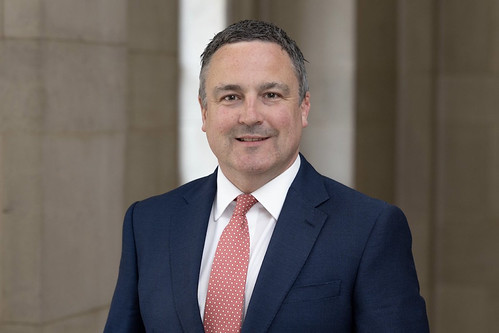
For the first time in history there will be a Welsh person's signature on UK bank notes.
On October 19, Rhys Phillips will take over the role of Chief Cashier of the Bank of England.
LOOSE CHANGE: OCTOBER 25, 2026
Here are some additional items in the media this week that may be of interest. -Editor
A Numismatic News article by Sierra Holt discusses a rare silver locket encasing a gold coin. The piece was likely made in 1660 to commemorate a marriage in County Cork, Ireland. -Editor
 Love was lost for centuries when a silver locket went missing. The silver locket was likely made in 1660 to commemorate the new marriage between Robert Coppinger and his wife Margarett, Catholic landowners residing in County Cork, Ireland. Coppinger's oval-shaped locket is adorned with an engraving of the Nativity on the front and the reverse showing the Adoration of the Magi and the text "ROBT COPPINGER & MARGARETT COPPINGER als. ROCHE."
The ornateness continues in the locket with an engraving of the Crucifixion and a 1619-struck gold 2 doppia from Parma and Piacenza during the reign of Duke Ranuccio I Farnese placed inside. As Roseberys notes in its press release, the issue would have carried a special resonance for the Catholic landowning family as at the time, high-value coins were carried as jewelry. Doppia circulated as a trade gold and was often in the possession of wealthy Europeans.
It isn't known when exactly the locket was lost or why, but it was rediscovered around 1850 under the castle of Mashanaglass in County Cork by a farm laborer. The locket was then taken to the rector of the parish, restored, and given to a Coppinger descendant. "Very few objects survive with such a vivid sense of the people and place to which they belonged," explains Anna Evans, Head of Works of Art at Roseberys.
When the coin reached the Roseberys' Fine & Decorative auction on October 1, the token of love was paired with a copy of The Cork Historical and Archaeological Society Journal from 1895 that reported on the discovery. Also accompanying it was a handwritten 1892 letter from the British Museum's Keeper of Coins that identified the coin.
To read the complete article, see:
Auction: A Coin Encased with Love
(https://www.numismaticnews.net/auction-a-coin-encased-with-love)
Other topics this week include an ancient coin podcast, and Trump's middle finger coin. -Editor
ABOUT THIS ISSUE: OCTOBER 25, 2026
Well, I've been on the road most of this week, and my Diary article has the deets. I started early on this issue to get as much done as I could before my trip. Garrett also came through as usual with a number of prepared articles. Somehow, these issues always manage to come together in time for Sunday night.
That Damon Douglas book on New Jersey coinage came to me from a Texas seller on Abebooks. It arrived in good condition, which was a miracle given that it was packaged in just a thin plastic envelope with no packing material whatsoever. These people have a lot of nerve calling themselves booksellers - that was a really dumb ham-handed way to treat a book.
Here are some non-numismatic articles I came across this week. For bibliophiles, the first one is an interesting account of one book dealer's adventure buying a large library.
How I Bought 6,000 Books, and What I Did with Them (https://downtownbrown.substack.com/p/the-maurice-neville-collection)
I've seen the future . . . [some questions, some without answers] (https://benjamindreyer.substack.com/p/ive-seen-the-future)
The Tragedy of Mrs. Dr. Seuss (https://downtownbrown.substack.com/p/the-tragedy-of-mrs-dr-seuss)
The Many Failures of Larry David (https://colossus.com/article/many-failures-larry-david-profile/)
Ann Hornaday, longtime Washington Post film critic, dies at 66 (https://www.washingtonpost.com/obituaries/2026/10/19/ann-hornaday-longtime-washington-post-film-critic-dies-66/)
-Editor

Editor Wayne Homren, Assistant Editor Garrett Ziss

|
|
| |