Visit our NBS Sponsors











About UsThe Numismatic Bibliomania Society is a non-profit association devoted to the study and enjoyment of numismatic literature. For more information please see our web site at coinbooks.org SubscriptionsThose wishing to become new E-Sylum subscribers can go to the following web page
Subscribe
MembershipThere is a membership application available on the web site Membership Application To join, print the application and return it with your check to the address printed on the application. Print/Digital membership is $40 to addresses in the U.S., and $60 elsewhere. A digital-only membership is available for $25. For those without web access, write to: Jeff Dickerson, Treasurer AsylumFor Asylum mailing address changes and other membership questions, contact Jeff at this email address: treasurer@coinbooks.org SubmissionsTo submit items for publication in The E-Sylum, write to the Editor at this address: whomren@gmail.com BUY THE BOOK BEFORE THE COINSale CalendarWatch here for updates! |
Volume 29, Number 26, June 28, 2026
- WAYNE'S WORDS: THE E-SYLUM JUNE 28, 2026
- NEW BOOKS BY ZLATKO VISCEVIC
- THE WARSHAW FAMILY CONSIGNMENT
- VIDEO: GREEK CURRENCY DURING WWII
- JEFF GARRETT MEGA RED INTERVIEW
- 1908 BATTLE OVER BAD HALF DOLLARS
- XRF ANALYSES $5 PER SCAN!
- NOTES FROM E-SYLUM READERS: JUNE 28, 2026
- SUNDMAN LECTURES AT 2026 PITTSBURGH ANA
- EXHIBITS AT AT 2026 PITTSBURGH ANA
- C4: NUMISMATICS IN AMERICA EXHIBIT AT ANA
- PHILIPPINE FORUM AT 2026 PITTSBURGH ANA
- VOCABULARY TERM: SPONSOR
- DONALD MAXWELL MILLER (1913-1995)
- KEN BRESSETT INTERVIEW, PART FIVE
- HERITAGE: JUNE 2026 ERROR COINS SHOWCASE
- NUMISMATIC AUCTIONS SALE 70 SESSION 4
- VIKING PENNIES MADE FROM ISLAMIC DIRHAMS
- COINS OF ESPERANTO INVENTOR L. L. ZAMENHOF
- THE 2026 PITTSBURGH ANA MEDAL
- WHALING VIGNETTES
- NETHERLANDS INDIES CURRENCY
- LOOSE CHANGE: JUNE 28, 2026
- MANHATTAN BANK CHANNELS RENAISSANCE
- FEATURED WEBSITE: ELEANOR PLATT
- ABOUT THIS ISSUE: JUNE 28, 2026
Content presented in The E-Sylum is not necessarily researched or independently fact-checked, and views expressed do not necessarily represent those of the Numismatic Bibliomania Society.
WAYNE'S WORDS: THE E-SYLUM JUNE 28, 2026
 New subscribers this week include:
Ron Fry of the Missouri Numismatic Society, courtesy Jeff Starck;
Kennedy collector Chris Maes, and
Gage.
Welcome aboard! We now have 6,447 subscribers.
New subscribers this week include:
Ron Fry of the Missouri Numismatic Society, courtesy Jeff Starck;
Kennedy collector Chris Maes, and
Gage.
Welcome aboard! We now have 6,447 subscribers.
Thank you for reading The E-Sylum. If you enjoy it, please send me the email addresses of friends you think may enjoy it as well and I'll send them a subscription. Contact me at whomren@gmail.com anytime regarding your subscription, or questions, comments or suggestions about our content.
This week we open with three new books, updates from the Newman Numismatic Portal, contemporary coin counterfeiters, notes from readers, and more.
Other topics this week include Greek currency during WWII, Mega Red, events, lectures and exhibits at the 2026 Pittsburgh World's Fair of Money, Don Miller, Ken Bressett, auction previews, Viking penny silver, Esperanto, whale vignettes, and sculptor Eleanor Platt.
To learn more about Zlatko Višcevic, the coins and banknotes of Croatia, the 1792 Mint Act, XRF analyses, the Park-Bernet Galleries sale of the Treasure of the Spanish Main, Col. E.H.R. Green, Zotz!, Indian Peace Medals, a Jimmy Stewart short snorter, error coins, and the battle over bad half dollars, read on. Have a great week, everyone!
Wayne Homren
Editor, The E-Sylum

Image of the week
NEW BOOKS BY ZLATKO VISCEVIC
Author Zlatko Višcevic recently published three books: Coins of the Republic of Ragusa, Coins of the City of Split, and his new numismatic catalogue of Austro-Hungarian coins, banknotes and ducats. -Editor

Zlatko Višcevic is a Croatian numismatist, author, publisher and editor, active in numismatics for more than three decades and in phaleristics for the past ten years. He began collecting coins as a child in 1989 and has been professionally involved in numismatics since 2008.
He was born in Rijeka, Croatia, in 1982. He attended Andrija Mohorovicic High School in Rijeka and later graduated from the Faculty of Law. After completing his studies, he worked as a legal trainee and later as a legal adviser in the offshore oil industry. In 2012, he founded Monetalis LLC, a company specialized in numismatics and phaleristics, where he continues to work today. In 2017, he established Dupondius, a trade business dedicated to numismatic publishing and consulting, and in 2021 he founded Numex LLC, a company focused exclusively on the numismatic trade.

Višcevic published his first book on Croatian coins in 2004. This was followed by several catalogues and publications dealing with the coins and banknotes of Croatia, the former Yugoslavia, the Republic of Ragusa, Slavonian banal denars, the coinage of the city of Split, and Austro-Hungarian crowns and ducats of Franz Joseph I. His work is primarily aimed at collectors, dealers, researchers and readers who need clear, practical and reliable numismatic references.


In addition to his books, he has written numerous articles for collectors, especially for those entering the field of numismatics. In 2005 he launched the blog "Hrvatska numizmatika", and in 2018 he founded the portal and YouTube channel "NumizmatikaNET", where he regularly publishes educational numismatic content and shares his knowledge with a wider audience.
He is also the author of several medals, including medals dedicated to Pope Benedict XVI, the Croatian missile boat Petar Krešimir IV, and the violinist Franjo Krežma.
Zlatko Višcevic is a member of several numismatic societies, including the Croatian Numismatic Society (#27), the Numismatic Society of Slovenia (#717), the International Bank Note Society (#10489), and the American Numismatic Association (#BR-3159085).
Published books:
- "Coins of the Republic of Croatia from Independence to the Present Day" (Kovani novac Republike Hrvatske od osamostaljenja do danas, 2004);
- "The Guide to Coins and Banknotes of Yugoslavia, Slovenia, Croatia, Bosnia and Herzegovina, Serbia, Montenegro and Macedonia" (2007);
- "Coins and Banknotes of Yugoslavia, Slovenia, Croatia, Bosnia and Herzegovina, Serbia, Montenegro and Macedonia" (Kovanice i novcanice Jugoslavije, Slovenije, Hrvatske, Bosne i Hercegovine, Srbije, Crne Gore i Makedonije, 2011);
- "Coins and Banknotes of Yugoslavia, Slovenia, Croatia, Bosnia and Herzegovina, Serbia, Kosovo, Montenegro and Macedonia - Issues 2011-2015" (Kovanice i novcanice Jugoslavije, Slovenije, Hrvatske, Bosne i Hercegovine, Srbije, Kosova, Crne Gore i Makedonije - izdanja 2011.-2015., 2014);
- "Coins of the Republic of Ragusa" (Novac Dubrovacke Republike, 2018);
- "Slavonski banovci" (Slavonian Banal Denars, 2025) toghether with Tomislav Dundovic,
- "Novac grada Splita" (Coins of the City of Split, 2026.) toghether with Tomislav Dundovic;
- "Austro-Ugarske krune 1892.-1918. i dukati Franje Josipa I." (Austro-Hungarian Crowns 1892- 1918 and the Ducats of Franz Joseph I, 2026).
 Contacts:
Tel. / Viber / WhatsApp: +385 97 619 4858
E-mail: zviscevic@gmail.com
Web:
www.numizmatika.hr
Facebook: zlatko.viscevic
Instagram: zlatko.viscevic
LinkedIn: zviscevic

THE BOOK BAZARRE
THE WARSHAW FAMILY CONSIGNMENT
Newman Numismatic Portal Project Coordinator Len Augsburger provided this report on the results of the Heritage sale of the Warshaw Family consignment. Portions of the sale proceeds will be donated to Washington University in St. Louis, home of NNP. -Editor
National Numismatic Heritage Items Take Center Stage in Dallas
Several items from the Warshaw Family collection, sold this week by Heritage Auctions, served to highlight the upcoming Sesquicentennial. A Continental Dollar in silver, one of four known, drew $1,312,500. The same piece was sold by Heritage in 2021 at $1,140,000. Prior to the sale, two of the other pieces are traced to the Resolute Americana Collection, while the third is in the Tyrant Collection.


A Comitia Americana medal in silver, PCGS MS64+ CAC, possibly the finest known, attracted exceptionally strong bidding and sold for $475,000.


 For numismatic literature collectors, the highlight of the sale was a copy of the April 2, 1792 Mint Act published in the Gazette of the United States on April 14, 1792. Unpublished research by this author has traced contemporary printings of the Mint Act in eighteen different newspapers, with the earliest publications appearing in Philadelphia, New York, and Boston. This lot drew spirited competition and sold for $47,500 (not a typo), vs. $400 (David Fanning, 2009), and $1,495 (Heritage, 2006) for other known examples. It's clear that this sale represents a sea change in the valuation of this historic document.
The Warshaw Family consignment further included a signed letter from Alexander Hamilton to General Alexander McDougall, March 10, 1777, which sold for $27,500, in addition to a signed letter from George Washington to Christopher Green, October 15, 1777, which drew $47,500. Per the sale catalog, portions of the sale proceeds will be donated to Washington University in St. Louis.
Here's more information from the Heritage website. Great video! -Editor
For a complete Heritage article and Libertas Americana medal lot description and video, see:
Symbols of a Revolution
(https://intelligentcollector.com/symbols-of-a-revolution/?ctrack=200071&type=article1-read-www-icmag-jun-v2-tem061626)
Circa 1783 Medal Libertas Americana Medal, Silver, Loubat-14, Betts-615, Adams-Bentley 15, MS64+ PCGS. CAC....
(https://coins.ha.com/itm/medals-and-tokens/circa-1783-medal-libertas-americana-medal-silver-loubat-14-betts-615-adams-bentley-15-ms64-pcgs-cac/a/6332-47017.s)
1783 Libertas Americana Silver Medal MS64+ | Benjamin Franklin's Masterpiece of Amer. Independence
(https://www.youtube.com/watch?v=n_irV76RYJI)
To read the earlier E-Sylum article, see:
SILVER LIBERTAS AMERICANA MEDAL OFFERED
(https://www.coinbooks.org/v29/esylum_v29n25a21.html)

VIDEO: GREEK CURRENCY DURING WWII
The David Lisot Video Library on the Newman Numismatic Portal can be found at:
https://nnp.wustl.edu/library/multimediadetail/522852
We highlight one of his videos each week in The E-Sylum. Here's one from 2016 about Greek Currency During WWII. -Editor

Italians attacked Greece on October 28, 1940, were driven out, then the Nazis overwhelmed the country in 1941. A brutal occupation followed made worse by inflationary currency.
Speakers: Ray & Steve Feller. From the 2016 International Paper Money Show.
To watch the complete video, see:
Greek Currency During WWII: Tragedy, Triumph, Tragedy and Triumph
(https://youtu.be/7LLraT1FWxU)
Greek Currency During WWII: Tragedy, Triumph, Tragedy and Triumph
(https://nnp.wustl.edu/library/book/540329)

JEFF GARRETT MEGA RED INTERVIEW
Greg Bennick's latest interview for the Newman Numismatic Portal is with the current Senior Editor of the Redbook (A Guide Book of United States Coins), Jeff Garrett. -Editor
GREG BENNICK
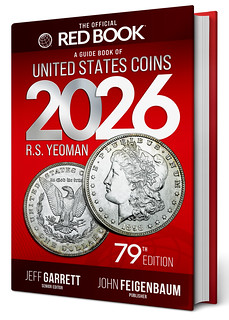 Hi everybody, it's Greg Bennick, and I am here today with Jeff Garrett. Jeff, of course, is from Mid
American Rare Coin Galleries, and is the senior editor of Red Book. And if you saw the first interview I
did with Jeff, you know it was filled with information and great stories, and I wanted to be back here
today with Jeff to talk about the Red Book and the Mega Red. So, Jeff, thanks for thanks for being here
today. I really appreciate it.
Hi everybody, it's Greg Bennick, and I am here today with Jeff Garrett. Jeff, of course, is from Mid
American Rare Coin Galleries, and is the senior editor of Red Book. And if you saw the first interview I
did with Jeff, you know it was filled with information and great stories, and I wanted to be back here
today with Jeff to talk about the Red Book and the Mega Red. So, Jeff, thanks for thanks for being here
today. I really appreciate it.
JEFF GARRETT
Well, thanks, Greg. Thanks for having me. And it's always fun to talk about the Red Book. It's a big part
of my life, and I enjoy sharing it.
GREG BENNICK
I'm so glad. Well, why don't we start with, why don't you tell me how you got involved with the Red
Book? How did that first come to be?
JEFF GARRETT
It's kind of an interesting story. So my first book that I was involved in that I came up with the idea for,
was 100 Greatest U.S. Coins, and that's 20 years ago now. It was probably, maybe even more than
that when I did that. I was working with Mary Burleson at Whitman…actually, I think it was even a
different company at the time. That book came out and was really popular. One thing they wanted in it
was pricing. At the time they wanted me to see if I could help Ken Bressett with his pricing, because the
whole coin business was kind of going through a transition. Ken Brissett and his son Phil were literally
doing pricing like on index cards and handwritten spreadsheets. They would handwrite them, send
them in, and it really needed to be modernized a lot. Ken is brilliant with coins, but he's not really a
trader. I've always been a high-level trader. I've been involved with everything from colonial coins to
basically everything from the front of the Red Book to the back of the Red Book. I buy and sell, so I
have a really good market feel. I started helping Ken with his pricing. At first I was mostly doing gold
coins, because at the time they also gave me the approval to do the Encyclopedia of United States
Gold Coins. I started working on that, and then over time I took more and more of that responsibility of
pricing. In 2019 Ken was about 90-ish, and decided he was really going to officially retire, so that's
that's when I became the Senior Editor of Red Book. It is a huge honor, because that's the bible of
numismatics. I really enjoy doing it, and it's a big part of my life.
GREG BENNICK
It's wonderful, and you're perfect for it, because when people open or look to the Red Book, they look to
answer two questions: What is this, and what is it worth? So, identification of the coin is one thing, but
your expertise is an encyclopedic knowledge of grading and value. So, you're the perfect person for
that position. I'm so glad you're there.
JEFF GARRETT
Yeah, that's been really a great transition. More recently, two or three years ago, John Feigenbaum
purchased Whitman Publishing from the Anderson family, and that's been a really great transition. I
love the Anderson family and they were great. All the people I dealt with were wonderful, but they had a
little bit different business view. The Red Book was a really wonderful, iconic thing, and they didn't like
to make changes. They were like, okay maybe next year we'll do something different, and so the book
in my mind could have been better.
It would take some risk. To make progress, you have to be willing to break things occasionally, to make them better. The only thing I made them do is I made them promise to keep it red!
GREG BENNICK
That's great, and John's perfect for that, right? It's two things at once: it's the "if it ain't broke, don't fix it,"
but also "let's break it a bit and make and take some risks and improve where we can." So that's a
perfect combination,
JEFF GARRETT
That's how things get better. I'm very proud of the Red Book now, because I think every year I can
spend more time on content which I really enjoy. Much rather write an article about something
interesting about coins than figure out the pricing for silver dollars for two days, so it makes it makes it
more fun. It has been a good mix, and I've really enjoyed it.
 GREG BENNICK
That's great. Well, let's talk about the Mega Red. Tell us what the Mega Red is and what it offers versus
the Red Book, and then where the current 10th edition stands?
JEFF GARRETT
That's really an interesting thing to talk about, because I was not around for the birth of the Red Book, I
was still not born for about 10 years or so. It started in 1947 and I wasn't around for that. It obviously is
an iconic brand, fabulous, and is still a wonderful book. I was around though for the birth of the Mega
Red.
At one time, Mary Burleson, who I mentioned before, ran things for the Whitman publishing empire. She asked me, "If you could like do the Red Book any way you wanted to, what kind of changes would you make, and what would you do?"
We thought about it, and I said, "Well, if we could do it, I would add more grading columns that would be for proof coins. You wouldn't start in 1858. You'd go all the way back. You would do more varieties. She really liked that idea. I kept pushing for change in the Red Book. They would say that they maybe were not going to do that, but that they would do something. They suggested that they could do it as a different book.
When it first came out, it was actually called The Professional Red Book…Red Book Professional Edition. I have a copy of it somewhere in my library. I think that was well over ten years ago. But then we started asking what we could do with what became the Mega Red?
Another reason that the book came into being was Dave Bowers. He is one of the most prolific authors of all time. He has a lot of specialty series in almost everything. He's created this amazing amount of content. They were able to take a lot of that content and put it into one book. It was really an amalgamation of a lot of the content that they were already creating for specialty series, but it was able to be put into one book. Now it's aimed for everyone who just really wants to take a deeper dive into coins and have one book that's super comprehensive. I think it's the most comprehensive book on US coinage that's ever existed.
GREG BENNICK
It's astounding. If people haven't seen the book, I recommend going to a coin store, a coin show,
finding a copy, just to look at it. I mean, it's like a cinder block of coins. It is huge.
JEFF GARRETT
There's poundage involved. It's 1075 pages. This is the newest edition, the Mega Red 10, and it's over
1075 pages packed with a lot of that content that Whitman produces. It's kind of condensed into one
book.
GREG BENNICK
Fantastic, I love it. Where's the easiest place for people to find it? I'm sure that it's available
everywhere.
JEFF GARRETT
You know, I was really surprised the other day that a big percentage of Whitman materials are sold on
Amazon, so really easy to get it on Amazon. Whitman has their own website, and of course, all a lot of
coin shops carry it, and then also supply dealers would carry it. The only thing about a coin show and
dealers is that the book is so heavy, they might not bring many copies. I'd say probably getting on
Amazon is probably the easiest access to it,
GREG BENNICK
I think it's important to note that this is a book that is incredible, both for advanced collectors, and
professionals…but also new collectors would benefit wildly from the Mega Red, and the Red Book, of
course, but the Mega Red has so much information. It kind of takes you from beginner to certainly
advanced beginner, and more, and beyond, if you put in the time to read it.
JEFF GARRETT
Each time we come out with a new edition – and this is the 10th edition - what we'll do is pick a
denomination and take a deeper dive into that denomination. This year for the Mega Red 10, it's for half
eagles. I had written some special articles about half eagles that are in here. John Dannreuther and I
worked on die varieties for early half eagles. There's a section on how to collect branch mint gold. A lot
of half eagles are in that so it's a good chance to find out more about one specialty series.
But no matter what you collect, there'll be more information in this book than then you would get in a Red Book, or some other standard reference. It's also packed with photographs, and as I mentioned earlier, a lot of people love dive varieties and cherry picking and stuff like that, so there's a whole lot of that. There's way more of that information in the Mega Red there is in the Red Book.
GREG BENNICK
Great. Well, I'm really happy that we had a chance to talk today and tell people about it. I think this is a
great opportunity for people to add that to their library and dive in and learn a lot more about
numismatics overall.
JEFF GARRETT
You know, if you're a collector of Red Book stuff, there's also a beautiful hardbound edition that's really
pretty cool. I've got one of these here. It's not just a book, it's actually a collectible. Buy this one for your
desk to flip through, and buy one of these to put in your permanent library, and don't touch it, because
these are collectibles.
GREG BENNICK
That's great. I think I might do exactly that myself. That sounds like a great idea. Well, thanks so much
for taking some time and speaking today with me and with everybody about the Mega Red.
JEFF GARRETT
Well, thanks for your interest in it. And if anybody's at a coin show and happens to have one, come by
and I'll be happy to sign one for them.
GREG BENNICK
Oh, that's a great opportunity! Everybody, if you've not seen Jeff's interview, be sure to check out the
Newman Numismatic Portal page, where all my interviews are. My full interview with Jeff is there, along
with many others. So, Jeff, thank you for being here today, and I'm sure we'll talk soon.
JEFF GARRETT
Okay, thanks a lot, Greg. Bye!
To watch the complete video, see:
Jeff Garrett Talks Mega Red with Greg Bennick
(https://www.youtube.com/watch?v=8X1Wi3I-2fI)
To read the earlier E-Sylum articles, see:
2026 RED BOOKS SHIPPED
(https://www.coinbooks.org/v28/esylum_v28n12a02.html)
NEW BOOK: TENTH EDITION MEGA RED X
(https://www.coinbooks.org/v29/esylum_v29n08a05.html)
1908 BATTLE OVER BAD HALF DOLLARS
Jim Haas writes:
"I was looking for information on my great grand uncle Joseph A. Haas. He was a Civil War veteran who fought alongside his father. The J. A. Haas in this article was not my great uncle, I know your readers will enjoy the story."
Jim stumbled across this 1908 account of a Secret Service raid on "the most perfect and largest den of counterfeiters in the history of the country," which took place in Braddock, PA, outside my hometown of Pittsburgh. The scoundrels were making counterfeit half dollars of the kind cataloged by Winston Zack in his book Bad Metal Silver. 50c to S$1 - Circulating Contemporary Counterfeit United States Coins. Thanks! Great story. It was published in the GLEN FALLS, N.Y. MORNING STAR, MARCH 16, 1908. -Editor
Secret Service Sleuths Catch
Counterfeiters at Work
Making Bad Half Dollars
After Battle at Braddock, Pa., in Which One Officer Is Stabbed, Two Men Are Locked Up — East Flooded With False Money
Pittsburg, March 15. — At the point of a gun two men were caught in the act of counterfeiting coins of the United States, and in the roundup the authorities uncovered what they say is the most perfect and largest den of counterfeiters in the history of the country. While only two of the gang of perhaps twenty coin makers were captured and only after a hard fight, fifty molds for making new counterfeit half dollars and almost 600 of the coins already boxed for shipment were captured, with several hundred dollars more ready to be boxed. Joseph A. Haas and John Fuhrman were the men caught in the act of making the coins, and they are in the jail here, having been sent up by the United States authorities after a preliminary hearing charged with counterfeiting.
For three weeks the detectives at Pittsburg have trailed the counterfeiters, who had flooded the town with spurious half dollars. So bad were conditions that the Pittsburg Railways Company took in twenty-seven of the false coins on one afternoon. Detectives Lally, Leff, Dillon and Hanley trailed the counterfeiting to 558 Braddock Avenue in Braddock, a suburb. Having found the counterfeiting machinery was in motion, they telephoned to Pittsburg for the secret service men to come and assist them in making the arrests, as the den was located outside the city of Pittsburg, where the city detectives had no jurisdiction. Operatives W. J. Walsh and John E. Washer were started out as fast as steam could carry them, and, dividing the party equally, they attacked both front and rear of the long, low building.
Battle Over Molten Metal
Once inside they were met by two men who, stripped to the waist, had just left a furnace on which a pan of molten metal was boiling. One of the men carried a knife, the other a revolver, which he discharged at the oncoming officers, but missed.
"Take them alive; there's only two. Look out for others and shoot if they come," shouted Walsh as he closed with the man with the knife. Detective Dillon, who was once a prizefighter, also closed in and with a swing to the ear put the coin maker out.
The man with the gun was also quickly subdued, and all were hauled to Pittsburg, twelve miles away.
The authorities say the best coin makers of the United States were evidently in on the manufacture of the half dollar. There were at least fifteen others connected with the plan at different times in the last two weeks, according to the detectives, who feared they would escape and decided to make the rush.
The bad half dollar is an exact imitation of that of the coinage of 1907 made at the New Orleans mint. Perhaps the only thing which the counterfeiters were not able to reproduce was the small "o" at the end of the eagle's tail. The molds were of new pattern also, the metal being poured in at the edge, and they were of the most clever design.
From this counterfeiting shop, it is alleged by the police, there was coin shipped east to every large city, and the amount of money thus put in circulation is beyond estimating.
Winston Zack writes:
"I probably have seen this article before. There was an overwhelming amount of cast counterfeiting happening at this time. As such, my research tries to capture all such stories but primarily focuses on the die struck counterfeits."
Winston kindly provided images of a cast 1907-O half from his files. -Editor


Winston adds:
"The quality of this example is pretty good, but I could not say if it is from the counterfeiting operation in the 1908 article."
Thanks, eveeryone - great numismatic history. -Editor
To read the earlier E-Sylum article, see:
NEW BOOK: BAD METAL: SILVER 50C TO $1
(https://www.coinbooks.org/v28/esylum_v28n21a04.html)

XRF ANALYSES $5 PER SCAN!
Jonathan Brecher has been reaping the research benefits of a very affordable service offered by author Winston Zack. Others may want to give it a try. -Editor
 Last year's review of the third volume of the Bad Metal series has a one-line comment that the book includes XRF analyses. There's an important extra detail that I haven't seen mentioned in The E-Sylum: That book includes XRF analyses because author Winston Zack bought his own XRF machine.
XRF is a non-destructive method that can measure metallic composition without risk even for valuable objects. It's not a new technology, mentioned in E-Sylum as early as 2012. The main drawback to XRF has been the price. Commercial XRF machines have been available for more than 20 years, but the price has never fallen to the "hobbyist" level. A new machine typically costs $20,000 or more. Some people may know someone with an XRF machine who is willing to run some tests for them as a favor. I don't have that option. Commercial services may charge $150 or more per scan. As a collector of tokens and medals, I have many pieces in my collection where I wondered about their composition. I would have continued wondering, rather than pay those prices.
When I saw that Winston was offering XRF analyses through his website https://www.badmetalcoin.com, I jumped at that. I can satisfy a lot of curiosity at his rate $5 per scan!
I ended up testing over 100 pieces, mainly So-Called Dollars. The results were fascinating, and I've written them up at https://www.so-calleddollars.com/XRF_results.html, with lots of pictures and discussion.
The "yellow-colored" medals provide good examples of the sort of questions that can be answered by XRF. The So-Called Dollars book originally by Hibler and Kappen described HK-694 as bronze, HK-481 as gilt bronze, and HK-415 as gilt brass. XRF shows that all three varieties are actually brass (85% copper, 15% zinc) with no hint of any sort of gilding. The book lists HK-69, HK-245, and HK-304 all as gilt bronze. XRF confirms that all three of those varieties indeed are gold plated — but only HK-245 is gilt bronze. HK-69 is actually gilt copper, while HK-304 is gilt brass.


HK-694 (brass) and HK-481 (brass)


HK-415 (brass) and HK-69 (gilt copper)


HK-245 (gilt bronze) and HK-304 (gilt brass)
I know a lot more now that I've seen the XRF results. I also see how much more could be learned. It would be great if others could test their own pieces, and share the results!
Many thanks to Winston for offering this service and Jonathan for helping get the word out. What discoveries are waiting to be made? -Editor
Jonathan adds:
"A recent thread on the PCGS Message Boards discusses some limitations of XRF. Because XRF analyzes the surface of an object to a microscopic depth, it can give confusing results for plated pieces. The XRF results will usually include both the plating and the base material, with the plating over-represented in terms of percentages. For the pieces I tested, gold plating typically registered at 1-3%, while nickel, cadmium, or chrome plating registered at 5-25% and silver plating in some cases registered at 30% or more. The results are still useful for plated pieces, just with a little more interpretation.
"Unsurprisingly, XRF also gives poor results when the surface is obscured. It's not a good idea to analyze pieces that are already slabbed. That thread points to an interesting analysis from the British Numismatic Society, showing clearly how the thickness of a slab interferes with the scans. Raw coins are certainly the best way to get accurate XRF results."
For more information, see:
1983 Lincoln Cent – Defective Bronze Planchet. NGC VS PCGS.
(https://forums.collectors.com/discussion/1121524/1983-lincoln-cent-defective-bronze-planchet-ngc-vs-pcgs)
XRF Analysis of Coins in Slabs etc
(https://britnumsoc.blog/wp-content/uploads/2022/07/269-xrf-slabs-oddie-blog-001.pdf)
To read the earlier E-Sylum article, see:
NEW BOOK: BAD METAL: SILVER 50C TO $1
(https://www.coinbooks.org/v28/esylum_v28n21a04.html)

NOTES FROM E-SYLUM READERS: JUNE 28, 2026
More on Bill Gibbs
 Vic Mason writes:
"I was sorry to hear of the untimely passing of former Coin World editor Bill Gibbs. His love of numismatics shone through every editorial, column and reader response he wrote. I found him to be a perfectionist in his writing. What always impressed me was the importance he and other staff writers for the publication placed on the ethical dimensions of relations between coin dealers and their customers."
1967 Park-Bernet Treasures of the Spanish Main Sale
To read the earlier E-Sylum article, see:
WILLIAM TILDEN GIBBS (1954-2026)
(https://www.coinbooks.org/v29/esylum_v29n24a05.html)
1967 Park-Bernet Treasures of the Spanish Main Sale


"I was interested to read about the 1715 dated Real with a pedigree from Henry Christensen. In the summer of 1966, when I was working for Sotheby's, I was sent to Melbourne, Florida, to make a selection of coins for the auction at Park-Bernet Galleries on 4 February 1967. Henry Christensen had by then sold a number of coins but Kip Wagner and his band of merry men wanted to make an impact with a big and well publicised auction. By then they had recovered a huge quantity of coins and the auction was certainly going to achieve that. I was impressed with their knowledge and the research into the fleet and the bounty it had contained.
The Christensen sales had come to the attention of Xavier and Ferran Calico, the leading dealers in Spanish and Spanish Colonial coins, from Barcelona, but the 1715 fleet was largely unknown in Spain. The sale was the first of the Treasure auctions, many were to follow. The sale included the Captain General's Emblem of Office (recovered on the beach between the high and low water mark), jewellery, an anchor, Chinese porcelain, ingots and, of course, coins, including the magnificent fully round ‘Royal' 8-Escudos of Philip V, dated 1714. The last lot in the sale comprised 11 Reales and 7 Half-Reales (all but one half-real undated - this 1714).
Sotheby's in their wisdom, did not let me attend the sale, but meeting Kip Wagner and his team was an experience - a large brandy at 10 o'clock in the morning. Going to the Cabin and swimming out to their salvage boat. Seeing the primitive salvage methods, a sieve in the bottom of an oil drum! Seeing a shark swim round the boat - it sped off when they shot at it. Talking to the State of Florida official who had to be on the boat to make certain the State got their share (every fourth item). I visited the bank where silver coins, mostly unsorted, were bagged and stacked to the ceiling. Alas, they never gave me one!
I was 21 and I am still proud of the catalogue. It covered mostly 'uncharted waters' and set a benchmark for future auctions."
Thank you - great story! This is my favorite part about The E-Sylum - hearing directly from people who were there in person, making hobby history. -Editor
To read the earlier E-Sylum article, see:
1715 FLEET: SILVER REALE PROVENANCE SEARCH
(https://www.coinbooks.org/v29/esylum_v29n24a19.html)
Col. Green and the First Car Radio
Julia Casey writes:
"I was searching on Worthpoint trying to identify an antique that I thought could be an early radio, and I came across this neat real photo postcard of Col. Green! It sold in Sept 2023. The selling price was $29.88."
Thanks! Green built an incredible coin collection. Here's the image and seller's description. -Editor

Real photo postcard of millionaire COLONEL E. H. R. GREEN, son of financier Hetty Green, dates from around 1925. Edward Howland Robinson "Ned" Green, also known as Colonel Green, was an American businessman, the only son of financier Hetty Green, the "Witch of Wall Street". After his mother's death in 1916 and his inheritance of half of her fortune, Green built a mansion in Round Hill, Dartmouth, Massachusetts. He brought one of the first automobiles into Texas, a two-cylinder St. Louis Gas Car surrey, designed by George Dorris and is reputed to have been involved in the first car accident in the state, when the car was forced off the road by a farm wagon. He eventually owned a large fleet of cars. From WIKIPEDIA.
In this photograph, Colonel Green is seen motoring in a hybrid vehicle. He lost a leg as a child and, unable to operate a clutch, a gasoline / electric car was built for him. In 1923 a radio station was constructed at his estate in Dartmouth and the wooden box on the hood of his car houses what is considered to be the first car radio. The postcard measures 3 3/8 x 5 3/8" and is in very good condition with light soiling and toning on the reverse.
To read the complete lot description, see:
1925 Dartmouth MA COLONEL GREEN Photo Postcard RPPC Hybrid Car FIRST CAR RADIO
(https://www.worthpoint.com/worthopedia/1925-dartmouth-ma-colonel-green-photo-4668090687)
To read earlier E-Sylum articles, see:
COL. GREEN AND THE WITCH OF WALL STREET
(https://coinbooks.org/esylum_v08n26a20.html)
HARVEY STACK ON MEETING COL. E.H.R. GREEN
(https://www.coinbooks.org/esylum_v16n06a17.html)
RARE COL. GREEN NUMISMATIC LITERATURE OFFERED
(https://www.coinbooks.org/v20/esylum_v20n31a03.html)
 More on the Movie Zotz!
Regarding the 1962 magic coin-themed movie starring Tom Poston,
Joe Onishchuk writes:
"Here's the link to the movie on Archive.org:
https://archive.org/details/zotz-1962
."
Check it out - Jim Backus also stars. -Editor
To read the earlier E-Sylum article, see:
NOTES FROM E-SYLUM READERS: JUNE 14, 2026 : Movie: Zotz
(https://www.coinbooks.org/v29/esylum_v29n24a10.html)
Wisconsin Jeweler Thwarts Gold Con
Justin Perrault writes:
"Piggybacking off the news in last issue about the Michigan Dealer who thwarted a gold con, we had a similar instance here in Waukesha, WI. People need to watch out for these scam artists!"
 A Wisconsin jeweler stopped an 84-year-old Brookfield woman from losing $47,000 after she was pushed toward one of the clearest scam red flags: buying gold and handing it to someone else.
The woman was about to buy gold when a Waukesha jeweler realized something was wrong, according to WISN.
The station reported that the woman had been targeted by a con artist who wanted her to buy gold and hand over the money, but the transaction was stopped before the $47,000 disappeared.
Thanks. We should all be grateful for people who step in at times like these to help someone in need. -Editor
To read the complete article, see:
A Jeweler Stopped an 84-Year-Old From Buying $47,000 in Gold for a Scammer
(https://www.yahoo.com/news/us/articles/jeweler-stopped-84-old-buying-231148552.html)
To read the earlier E-Sylum article, see:
MICHIGAN DEALER THWARTS GOLD CON
(https://www.coinbooks.org/v29/esylum_v29n24a24.html)
Anil Bohora Book Links Updated

Author Anil Bohora submitted this note about a hosting change for his free online books about paper money, postal orders, and stamp papers. Thank for the update. -Editor
Unfortunately the hosting company I was using has decided to shut down their operations by the end of this month.
Now I have started using different hosting services. But because of that all the links to the books I have published have been changed. The new links to download the books for free are as below:
1. Book: History of Hundis Used In India
https://rebrand.ly/HundisUsedInIndia
2. Book: Banknote Stories
https://rebrand.ly/BanknoteStories
3. Book: Banknotes of Bhutan
https://rebrand.ly/BanknotesOfBhutan
4. Collection of Picture Post Cards
https://rebrand.ly/MyPostCards
5. Collection of Different Denominations of World Banknotes
https://rebrand.ly/BanknoteDiffDenomi
6. Collection of One Banknote From Each Country & Monetary Unions
https://rebrand.ly/OneBanknote
7. Catalog of Savings Certificates Used in India
https://rebrand.ly/SavingsCerti
8. Catalog of Postal Orders Used in India
https://rebrand.ly/PostalOrders
9. Catalog of Engraved Stamp Papers Used in British India
https://rebrand.ly/Engraved
10. Catalog of Congreve Stamp Papers Used in British India
https://rebrand.ly/Congreve
11. Catalog of Stamp Papers Used in British Burma
https://rebrand.ly/BritishBurma
12. Collection of One Stamp Paper From Each Princely State
https://rebrand.ly/StampPapersPrincely
13. Collection of Textile Labels Used in India
https://rebrand.ly/TextileLabels
14. Book: Money Stories
https://rebrand.ly/MoneyStories
15. Sample Pages of "Catalog of Hundis Used in Princely States of India"
https://rebrand.ly/HundisPrincelyStates
16. Sample Pages of "Catalog of Hundis Used in India"
https://rebrand.ly/Hundis

SUNDMAN LECTURES AT 2026 PITTSBURGH ANA
The Maynard Sundman/Littleton Coin Company Lecture Series at the Pittsburgh World's Fair of Money will focus on 250 years of American numismatics, including the secrets, crises, and foreign roots behind U.S. coinage. -Garrett
For two and a half centuries, American coins have been far more than mere currency—they are tangible milestones tracking a nation's ongoing pursuit of freedom and identity. From the revolutionary symbols born in 1776 to the modern designs on today's pocket change, United States money has long mirrored the defining crises, values, and triumphs of the American experience. During the American Numismatic Association's (ANA) World's Fair of Money®, taking place August 25-29 in Pittsburgh, experts will explore how coins, medals, and tokens tell the story of the United States from 1776 to today.
The Maynard Sundman/Littleton Coin Company Lecture Series will be held at the David L. Lawrence Convention Center on Wednesday, August 26, from 10 a.m. to 4:15 p.m. This year's theme is "Striking Independence: 250 Years of American Numismatics." The speakers and their lectures include:
10 a.m. – Toby Reeves: Coins Don't Lie: How 250 Years of American Monetary Crisis Created a Roadmap for the Digital Currency Revolution
 American monetary history has repeated the same five-stage crisis cycle four times in 250 years. That is not a coincidence. It is a pattern, and the numismatic record is its most reliable witness. This lecture presents original research using coins, tokens, and paper currency as primary behavioral evidence to argue that cryptocurrency is not a disruption of American monetary tradition. It is the most faithful expression f it. Every time Americans lost confidence in their official money, they invented something new. They did it in 1776, the 1860s, and 1971. They are doing it right now. The coins tell the story every time, if you know how to read them.
11:15 a.m. – Dr. Eric Karrell: Our Nation's History – It's All There in the "Fine Print"
 There are few more iconic American images than the $1 bill. In its current form it has been around for some 90 years. So long, in fact, that we don't give it a second glance as we pull it from the tip jar—let alone read the fine print "This note is a legal tender for all debts public and private." But these same 12 words have not always been on our money—there have been many different variations on this theme throughout the past 250 years. In this lecture, we'll see how we can read our nation's history in that "fine print."
12:15 p.m. Sundman Luncheon (fee and pre-registration required)
2 p.m. – Russ Bega: From Libertas to Liberty: The Foreign Roots of America's Numismatic Identity
 Liberty is often regarded as a uniquely American ideal, proudly proclaimed on United States coinage for more than two centuries. Yet the imagery and symbolism used to express liberty in American money did not originate with the United States. Instead, they emerged from a long visual and intellectual tradition sketching back to the classical world.
This lecture traces the evolution of liberty as a numismatic symbol from the ancient Mediterranean to the early American republic. Beginning with the Greek and Roman traditions that personified freedom through figures such as Libertas and symbols like the pileus, the talk explores how these classical motifs were revived during the Enlightenment and the Atlantic revolutions of the eighteenth century. These ideas circulated widely through European art, political philosophy, and coinage long before the founding of the United States.
3:15 p.m. – Caroline Turco: Republics in Profile: The Parallel Transition from Allegory to Authority in American and Roman Coinage
 From its beginning, American coinage deliberately avoided depicting real people. The Founders—especially George Washington—rejected portrait coinage as a symbol of monarchy, instead choosing allegorical Liberty drawn from classical republic traditions. Yet within little more than a century, portraits of Washington and other former presidents became the dominant visual language of U.S. coins. Today, American coinage increasingly commemorates individuals, events, and national origin stories rather than abstract civil ideas. This lecture will explore that transformation across 250 years of American numismatics and place it in conversation with a striking historical precedent: the evolution of the Roman Republic coinage into Imperial portrait coinage. It will examine how both societies used money to construct civic identity, promote shared myths, and redefine political legitimacy through imagery.
To register for the Sundman Lecture series, visit WorldsFairOfMoney.com. For questions about presentations or more information, contact Doug Mudd at mudd@money.org.
The World's Fair of Money is an annual convention hosted by the American Numismatic Association (ANA) that features educational seminars, lectures, and presentations from noted numismatists; hundreds of dealers to give coin appraisals, buy, and sell inventory; rare treasures on display, auctions and more. For more information on the event, visit WorldsFairOfMoney.com.
The American Numismatic Association is a congressionally chartered, nonprofit educational organization dedicated to encouraging the study and collection of coins and related items. The ANA helps its members and the public discover and explore the world of money through its vast array of educational and outreach programs, to include its museum, library, publications, conventions and webinars. For more information, call 719-632-2646 or visit money.org.
EXHIBITS AT AT 2026 PITTSBURGH ANA
As part of its exhibits at the 2026 World's Fair of Money, the ANA will display never-before-seen coins, sunken treasures, American history, and much more. -Garrett
Discover an extraordinary array of numismatic treasures at the American Numismatic Association's (ANA) 2026 Pittsburgh World's Fair of Money, August 25-29, 2026. The bourse floor at the David L. Lawrence Convention Center will feature an exceptional lineup of exhibits, from iconic favorites—such as the ANA Money Museum's legendary 1913 Liberty Head nickel—to specially curated displays honoring 250 years of American independence.
Examine never-before-seen rarities from the world-renowned Tyrant Collection (the world's most valuable private coin collection), explore remarkable recovered sunken treasures, follow Liberty's evolving image across U.S. coinage, and experience many additional displays designed to inspire, educate, and engage collectors and researchers.
Money Museum Showcase
At the Money Museum Showcase, attendees can encounter some of the world's most beautiful and significant coins, paper money, and related numismatic treasures—featuring rare and historic pieces from the ANA Money Museum, alongside exceptional items generously lent from distinguished private collections.
"The Money Museum is planning a memorable showcase of American history, artistry, and numismatic treasures with classic highlights from the museum's collection, alongside several new and timely exhibitions created for this milestone year," stated Money Museum Curator Caroline Turco.

A few highlights from the Money Museum Showcase include:
- Promises in Silver: The Changing Face of Indian Peace Medals in the United States—a joint display with the American Numismatic Society (numismatics.org).
- Athena's Owls—Icons of Silver (Courtesy of the Arcadia Collection) explores one of the most influential coins of all time, the Athenian "owl" silver tetradrachm.
- A Liberty for All highlights the adoption of Liberty to grace our nation's first coinage and how her image has changed over the last 250 years.
- One of only two known examples of the extraordinary 1921 Satin Finish proof 1921 $20 Double Eagle, on display courtesy of Brian Hendelson.
- Two version of the Declaration of Independence, in celebration of the nation's 250th anniversary, on display courtesy of Brian Hendelson.
"These exhibits invite visitors to explore the stories behind America's money, from diplomacy and war to liberty, leadership, and national identity," explained Turco. The Money Museum Showcase can be found at Booth 1430, at the far end of the convention hall.
Commemoratives & Error Coins Displayed by GreatCollections
GreatCollections (GreatCollections.com), the ANA Official Auctioneer, will present a selection of notable displays that highlight both the artistry and variety of U.S. coinage. From landmark, registry-level silver commemoratives to a remarkable group of dramatic modern errors, these exhibits offer attendees insight into the depth and diversity of the hobby.

Above: Select highlights from the silver commemorative set carefully assembled by ANA member Mike Fuljenz. (Image courtesy of GreatCollections.)

Above: A few of the error coins GreatCollections will display during the World's Fair of Money in Pittsburgh. (Image courtesy of GreatCollections.)
At booth 1100, visitors can view the All-Time #1 Silver Commemorative Set of 144 Coins Graded by PCGS with CAC Approval. This set was formed by well-known ANA member Mike Fuljenz over 20 years. Visitors will also have the chance to view the Palos Verdes Collection of Error Coins, a personal passion project for the collector. Each of the coins is struck from the year 1972 and includes fascinating errors like double strikes, off-metals, wrong planchets, off-center strikes, and die caps.
Tyrants of the Golden Horn
A portion of historical rare coins from the unparalleled Tyrant Collection (TheTyrantCollection.com) will be publicly displayed together for the first time. This multi-million dollar exhibit, Tyrants of the Golden Horn, showcases 224 important coins representing virtually every Byzantine emperor.
"The earliest coin in the exhibit is a gold Aureus of Diocletian, struck in 290 A.D. in Cyzicus (modern-day Turkey), and the last coin is a 1943 Turkish 500 kurush. This is more than 1,700 years of remarkable numismatic history," announced Ira Goldberg, president of Goldberg Coins and Collectibles, Inc., one of the numismatic professionals guiding the assembly of the exhibit.

Above: The finest of only seven known examples, this solidus of Mezezius, A.D. 668-669, graded PCGS MS66, is one of the highlights of the Tyrants of the Horn collection. (Image courtesy of PCGS.)

Above: Described as one of the most important women of all time, Helena, the mother of Constantine the Great, is depicted on this gold solidus. (Image courtesy of PCGS.)
This portion of the Tyrant Collection is named after the Golden Horn, a horn-shaped natural waterway and primary inlet of the Bosphorus sea strait that divides the European side of Istanbul, Turkey. For over 2,000 years, it was the principal harbor for trade ships in Byzantium, Constantinople, and the Ottoman Empire.
"The Tyrants of the Golden Horn consists of coins of the emperors and sultans who ruled Constantinople from its founding in 324 by Constantine the Great, to the abolishment of the Ottoman Sultanate in 1922," revealed Dan O'Dowd, owner of the extensive Tyrant Collection.
This exhibit is the latest in a multi-year series of educational, museum-quality exhibits revealing different portions of the extensive and unprecedented Tyrant Collection. View the exhibit at booth 1330, next to the Money Museum Showcase on the bourse floor.
The Short Snorter Project – James Stewart's Signature
A display of "short snorter" banknotes autographed by World War II-era dignitaries will be on display during the convention. The exhibit, courtesy of the nonprofit Short Snorter Project (ShortSnorter.org), features over 1,300 signatures, including hundreds of VIPs, generals, admirals, presidents, prime ministers, and ambassadors.
 Short Snorter Project Founder Tom Sparks, will display a rare and possibly unique short snorter signed by famous actor James (Jimmy) Stewart. The note was signed while Stewart was serving in the 8th Air Force in the U.K., specifically at RAF Old Buckenham as Group Operations Officer of the 453rd Bomb Group. "In my 20-plus years of collecting, I have not seen another short snorter signed by James Stewart," said Sparks.
Sparks will donate the note signed by Stewart to the Jimmy Stewart Museum, located in Indiana, PA. Now on display through November 15, 2026, at the museum is The Making of JIMMY, a special exhibit celebrating the upcoming feature film JIMMY. The exhibit displays costumes, props, memorable quotes, fun facts, and exclusive behind-the-scenes footage that bring the story of Jimmy Stewart to life.
In 1941, Stewart enlisted in World War II as a combat pilot in the U.S. Army Corps after winning the Academy Award® for Best Actor in The Philadelphia Story. He flew 20 missions over Europe, rising to the rank of colonel by the end of the war. After he served, he portrayed the character George Bailey in It's a Wonderful Life.
Visitors can see the Short Snorter exhibit on display at Booth 96, next to Collector Exhibits on the bourse.
The S.S. Central America Story
This member exhibit presents treasure, artifacts, and scientific wonders found during expeditions to the famous "Ship of Gold," which sank in a hurricane on September 12, 1857, with the greatest lost treasure in U.S. history, tons of gold being transported from Gold Rush California. See treasure and personal artifacts, including clothing found in passengers' luggage, and learn the stories of those who were on board. See 3D photographs of the incredible treasure when it was first found in 1988, 7,200 feet deep in the Atlantic, 150 miles off the Carolina coast. Scientific specimens offer insights into the mysterious, deep-sea environment.

The shipwreck is rightly famous for its tons of gold ingots and its thousands of Mint-State Double Eagles. But the "small change" coins carried by passengers and found in the shipwreck's debris field are important as well, showing the confusion and chaos that accompanies American commerce at the end of foreign coin legal tender. The treasure provides a perfect time capsule marking the beginning of the enormous changes that would happen with American money because of the U.S. Coinage Act of 1857 and the upheavals of the Civil War.
The "Ship of Gold" exhibit will be displayed at Booth 600.
The World's Fair of Money Experience
During the World's Fair of Money, more than 500 dealers from across the United States and abroad will be buying and selling rare coins, vintage paper money, medals, tokens, and gold and silver. Many of the on-site numismatic experts will provide free, informal evaluations of the public's old coins and paper money.
Educational seminars, free presentations, and a children's treasure trivia game will be offered during the show, as well as family-friendly activities.
The 2026 World's Fair of Money is taking place at the David L. Lawrence Convention Center at 1000 Fort Duquesne Blvd., Pittsburgh, PA, 15222. The show will be open to the public on Tuesday, August 25, from 1 p.m. to 5 p.m.; Wednesday through Friday, August 26-28, from 10 a.m. to 5 p.m.; and Saturday, August 29, from 10 a.m. to 3 p.m.
Admission is free for ANA members and children 12 and under, and $10 for non-member adults Tuesday through Friday. Admission is free for everyone on Saturday.
Additional information about the convention and hotels in the area can be found online at WorldsFairOfMoney.com.
C4: NUMISMATICS IN AMERICA EXHIBIT AT ANA
The Colonial Coin Collectors Club (C4) celebrates America's 250th anniversary with the Special Exhibition "Numismatics in America, 1752–1792: How Money, War, and Taxation Forged an American Nation." -Garrett
Discover the story of America's founding through the coins, medals, and paper money that financed a revolution, reflected political ideals, and helped forge a nation. The Colonial Coin Collectors Club (C4) invites you to experience one of the most transformative periods in American history through the remarkable numismatic treasures that circulated during the nation's birth.
Presented in conjunction with America's 250th Anniversary, this special exhibition will be on display August 25–29, 2026, during the American Numismatic Association World's Fair of Money® in Pittsburgh, Pennsylvania.
The four-case exhibit traces the evolution of American numismatics from the French and Indian War through the Revolutionary War, the Confederation period, and the ratification of the Constitution and the election of George Washington as the nation's first President. Together, the coins, medals, and currency tell the story of a people forging both a nation and a monetary identity.
Exhibition Highlights
Featured among the exhibition's extraordinary rarities are:


An original 1776 Washington Before Boston Comitia Americana Medal in bronze.


A Massachusetts 24-Shilling "Sword in Hand" note engraved and printed by Paul Revere.
Each artifact serves as a tangible witness to the events that transformed thirteen British colonies into the United States of America.
Many of the pieces on display rank among the finest known examples and represent decades of careful collecting, research, and stewardship. Together, they offer a rare opportunity to experience firsthand the numismatic artifacts that witnessed America's birth.
Conceived by Dr. David Menchell and developed through the collaborative efforts of numerous members of C4, this exhibition showcases not only extraordinary numismatic treasures but also the scholarship and dedication that have made C4 the premier organization devoted to colonial and early American numismatics.
Whether you are a seasoned collector, a student of history, or simply curious about America's founding, this exhibition offers a unique opportunity to discover how money helped shape a nation.


Libertas Americana Medal


LEFT: Benjamin Franklin Nini terra cotta
RIGHT: Washington Inaugural Button eagle and star

PHILIPPINE FORUM AT 2026 PITTSBURGH ANA
The Philippine Collectors Forum will meet at the 2026 ANA World's Fair of Money in Pittsburgh. The keynote speaker will be Jeff Shevlin on "Wilson Dollars," and other presenters include Dennis Tucker, The Honorable Steven M. Bieda, and more. -Garrett

Book reviews and market reports on many aspects of Philippine history and collectibles are part of the annual Forum. (Pictured: Dennis Tucker with recent publications by Eldrich Yap and Janssen Bantugan; Desiree Ann Cua Benipayo; Earl Honeycutt and Sandy Lichauco; Kenneth J.E. Berger; Q. David Bowers; and The CDN Monthly.)
The Philippine Collectors Forum will hold its annual gathering at the American Numismatic Association's summer convention (the World's Fair of Money) on Friday, August 28, 2026, in Pittsburgh. The PCF meeting is free and open to the public. Highlights include custom ANACS-slabbed commemorative coins for the first fifteen attendees, and Philippine money–related door prizes, including bronze and silver coins and Japanese Invasion currency from World War II. Educational features include a keynote lecture, market and auction reports, book reviews, and research updates from experts in the fields of Spanish and American Philippine coins, tokens, medals, and paper money.

Limited-edition slabbed coins are distributed to early attendees of every Philippine Collectors Forum meeting. Pictured are examples from 2017 and 2018.
PCF Secretary John Riley has noted the very strong market in U.S./Philippine currency in recent years, as well as active research in all aspects of related numismatics.
PCF founding member Dr. Earl Honeycutt continues to add more and more material to his book Philippine Medals and Tokens 1780–2024 (fourth edition coauthored with Sandy Lichauco, 2024). He observes: "Buying and selling Philippine medals continues to grow in popularity in Manila. High-quality and rare medals and tokens are bringing record prices at auctions. To keep collectors abreast of the latest pricing information and new medals, the 84-page ‘Edition 4.5' (2026) was just released."
The keynote speaker of the 2026 Philippine Collectors Forum symposium is award-winning author and former ANA executive director Jeff Shevlin. He will share information on the hundredth anniversary of the famous "Wilson Dollars" (originally minted in bronze, silver, and gold in 1920 to celebrate the opening of the Manila Mint). Shevlin will also show the original dies rescued from the rubble of the destroyed Mint after World War II and eventually used to strike commemoratives of the Mint's centennial.
Former Citizens Coinage Advisory Committee numismatic specialist Dennis Tucker will present an appreciation of the late Joel Iskowitz, designer of the Filipino Veterans of World War II Congressional Gold Medal. Iskowitz passed away in April 2026 after a prolific career in corporate, military, and book illustration, coin and medal design, and the creation of more than 2,000 postage stamps for forty nations.

Dennis Tucker was the keynote speaker at the 2025 Philippine Collectors Forum symposium in Oklahoma City. He presented on Filipino coin designer Melecio Figueroa, "The Saint-Gaudens of the Philippines."
Additional Forum speakers will include The Honorable Steven M. Bieda (giving an update on the former Manila Mint), Dr. Earl Honeycutt (on the current market for Philippine exonumia), coin dealer and researcher Kyle Ponterio (on a major two-part auction of Philippine medals and exonumia that will begin in October), and Secretary John Riley, with others to be announced. Reports from dealers and collectors in the Philippines will also be presented, along with show- and-tell and a vibrant atmosphere of Kapwa (shared community).
The Philippine Collectors Forum is a club member of the congressionally chartered American Numismatic Association. Membership in the PCF is free, and attendees don't have to pay the convention's entrance fee to attend the 2026 annual meeting. It runs from 1:00 to 4:00 pm in Room 334 (above Hall A, near the Noresco Riverside Terrace) of the David L. Lawrence Convention Center.
Readers can request a copy of the 2025 Report of the Philippine Collectors Forum by emailing John Riley (johnrriley@yahoo.com) or Dennis Tucker (dtucker@americannewsagency.org).
VOCABULARY TERM: SPONSOR
Here's another entry from Dick Johnson's Encyclopedia of Coin and Medal Terminology. -Editor
Sponsor, Sponsorship. A firm, organization or individual that underwrites the expense of making and issuing a medal, or medal program, for another entity. Many scienific, medical (and some sports) medallic awards are often underwritten by profit corporations for the benefit of nonprofit organizations, often trade associations. Chevrolet was the sponsor, for example, of the College Football Centennial Medal of 1969. The American Numismatic Society was the sponsor of the New York Charter Day Medal of 1898 for the New York City Chamber of Commerce. The sponsorship of a medal – or a medal award program – is an eleemosynary or philanthropic act.
To read the complete entry on the Newman Numismatic Portal, see:
Sponsor, Sponsorship
(https://nnp.wustl.edu/library/dictionarydetail/516794)
DONALD MAXWELL MILLER (1913-1995)
E-Sylum Feature Writer and American Numismatic Biographies author Pete Smith submitted this article on token collector and author Don Miller. Thanks! I've used AI to sharpen and enhance the newspaper clipping image. -Editor
I have been writing a column for the TAMS Journal. When I decided that Donald Miller was not appropriate for that column, I decided to write him up for The E-Sylum instead.
Donald M. Miller was born in Indiana, Pennsylvania, on August 1, 1913. He was the son of Lewis Earle Miller (1881-1954) and Mary Elizabeth Fleming (1881-1953). His father was an attorney.
Donald graduated from Juniata College in 1934 with his degree in commerce and finance. He went on to Dickinson School of Law and graduated in 1939. He practiced law with his father briefly until 1942.
Miller joined the U. S. Navy in 1942 and served on the United States Army Transport Fairfax in convoy service across the North Atlantic. He also saw convoy service in the Mediterranean. They provided support for the invasions of Sicily and Salerno, Italy.
Late in the war, he was a communications officer in Seattle, Washington. He left service with the rank of lieutenant.
Miller returned to the practice of law with his father in 1946 and continued until the death of his father in 1954. Later he was a partner with his daughter, Pamela, in the firm Miller and Miller.
Donald was married three times. He married [1] Betty Dorothea Rephorn (1912-2000) while still in college in 1933; then he married [2] Anne Louise Franson (1921-2009) on June 14, 1947; then he married [3] Rita Mae "Dolly" Lewonas (1926-2013) in 1956. He had two daughters and one son.
 Perhaps the most interesting wife was Dolly. She attended modelling school in New York and
worked as a photo and fashion show model. She earned the title of
Miss Cinderella of Television
and Cover Girl Queen.
Perhaps the most interesting wife was Dolly. She attended modelling school in New York and
worked as a photo and fashion show model. She earned the title of
Miss Cinderella of Television
and Cover Girl Queen.
Miller was a director of the Elderton State Bank from 1948 until 1987 and was then director emeritus after 1988.
He joined the American Numismatic Association in 1941 as member 8430 from his address at 1470 Philadelphia Street in Indiana. Miller was a charter member of the Token and Medal Society (TAMS) in 1960.
In the Oct-Nov 1964 issue of the TAMS Journal, president Virginia Culver announced the creation of the Donald M. Miller Merchant Token Award to be presented at the annual banquet for the best exhibit of merchant tokens at the ANA convention. I spent hours attempting to compile a list of winners. This is the best I could do:
1965 - Arlie R. Slabaugh
1966 - Arlie R. Slabaugh
1967 - John A. Wafer
1968 - No Exhibit
1969 - No Exhibit
1970 – Dottie Dow
1972 – Max M. Schwartz
1973 – Ronald J. Benice
1974 – Robert W. Craigo
1975 – No Award
1977 – David E. Schenkman
The American Numismatic Association presented the B. P. Wright Award for exhibits of tokens and medals. Most years the Wright Award was given for the same exhibit as the Miller Award. In 1977, the Miller Award was eliminated and replaced by the ANA B. P. Wright Award.
Miller lived at 155 East 14th Street and sold the house in 1962. He then bought the house at 104 North 7th Street in Indiana.
Kenneth W. Rendell issued A Descriptive List of an Outstanding Collection of Hard Times Tokens in 1957. This was a 16 page fixed price list for 154 of the 160 varieties numbered by Low from the duplicates of Donald M. Miller, formerly the collection of George L. Tilden. The entire collection was offered at $9850.


Miller compiled A Catalogue of U. S. Store Cards and Merchant Tokens, published in 1962. This was a revision of Edgar Adams' United States Store Cards published in 1920.
The era of Merchant Tokens generally applies to tokens issued during 1845 to 1860 and to tokens issued in the first 31 states admitted to the Union through California in 1850. Miller numbers begin with a two-letter state code followed by digits. The tokens were listed first by state and then alphabetically by city.
He was a member of the Historical Society of Western Pennsylvania. He was a member of the Indiana Country Club, the VFW Country Club and the BPOE Lodge.
In the 1950's, Miller attended an auction in the penthouse of a New York hotel. He got into a dispute with John J. Ford over a Hard Times Token they both wanted. Strong words were followed by a scuffle and shoving match that moved out to the balcony. Bystanders stepped in to prevent Miller from pushing Ford over the edge.
Miller may have had the finest collections of Bolen medals, Hard Times Tokens and antebellum merchant tokens. These were sold to Charles Litman in Pittsburgh.
Donald died at Indiana Hospital on April 18, 1995, and is buried with Dolly in Oakland Cemetery in Indiana.
Miller's numismatic library was acquired after his death by Wayne Homren. Items Wayne didn't want were sold through Money Tree. Wayne kept Donald's notebooks and ephemera until selling the lot through Kolbe and Fanning in 2024.
The Indiana Gazette for February 3, 1979, had a full-page feature article on Mrs. Dolly Miller and her daughter Pamela. Between them, they had nearly a thousand tin cans. These were lithographed product containers like those in an old country store and Pamela had a reimagining of an old country store in her basement. Mrs. Miller belonged to Tin Container Collectors of America. The article did not mention Donald Miller or his collections.

Wayne Homren visited Miller at his home at 104 North 7th Street in Indiana, Pennsylvania.
Smarty-Pants question of the week: Who was the previous owner of the house and why is that important?
I met Don and Dolly when I first visited their home, and while getting a tour from Don I got to see the impressive County Store collection. After Don passed, Dolly contacted me about buying his numismatic library. I made an offer and it was accepted. We had very similar tastes in books; although he specialized in collecting tokens, his books covered the gamut of U.S. coins, medals, tokens and paper money. About 90% were duplicates of my library. The Money Tree sale helped me recover my cost and repay a loan from a friend. The books I kept included a number of plated auction catalogs and a complete set of Coin Collector's Journal. -Editor

KEN BRESSETT INTERVIEW, PART FIVE
Greg Bennick's latest interview for the Newman Numismatic Portal is with "Mr. Redbook". Ken Bressett. Here's the fifth of six parts, where Ken discusses his lifelong friendship with Eric P. Newman, including the New Hampshire copper, their research collaborations, and remarkable moments in the Newman home. -Editor
 GREG BENNICK: For sure. Okay, well switching gears a bit, can you tell me a little bit about meeting Eric Newman?
KEN BRESSETT: Because I was a Hampshire boy, I wanted to collect and to learn all about the only coin made for New Hampshire in the colonial times.
Sure enough, there was a copper coin dated 1776, with a New Hampshire origin. It is listed in the Red Book. I had to learn all I could about that. I learned every owner of those New Hampshire cents and the true history of them all. Eric Newman was one of those people. I wrote to him, and said, "I'm very much interested in the New Hampshire copper coins. I'm trying to learn all I can about them and I've discovered that you own one of them. Would you please tell me what you can about it, because I want to have photographs of all that I can find."
So, Eric wrote back to this young kid that he didn't know. And he said, "I'm sending you the coin so that you can examine it, and here's a few things that I know about it. And would you please return it to me when you're done?"
GREG BENNICK: Wow.
KEN BRESSETT: And that's how I met him. We became fast friends and ever after. I became his publisher in time, and published his great book on early American paper money. We worked on several projects, as you probably know, such as the 1804 dollar book.
GREG BENNICK: Sure.
KEN BRESSETT: We cooperated on that and remained friends for his entire life. Yeah, a great, great, great man. He taught me how to eat.
GREG BENNICK: He taught you how to eat?
KEN BRESSETT: Yeah. Because, he said, "Always eat a lot of grain foods. A lot of grain foods." He advised me on some other things not to eat. That was the secret of his long life. He lived to be 106.
GREG BENNICK: He was 106, that's right. And did you say grain or green as in like the color green?
KEN BRESSETT: No, grain. Grain foods. Nuts and, you know, other things.
GREG BENNICK: Beans and things like that.
KEN BRESSETT: Yep. All I can say is I'm pretty darn healthy for a guy my age.
GREG BENNICK: You're incredibly healthy. I mean, even literally last week, I was sitting in Colorado Springs thinking, "Man, I should have exercised today." And somebody mentioned to me that you walk three miles a day or four miles or some number of miles a day? It's amazing.
KEN BRESSETT: Yep, I still do. And did today. On a good day, I'll go five miles a day.
GREG BENNICK: Wow, you've inspired me. After we get done talking, I might go for a walk. This is tremendous.
KEN BRESSETT: (Laughs) Good. Well, it's the best and most healthful thing that a person can do.
GREG BENNICK: That and eat grain foods. Okay, I've learned a lot.
KEN BRESSETT: Yeah, well watch what you are eating. Eat just good things, vegetables and all that sort of thing.
GREG BENNICK: That's great. You were thinking before about where Eric Newman was from. Was he from St. Louis, Missouri?
KEN BRESSETT: Yes! St. Louis. That's the part I...
GREG BENNICK: No, no problem. I mean, it's not like you've not met every single person in coins in the last few decades. So, it's understandable to forget where somebody is from.
KEN BRESSETT: Well, I visited him often, and it was always such a pleasure. One time, we were there alone. His wife, Evelyn, had gone out for something, some meeting or something. And Eric says, "Well, we got to have something to eat. It's getting late. We got to eat something. The maid has gone, the cook has gone. I don't know. I think I can do something. Oh, I'll get a pizza and I can heat it up in the kitchen."
GREG BENNICK: Okay.
KEN BRESSETT: He says, "I know where the kitchen is." (laughter) He says, "I'm not sure. We got to have a pan or a something here, a pot or something." That guy had never been in the kitchen.
 But eating with him was an experience too. One time he said, "See that
spoon you're using?" I said, "Yeah, that looks old. It looks older than
the others." He says, "Yeah. That one's made by Paul Revere."
But eating with him was an experience too. One time he said, "See that
spoon you're using?" I said, "Yeah, that looks old. It looks older than
the others." He says, "Yeah. That one's made by Paul Revere."
GREG BENNICK: What?
KEN BRESSETT: And then he says, "Well, that big spoon there with the salad… that's Ephraim Brasher's hallmark on it. He made that."
GREG BENNICK: What?
KEN BRESSETT: Yeah. Yeah. And while I was at his house, I always had to look at the original Declaration of Independence.
GREG BENNICK: Wow.
KEN BRESSETT: Now, you're going to say, he can't have the original Declaration of Independence because that's in our national collection. Well, if you stop to think about it, you can't have a declaration signed by all these states unless all of the states have their separate copies.
GREG BENNICK: Wow.
KEN BRESSETT: So he actually owned the Delaware copy of the Declaration of Independence. Looks just like, almost like the original. It's not quite as big, and it's printed. But he had it.
GREG BENNICK: I'm amazed. Just the fact that you're sitting around eating pizza you cooked out of a pot with Paul Revere's spoon while looking at a copy of the Declaration of Independence with Eric Newman.
KEN BRESSETT: Yes. And he's donated that since before his death. He donated the Declaration to, I think, a local museum. Great person to know. He was wonderful.
 About the Interviewer
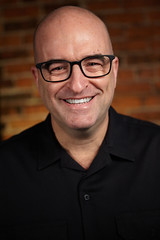
Greg Bennick (www.gregbennick.com) is a keynote speaker and long time coin collector with a focus on major mint error coins and US counterstamps. He is on the board of both CONECA and TAMS and enjoys having in-depth conversations with prominent numismatists from all areas of the hobby. Have ideas for other interviewees? Contact him anytime
via instagram @minterrors.
He can also be reached by email at
minterrors@gmail.com.
To watch the complete video, see:
Ken Bressett, Interviewed by Greg Bennick
(https://www.youtube.com/watch?v=emQlt4zLTxU&t=1s)
To read the earlier E-Sylum article, see:
KEN BRESSETT INTERVIEW, PART ONE
(https://www.coinbooks.org/v29/esylum_v29n22a17.html)
KEN BRESSETT INTERVIEW, PART TWO
(https://www.coinbooks.org/v29/esylum_v29n23a18.html)
KEN BRESSETT INTERVIEW, PART THREE
(https://www.coinbooks.org/v29/esylum_v29n24a14.html
KEN BRESSETT INTERVIEW, PART FOUR
(https://www.coinbooks.org/v29/esylum_v29n25a12.html)

HERITAGE: JUNE 2026 ERROR COINS SHOWCASE
Heritage Auctions will be hosting their Error Coinage US Coins Showcase Auction on June 29. Select items are discussed below. -Garrett


1944 1C Lincoln Cent -- Struck on 2.9 Gm Steel Planchet -- VF35 PCGS.
To read the complete item description, see:
1944 1C Lincoln Cent -- Struck on 2.9 Gm Steel Planchet -- VF35
PCGS.
(https://coins.ha.com/itm/errors/1944-1c-lincoln-cent-struck-on-29-gm-steel-planchet-vf35-pcgs-pcgs-population-59-in-35-274-finer-4-26-cd/a/60547-53042.s?ctrack=200071&type=featured-2-coinus-news-tem062426)


1965 1C Lincoln Cent -- Large Cud Die Break Obverse -- MS64 Red PCGS.
To read the complete item description, see:
1965 1C Lincoln Cent -- Large Cud Die Break Obverse -- MS64 Red
PCGS.
(https://coins.ha.com/itm/errors/1965-1c-lincoln-cent-large-cud-die-break-obverse-ms64-red-pcgs-cdn-3-whsle-bid-for-ngc-pcgs-ms64/a/60547-53074.s)


(1990) 1C Lincoln Memorial Cent -- Overstruck on a 1990-P Dime, Double Denomination -- MS65 NGC.
To read the complete item description, see:
(1990) 1C Lincoln Memorial Cent -- Overstruck on a 1990-P Dime,
Double Denomination -- MS65 NGC.
(https://coins.ha.com/itm/errors/-1990-1c-lincoln-memorial-cent-overstruck-on-a-1990-p-dime-double-denomination-ms65-ngc/a/60547-53110.s?ctrack=200071&type=featured-3-coinus-news-tem062426)


1998 1C Lincoln Cent -- Multi-Struck -- MS64 Red and Brown NGC.
To read the complete item description, see:
1998 1C Lincoln Cent -- Multi-Struck -- MS64 Red and Brown
NGC.
(https://coins.ha.com/itm/errors/1998-1c-lincoln-cent-multi-struck-ms64-red-and-brown-ngc-ngc-census-10-in-64-5-finer-4-26-cdn-050-whsl/a/60547-53120.s?ctrack=200071&type=featured-4-coinus-news-tem062426)


(1883-1912) Liberty Nickel, With Cents 5C -- Struck 70% Off Center -- MS64 PCGS. Ex: Fred Weinberg Collection.
To read the complete item description, see:
(1883-1912) Liberty Nickel, With Cents 5C -- Struck 70% Off
Center -- MS64 PCGS.
(https://coins.ha.com/itm/errors/-1883-1912-liberty-nickel-with-cents-5c-struck-70-off-center-ms64-pcgs-ex-fred-weinberg-collection-liberty-head/a/60547-53163.s)


Undated 5C Jefferson Nickel -- Struck on a Cent Blank -- MS64 Red and Brown NGC.
To read the complete item description, see:
Undated 5C Jefferson Nickel -- Struck on a Cent Blank -- MS64
Red and Brown NGC.
(https://coins.ha.com/itm/errors/undated-5c-jefferson-nickel-struck-on-a-cent-blank-ms64-red-and-brown-ngc-31-grams/a/60547-53178.s)

(1946-65) 10C Roosevelt Dime, 90% Silver -- Broadstruck & 40% Indent -- MS65 PCGS. The PCGS insert incorrectly lists the potential date range as 1946-25.
To read the complete item description, see:
(1946-65) 10C Roosevelt Dime, 90% Silver -- Broadstruck & 40%
Indent -- MS65 PCGS.
(https://coins.ha.com/itm/errors/-1946-65-10c-roosevelt-dime-90-silver-broadstruck-and-40-indent-ms65-pcgs-the-pcgs-insert-incorrectly-lists/a/60547-53231.s?ctrack=200071&type=featured-5-coinus-news-tem062426)


1976 25C Bicentennial Quarter -- Two-Coin Mated Pair -- Brilliant Uncirculated NGC. The obverse of the quarter is fully struck. The reverse design is mostly struck on a smaller (possibly dime) planchet that was nearly centered on the reverse of the quarter when struck. The smaller piece shows some strike softness and blue-green toning, with blushes of gold and rose.
To read the complete item description, see:
1976 25C Bicentennial Quarter -- Two-Coin Mated Pair --
Brilliant Uncirculated NGC.
(https://coins.ha.com/itm/errors/1976-25c-bicentennial-quarter-two-coin-mated-pair-brilliant-uncirculated-ngc-the-obverse-of-the-quarter-is-ful/a/60547-53281.s?ctrack=200071&type=featured-6-coinus-news-tem062426)

NUMISMATIC AUCTIONS SALE 70 SESSION 4
Here's some more information on the Numismatic Auctions LLC Sale 70, which features ancient coinage. -Editor


Lot 865 - Ancient Greek, Lucania, Heraklea, 276-250 BC Silver Stater. 6.51g, 20mm. SNG ANS 90 (same dies); Head of Athena left, wearing a crested Corinthian helmet, "|- A" behind neck, "|-HPAK?EION" above.; Rx: Herakles standing left, holding up an uncertain object with his right hand, a lion skin over his left arm while leaning on a club. "?O[P]" to right. aXF, gunmetal blue and iridescent toning, somewhat flatly struck on the reverse. ($250-350)


Lot 870 - Ancient Greek, Bruttium, Caulonia, 475-425 BC Silver Stater. 7.98g, 20mm. SNG Cop 1711; Apollo advancing right left hand raised - holding a branch, a small daimon running right on his extended left hand, stag to right, head left, "KAV?" to left; Rx: Stag standing right, retrograde "KAV?" above, branch to right. gVF. ($200-300)


Lot 878 - Ancient Greek, Islands off of Thrace, Thasos, 500-480 BC Silver Stater. 9.68g, 20mm. Le Rider, Thasiennes 2; Satyr running right, carrying a protesting nymph; Rx: Quadripart incuse square punch. Toned gVF, some old striations/light diagonal marks reverse, yet a very pleasing and sharp example of this popular type. ($400-600)


Lot 912 - Seleucid Kingdom, Seleucus I (in the name of Alexander the Great), 312-281BC Silver Tetradrachm. 17.2, 26.7mm (Struck 311-294 BC, Babylon mint) SC 82.3c, Price 3959. Head of Herakles right wearing lion's skin; Rx: Zeus seated left holding an eagle and scepter, "MI" and lion head left to left, monogram within a wreath below the throne, "A?E?AN?POY BASI?EOS". A handsome and lustrous XF with hints of gold and bluish-gray color, obverse slightly off-center, a few old flan irregularities and light old marks about the edge. Overall quite attractive with nice style, a lovely presentation and charming originality. Accompanied by an old collector or dealer ticket with the common attribution error as Macedonia rather than the correct nomenclature as Seleucid Kingdom. ($300-400)


Lot 921 - Egypt, Ptolemy I, 305-281 BC Gold Triobol. Struck 298-294 BC.1.29g, 9.5mm. Sv223; Diademed head of Ptolemy I right; Rx: Eagle standing left on a thunderbolt, monogram to left. "?TO?EMAIOY-BASI?EOS". VF, a few scratches/marks & clipped. Ex Pegasi with tag. ($500-600)


Lot 958 - Nero, 54-68, Gold Aureus. 6.75g, 18mm. RIC 63; Laureate bust of Nero right "IMP NERO CAESAR AVGVSTVS"; Rx: Jupiter seated left, holding a thunderbolt and scepter, "IVPPITER CVSTOS". Bold Fine by wear, typical light scratches and marks, some edge marks lower right on reverse side, yet a very presentable and affordable example of this sought after ruler in Gold. ($1200-1500)


Lot 960 - Vitellius, 69, Silver Denarius. 3.54g, 18mm. RSC 112; Head of Vitellius right "A VITELLIVS GERMAN I[MP TR P]"; Rx: Tripod, dolphin right above, raven in the legs. "XV VIR SARC FAC". gVF. Ex Agora Auctions, Sale 47, Lot 103. ($400-500)

VIKING PENNIES MADE FROM ISLAMIC DIRHAMS
Len Augsburger passed along this article about a new study reporting that early Viking pennies were likely made from silver obtained by melting Islamic coins. Thanks - interesting discovery. -Editor

Some of the earliest Viking "pennies" were made with silver that contained melted-down coins from the Islamic world, a new study reports. The finding confirms the relationship between early Viking and Islamic silver, which was likely the result of long-distance trade.
The silver coins make up the Damhus hoard, a trove of 226 Viking Age pennies found near the town of Ribe on Denmark's Jutland Peninsula in 2018. The trove dates to between A.D. 830 and 850, which makes the silver pieces some of the earliest Viking coins ever discovered, according to the study, which was published June 5 in the journal Archaeometry.
Early medieval Denmark was a center of the Norse world, and raiders from the coasts of Scandinavia were known as Vikings after the Old Norse word "vikingr," which meant something like "pirate."
The Vikings became notorious in 793 when they raided Christian monks on the English island of Lindisfarne. This event sparked the Viking Age, which ended in 1066 when a Viking army was defeated at Stamford Bridge in England only a few weeks before the Norman Conquest.
Birch said the Damhus hoard came from a time when Denmark was divided among pagan Norse kingdoms, more than 100 years before their unification and Christianization under Harald Bluetooth.
Examination of 25 of the coins with X-ray fluorescence and other analytical techniques looked at the different isotopes — elements with different numbers of neutrons in their nuclei — of the trace elements mixed in with the silver. The results indicated that, in some cases, more than half of the precious metal had come from Islamic silver coins called "dirhams," he said.
The Viking coins were probably minted from ingots of silver produced outside Scandinavia, in part by melting down Islamic coins in bulk, Birch said, and these ingots had likely been traded to the ancient mint at Ribe.
"This silver has already had a life cycle; it's not coming straight from a mine," he said. "[The silver] has been made into dirhams and then been melted in a pot somewhere."
To read the complete article, see:
'Melted in a pot somewhere': Vikings used Islamic silver coins to make their early pennies, study finds
(https://www.livescience.com/archaeology/vikings/melted-in-a-pot-somewhere-vikings-used-islamic-silver-coins-to-make-their-early-pennies-study-finds)

COINS OF ESPERANTO INVENTOR L. L. ZAMENHOF
Laurence Edwards writes:
"Thanks for the link to the Harper's article on Esperanto! I published a (shorter) piece in The Shekel, Summer 2025, on LL Zamenhof on "fantasy" coins."
Thank you! Here's an excerpt from the article. -Editor
L.L. Zamenhof is best known as the inventor of the universal language Esperanto. He was born in Bialystok, then part of the Russian Empire in 1859, one of eleven children. (Bialystok is now the tenth largest city in Poland.) He studied medicine in Moscow, Warsaw, and Vienna. He completed his medical training in 1886 and practiced ophthalmology in Warsaw.
In an article on the website of the National Yiddish Book Center, Esther Schor traces Zamenhof's intellectual journey from an attachment to Yiddish and Zionism to the universalism that led him to invent Esperanto. Esperanto was not meant to replace one's native language, but to be a universal second language that would facilitate communication and thus world peace. The Esperanto Association has chapters around the world.
I was doing some research on Zamenhof for a Jewish History class I was teaching. Some of the online articles included coins as illustrations, and I decided that I had to have some representative examples for my collection of coins and medals related to Jews and Jewish history. My collection includes three coins commemorating Zamenhof; there are several others listed on Numista. All of the Zamenhof pieces are classified as either fantasy pieces or commemoratives. None was intended to circulate.

On March 29, 1979 the Warsaw Mint on the Polish People's Republic produced 30,000 silver proof pieces in the denomination 100 zlotys commemorating the 120th anniversary of the birth of Ludwik Zamenhof. The engraver of this non-circulating commemorative was Stanislawa Watróbska-Frindt, née Reczek (1934-1994). There are also several versions of trial strikes for this piece.

The Esperanto Society itself has issued what technically would be classified as fantasy pieces in 1912 with 1 and 2 spesmilo (thousand units, part of a proposed universal coinage), in 1959 with invented denominations of 1, 5, and 10 steloj (Esperanto for "star"), and in 1965 with a 25 steloj silver crown. They were produced for the Esperanto Society by the Royal Dutch Mint, Utrecht. Several other pieces have been issued to commemorate various Esperanto Congresses (1923 and 1990).
I have also acquired a mysterious issue, in which Zamenhof is honored by the Republic of Cabinda.

Dated 2017 honoring the 100th anniversary of Zamenhof's death, it is listed as another fantasy piece, issued by the Republic of Cabinda. According to Wikipedia, Cabinda was a Portuguese colony claimed by Angola though it is not quite adjacent. It has been the subject of an ongoing post-colonial dispute which has sometimes flared into violence. Various coins have been issued, many of which portray animals, especially fish. I have been unable to track down who is designing these issues or where they are being produced. If anyone can find out why Dr. Zamenhof (or as he is often called, Doktoro Esperanto) is the singular human figure honored by the Republic of Cabinda, please let me know! You can reach me at LLE49@comcast.net.
Interesting topic. Would anyone have more information or images of the 1912 Esperanto Society 1 and 2 spesmilo pieces? -Editor
To read the complete article, see:
Love Language - The undying dream of Esperanto
(https://harpers.org/archive/2026/06/love-language-katie-thornton-esperanto/)
To read the earlier E-Sylum article, see:
ABOUT THIS ISSUE: JUNE 14, 2026
(https://www.coinbooks.org/v29/esylum_v29n24a27.html)
THE 2026 PITTSBURGH ANA MEDAL
Jamie Franki and Heidi Wastweet collaborated on the official 2026 Pittsburgh ANA medal. Here's information from the ANA website. -Editor


The American Numismatic Association has invited celebrated medallic artists Jamie Franki and Heidi Wastweet to collaborate on designing and sculpting the official 2026 World's Fair of Money® convention medal for the annual convention in Pittsburgh, Pennsylvania. This marks the dynamic duo's third major design partnership for the ANA, following their highly successful collaborations for Philadelphia in 2018 and Oklahoma City in 2025.
This year's keepsake honors a monumental turning point in numismatic history while celebrating the industrial spirit of the "Steel City." Following the United States Mint's decision to stop striking the one-cent coin for circulation, the 2026 medal recognizes the legacy of the historic 1943 steel cent, originally struck to conserve copper for military equipment during World War II. The medal masterfully reimagines Victor David Brenner's classic cent composition to showcase quintessential landmarks of Pittsburgh.
Medal Details
The Obverse: Depicts industrial steelworkers constructing a giant penny made of riveted sheet metal. Behind their work-in-progress, stylized elements of Pittsburgh's iconic skyline rise into view, seamlessly blending Brenner's classic framework with the city's manufacturing heritage.
The Reverse: Features one of Pittsburgh's famous Duquesne Incline railcars, artfully occupying the exact position held by the Lincoln Memorial on the traditional cent. The design honors the historic 1877 funicular, a cable-driven, counterbalanced railway system that still lifts passengers 400 feet up Mount Washington for iconic views of the city's skyline and three rivers.
About the Artists
Both Heidi and Jamie are elite alumni of the United States Mint's Artistic Infusion Program and bring a wealth of master craftsmanship to this year's convention release:
Jamie Franki is one of the most prolific designers in the history of the ANA's World's Fair of Money medals program. He is widely celebrated as the designer of the 2005 Buffalo nickel reverse and the 2006/Beyond Jefferson nickel obverse.
Heidi Wastweet has sculpted and designed thousands of coins and medals over the span of a long, impactful career in the medallic arts. She is a past president of the American Medallic Sculpture Association, a former member of the Citizens' Coinage Advisory Committee, and was selected as the winner of the prestigious 2024 ANA Numismatic Art Award for Excellence in Medallic Sculpture.
For more information, or to order, see:
Commemorate the 2026 World's Fair of Money® with Convention Medals & Collectibles
(https://www.money.org/worldsfairofmoney-collectibles/)
WHALING VIGNETTES
Heritage published the following article in their latest Currency News email entitled Whaling Vignettes: An American Industry on Paper Currency by Ryan Tidwell. -Garrett
Obsolete banknotes are a growing market for Paper Money collectors for their history and interesting vignettes. Whaling scenes are among the most popular vignettes, with ten variations known to the author. Because New England, and more specifically Massachusetts, once housed a booming whaling industry from the late 17th century all the way to the 19th century, banknote engravers in America from the 1830s to the 1860s decided to feature these vignettes in their designs to build connections with the communities they served.

The whaling industry went out into the seven seas of the world and hunted sperm whales (and occasionally other species of whales) for their spermaceti stored in a sperm whale's head. This fluid, once boiled down and processed, made oil for streetlamps, lighting homes, and the grease for machinery at the beginning of the Industrial Revolution in the United States and around the world. Countless sperm whales were killed for their spermaceti, almost bringing the species to extinction and possibly eliminating males over 80 feet in length from the sperm whales' genetic makeup. Through these vignettes, modern collectors can see how terrifying hunting a sperm whale can be. It was a dangerous job that saw many men lose either a limb or sometimes even their lives.
Naturally these vignettes are more violent and dramatic compared to other vignettes more commonly used on Obsolete currency. The most frequently used whaling scene depicts a boatswain holding a harpoon as he readies to throw it into the whale's side. Other variations show the whale's death throes or its struggle against the whalers. The total number of vignettes depicting the whaling industry is small, numbering to about ten, with the vignette titled South Sea Whale Fishery by artist Ambrose Louis Garneray being the most common vignette type. Collectors usually find this vignette on the $2 Stonington Bank note from Stonington, CT. It also appears on the Commercial Bank of New Jersey $5 note from Perth Amboy, NJ and a few others. A very similar vignette, though not as artistically impressive, can be seen on the $1 Mechanics Bank note from New Bedford, MA. The Stonington Bank $10 uses another vignette titled Dying Struggles of the Spermaceti Whale, by artist James Stewart, also another relatively common vignette. Some engravers chose to recreate images from other artists paintings, such as Capturing a Sperm Whale by William Page that is on the Newark Whaling, Sealing & Manufacturing Co. notes (multiple denominations), based in Newark, NJ.
Interestingly, only one bank from the town of Nantucket, MA issued notes with a whaling vignette at center, as far as we know. It was only the $1, $3 and $5 notes from the Manufacturers & Mechanics Bank between the 1830s and 1840s. The action depicted in this scene is similar to the vignette South Sea Whale Fishery, however this scene holds more realism. The whalers are tiny in comparison to the large sperm whale, which on this note looks more accurate than the other vignettes. It is entirely likely that whoever created this image had either observed such a scene on a whaling expedition or knew someone who had. Either is likely given Nantucket is arguably the most famous town associated with whaling culture in American history. One other bank issued a note with a whaling scene on it, but as a side vignette. The Citizens' Bank of Nantucket issued a $3 note in the 1840s with a vignette similar in subject matter to the Dying Struggles of the Spermaceti Whale, as seen on the Stonington Bank $10, on the far-left side. Surprisingly, these notes were issued after Nantucket had stopped being the largest whaling port in America, having lost the title to New Bedford, MA in the early 1820s.

While the practice of commercial whaling has thankfully become increasingly unpopular and the desire for whale blubber and oil has practically been eliminated by modern advancements, depictions of this industry fascinate collectors to this day. Many nations have abandoned whaling as part of their commercial fishing practices; however, Japan, Norway, and Iceland are the exceptions to this. One other exception is for specific indigenous groups in the Arctic who practice subsistence whaling as a continuation of practices done by hunters for centuries to feed community members. Whaling's legacy survives in part through these notes. Through this brief explanation of whaling vignettes and their part in American history, I hope current and future collectors can better appreciate the history they hold in their collections and the importance of including Obsolete currency in their U.S. Paper Money collections.
NETHERLANDS INDIES CURRENCY
Heritage published the following article in their latest Currency News email entitled Netherlands Indies Currency in An Age of Change by Olivia Collier. -Garrett
Netherlands Indies paper money offers more than a record of colonial finance. Across its portraits, coats of arms, multilingual inscriptions, and carefully composed figures, it traces the shifting authority, identity, and visual culture of a region shaped by commerce, empire, occupation, and revolution. From the Dutch East India Company's early foothold in Java to the final years before Indonesian independence, these notes reveal a world in transition-and the 1933-1939 De Javasche Bank series stands among its most evocative artistic expressions.
The Dutch East India Company-the VOC-first established commercial control in Java, present-day Indonesia, in the early 17th century. Its capital, Batavia, now Jakarta, became the company's Asian headquarters. The VOC's first Governor-General, Jan Pieterszoon Coen, named the city Batavia after the Iron Age Germanic tribe from which the Dutch claimed descent. Coen's portrait, paired with the Batavian coat of arms, later appeared on Netherlands Indies paper money, linking the currency of the colony to the origins of Dutch authority in the region.


Batavia's location was essential to the VOC's success. It connected the company not only to naval routes back to Europe, but also to eastern trade networks reaching China, Japan, and India. Through these channels flowed luxury goods such as silk, cotton, and porcelain, as well as precious metals including silver and gold.
At its height, the VOC controlled some of the most valuable commodities in the world, including pepper, nutmeg, and cloves. It was, by many measures, the richest company the world had ever seen, employing approximately 50,000 people and maintaining a private army of 10,000 soldiers, 40 warships, and 150 merchant vessels. This was an extraordinary transformation for a Dutch republic that, only a century earlier, had been overshadowed by Spain and Portugal and lacked direct knowledge of the Portuguese sea routes to Indonesia.
By the turn of the 18th century, however, the VOC's global power had begun to decline. Dutch state rule in Java formally succeeded the company in 1799, and the Netherlands Indies remained under colonial administration for well over a century. During the Napoleonic Wars, the region briefly passed through French and then British control before being returned to the Dutch after the Netherlands was reestablished as a kingdom and released from French sovereignty. A similar pattern followed the Japanese occupation in 1942. After the defeat of the Axis powers, Indonesia was returned to Dutch control, but the Indonesian National Revolution of the late 1940s led to the transfer of sovereignty in 1949, bringing Dutch colonial rule to a close.


Earlier Netherlands Indies paper money often emphasized Dutch design traditions and the unmistakable symbols of colonial authority. In contrast, the 1933-1939 series turned toward the traditional imagery of the region, a visual shift that feels especially significant amid the growing instability of colonial rule in Asia. The reverse of the 1000 Gulden captures the complexity of the Netherlands Indies itself, with language obligations appearing in Dutch, Javanese, Chinese, and Arabic. It was also the last De Javasche Bank series to include Chinese characters before the Japanese occupation.


On the front of the note, two seated male figures angle slightly inward, their forms composed with quiet symmetry. The portraits recall the dignity and restraint of Dutch Golden Age portraiture: formal, serious, and deeply controlled. Yet the figures are dressed for traditional Javanese dance, an art rooted in court culture and used to tell long, epic stories of history, legend, and moral order. Known for its grace, precision, and expressive discipline, Javanese dance becomes a fitting image for a place with such a long and storied past. In this final prewar series, the artistry of the note holds two worlds at once: the visual language of Dutch colonial power and the enduring cultural identity of the Indies at the edge of profound change.

LOOSE CHANGE: JUNE 28, 2026
Here are some additional items in the media this week that may be of interest. -Editor
Jamie Franki posted on Facebook about the medal for this year's ANA World's Fair of Money in Pittsburgh. -Editor
Looks great! See the article elsewhere in this issue for more information. -Editor
To read the complete post, see:
https://www.facebook.com/jamie.franki/posts/10164803452727103
MANHATTAN BANK CHANNELS RENAISSANCE
We often discuss the transformations of old Mint and bank buildings. The Beaux-Arts former Emigrant Industrial Savings Bank in Manhattan is now the setting for an immersive experience in Renaissance art. The event runs through September 13, 2026. -Editor

New York is no stranger to wild architectural transformations, but watching a landmarked 1912 bank vault morph into a glowing, floor to ceiling canvas of the Italian Renaissance is entirely next level.
Beginning June 23, the city's art scene is getting a massive upgrade when the highly anticipated Renaissance: Da Vinci, Raphael, Michelangelo exhibition officially opens its doors in Tribeca!

The team behind Hall des Lumières is bringing the absolute heavyweights of art history directly to downtown Manhattan, and they are doing it with some serious flair.
You are not just looking at paintings here. You are actively walking through the minds of history's greatest creators.
The former Emigrant Industrial Savings Bank is a stunning Beaux Arts landmark that once stood as the largest bank building in the United States.
Today, it features towering 40 foot ceilings, intricate marble columns, and spectacular architectural details.
Now, imagine those historic walls wrapped in vibrant, moving projections of Da Vinci's Mona Lisa, Raphael's The School of Athens, and Michelangelo's awe inspiring Sistine Chapel ceiling.


To pull off this massive visual feat, the creators are deploying their most advanced technological arsenal to date.
High-definition 3D digital modeling literally carves Michelangelo's majestic sculptures out of virtual white marble right before your eyes, creating a fully immersive world known as a digital twin.
To read the complete article, see:
Once the largest bank in the U.S., this 1912 Manhattan vault is transforming into a towering 40-foot Renaissance time-capsule next week — complete with 3D projections and a Rosalía soundtrack
(https://secretnyc.co/nyc-sistine-chapel-renaissance-digital-exhibition-hall-des-lumieres/)
For more information, see:
https://www.halldeslumieres.com/en
FEATURED WEBSITE: ELEANOR PLATT
This week's Featured Website is about sculptress Eleanor Platt, recommended by Jesse Kraft, Resolute Americana Assistant Curator of American Numismatics at the American Numismatic Society. Thank you.
Eleanor Platt was one of the foremost classical American sculptors of the 20th Century. Her works are installed in the Metropolitan Museum of Art, the National Portrait Gallery, the Hall of Great Americans at New York University, the United States Supreme Court, Harvard University, Cal Tech, and many other museums, universities, government buildings, and private collections throughout the country. Eleanor was a portraitist, sculpting busts, reliefs, and commemorative medals of many important historical figures of the 19th and 20th centuries. Her works included many prominent legal, scientific, and intellectual leaders . Throughout her prolific career she sculpted over 30 busts, 16 reliefs, and 32 medals, many of which were reproduced for museums, institutions, and private collectors. She also served in several important positions within the arts community.
Sculpting was Eleanor's primary career. In her early years she supplimented her income with other employment but eventually made a fully independent living from her art. This was especially impressive considering she graduated from art school amid the Great Depression and developed her career in an era when single women were rarely professionally self-employed. She quickly made a name for herself with her early works of Justice Learned Hand, artist John Flanagan, and artist Arthur Lee. Her career spanned almost five decades and included occasional teaching, education, travel, and lectures.
https://www.eleanorplatt.org/
ABOUT THIS ISSUE: JUNE 28, 2026
Nothing to speak of numismatically this week except for my usual efforts on The E-Sylum. Last week's issue didn't include Notes From E-Sylum Readers because an obituary and my Diary article took up a good bit of time. This issue plays catch-up with those notes and some other items that missed the cut last week. But I did order one of the 2026 Pittsburgh ANA Medals by Jamie Franki and Heidi Wastweet. For more information, see the mentions elsewhere in this issue.
In the making-connections department, I alerted a friend at the Pittsburgh History Center of an offering from Heritage of a fascinating original manuscript journal recording frontiersman Christopher Gist's account of George Washington's 1754 mission to the French Forts in the Ohio Valley near Pittsburgh (see LOT #42045).
Thoughts and wisdom from the interwebs:
- He's so dumb, I gave him a penny for his thoughts and got change back.
- Pro tip: Before spreading a loved one's ashes, check the wind direction.
Finally, here are some interesting non-numismatic articles I came across this week.
Manhattan was once ‘traded' for a tiny Indonesian island. (https://historyfacts.com/us-history/fact/manhattan-was-once-traded-for-a-tiny-indonesian-island/)
Benjamin Franklin's Presence at the Creation (https://www.nationalreview.com/2026/06/benjamin-franklins-presence-at-the-creation/)
Ode to the aeronauts (https://michigantoday.umich.edu/2026/06/26/ode-to-the-aeronauts/)
Why Do Shirts Have Collars? (https://historyfacts.com/arts-culture/article/why-do-shirts-have-collars/)
Dan Rodricks: The end approaches for one of Baltimore's oldest businesses (https://baltimorefishbowl.com/stories/dan-rodricks-the-end-approaches-for-one-of-baltimores-oldest-businesses/)
They Were Just Having a Back-to-School Party in an Apartment Rec Room. Little Did They Know They Were Creating Hip-Hop (https://www.smithsonianmag.com/arts-culture/they-were-just-having-back-school-party-apartment-rec-room-little-did-know-creating-hip-hip-180988814/)
Why Are LLMs Smart? (https://kevinkelly.substack.com/p/why-are-llms-smart)
Best Investments Over the Last 100 Years? Almost All Are Tech Companies. (https://www.nytimes.com/2026/06/26/business/apple-nvidia-tesla-spacex-stock-market-winners.html)
Scientists recorded individual neurons in bilingual brains for the first time and found that the brain does not translate words, it does something more sophisticated (https://thesciverse.org/scientists-recorded-individual-neurons-in-bilingual-brains-for-the-first-time-and-found-that-the-brain-does-not-translate-words-it-does-something-more-sophisticated/)
Futurists Don't Have Crystal Balls. They Have Mirrors (https://www.singularityweblog.com/futurist-keynote-speaker/)
-Editor


Editor Wayne Homren, Assistant Editor Garrett Ziss
Wayne Homren
Wayne Homren is the founding editor of The E-Sylum and a consultant for the Newman Numismatic Portal. His collecting interests at various times included U.S. Encased Postage Stamps, merchant counterstamps, Pittsburgh Obsolete paper money, Civil War tokens and scrip, Carnegie Hero Medals, charge coins and numismatic literature. He also collects and has given presentations on the work of Money Artist J.S.G. Boggs. In the non-numismatic world he's worked in artificial intelligence, data science, and as a Program Manager for the U.S. Department of Defense.
Garrett Ziss
Garrett Ziss is a numismatic collector and researcher, with a focus on American paper money and early U.S. silver and copper coins. He is also a part-time U.S. coin cataloger for Heritage Auctions. Garrett assists Editor Wayne Homren by editing and formatting a selection of articles and images each week. When he's not engaged in numismatics, Garrett is pursuing a Master's Degree in Quantitative Economics at the University of Pittsburgh.

Contributors Pete Smith and Greg Bennick
Pete Smith
Numismatic researcher and author Pete Smith of Minnesota has written about early American coppers, Vermont coinage, numismatic literature, tokens and medals, the history of the U.S. Mint and much more. Author of American Numismatic Biographies, he contributes original articles to The E-Sylum often highlighting interesting figures in American numismatic history.
Greg Bennick
Greg Bennick (www.gregbennick.com) is a keynote speaker and long time coin collector with a focus on major mint error coins and US counterstamps. He is on the board of both CONECA and TAMS and enjoys having in-depth conversations with prominent numismatists from all areas of the hobby. Have ideas for other interviewees? Contact him anytime
via instagram @minterrors.
He can also be reached by email at
minterrors@gmail.com.

Website host John Nebel and webmaster Bruce Perdue
John Nebel
Numismatist, photographer, and ANS Board member and Fellow John Nebel of Boulder, CO helped the ANA and other clubs like NBS get online in the early days of the internet, hosting websites gratis through his Computer Systems Design Co. To this day he hosts some 50 ANA member club sites along with our
coinbooks.org site, making the club and our E-Sylum archive available to collectors and researchers worldwide.
Bruce Perdue
Encased coinage collector (encasedcoins.info) Bruce Perdue of Aurora, Illinois has been the volunteer NBS webmaster from its early days and works each week to add the latest E-Sylum issue to our archive and send out the email announcement.

|
|
The E-Sylum is an electronic publication of the Numismatic Bibliomania Society Copyright © 1998 - 2026 | |