Visit our NBS Sponsors









About UsThe Numismatic Bibliomania Society is a non-profit association devoted to the study and enjoyment of numismatic literature. For more information please see our web site at coinbooks.org SubscriptionsThose wishing to become new E-Sylum subscribers can go to the following web page
Subscribe
MembershipThere is a membership application available on the web site Membership Application To join, print the application and return it with your check to the address printed on the application. Print/Digital membership is $40 to addresses in the U.S., and $60 elsewhere. A digital-only membership is available for $25. For those without web access, write to: Jeff Dickerson, Treasurer AsylumFor Asylum mailing address changes and other membership questions, contact Jeff at this email address: treasurer@coinbooks.org SubmissionsTo submit items for publication in The E-Sylum, write to the Editor at this address: whomren@gmail.com BUY THE BOOK BEFORE THE COINSale CalendarWatch here for updates! |
- WAYNE'S WORDS: THE E-SYLUM NOVEMBER 8, 2026
- NBS PUBLICATIONS COMMITTEE UPDATE
- LANG NUMISMATIC LITERATURE AUCTION 14
- NEW BOOK: THE CONTINENTAL DOLLAR
- HOWARD ALYN MINNERS (1931-2026)
- STEPHEN K. SCHER (1934-2026)
- NORMAND PEPIN (1961-2026)
- NNP ADDS TERRITORIAL GOLD COIN DATABASE
- VIDEO: NUMISMATIC PORTRAITS OF CLEOPATRA
- VIDEO: WHAT WAS IN LINCOLN'S POCKETS?
- MORE ON THE 'GW' PEACE MEDAL
- THE SECOND GW PEACE MEDAL
- COMMENTS ON FLOWLINES
- MORE ON MINT AND FEDERAL RESERVE BAGS
- NOTES FROM E-SYLUM READERS: NOVEMBER 8, 2026
- QUERY: XRF COIN COMPOSITION ANALYSIS
- EXHIBIT AT ANA'S VIRGINIA BEACH SHOW
- VOCABULARY TERM: SURROUND
- 2018 TENNESSEE MASON JAR HOARD DISCOVERY
- ROBERT DOWNING (1826-1909)
- NUMISMAGRAM MEDAL SELECTIONS: NOVEMBER 8, 2026
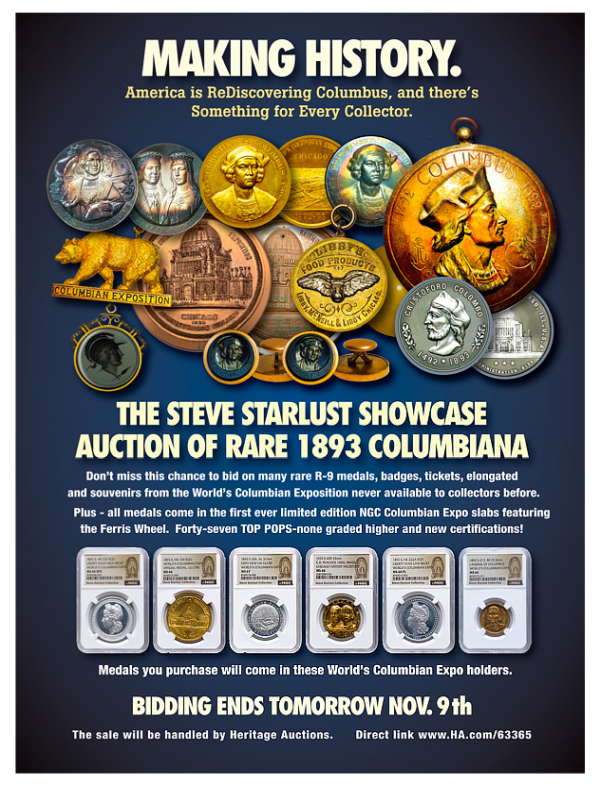
- HERITAGE: THE STARLUST COLLECTION
- NOONANS: SPRINGHEAD HOARD, PART ONE
- STACK'S BOWERS: COLONIAL COINS
- STACK'S BOWERS: U.S. COINS RARITIES NIGHT
- ARCHIVES INTERNATIONAL SALE 118 SELECTIONS
- WAYNE'S NUMISMATIC DIARY: NOVEMBER 8, 2026
- IRON AGE RULER VERICA WAS FEMALE
- NEW AUSTRALIAN COINS FEATURE NATIVE ANIMALS
- LOOSE CHANGE: NOVEMBER 8, 2026
- ABOUT THIS ISSUE: NOVEMBER 8, 2026
Content presented in The E-Sylum is not necessarily researched or independently fact-checked, and views expressed do not necessarily represent those of the Numismatic Bibliomania Society.
WAYNE'S WORDS: THE E-SYLUM NOVEMBER 8, 2026
 New subscribers this week include:
Terome Mitchell ii.
Welcome aboard! We now have 6,299 subscribers.
Thank you for reading The E-Sylum. If you enjoy it, please send me the email addresses of friends you think may enjoy it as well and I'll send them a subscription. Contact me at whomren@gmail.com anytime regarding your subscription, or questions, comments or suggestions about our content.
This week we open with the NBS Publications Committee, a numismatic literature auction, one new book, three obituaries, updates from the Newman Numismatic Portal, and more.
Other topics this week include the Continental Dollar, territorial gold, portraits of Cleopatra, the 'GW' peace medals, flowlines, XRF analysis, a Tennessee coin hoard, fixed price and auction selections, the National Gallery of Art, and new Australian coins.
To learn more about Dennis Tucker, Robert Downing, X-ray micro-diffraction technology, the origin of the Silver Taler, Portrait Medals of the Renaissance, what was in President Lincoln's pockets, Cherokee Brides, Contemporary Counterfeit Bust Half Dollars, the Bryan Dime, the Springhead Hoard, the Higley Copper, the Amazonian Half Dollar pattern, the Torpedoing of the Tubantia, the Society of the Cincinnati plate, Dubreuil's "Safe Money", privy marks, and Jumbo the Elephant's Coin Collection, read on. Have a great week, everyone!
Wayne Homren
Editor, The E-Sylum

Image of the week
NBS PUBLICATIONS COMMITTEE UPDATE
Numismatic Bibliomania Society President Len Augsburger submitted this report. Great news! -Editor
NBS Publications Committee Update
 At the 2026 NBS board meeting, held in conjunction with the ANA World's Fair of Money in Pittsburgh, the board approved the formation of a Publications Committee, with the goal of encouraging and supporting the publication of worthy numismatic books. The initiative reflects the Society's longstanding commitment to numismatic literature and recognizes the important role that NBS can play in bringing significant research to the collecting community.
Dennis Tucker has graciously agreed to chair the committee, bringing considerable experience in numismatic publishing to the effort. We are now seeking additional NBS members who would be interested in serving on the committee and helping to shape this new initiative. Responsibilities will include reviewing prospective manuscripts, assessing their scholarly and numismatic merit, and developing recommendations to the board regarding potential NBS sponsorship.
Initial interest from the numismatic community has been encouraging. Already, six authors have expressed interest in potential NBS support and three NBS members have volunteered for the committee. Members interested in participating in the Publications Committee are encouraged to contact Len Augsburger at leonard_augsburger@hotmail.com. We welcome the involvement of NBS club members with experience in writing, editing, publishing, or numismatic research, as well as anyone who shares an enthusiasm for advancing numismatic literature.
 Dennis Tucker is a numismatic researcher, writer, editor, and publisher. From 2004 to 2024 he served the hobby community as publisher at Whitman Publishing, where he oversaw production of more than 300 titles ranging from 96-page monographs to 1,500-plus-page encyclopedias, including 20 editions of the Guide Book of United States Coins. He is the author of hundreds of numismatic articles, and of the award-winning book American Gold and Silver: U.S. Mint Collector and Investor Coins and Medals, Bicentennial to Date. In retirement Dennis has focused on nonprofit management including as a coordinator of the Philippine Collectors Forum, a member of the ANA's Publications Committee, secretary of the American Medallic Sculpture Association, and a governor of the Central States Numismatic Society.
See the earlier E-Sylum article for more about Dennis:
PUBLISHER DENNIS TUCKER REFLECTS
(https://www.coinbooks.org/v27/esylum_v27n23a10.html)
LANG NUMISMATIC LITERATURE AUCTION 14
Here's some more information about the 14th numismatic literature auction from Numismatic Antiquarian Bookshop Lang, which closes November 25, 2026. -Editor

We are pleased to announce our 14th auction at Numismatisches Antiquariat Lang, which will take place on November 25, 2026, via the AUEX auction platform. The highlight of this auction is an extensive and diverse selection of 1,364 lots of numismatic literature. In addition to numerous interesting individual works, you can look forward to standard reference works, historical publications, and bibliophile rarities.
Special highlights of our 14th auction include:
- Indian Numismatics: An interesting selection of specialized books and literature on the history of coins from the Indian subcontinent.
- Jordan Library: An extensive collection of literature on North American numismatics.
- Numismatic Journals: A diverse selection of specialized journals and periodicals.
- Historical Auction Catalogs: Numerous bound auction catalogs from the period before 1945. Among them are also several personal copies that, with their individual notes and inscriptions, offer a particularly interesting glimpse into the history of auctions and collecting.
- Bibliophile Works: Lovers of rare and bibliophile literature will also find something to their liking.

Details:
- Date: November 25, 2026
- Location: Online on the Auex.de auction platform
- Time: Starting at 5:00 p.m. CET
Of course, you also have the option to submit advance bids. These can be conveniently submitted via the following platforms:
- SIXBID
- biddr
- NumisBids
We cordially invite you to explore our auction and see for yourself the diversity and uniqueness of the items on offer. We look forward to your participation and hope you enjoy browsing the auction and have success with your bids!
Please remember to register in a timely manner so that you can participate in the auction. If you have any questions or are interested in specific items, we are, of course, happy to assist you at any time.
To read the earlier E-Sylum article, see:
LANG NUMISMATIC LITERATURE AUCTION 14
(https://www.coinbooks.org/v29/esylum_v29n44a02.html)

NEW BOOK: THE CONTINENTAL DOLLAR
Whitman has published a new book by Rob Rodriguez on the mysteries of the Continental Dollar. Here's the press release. I've added sample page images. Rob will be signing copies at the Whitman Baltimore Expo Thursday afternoon November 12, 2026 at 1:30. I plan to be there. Come say hello, meet the author and get your copy. -Editor
 Was the legendary 1776 Continental Dollar one of America's first coins—or
was it a medal produced elsewhere? Who made it, where was it struck, and what purpose did it
serve?
For 250 years, those questions have surrounded one of the most mysterious artifacts associated with America's founding. Now, as the nation celebrates its 250th anniversary, acclaimed researcher and collector Robert L. Rodriguez reopens the case in The Continental Dollar: A Journey of Discovery, a groundbreaking new book from Whitman Brands.
Dated 1776 and bearing imagery closely associated with Continental Currency and Benjamin Franklin, the Continental Dollar has long occupied a tantalizing place in American numismatics. No known surviving records of the Continental Congress document its creation, leaving generations of collectors and researchers to debate its origin, manufacture, and even whether it should properly be considered a coin.
Rodriguez set out to approach the mystery differently: follow the physical evidence.
"The Continental Dollar has been an enigma hidden for 250 years," Rodriguez writes. "Spirited debates over the purpose, location, method, and timeframe of their mintage continue to this day."
The resulting Continental Dollar Project became what Rodriguez describes as the most extensive investigation ever undertaken into these pieces. The multidisciplinary effort brought together experts in numismatics, physics, metallurgy, minting, and statistics and required access to approximately $7 million in rare coins and related material.


At the heart of the investigation was cutting-edge research conducted at Argonne National Laboratory's Advanced Photon Source synchrotron. Using X-ray micro-diffraction technology capable of examining what lies beneath a coin's surface, Rodriguez and the scientific team studied all four known silver Continental Dollars. After 437 hours of scanning, the researchers recovered evidence of the host planchets beneath the coins' visible designs—information unavailable through conventional examination.
"If these truths were discernible on the surface of the Continental Dollars, the question of their origin would have been settled long ago," Rodriguez writes, quoting numismatic researcher Joel J. Orosz. "These truths lie beneath the dollars' surfaces."


But Rodriguez did not stop with laboratory analysis. The investigation expanded into statistical modeling, historical and observational research, and an ambitious reverse-engineering experiment. Working with minting expert Dan Carr at the Moonlight Mint, the team produced 112 experimental Continental Dollars in four different metals under varying striking conditions to better understand how the originals could have been manufactured.
The result is a body of new evidence that Rodriguez believes warrants a fundamental reassessment of the Continental Dollar and its place in early American monetary history.
"Our conclusions are predicated on science, statistical and observational analysis, and reverse engineering," Rodriguez writes. "It is my hope that this book will further illuminate these legendary artifacts for the numismatic community."
In his foreword, numismatic author and researcher Leonard Augsburger describes Rodriguez as bringing "fresh eyes" to a longstanding numismatic controversy and praises his willingness to go beyond the traditional written record in search of physical evidence.
The timing gives the investigation special resonance. The Continental Dollar bears the defining date 1776, while its interconnected rings and Revolutionary-era motifs evoke the emerging nation and its struggle for independence. Two and a half centuries later, modern scientific tools are allowing researchers to ask new questions of an artifact created at the very moment the United States was born.


Richly illustrated with detailed coin photography, scientific imagery, charts, archival material, and the evidence assembled during the investigation, The Continental Dollar: A Journey of Discovery gives readers a front-row seat to the research and the discoveries that followed.
Part detective story, part scientific investigation, and part numismatic history, The Continental Dollar: A Journey of Discovery reopens a 250-year-old case and offers a bold new perspective on one of America's most fascinating—and enduring—mysteries.
Published by Whitman®, the most trusted name in numismatic literature, The Continental Dollar: A Journey of Discovery is available now from Whitman.com, Amazon, Ebay, bookstores, distributors, and other retailers nationwide.

Title: The Continental Dollar: A Journey of Discovery
Author: Robert L. Rodriguez
Publisher: Whitman-CDN Publishing
Edition: First Edition
Publication Date: October 22, 2026
Format: Hardcover, 288 pages
ISBN: 978-0-7948-5574-1
Retail Price: $69.95
Availability: Whitman.com, authorized booksellers, and select numismatic retailers
For more information, or to order, see:
The Continental Dollar – A Journey of Discovery
(https://whitman.com/shop/books/coin-collecting-books/the-continental-dollar-a-journey-of-discovery/)
About the Author

Robert L. Rodriguez is an investor, author, and accomplished numismatist whose collecting interests span early American coinage, colonial issues, ancient coins, and medals. Following a distinguished career in investment management, he served as Chief Executive Officer of First Pacific Advisors (FPA), helping grow the firm into one of the nation's leading independent investment management companies. Rodriguez is a Fellow and Trustee of the American Numismatic Society, where he endowed the Resolute Americana Chair of American Numismatics in 2022 to support research across the numismatic history of the Americas. He is also a member of the American Numismatic Association, Colonial Coin Collectors Club, Early American Coppers, Medal Collectors of America, U.S. Mexican Numismatic Association, and several other leading numismatic organizations. His Resolute Americana Collection includes the finest collections of Continental Dollars ever assembled, reflecting a lifelong passion for America's earliest coinage. A dedicated advocate for numismatic education, Rodriguez regularly shares his collection to promote a deeper appreciation of American history and the nation's numismatic heritage.
For other articles, see:
X-Rays Reveal a Hidden Spanish Dollar Beneath the 1776 Continental Dollar
(https://coinweek.com/x-rays-reveal-a-hidden-spanish-dollar-beneath-the-1776-continental-dollar/)
Science Meets 1776: New Whitman Book Reopens the Mystery of the Continental Dollar
(https://www.greysheet.com/news/story/science-meets-1776-new-whitman-book-reopens-the-mystery-of-the-continental-dollar)
Rob Rodriguez adds:
The Continental Dollar Project, which I describe this investigation as, took nearly seven years or about 7,000 to 10,000 hours. The coins examined were valued at approximately $7 million.
I kept the details of this project and what was being discovered confidential among a few trusted colleagues. I appreciated all their inputs and suggestions. Recognition goes out to Henry Warshaw since he and I worked together for him to acquire the Romano Specimen several years ago with the understanding I would have access to it for the Argonne investigation. Additionally, John Dannreuther acted as an intermediary with Dan O'Dowd of the Tyrant Collection whereby Dan allowed his Newman 3-D silver Continental Dollar to also become part of this project. Heritage Auctions was very helpful in making this outcome occur.
Special recognition goes out to Maureen Levine and my wife, Sue Boyer, for editing this manuscript which, under their careful eyes, it became much better.
This has been a labor of love. Upon my return to coin collecting in 2014, after a 54 year absence, I acquired the beginnings of what would become the Resolute Americana Continental Dollar Collection. With these initial purchases, I was curious about what they were worth back then so I went to my old 1960 Whitman Red Book. To my surprise, on the page where they were listed, I had put a checkmark beside an image of one, so I was taken with them back then.
I truly hope this and my earlier investigation, History Recovered, Saga of the 1792 Silver Disme, using synchrotron x-ray micro-diffraction for the first time anywhere in the world will encourage other inquiries using this technique. None of this would have occurred without the talent and skills of the physicists at the Argonne National Laboratory's Advanced Photon Source. Special recognition goes out to Dr. Wenjun Liu who conducted all the Continental Dollar scans that took anywhere from 9 to 42 hours each with a spacing of 40 microns.

HOWARD ALYN MINNERS (1931-2026)
On Thursday the American Numismatic Society announced:
 "It is with sadness that we learned of the passing of one of our trustees, Howard Minners, on October 22, 2026. He was 95. Howard was a NASA flight surgeon who monitored the health of the flight crews during both the Mercury and Gemini projects. He was an accomplished collector and researcher in numismatics, and is known for his work in early-dated European coins and early Mexican colonial coinage, among other topics. As a trustee of the Society, he was particularly interested in supporting the Society's fundraising. It is thanks to both his initiative and generosity that ANS has an endowment for the curatorial position in Medieval, Renaissance, and Early Modern Coinage. He attended board committee meetings as recently as a month ago."
Sorry to hear this news. Here's more from his online obituary. -Editor
Born September 1931 in Long Island, NY as the only child of Howard, a printing engineer and Marie of Polish descent, he grew up in Garden City NY. His paternal grandfather immigrated to New York around 1884 from the small town of Jork, just west of Hamburg, Germany where there is still a small Minners family presence.
Education and military career
Following his education at Princeton University (A.B. Chemistry, 1953) and Yale School of Medicine (M.D., 1957), Dr. Minners entered active duty with the US Air Force. He completed specialized residency training in aerospace medicine through the USAF School of Aerospace Medicine at Brooks Air Force Base, Texas, earning his certification in 1958 as an Air Force Flight Surgeon. During this period, he earned a Master of Public Health (M.P.H.) degree from Harvard University (1960) to specialize in environmental physiology and preventative occupational health for pilots and crew.
After several assignments as flight surgeon to Air Force pilots including B52s on 24-hour patrol over the north Atlantic, Dr. Minners served as a Medical Corps officer assigned directly to NASA during the pioneering years of the American space program (1962–1966). As a bioastronautics research physician and flight surgeon, he played a critical role in safeguarding astronaut health during Projects Mercury and Gemini, helping establish the core protocols of modern space medicine. He served as a primary aeromedical flight surgeon monitoring vital signs and physiologic telemetry for the Project Mercury astronauts during pre-launch preparations, orbital flight, and immediate post-landing recoveries. He conducted detailed physical examinations and environmental stress assessments on astronauts, including John Glenn, Scott Carpenter, Walter Schirra, and Gordon Cooper.
After earning Board certification in Aerospace Medicine (1965) he extended his work into Project Gemini as Chief of Flight Medicine Branch, researching the physiological impacts of microgravity, long-duration confinement, extravehicular activity (EVA), and space radiation on two-man crews. He authored ground-breaking NASA medical reports and scientific publications from early orbital missions. He contributed to designing post-flight recovery room medical protocols aboard U.S. Navy aircraft carriers retrieving splashdown capsules in the Atlantic and Pacific oceans. He developed baseline medical databases that proved humans could survive and function effectively in weightlessness, directly enabling the subsequent Apollo lunar landing missions.
Subsequent Career
Following his tenure at NASA and fulfillment of Air Force service in 1966, Dr. Minners transitioned to senior civilian executive leadership within federal science and public health agencies. He served 21 years in the US Public Health Service (USPHS) including leadership assignments at the National Institutes of Health (NIH) Office of International Research focusing on vaccine development, transplantation immunology, research reagents and geographic medicine. Serving as Chief of the Geographic Medicine Branch and subsequently associate director within the National Institute of Allergy and Infectious Diseases (NIAID) from 1968-1975, Dr. Minners coordinated federal support and international collaborations with major academic institutions, including the US-Japan Cooperative Medical Science program and the Johns Hopkins Center for International Medical Research and Training (ICMRT).
He retired from the USPHS in 1987 after 31 years of Federal service.
Dr. Minners served as Chairman of the Yale Medical Alumni Fund, later as a member of the Dean's Council at Yale Medical School, and in 2007 was awarded the Medical School's Distinguished Alumni Service Award.
Life-long hobbies
Although Dr. Minners was widely recognized for his prominent work as an aerospace medicine physician, he was always a collector at heart. His primary life-long collecting and research pursuits focused on world-renowned collections of Ford Model A advertisements, literature, and restored vehicles, scholar-grade collections and research of early European talers, dated 14th-century coins, and colonial American/Mexican silver.
Coin scholar and collector
Dr. Minners' numismatic research into early dated European coins focused on one of the most critical milestones in monetary history: the transition from medieval, undated coinage to coins stamped with explicit Anno Domini dates. Central to this study were the coins minted in the Free Imperial City of Aachen (Aix-la-Chapelle). Before the late 14th century, Western European coins rarely bore calendar dates, making them difficult to chronological order. Dr. Minners' research also highlighted Aachen as the pioneer of dated Christian coinage. In 1372, the city of Aachen minted a silver Groschen (or Schocken-Groschen) featuring the image of Saint Charlemagne (Sanctus Karolus) seated on a throne. Uniquely, the reverse inscribed the date ANNO DOMINI MCCCLXXII (1372) in Roman numerals. This issue is widely recognized by numismatists as the first regular silver coin in Europe to bear an explicit Anno Domini date.
Minners focused heavily on the paleography and numeral systems used on late 14th- and 15th-century coins. He documented the shift from Roman numerals (e.g., MCCCLXXII for 1372) to early Arabic numerals in subsequent decades across the Holy Roman Empire. In his published essays and educational exhibit displays presented at American Numismatic Association conventions, Minners tracked how Aachen's 1372 experiment paved the way for other Rhenish and Low Country mints (such as Maastricht, Utrecht, and Cologne) to begin dating their issues over the next century. As a meticulous research-oriented collector, Minners conducted detailed die studies of surviving 1372 Aachen groschen specimens, documenting small variations in obverse/reverse legends, punctuation marks, and structural motifs surrounding Charlemagne's iconographic depiction.
Additionally, Dr. Minners wrote "The Origin of the Silver Taler", a foundational study exploring how early large silver crown coinage emerged in 15th- and 16th-century Europe. Initially presented at the 1973 International Numismatic Conference and then published in 1987 in a numismatic festschrift, the work remains an essential historical reference on European monetary development. The paper examines the economic, technological, and political factors in Central Europe—particularly the Holy Roman Empire—that led to the transition from small silver coins to heavy, high-purity silver coinage.
Dr. Minners traced the evolution from early medieval pfennigs and groschen to the earliest large-denomination silver coin experiments, most notably Archduke Sigismund of Tyrol's 1486 Guldiner minted at Hall in Tyrol. The study details how rich silver discoveries in the Erzgebirge (Ore Mountains) led the Counts of Schlick to mint massive quantities of large silver coins in Joachimstal (Jáchymov, Bohemia) starting around 1519–1520. These Joachimstalers gained immense popularity, shortened colloquially to "Taler" (or Thaler). Dr. Minners highlights how this specific silver coin gave rise to the term Taler, which eventually evolved into the Dutch daalder, the Spanish-American dollar, and ultimately the United States dollar. The work is frequently cited in economic history literature examining Reformation-era silver production, inflation, and early modern currency stabilization. Dr. Minners later adapted research and displays from his extensive collection into award-winning educational exhibits presented at American Numismatic Association (ANA) conventions under titles such as "Birth of the Taler (Dollar)" and "Origin of the Taler".
Dr. Minners' research into early Mexican colonial coinage naturally paralleled his extensive studies on European silver crowns (talers). Because the New World silver mints directly funded European monetary expansion in the 16th century, Dr. Minners explored the establishment of the Casa de Moneda de México—the first mint in the Americas, authorized by the Spanish Crown in 1535. He investigated the initial coinage issued under Queen Joanna (Juana "the Mad") and her son, Emperor Charles V (Charles I of Spain). His research focused on the transitional strike methods used in Mexico City, examining how early hammer-minted real denominations laid the groundwork for standardized weight and purity in global transatlantic trade.
A primary theme in Dr. Minners' work was the economic link between the vast silver deposits discovered in New Spain (Mexico) and the Holy Roman Empire's coinage system. He analyzed how Mexican silver bullion was shipped back to Europe to feed mints producing heavy silver talers, demonstrating how Spanish colonial silver effectively underpinned early modern European financial markets. Dr. Minners tracked the structural progression from early Mexican cob coinage (rough, hand-cut planchets) to the highly sophisticated Pillar Dollars (Columnarios). He highlighted how the Mexican 8 Reales became the direct precursor to the U.S. silver dollar—a subject he frequently incorporated into his educational displays and lecture series at ANA conventions under the broader theme of the "Birth and Spread of the Dollar." After joining the American Numismatic Society in 1963 and becoming a life member in 2002, he was elected Fellow in 2012 where he served as Fellow and Trustee until his final days.
Reflecting on his life while writing his biography "Good Choices", he never tired of travel, and his jobs and hobbies abundantly fulfilled that desire. Over multiple round-the-world trips on Pan Am airlines, his favorite destinations included London, Geneva, Stockholm, Tokyo, Bangkok, Mexico City and Kuala Lumpur. In addition, he led multiple family trips to Kenya, Egypt, Japan, India and across Europe including East Germany.
To read the complete obituary, see:
Howard Alyn Minners Obituary
(https://www.pumphreyfuneralhome.com/obituaries/Howard-Alyn-Minners?obId=50081262)

STEPHEN K. SCHER (1934-2026)
New York Numismatic Club Secretary-Treasurer John Janeczek writes:
 "It is with deep regret that the New York Numismatic Club announces the death of our fellow member Dr. Stephen K. Scher.
"Dr. Scher became a member of the Club in 1998. He received his B.A. from Yale University in 1956 and a Ph.D. in art history from Yale in 1966. After obtaining his Ph.D., he taught art history at Brown University.
"Stephen was an expert collector and scholar in the field of medallic art, having curated three exhibitions on medals over the years, including "The Currency of Fame: Portrait Medals of the Renaissance" (1994), "The Proud Republic: Dutch Medals of the Golden Age" (1997), and "The Pursuit of Immortality: Masterpieces from the Scher Collection of Portrait Medals" (2017).
 "He assembled the most comprehensive and significant private collection of medals over six decades of collecting, and a selection of medals from his donation to the Frick Collection are displayed there in a recently opened second floor gallery.
"Together with his wife Janie, they established The Stephen K. and Janie Woo Scher Center for the Study of Commemorative Medals, through which the Frick provides a lecture series and an annual Scher Fellowship to promote research in the field of medals. His generosity of knowledge, cultivated connoisseurship, and congeniality will be greatly missed."
Scher was born December 16, 1934 and was a member of the Yale Class of 1956. Here's a bio from the class website. -Editor
Dr. Scher was awarded a B.A. from Yale University in 1956, a M.A. from the Institute of Fine Arts of New York University in 1961, and a Ph.D. in art history from Yale in 1966. He taught at Brown University in the Art Department from 1961 to 1974, becoming chair of the department in 1972. In 1969 he organized the exhibition, The Renaissance of the Twelfth Century, at the museum of the Rhode Island School of Design, with an accompanying catalogue. In 1974 he left Brown to become President and CEO of Scher Chemicals, Inc., a manufacturer of specialty organic chemicals. He held this position until he retired in 2004. During this period Dr. Scher also continued his activities as an art historian and guest curator, organizing, in 1994, the exhibition The Currency of Fame: Portrait Medals of the Renaissance, at The Frick Collection, The National Gallery of Art, Washington, D.C., and the National Gallery of Scotland, Edinburgh, accompanied by a major catalogue. In 1997, he organized a second exhibition at the Frick: The Proud Republic: Dutch Medals of the Golden Age, also accompanied by a catalogue. In addition, he has participated in exhibitions at the Metropolitan Museum of Art, New York, both as a lender and a contributor to catalogues: (2004) Byzantium: Faith and Power; (2006) Set in Stone: The Face in Medieval Sculpture; (2010) The Art of Illumination: The Limbourg Brothers and the Belles Heures of Jean de France, Duc de Berry; (2011) The Renaissance Portrait from Donatello to Bellini.
Dr. Scher is a member of four departmental visiting committees at the Metropolitan Museum of Art: Medieval; European Sculpture and Decorative Arts; Paper Conservation; and Object Conservation. He is also a member of the Visiting Committee for Collections at The Frick Collection. Dr. Scher is a member of the Yale Library Associate Trustees. He is also on the Board of Visitors of the Tyler School of Art at Temple University.
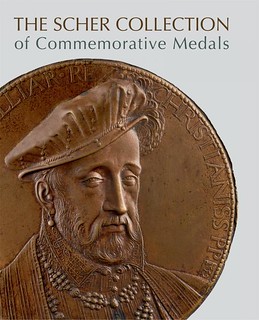 Dr. Scher has lectured and published extensively on medieval and Renaissance art. His own collecting activities have focused on commemorative, especially Renaissance, portrait medals. He is donating the bulk of this collection to the Frick Collection, where he helped organize an exhibition of highlights from the collection, entitled The Pursuit of Immortality: Masterpieces from The Scher Collection of Portrait Medals. In 2019, The Frick published The Scher Collection of Commemorative Medals, a catalogue of the entire collection.
Dr. Scher received the Yale Medal in November 2015, the British Art Medal Society's President's Medal in October 2018, and the Iris Award for Outstanding Philanthropy in 2021.
Interestingly, Scher also co-produced a documentary with his wife on Paris restaurants in the 1970s. -Editor
THE WAY IT WAS: PARIS RESTAURANTS IN THE 1970s
 This film was originally shot in 1972, and the objective was to present a brief, but comprehensive visual presentation of the extraordinary world of French cuisine, which was considered the pinnacle of gastronomy, a model against which other cuisines were measured and one of the most important elements of French culture. I wanted to introduce the viewer to some of the reasons why this was so: the fact that the desire for quality cooking existed at all levels of French society, meeting the expectations of a discerning public that needed to be satisfied not only by the restaurants, among which were the small family bistro, the brasserie, the grand, large-scale establishments, locations that offered reasonably priced food, the popular facility with some entertainment for tourists and natives alike, and finally, and most importantly, the famous sources of haute cuisine, but also by the markets that provided the raw materials. In place of a running narrative the film includes interviews with a famous food writer, chefs, and restaurant owners providing valuable explanations and opinions.
The original footage was never edited into a finished film until now, and the passage of time has necessarily changed my original intentions. With the title, THE WAY IT WAS: PARIS RESTAURANTS IN THE 1970s the new objective of the film is to look back to a past that no longer exists in what it offered and perhaps even at the level of quality that no longer exists. This opinion begins to emerge even in the interviews done in 1972 where reference is made to a time when some of these restaurants were founded in the 1920's during a period of exuberance following World War I. The serious impact of the Great Depression was followed by the even more catastrophic events of World War II, the end of which is referenced by some of the interviewees as a starting point for their own experiences as restaurateurs and a return to a normality that has continued to contain disturbing changes.
The film has now become a retrospective, historical document, a reminiscence of another time with regrets, perhaps, for what has been lost. I hope to infer this through the range of locations, the excellence of the photography, and the narratives that are provided by the interviews. For some, there will be nostalgia, for others gratitude for an introduction to a world they never experienced, and for all, I hope, a satisfying visual delight.
The film was awarded a Grand prize for Cinematography at the 2023 Rhode Island International Film Festival.
To read the complete article, see:
Short Biography: Dr. Stephen K. Scher
(https://yale56.org/the-way-it-was-stephen-k-scher/)
David Menchell writes:
 "He was an important collector of portrait medals, especially those of the Renaissance. He was also active in a number of numismatic organizations. Most recently, he headed the committee responsible for selecting the artists producing the annual MCA medal. He remained active until recently. He would often be participating in the monthly ZOOM sessions for AMSA and the weekly ANS Long Table presentations.
"Given his background in art history, he had extensive knowledge and was always willing to share information and discuss any questions you might have. Pieces from his amazing collection were on display at the Frick Museum in NYC in 2017 and detailed in an extensive catalogue. Much of that collection was donated to the Museum, and are currently on display. His passing is a great loss to the field of medal collecting and research."
David also shared the above Facebook post by Heidi Wastweet. George Cuhaj shared the below photos. -Editor


Thanks, everyone! As fate would have it, I spent much of the day Thursday at the National Gallery of Art, where I encountered some of Scher's donated medals on exhibit. For more, see my Numismatic Diary article elsewhere in this issue. -Editor


Here are some YouTube videos of Scher speaking. -Editor
Dr. Stephen Scher - Hunting the Wild Aftercast
Stephen K. Scher: "Heads and Tales: The Odyssey of a Medals Collector"
To read biographies on Numista and Antiques and the Arts Weekly, see:
Stephen K. Scher
(https://en.numista.com/people/stephen-k-scher)
Q&A: Stephen K. Scher
(https://antiquesandthearts.com/qa-stephen-k-scher/)
To read earlier E-Sylum articles, see:
VIDEO: DR. STEPHEN SCHER ON MEDALS
(https://www.coinbooks.org/v21/esylum_v21n05a21.html)
NEW BOOK: SCHER COLLECTION OF PORTRAIT MEDALS
(https://www.coinbooks.org/v20/esylum_v20n30a06.html)
NEW BOOK: THE SCHER COLLECTION
(https://www.coinbooks.org/v22/esylum_v22n46a03.html)
FRICK COLLECTION MEDAL GALLERY
(https://www.coinbooks.org/v28/esylum_v28n16a18.html)

NORMAND PEPIN (1961-2026)
New York Numismatic Club Secretary-Treasurer John Janeczek writes:
 "It is with deep regret that the New York Numismatic Club announces the passing of our fellow member Normand Pepin.
"Normand was born in 1961 in Montreal. He resided in New York City for many years and joined the Club in 1982. He was a very active member, priding himself on never missing a meeting. Normand served as the Club's Curator for several years and was appointed as the Club's first Curator Emeritus in 2025. He also was the Past President of the Bronx Coin Club.
"Normand's knowledge of Club history and numismatic information was immense. He will be greatly missed by his many friends."
David Menchell writes:
"Normand had worked for Spink's and was quite knowledgeable on medals and coins, particularly those of Canada, having been born in Montreal. He retained a residence in Montreal but lived most of the time in New York City. He loved New York and was a compendium of knowledge about the city, its history, buildings, monuments and other details."
Thank you. Sorry to hear this news. Here's an earlier photo with Normand Pépin as the Bronx Coin Club celebrated the Club's 1000th monthly meeting at Keens Steakhouse in Manhattan on April 27, 2017. -Editor

Back Row: Jeremy Wallace, Ed Snible, Tom Tesoriero.
To read the earlier E-Sylum article, see:
BRONX COIN CLUB CELEBRATES 1000TH MEETING
(https://www.coinbooks.org/v20/esylum_v20n30a08.html)

NNP ADDS TERRITORIAL GOLD COIN DATABASE
The latest addition to the Newman Numismatic Portal is a database of U.S. territorial gold coins. Project Coordinator Len Augsburger provided the following report. -Editor
NNP Adds Territorial Gold Coin Database
 Bob Cassling has been carefully tracking auction appearances of U.S. territorial gold coins for some time and has recently shared his data with Newman Portal. The database enumerates approximately 11,000 appearances of territorial pieces in major auctions, including Heritage and Stacks-Bowers. Historic sale catalog series such as the Chapmans are also represented. The recent migration of Newman Portal to the Quartex platform allows for greater customization of filters and sort options, which are available here. Many thanks to Bob for sharing this information via NNP.
Image: Bechtler $5 from the National Numismatic Collection, 68.159.1097. Photograph by Jeremy Katz.
Link to Bob Cassling Territorial Gold database on NNP:
https://nnp.washu.edu/u.s.-territorial-gold
Link to Smithsonian Bechtler gold collection on NNP:
https://nnp.washu.edu/images-list/list/image-collection/26442


VIDEO: NUMISMATIC PORTRAITS OF CLEOPATRA
The David Lisot Video Library on the Newman Numismatic Portal can be found at:
https://nnp.wustl.edu/library/multimediadetail/522852
We highlight one of his videos each week in The E-Sylum. Here's one from the 2016 ANA with Oliver Hoover speaking about the numismatic portraits of Cleopatra & Ptolemaic Queens. -Editor

Oliver D. Hoover speaks at the 2016 ANA World's Fair of Money in Anaheim, CA.
To watch the complete video, see:
Numismatic Portraits of Cleopatra & Ptolemaic Queens
(https://youtu.be/Pqi1UXBXKNI)
Numismatic Portraits of Cleopatra & Ptolemaic Queens
(https://archive.org/details/ANA16027NumismaticPortraits_1)

VIDEO: WHAT WAS IN LINCOLN'S POCKETS?
Civil War numismatic history is a specialty of mine, and I'm glad to see this new video with Dennis Boggs as Abraham Lincoln being interviewed about the coins, tokens, and paper money that shaped his life and his presidency. Well done! Check it out, subscribe, and watch for future videos in the "Ten Tumultuous Years" series. -Editor

In May of 2026 at the Pennsylvania Association of Numismatists (PAN) Coin Show, we introduced "10 Tumultuous Years" as the theme for our new series of numismatic, nautical, and economic civics educational programs. Our 10 Tumultuous Years exhibits there focused on the connections between the California Gold Rush, 1857 Coinage Act, the 1857 sinking of the S.S. Central America, and the massive monetary changes impacting the U.S. Civil War.
See our newest VIDEO Featuring Dennis Boggs (President Lincoln) interviewed by 10 Tumultuous Years team member, Rebecca Rush. Our "What Was In Your Pockets" interview started with Abe's earliest days in Indiana…and walked through the many changes in U.S. Monetary Policy that are attributed to Lincoln, right through to discussing the Confederate currency in his pocket at the Ford's Theater.
Three more videos filmed at PAN are just about ready for release:
- "Uncle Billy Was a Banker: W.T. Sherman's Gold Rush Days" (Kris Gulvansen and Rick Lank)
- "The S.S. Central America: Science Stories" (Bob Evans)
- "The "S.S. Central America Recovery Story" (Bob Evans).
MORE ON THE 'GW' PEACE MEDAL


Last week Alan Weinberg wrote:
"I cringed when viewing the mechanically rotating GW Indian Peace medal in the British Museum. Instead of using a mirror to exhibit the uniquely engraved reverse, there are multiple metal prongs "stabilizing" this invaluable medal, the prongs contacting and perhaps impairing the medal's periphery & surfaces on both sides as the medal minutely shifts as it rotates. Even if it doesn't shift, there could be periphery dents and flat surface abrasions from the prongs."
"This brings to mind a very expensive 1792 white metal pattern quarter that suffered large rim dents from a slabbing company's stiff stabilizing plastic prongs."
I commented:
"I wondered about the myself, assuming there must be some unseen soft padding between the piece and the prongs. I'll ask the museum for comments."
This week I reached out to British Museum Keeper of Money and Medals Tom Hockenhull, who wrote:
"I curated it with a colleague. Nice to see the review – to answer the question of whether the object has been displayed much in the past – it's had limited exposure, mainly because its significance and original context were lost prior to its arrival at the BM in 1825, and not rediscovered until the late-1980s. I would like to see it have more prominence in a future permanent gallery."
That's great news - it's an object of great historical significance. He consulted their technical team about the mount; their answers are below. Thank you! -Editor
-
 Even if there was a mirror behind this to show both sides, we would still need to use "prongs" – (we call them returns or tangs) to mount and display this medal to show the reverse side in a mirror.
- The mount is bespoke to this object and is an exact fit, as such it underwent extensive testing to ensure it does not shift.
- We made and remade this mount several times to get the best fit, and also tested the ‘prongs' throughout to make sure they aren't grabbing or causing damage to the object. It's a delicate balance of making sure they hold the object securely but not over tightly, something we take into consideration when designing the whole mount.
- We are professional mount makers and have used a suitable and correct material.
Thanks, everyone - great questions and answers. I hope to view this important piece in person someday. Here is piece photographed without the prongs. -Editor

To read the complete museum catalogue entry, see:
Washington Peace Medal
(https://www.britishmuseum.org/collection/object/C_G3-IP-1111)
To read the earlier E-Sylum articles, see:
EXHIBIT: DECLARING INDEPENDENCE USA 250
(https://www.coinbooks.org/v29/esylum_v29n43a10.html)
NOTES FROM E-SYLUM READERS: NOVEMBER 1, 2026 :
The Perils of Prongs in Coin Displays
(https://www.coinbooks.org/v29/esylum_v29n44a09.html)

THE SECOND GW PEACE MEDAL
The Curator's comments on the "GW" peace medal on display at the British Museum note that "The medal is one of two, the other having passed down through Micmac hands...", citing Harald E.L. Prins, 'Two George Washington Medals: Missing Links in the Chain of Friendship Between the United States and the Wabanaki Confederacy', Maine History 28:4 (1989), pp.226-234. The article was "Reprinted by permission from The Medal (British Art Medal Trust, British Museum, London), Winter 1985." Here's a short excerpt - see the complete article online. -Editor
In 1972, a tribal dispute developed between two Indian bands belonging to the Micmac Nation. The controversy centred around the ownership of a rare ‘peace medal,' which features George Washington and his initials on one side, and an Indian sitting at the base of a classical column, crowned by thirteen hands, on the other.
A matching silver medallion, engraved with the same images, is harbored in the collection of the British Museum's Department of Coins and Medals. In 1982, this medal appeared in Jonathan King's book Thunderbird and Lightning. The existence of both extraordinary medals remains largely unknown, and has never been chronicled in professional journals of the United States or Canada. In 1984, while researching Micmac Indian history in Maine, I became aware of the two medals and their curious distribution.
The Micmac Indians are not quite certain of the origins of their silver medal either, and its blurry history led to the inter tribal controversy over ownership. The Band at Eel Ground reserve claimed that it was their Chief's badge of office, which had been passed from each headman to his successor. In 1972, the Eel Ground Micmac Chief ceremoniously turned the medal over to the Public Archives of Canada, which was to keep it in trust for that Band.
When the Micmac Band of Indian Island heard of this transference its Chief Peter Barlow stepped forward in protest. He claimed that the medallion belonged to one of the members of his Band, Mrs. Georgina Barlow, who had inherited it from her mother Rose Francis. Her father, being at one time Chief of the Eel Ground Band, "with the permission of his wife," wore the silver medal on special occasions. In 1979, after a long legal battle, the Federal court ruled that Georgina was the rightful owner of the medal, and it was returned into her family's hands. There it remains today.

The Second GW Indian Peace Medal Whereabouts Mystery
The author had personal communications in 1984-1985 with Georgina Barlow of the Micmacs at Indian Island (New Brunswick, Canada) [footnote 3]. That was over forty years ago. Where is the second GW Peace Medal today? -Editor
To read the complete Prins article from Maine History, see:
Two George Washington Medals: Missing Links in the Chain of Friendship Between the United States and the Wabanakl Confederacy
(https://journals.maine.edu/mainehistoryjournal/article/view/3775)
See also:
Gift Diplomacy: Medals for the Wabanaki
(https://ojs.library.carleton.ca/index.php/ALGQP/
article/download/632/532/1659)

COMMENTS ON FLOWLINES
E-Sylum Feature Writer and American Numismatic Biographies author Pete Smith submitted this article in response to last week's "Surface Displacement" vocabulary term. Thank you. -Editor
The November 1 issue of The E-Sylum had an item on "Vocabulary Term: Surface Displacement" from Dick Johnson's Encyclopedia of Coin and Medal Terminology. It included this description of surface displacement.
"The movement of surface metal mass toward and into die cavities during striking. Generally surface metal flows from the outermost rim inward toward the center of the struck surface to fill the greatest cavity. Sometimes, but not always, striations will form on the surface; these are called flow marks and are always inward from the rim toward the center point like the spokes of a wheel."
This is contrary to what I have learned and what I believe. The unstruck blank is smaller than the collar in the die. Striking forces metal to flow outward to fill the collar. The fields in the die are the high areas with the devices as low areas. Pressure on the fields forces metal inward to fill the central devices. This does not create flowlines in the central device. In the outer areas of the coin, metal flows outwards to fill the lettering or stars and in late stages, may leave flowlines.
I have studied flowlines on the Classic Cents of 1808-1814 more than any other series. On December 2, 1984, I made a presentation at the Coinage of the Americas Conference at the American Numismatic Society. My presentation was "United States Turban cents, 1808-1814" published in the conference proceedings as America's Copper Coinage 1783-1857. Thus, I am citing as my authority something I wrote forty-two years ago. This is what I wrote for the 1984 COAC Proceedings and appears on page 154.
FLOWLINING
In the striking process the metal of the planchet is compressed between the two dies. It is also forced outward from the center. This lateral movement nay have a cumulative effect upon the dies. The effect can be observed as radial lines across the surface of the coin. Some of these radial lines are a natural product of the metal stretching. However, when they appear in the same place and pattern on many coins, it is apparent that the lines are transferred from the surface of the die. These lines can be observed at the points of greatest resistance. Often the points of the stars on the obverse or the letters of the reverse legend become connected to the rims because of this effect.
Then this is what appears on page 157.
INCOMPLETE BOTTOMS OF LETTERS
Often the pressure of the dies and flow of the metal were not adequate to fill all the details near the outer edge of the dies. On the obverse the stars often lack the central detail. On the reverses, the letters of the legend may not fill completely. This effect creates a style of letter that may appear to come from different letter punches. However, this is a striking variation rather than a die variety.


The first image shows an enlarged area on the obverse of an 1812 Cent. Flowlines extend from the tops of the stars to the rim. There are shorter lines from the tops of some stars. The shape of the stars concentrated metal flow in these areas. It should be obvious that the metal flowed outward.
This is similar to a photo on page 161 of the 1984 COAC Proceedings.
The second image shows an enlarged area on the reverse of an 1814 Cent. There is a void at the base of most letters. The metal flowed into the letters from the interior but there was inadequate metal to fill the base of these letters. There are also flowlines from the top of the first ‘A' to the rim.
The photo also shows that the flowlines are in the area between the wreath and the rim with no flowline in the central area of the coin.
Thanks, Pete. I agree, and I'm sorry I didn't catch that when preparing last week's issue. Metal flows outward, not toward the center. -Editor
To read the earlier E-Sylum article, see:
VOCABULARY TERM: SURFACE DISPLACEMENT
(https://www.coinbooks.org/v29/esylum_v29n44a11.html)

MORE ON MINT AND FEDERAL RESERVE BAGS
Inspired by Pete Smith's article, Tom DeLorey submitted these thoughts on U.S. Mint and Federal Reserve Bank coin bags. Thanks. -Editor
Here is a file copy of a letter from the Director of the Mint to the Denver Mint in 1922 informing it as to what size coin bags it could order from the Philadelphia Mint, which made the actual bags. Note that the different size bags are identified by number, including the interesting size 7-1/2. Unfortunately the letter does not identify the actual size of each bag, which presumably the Denver Mint already knew.
It would be logical that the Federal Reserve Banks receiving coins from the various Mints would use the same bag size numbering system for the bags that the FRBs ordered for themselves.

And here is a 5-5-22 letter from the Denver Mint to the Director of the Mint advising that it had purchased 35,000 Number 1 bags, and would not be requiring any more. Since the only coins being struck in Denver in May of 1922 were Standard Dollars, it is safe to say that the #1 bag size was for dollars.

And here's a report from the Sewing Room at the Philadelphia Mint for December, 1907, showing various items made and their costs to ridiculously trivial fractions of a cent.

Note that multiple size bags were made for Silver, Nickel and Bronze coinages. As the Mints were still supplying coins directly to the Sub-Treasuries at the time (the end of which greatly affected the story of the 1922-D cents; see my book), it was presumably so that the Sub-Treasuries could then just sell different sized intact bags to local banks without the necessity of counting them out.
These various small bags would have been shipped to the Sub-Treasuries in one large keg. I have never seen an original Mint Keg. Perhaps they were anonymous for security reasons.
File copies courtesy of Roger W. Burdette, who provided me with many such documents for use in my book on the Cents of 1922.
And What About Kegs?
 Pete Smith adds:
"The Early American Coppers (EAC) people spent a lot of time discussing kegs in the past. During the large cent era, copper planchets were shipped from England in kegs. I suspect the Mint reused those kegs to ship out their product. I think of kegs as generic shipping containers that could be ordered from the local cooper and used to ship nails or grommets or any dry bulk material. I doubt if the kegs that the Mint used were ever marked as Mint products."
Thanks, everyone - great topics. -Editor
UNUSUAL MONEY BAGS (https://www.coinbooks.org/v29/esylum_v29n44a12.html)
NOTES FROM E-SYLUM READERS: NOVEMBER 8, 2026
More on Blackinton
Regarding the badge and medal maker Blackinton,
Bob Fritsch writes:
"Blackinton has made countless medals in the New England series, counting all six NE states plus NENA (New England Numismatic Association). Robert R. Heath created 7 catalogs for these medals, organizing them by town (date for NENA). Unfortunately, when Bob died 20 years ago, his catalogs were distributed to other New England collectors/dealers but only two were continued, Sam Allen for New Hampshire and myself for NENA, which has been passed on to a new editor. So Blackinton is definitely in these catalogs along with all the other makers of New England Town Medals."
I was aware of the New England medals, but wondered if they made any OTHER medals outside of their law enforcement ones. I was hoping to find a more comprehensive catalog. -Editor
Bob adds:
 "It sure appears they are out of the town medal business after a quick look at their website. I got lots of hits for "New Hampshire" but they appeared to be challenge coins from police/fire. I have no other info."
Thanks. So I guess their core market is for law enforcement badges, and the related markets for law enforcement medals and challenge coins. They may not be making other medals anymore. -Editor
To read the earlier E-Sylum articles, see:
ROBERT HEATH'S NEW ENGLAND MEDAL CATALOGS
(https://www.coinbooks.org/esylum_v17n01a20.html)
MORE ON THE NEW ENGLAND MEDALS BOOK SERIES
(https://www.coinbooks.org/esylum_v17n04a17.html)
HOW BADGE AND MEDAL MAKER BLACKINTON USES AI
(https://www.coinbooks.org/v29/esylum_v29n44a16.html)
More on That Magnifying Glass
A reader writes:
"Is it possible that little circle at the top of the oil pouring into the lamp was meant to be the lip of the vessel from which the oil is being poured?
"A "magnifying glass" in that position makes no sense to me."


It could be a magnifying glass, but I thought it was part of the lamp at first. David Fanning agrees. -Editor
David Fanning writes:
"These pins are absolutely based on the American Numismatic Association badge announced in the October 1911 issue of The Numismatist, with the "ANA" part added. The unusual design of the lamp is virtually identical. There is not a magnifying glass on it, as was suggested—that is indeed part of the lamp. The question is whether they are contemporary or were made afterwards, possibly even recently. Here is a highly unprofessional photo of a badge attached to a ladder of convention bars starting in 1909. When the 1911 badge was released, they also made bars for all previous conventions."

Thanks, everyone. -Editor
To read the earlier E-Sylum article, see:
THE EARLY ANA PIN AND THE FIRST ANA SEAL
(https://www.coinbooks.org/v29/esylum_v29n44a08.html)
On Cherokee Brides
Don Cleveland writes:
 "I read the article about Lola's Buffalo Nickel. The account in the last paragraph caught my eye, regarding her family legend about one of her great grandmothers being Cherokee Indian. As written, every word describes my own family story on my mother's side, exactly as it has been passed down in my family – Civil-war bride, Cherokee, and the census taker writing her into the record as "white", because if she had been entered as Cherokee, she could
not inherit, or even be considered married to a white man. Most interesting.
"I am a retired American living in Australia these past 27 years."
Interesting - thanks for sharing. -Editor
To read the earlier E-Sylum article, see:
NEW BOOK: LOLA'S BUFFALO NICKEL
(https://www.coinbooks.org/v29/esylum_v29n44a04.html)
More Franz Eue Popsicle Tokens
Edwin Johnston writes:
"I've got Clark Gable, Gary Cooper, Frederic March and Clive Brook. I picked these up on eBay many years ago."

Thanks! Neat series. -Editor
To read the earlier E-Sylum article, see:
WILHELM FRIEDRICH "FRANZ" EUE (1888-1937)
(https://www.coinbooks.org/v29/esylum_v29n44a14.html)
Hayden Offers Contemporary Counterfeit Bust Half Dollars

In an email to clients, dealer Steve Hayden wrote:
We are very pleased to announce the purchase of the Mark Glazer collection of Contemporary Counterfeit Bust Half Dollars. Mark has been a very active collector of these fascinating and historically significant items for nearly 30 years. To put it in perspective, the collection contains an incredible 170 Plates in Winston Zack's new book. Again, for perspective, it contains five of the six Flowing Hair varieties as well as counterfeits of coins that never existed like 1787, 1836-O, 1838-O, 1840, 1842 and 1878.
To see pictures of many others refer to the Photographic References section in the back of Winston Zack's book and look for Mark Glazer's name. We have already started listing some a number of pieces on eBay including the three above. We will also sell a number of the more expensive pieces by Want List. Finally, we are offering some at Fixed Price on our website.
For more information, or to bid see:
Steve Hayden's eBay offerings
https://www.civilwartokens.com/Browse/C4068388/
Contemporary_Counterfeit
Jumbo the Elephant's Coin Collection
Here's a newspaper article found by Jim Haas. Thanks! -Editor

Jim adds:
"The article was published first in the Chicago Inter-Ocean and was subsequently picked up and published in newspapers across the country in 1900."

QUERY: XRF COIN COMPOSITION ANALYSIS
Website visitor Vitaly Ovchinnikov submitted questions for our readers based on XRF measurements. -Editor
I am an independent researcher investigating anomalous coin compositions. Recently, I analyzed two coins from opposite sides of the Iron Curtain using an XRF spectrometer (Olympus Vanta): a Soviet 10 Kopecks from 1939 and a US 5 Cents "Buffalo".


To my astonishment, both coins share an absolutely identical trace element profile that does not match their official recipes. Please look at the data:
- USSR 10 Kopecks 1939: Mn 0.263%, Fe 0.171%, Co 0.098%, Ni 18.99%, Cu 80.41%, Au 0.064%
- US Buffalo Nickel: Mn 0.178%, Fe 0.239%, Co 0.069%, Ni 24.33%, Cu 75.15%, Au 0.041%


The presence of Gold (Au), Cobalt (Co), and Manganese (Mn) in these base metal alloys is highly unusual. The fact that this exact "fingerprint" appears on coins from two opposing superpowers on the eve of WWII suggests either a shared source of raw materials (scrap metal recycling?) or a parallel technological experiment.
Have your readers ever encountered such a transcontinental metallurgical connection? I would be grateful for any insights.


I also recently analyzed a trio of coins from completely different parts of the world:
- Switzerland, 2 Francs 1980
- Denmark, 10 Øre 1954
- Kuwait, 5 Fils 1961
All three coins share an absolutely identical, non-standard trace element profile. They are officially made of standard Copper-Nickel alloys, but the XRF analysis reveals the same systematic "fingerprint":
- Switzerland 2 Francs 1980: Cu 75.17%, Ni 24.66%, Mn 0.079%, Co 0.020%, Au 0.072%
- Denmark 10 Øre 1954: Cu 74.97%, Ni 24.76%, Mn 0.179%, Co 0.038%, Au 0.054%
- Kuwait 5 Fils 1961: Cu 78.70%, Ni 21.07%, Mn 0.158%, Co 0.015%, Au 0.063%


The presence of Manganese (Mn), Cobalt (Co), and especially Gold (Au) in these base metal coins is highly unusual. How did three different nations, spanning three decades (1954, 1961, 1980) and three continents, end up with the exact same unregulated trace elements?
Could this point to a shared source of recycled industrial scrap metal circulating in the global market? Or was this a parallel, undocumented technological experiment by different mints?
I would be extremely grateful for any insights or historical context your knowledgeable readers might have regarding such transcontinental metallurgical connections.
I reached out to two E-Sylum contributors for their thoughts. Both are numismatic researchers and authors. Bill Eckberg is a scientist who uses his scientific methods and tools to investigate early U.S. coinage. Winston Zack investigates circulating counterfeit coins and uses XRF analysis extensively to study their metallic compositions. Here are Winston's thoughts. -Editor

-
Environmental Interaction & Trace Element Transfer
- Soil Composition: Soils globally contain varying trace quantities of metallic elements—most commonly Iron (Fe), Manganese (Mn), and Cobalt (Co) alongside Copper (Cu) and Zinc (Zn).
- Surface Contamination: Regular circulation and environmental interaction (such as ground corrosion) can transfer these soil elements onto a coin's surface. During X-Ray Fluorescence (XRF) analysis, this surface contamination is often read at trace levels.
-
Metallurgical Associations & XRF Anomalies
- Nickel & Cobalt: The association of Cobalt within Nickel alloys is standard and not unexpected especially at trace levels.
- Gold & False Positives: Detecting trace amounts of Gold (Au) is unusual. In XRF analysis, this can be a false positive caused by spectral overlap with other elements, such as Copper (Cu). I've also observed coin samples that are pure or nearly pure copper (dating to the 18 th century) to occasionally trigger XRF false readings for Platinum Group Elements (PGEs), such as Iridium, which is illogical.
-
Assessment of Origins & Hypotheses
- Identical Profiles: The observed composition does not indicate an "absolutely identical" trace element profile; it is far more likely a coincidence resulting from normal circulation and environmental exposure.
- Recycled Industrial Scrap: The theory that this composition stems from a shared source of recycled global scrap metal is unlikely.
- Parallel Mint Experiments: The possibility of parallel, undocumented technological experiments conducted across different mints is also unlikely.
Bill Eckberg writes:
"It looks like we agree. I'm not an expert on coin metallurgy, but I've read that handheld units aren't particularly reliable for trace elements. I suspect he's overinterpreting his results.
Vitaly provided some additional background. -Editor
I fully understand what your colleagues are saying. However, I would frame the question slightly differently. I didn't write to you immediately because this topic is very complex, and I don't think anyone in the US is currently working on this for a number of reasons. In Russia, there are still people trying to find something, but unfortunately, true specialists in this field are already gone.
I focus on a very narrow specialization: finding trial strikes (patterns) that are released into circulation alongside regular batches. They are called "hard-to-distinguish" patterns. A layperson, or even an ordinary collector, will never be able to tell such a coin apart from a regular one. Even major experts do not possess this information – I have checked this.
I have been doing this for 45 years, since I was 5 years old. My great-grandfather taught me and gave me a trial strike as a gift back then. I collected for myself; it was a burning interest, excitement, and a hobby. But now that I am 51, I have finally decided to share this information with people who might find it interesting, because numismatics is a science without borders.
Before I take any coin for analysis, I meticulously select it by its die features, separating it from the rest of the batch. All these dies are unique; despite their apparent similarity, they will always have fundamental features that no other coin in the batch can replicate.
Therefore, I am attaching three additional photos of the Switzerland, Denmark, and Kuwait coins, where I have indicated the fundamental differences from the serial coins and, in fact, why exactly they ended up on the XRF analysis. I think it will be easier this way to understand both me and these coins.

Switzerland 2 Francs 1980 comparison

Denmark 10 Øre 1954 comparison

Kuwait 5 Fils 1961 comparison
Thanks, everyone. Great questions. What thoughts do other readers have? -Editor

EXHIBIT AT ANA'S VIRGINIA BEACH SHOW
Paul Hybert (one of the American Numismatic Association's National Exhibit Coordinators) submitted this call for exhibits at the upcoming National Money Show in Virginia Beach. Thanks. Show off your stuff! -Editor
 We have four months until the ANA's National Money Show is held in
Virginia Beach on March 4-6, but members who would like to enter an
exhibit at that show must submit an application by January 21.
Please visit
https://www.money.org/
convention-exhibits/ for an
overview of the Collector Exhibit Area -- this page has links to the
NMS Exhibitor Rules and to the NMS Exhibitor Application (each exhibit
requires its own application form).
The online application process is a little different from before: follow the NMS Exhibitor Application link to an Event Registration webpage, from which you must select the "Register Now" button in the "National Money Show 2027 - Dealer/Exhibitor Registration" box to get to the correct page for people getting extended access to the bourse floor. Then select the "Collector Exhibitor" box to start the sequence of actual registration webpages.
Download the NMS Exhibitor Rules document for future reference. The first page shows email addresses for people who can answer your questions, and page 7 shows dates and times important to Collector Exhibitors.
Exhibits must be placed by the time the bourse opens to the public on Thursday morning, March 4 -- Collector Exhibitors are able to setup their exhibits during 1-7pm on Wednesday, March 3, and also during 7-9:30am on Thursday, March 4.
Exhibits can be removed starting at 4pm on Saturday, March 6. See the Rules document for using an agent to setup or remove an exhibit -- a first-time exhibitor must setup the exhibit(s) in person.
(The Rules and Application for the 2027 World's Fair of Money in August will be posted later -- the WFM webpage currently has only Hotel details.)
VOCABULARY TERM: SURROUND
Here's another entry from Dick Johnson's Encyclopedia of Coin and Medal Terminology. I added the UN logo image. -Editor
Surround. A supplemental part of a medallic design, always a wreath, forming a separate appurtenance that partly encircles a medal or medallic item. A surround does not form a complete circle (as does a bezel for a coin or medal) but is open at top or bottom for artistic purpose. Its most popular form is an open wreath to frame the medallic item. The open top wreath is symbolic of victory, success or achievement, the open bottom wreath is symbolic of death and used as a memorial. The surround can be attached, by solder, to the medallic item to become a permanent part of it. (In contrast a bezel is never soldered to the item it encircles.)
A surround is not customarily in the die and struck at the same time (thus it is not an integral part), but it is made separately and later the two are fabricated together. An example was made in 1971. A medal was created for the Puerto Rico Festival of Arts by native sculptor Jose Buscaglia. He also modeled a separate wreath surround, designed to be open at the top and attached to the 3-inch medal making the overall diameter 4 5/8 inches (132mm).
If not custom designed for a specific medal, the medalmaker may furnish a stock surround that can be applied to any similar-sized medal. In Latin American countries this type of embellishment is used, particularly for OVAL medals. In the jewelry field the term is called a pendant frame; in the award field the medallic item and the surround are often mounted separately, as on a wood plaque, and not soldered together. The trophies of the National Collegiate Athletic Association is an example of this mounting of a surround.

The wreath around the globe in the United Nations seal is a surround – the wreath does not touch the globe.
To read the complete entry on the Newman Numismatic Portal, see:
Surround
(https://nnp.washu.edu/Documents/Detail/surround/4362383)
2018 TENNESSEE MASON JAR HOARD DISCOVERY
AgWeb's Farm Journal published this story of a buried coin discovery in Tennessee. Here's an excerpt - see the complete article online. Is this old news? I don't recall hearing about this before. -Editor

Concealed beneath a fieldstone wall, the five jars of coins in the Tennessee hoard ranged from the late 1800s to the early 1900s and included an abundance of pre-1933 gold. Their discovery, made by the most improbable alignment of erosion, sun, and vantage point, was a formula of coincidence. Or was it? Does a treasure pick its own time to talk?
"I could see almost right away the coins were real," recalls Dunbar, who purchased the hoard. "The smell and patina matched the origin story. A true rarity: Buried treasure."
Seated in his office at Nashville Gold & Coin in early 2018, owner Kyle Dunbar answered a blind phone call, anticipating a collector's request or an investor's inquiry. Instead, he listened as a middle-aged couple, John and Jane Doe, dropped opaque hints: old, gold, silver, coins.
Dunbar poked for detail. What types of coins do you think you have? Gold? Silver? Both? American? Foreign? Denomination? Years?
Coins unseen, he believed the couple was truthful and he suspected their trove was the real McCoy. But he had to tread lightly. "I always assume other dealers have been or will be called. That's entirely understandable and reasonable. So, sometimes you just wait and leave the ball in their court."
Several weeks later, the couple phoned again: Would you want to see a few of the coins?
Rubber met road. Weeks later, skeptical and a touch jumpy, John and Jane walked into Dunbar's office. At first, they peppered him with questions, trying to gauge his integrity.
Ten minutes later, out spilled two handfuls of coins. From the jump, Dunbar knew the coins were authentic. "Oh yeah. Most of it was pre-1933 gold. Much of it was over 100 years old, with a lot of Morgan and Peace dollars mixed in."
Significantly, the coins had a peculiar appearance and feel. "I could tell where they'd likely come from: underground or stored in a damp environment. They had patina and smelled musty."
Legitimacy established, Dunbar moved to origin. "Everything has to be aboveboard. I have to make sure I'm not buying anything stolen. I have to do my due diligence. At first, like most people who make remarkable finds, these people understandably were reluctant to trust me. And then out came the story of the mason jar hoard."
Perched atop a ladder while removing debris, the hired man glanced across the back yard toward a perimeter wall of stacked fieldstone. His eyes caught a peculiar reflection of sunlight at the wall's base. He descended the ladder, walked to the wall, and saw the exposed source of the shimmer: metallic lids. Rain runoff had eroded soil, exposing the tops of several jars.
He alerted John and Jane, and the trio dug up five quart-sized mason jars, each packed with precious metal. Uncertain of value, they telephoned Dunbar, provided a few samples, and slowly built a rapport. Months after the initial discovery, John and Jane invited Dunbar to their local bank to view the entire cache in the secure confines of a conference room.
Dunbar walked into the small-town bank on Customer Appreciation Day, literally passing a potluck of casseroles and congealed salads before accessing the gold and silver in a rear conference room.
On a central table, Dunbar examined the hoard. "It was all as described. Hundreds of coins."
Dunbar bought the Tennessee hoard at a pretty price. "It was a very substantial sum of money," he notes. "I'm not sure what they paid for the entire property, but those coins gave back a sizable chunk of what they paid for the whole place."
Here's an interview Dunbar recorded where he tells the story. Do any of our readers know him? Does the story ring true? -Editor
In all his years in the precious metals business, Kyle Dunbar, owner of Nashville Gold and Coin, has met a lot of interesting people and heard a lot of remarkable stories. But this one is his favorite — and it's hard to argue with why. A couple in South Pittsburgh, Tennessee. A gutter cleaner on a roof. Five Mason jars full of gold and silver coins from the 1800s and early 1900s buried behind a rock wall in a backyard. And a small town bank with a potluck lunch waiting in the back room.
To watch the YouTube interview, see:
Five Mason Jars of Gold | A True Buried Treasure Story by Kyle the Coin Guy
(https://www.youtube.com/watch?v=8OoXZk2sYPg&t=19s)
To read the complete article, see:
Buried Treasure of Gold and Silver Coins Discovered at Tennessee Farmhouse
(https://www.agweb.com/news/business/farmland/buried-treasure-gold-and-silver-coins-discovered-tennessee-farmhouse)

ROBERT DOWNING (1826-1909)
E-Sylum Feature Writer and American Numismatic Biographies author Pete Smith also submitted this article on the mysterious Robert Downing. Thanks! -Editor
Three weeks ago, I started research for an article on Robert Downing, a coin dealer who issued Civil War Tokens. I was unable to find him listed in a Census so I was unable to identify his parents or age. I have no information from his first thirty years of life.
I found him listed in Cincinnati city directories from 1857 to 1876. During the period of 1857 to 1865, he was selling periodicals from 288 West 6 th street in downtown Cincinnati. His tokens from this era stated that he was a "Publisher of Sheet Songs & Dealer in Old Coins" in Cincinnati without his street address.
From 1870 to 1971, he was listed under "Bookseller and Publishers" at 281 West 4th street. From 1875 to 1876, he was listed under the classification of "Booksellers, Publishers and Stationers" located at 249 Walnut Street. If you stood at that location today, you could look across the street to the National Underground Railroad Freedom Center. Be careful, as you would be standing in the middle of Interstate Highway 71.
He ran a small ad in The Cincinnati Inquirer for February 17, 1866. He was selling sheet music for "Mother's Dying Words" from 256 West Sixth Street.
The Cincinnati Inquirer had a report on Police Court for May 5, 1866, that Robert Downing had been charged with selling obscene publications.
Robert Downing joined the American Numismatic and Antiquarian Society in 1868 with the sponsorship of J. N. T. Levick who said that Downing had one of the best collections of store cards in the country.
A very interesting ad appeared in the Cincinnati Daily Star on October 2, 1876.
"WANTED – INFORMATION - Any person knowing the whereabouts of Robert Downing, late of 249 Walnut Street, will consider a favor by informing his heart stricken wife at the above address."
Things were not going well for his wife, Agnes. The Cincinnati Daily Times reported on October 23, 1876, that she had been arrested for disorderly conduct. Their daughter, Ida, was charged with disorderly conduct and sentenced to thirty days in the workhouse on August 25, 1876, and their son, Clarence, was sent to the House of Refuge December 14, 1876, on charges of petit larceny.
So, that's where my story came to an abrupt stop, with the disappearance of Robert Downing and the family in various kinds of trouble. Then on Thursday evening, November 5, 2026, it is resurrected. I discovered an article published in The Civil War Token Journal for Summer 2013, Volume 47, Number 2.


The article was "Robert Downing (OH 15AK): Two Identities for a Bookseller and Numismatist of Cincinnati", by Q. David Bowers. Donald Erlenkotter and Richard Remling. The article presents strong evidence that Downing moved his family to Syracuse, New York, and he began to do business as Joseph Eugene Perkins.
Perkins appears in Boyd's Syracuse City Directory for 1877-78 conducting a "news and segars" business at 30 Warren Street.
The Syracuse Herald describes the shop in their issue of April 20, 1909, the day after his death.
"There was scarcely a man, woman or child in Syracuse who had occasion to pass by the old Alderman block who didn't know the Perkins bookshop with its windows filled with dime novels, priceless postage stamps, rare old coins, Indian relics, books on sports of various kinds, and queer models of ships, anchors, and other objects in glass jars."
The Perkins store carried a large stock of dime novels including some written by Francis Doughty. The (Syracuse) Evening Herald in their issue of November 25, 1895, complained that the Perkins bookstore was leading youth into a world of crime through the sale of pernicious literature.
Perkins compiled an Encyclopedia of Human Longevity that included more than 30,000 people who lived to be more than 100 years old. This included unverified reports for some who lived as much as 180 years. The book was never published. Perhaps someone could compile a similar list for hundred-year-old numismatists.
Perkins sold his store in 1908 and moved to Buffalo to live with his son, Eugene. Joseph Perkins died there on April 19, 1909.
The article in The Civil War Token Journal is excellent. It is something I wish I could have written. It can be read on the Newman Numismatic Portal.
Throughout my research, I found hints that his story is much more interesting that what I am able to confirm and report.
THE BOOK BAZARRE
NUMISMAGRAM MEDAL SELECTIONS: NOVEMBER 8, 2026
Numismagram's Jeremy Bostwick sent along these five medals from his most recent upload of new material to his site. For all of the new items, please visit https://www.numismagram.com/inventory. -Garrett

103668 | UNITED STATES. Statue of Liberty/"The World" silver award Medal. Issued 1886 to commemorate the newspaper's record-breaking circulation of over 250,000 (45mm, 31.36 g, 12h). By G. A. Rowe in New York City.
STATUE OF LIBERTY / HEIGHTH OF PEDESTAL 89 FT TOTAL HEIGHTH 306 FT 9 IN, view of the Statue of Liberty facing slightly left // THIS MEDAL / PRESENTED / WITH THE COMPLIMENTS OF / The World / IS COMMEMORATIVE OF THE PASSING OF / THE 250,000 MARK / THE LARGEST CIRCULATION / EVER ATTAINED BY ANY / AMERICAN NEWSPAPER / SEPTEMBER / 1886 in 11 lines. Edge: Reeded.
Gabriel GO-10. Mint State Details. Very lightly cleaned, with some subtle toning around the devices. A very rare and seldom encountered type, with this cataloger able to locate just three records: a Choice Mint State in Presidential Coin & Antique [Joe Levine] 86 (29 August 2016), lot 1069 at $632.50, a mottled Mint State details in Heritage 462 (14 February 2008), lot 81764 at $184, and an About Uncirculated in Coin Galleries (18 December 2007), lot 2027 at $143.75.
The New York World, originally entitled The World, was first published in 1860 and ran until 1931. Following Joseph Pulitzer's acquisition of it in 1883, the newspaper began a rapid increase in its circulation and subscriber base, owing a great deal to yellow journalism and publicity stunts. An aspect of the latter can be seen with this rare medal, in that Pulitzer sought to raise funds for a pedestal to accompany the newly-arriving Statue of Liberty. With the paper promising to print the name of each and every person who donated, the funds were raised and the pedestal acquired. This medal commemorates the "New Colossus" as well as highlighting the milestone circulation of 250,000 then-attained by The World. About this type, Joe Levine wrote that "...The World ... issued a number of tokens and medals of which this is by far the most outstanding. It is one of the earliest pieces depicting the Statue of Liberty."
To read the complete item description, see:
103668 | UNITED STATES. Statue of Liberty/"The World" silver award Medal.
(https://www.numismagram.com/product-page/103668)

103752 | UNITED STATES. Satirical cast type metal "Bryan Dime." Issued 1896 as a campaign commentary on the McKinley–Bryan presidential race (50mm, 12h). By I. F. Repp in Fostoria, Ohio.
VOTE FOR / A 100¢ / DOLLAR / AND / McKINLEY in five lines // FREE SILVER / ONE / DIME / 1896 in four lines.
Schornstein 314 (scarce); Zerbe 27; Kagan (ANS 2020.3), p. 39, fig. 21 = ANS 0000.999.41852. NGC MS-64. Steely gray and quite brilliant and dazzling, with a few scattered spots, but overall a great appearance for the metal type. The finer of just two observed for the type in the NGC census, and far superior to the one observed at PCGS (an AU-53). As such, likely among the finest for the type that one will ever encounter.
The debate between the gold standard and the free and unlimited coinage of silver played out in large part during the 1896 presidential campaigns of William McKinley, the Republican, and William Jennings Bryan, the Democrat. Known for his famous "Cross of Gold" speech, Bryan was mocked and derided for his stance on bimetallism by those in Republican and business circles. As such, a number of campaign items were produced during the campaign expressing this derision, with many poking fun at bimetallism's feasibility through oversized "silver" dollars and other denominations, such as dimes like the example here. For more information on this fascinating period and its numismatic connection, check out The Cross of Gold: William Jennings Bryan, Bimetallism, and Gilded Age Economic Equality, by Helena Kagan in ANS, vol. 19, no. 3, 2020, pp. 28-41.
To read the complete item description, see:
103752 | UNITED STATES. Satirical cast type metal "Bryan Dime."
(https://www.numismagram.com/product-page/103752)

103514 | GREENLAND & FRANCE. Polar Expeditions bronze Medal. Issued 1953 (72mm, 184.92 g, 12h). By Florentin Brigaud at the Paris mint.
OCEAN GLACIAL ARCTIQUE, view of Greenland (Groenland), with northeastern coastlines of Canada to left and Iceland to right, as well as various expeditions mentioned: Paul-Emile / VICTOR / 1934-37 / 1948-52; duc d'Orléans / 1905; Mission Polaire / 1932-33; de Blosseville 1833 / J. B. Charcot 1925 1936 // EXPEDITIONS + POLAIRES, polar bear standing right on ice shelf. Edge: «cornucopia» BRONZE.
MdP 4.1, 316b. Gem Mint State. Glossy brown surfaces.
The first half of the 20th century saw a number of expeditions on and around the arctic island of Greenland, with cartographic and ethnographic discoveries emanating from each. While the island does stand as the largest on the planet, its appearance on Mercator projection maps makes it look much larger than it actually is. It is likely such a projection that put it on the radar of a certain president seeking to it add it to the American real estate portfolio. However, Greenland rather clearly is not up for grabs, and is a part of the Kingdom of Denmark—an obvious ally of America in any sane timeline.
To read the complete item description, see:
103514 | GREENLAND & FRANCE. Polar Expeditions bronze Medal.
(https://www.numismagram.com/product-page/103514)

103305 | UNITED STATES & GERMANY. Thomas Nast Prize cast bronze award Medal. Issued 1978 for the promotion of German-American relations in the field of media cartoons/caricatures (86mm, 286.02 g, 12h). By Otto Kallenbach.
Stylized bust facing slightly left; LANDAV / PFALZ / 1840 – NEW / YORK / 1902 across field; signature below // FREIHEIT IST NICHT ANARCHIE on banner, donkey and elephant confronting one another; in two lines in exergue, LIBERTY IS NOT / ANARCHY. Edge: X stamped, otherwise plain.
Choice Mint State. Deep brown surfaces, with some lighter hues upon the higher points. An incredibly rare and interesting medal for the "father of the American cartoon."
Born in 1840 in Landau (then part of the Kingdom of Bavaria), Thomas Nast came to America at the age of 10 as his father was at odds with the Bavarian government. Though not excelling at school, he displayed a great aptitude for drawing, eventually becoming a staff illustrator at Harper's Weekly in the middle of the Civil War in 1862. For the next two-plus decades, he was the preeminent political cartoonist in the nation, shaping more than one presidential campaign with his witty and pointed drawings. The elephant representing the Republican party was a creation of Nast and, though he did not similarly create the donkey associated with the Democratic Party, his use of the pair made the latter commonplace. Other creations include Santa Claus—whose depiction in North America emanates entirely from Nast—and the Tammany Hall tiger, a symbol of Boss Tweed's political machine. On the 75th anniversary of Nast's death in 1977, a prize was created to be awarded periodically to German or American cartoonists, with the winners receiving a prize of €1,300, a trip to Landau, and one of these very rare prize medals.
To read the complete item description, see:
103305 | UNITED STATES & GERMANY. Thomas Nast Prize cast bronze award Medal.
(https://www.numismagram.com/product-page/103305)

103618 | UNITED STATES. Joseph Pulitzer bronze Medal. Issued 2017. Jewish American Hall of Fame series: commemorating the famous newspaper publisher and politician (49mm x 47mm, 67.39 g, 12h). By Eugene Daub for the Medallic Art Company.
Bust facing slightly left; JOSEPH / PULITZER / 1847- / 1911 in four lines to left // Pulitzer (modeled after a cartoon by William A. Rogers) standing slightly right, head slightly left, holding up printing press and globe entwined with uncut newspaper pages; in four lines to left and right, OUR / REPUBLIC / AND ITS / PRESS – WILL / RISE / OR FALL / TOGETHER. Edge: © 2017 MACO–BRONZE / 065.
JAHF 48. Gem Mint State. Darkened bronze surfaces. Serially numbered 65 of just 110 produced.
To read the complete item description, see:
103618 | UNITED STATES. Joseph Pulitzer bronze Medal.
(https://www.numismagram.com/product-page/103618)

HERITAGE: THE STARLUST COLLECTION
Heritage Auctions will be selling the Starlust Collection of Columbian World Expo Medals on November 9. Select items are discussed below. -Garrett


1893 Medal Mrs. Potter Palmer Brooch, World's Columbian
Exposition, Starlust STND-S64, R.8, Uncertified. 33 x 42mm,
silvered white metal. Palmer was the president of the Board of Lady
Managers for the Exposition, directly linking this brooch to the
Isabella quarters struck by the U.S. Mint.
From The Starlust Collection of 1893 Columbiana.
To read the complete item description, see:
1893 Medal Mrs. Potter Palmer Brooch, World's Columbian
Exposition, Starlust STND-S64, R.8, Uncertified.
(https://coins.ha.com/itm/expositions-and-fairs/1893-medal-mrs-potter-palmer-brooch-world-s-columbian-exposition-starlust-stnd-s64-r8-uncertified-33-x-42mm-s/a/63365-93155.s?type=featured-1-coinus-news-tem110326)


1893 Medal World's Columbian Exposition, 1892 Flag of Castile,
Eglit-213, Starlust ST-eg-213, R.4, MS66 NGC. Ex: Steve
Starlust Collection (limited edition slab). 24mm, bright brass.
Top Pop: NGC reports only seven certified examples of
Eglit-213, including a Details example; the current piece is the
sole finest (9/26). This medal is the popular design of Columbus
with long hair. The reverse shows Columbus kneeling with the flag
of Castile. The surfaces display attractive light toning and bright
orange-gold luster.
From The Starlust Collection of 1893 Columbiana.
To read the complete item description, see:
1893 Medal World's Columbian Exposition, 1892 Flag of Castile,
Eglit-213, Starlust ST-eg-213, R.4, MS66 NGC.
(https://coins.ha.com/itm/expositions-and-fairs/1893-medal-world-s-columbian-exposition-1892-flag-of-castile-eglit-213-starlust-st-eg-213-r4-ms66-ngc-ex-stev/a/63365-93066.s?type=featured-3-coinus-news-tem110326)


1892 Medal Columbus' Voyage, World's Columbian Exposition,
Eglit-111, Starlust ST-eg-111, R.7, MS65 Brown NGC. Ex: Steve
Starlust Collection (limited edition slab). 70.5mm, bronze. Top
Pop: Tied with one other for finest certified at NGC in Brown;
NGC lists a single Red and Brown piece, in MS62 (9/26). In total,
only 11 examples of this medal in bronze are listed at that grading
service. The current piece displays beautiful old-red-brown patina
with semiglossy surfaces and bold definition. The fields are
modestly reflective. Easily among the prize acquisitions in the
Starlust Columbiana Showcase auction.
From The Starlust Collection of 1893 Columbiana.
To read the complete item description, see:
1892 Medal Columbus' Voyage, World's Columbian Exposition,
Eglit-111, Starlust ST-eg-111, R.7, MS65 Brown NGC.
(https://coins.ha.com/itm/expositions-and-fairs/1892-medal-columbus-voyage-world-s-columbian-exposition-eglit-111-starlust-st-eg-111-r7-ms65-brown-ngc-ex-st/a/63365-93055.s?type=featured-5-coinus-news-tem110326)
NOONANS: SPRINGHEAD HOARD, PART ONE
Noonan's is selling the first part of the Springhead Hoard of Late Roman Coins Here's the press release. -Editor

Lot 552 - Gratian
Noonans are to sell the first part of the Springhead Hoard of Late Roman Coins in an auction on Tuesday, November 10, 2026, at 3pm. Discovered by members of the Gravesend Historical Society more than 60 years ago when the A2 in Kent was being widened. The Springhead Hoard will be offered in several parts. Part I, which consists of 114 Siliquae, including many attractive and well-preserved pieces is estimated to fetch up to £15,000 with the proceeds going to support the society which is still in existence today and has recently celebrated its 100th anniversary. The remaining coins will follow in Spring 2027.
As Richard Taylor, Honorary Secretary of the Gravesend Historical Society explains in the foreword of the catalogue: "The Gravesend Historical Society was founded in 1924. Early talks ranged from butterflies to bees, but by 1950 the Society had found its true calling: the Roman site at Springhead, known to the Romans as Vagniacis. Led by Bill Penn, members dug there Sunday after Sunday, summer and winter. They uncovered the temples, shops and roads of one of Roman Britain's most important religious centres, where travellers on Watling Street probably stopped to pray for healing and good fortune."
He continues: "Then, on 22 October 1964, came the find of a lifetime. Workmen widening the A2 turned up a hoard of late Roman gold and silver coins, struck under emperors from Constantius II to Magnus Maximus. Someone hid them around the AD 380s, a troubled time of raids and rebellion, and never came back. Word got around, so the timely recovery of the coins was essential. That 447 were recovered was, in the words of the excavation report, "largely as a result of strenuous efforts by members of the Gravesend Historical Society."
He finishes: "Sixty years on, it is time for the coins to circulate once more. Victor and Alan, the only members still with us who helped recover them, remain active in the Society. Having watched the coins come out of the ground, they will now see them set off on the next stage of a very long journey. The proceeds will go towards the storage, conservation and digitisation of the Society's extensive local research archive. That archive holds documents, photographs, excavation records and Springhead artefacts, including a few coins from the hoard that are staying at home in Gravesend. So, whoever takes one of these coins home will also be helping to keep Gravesend's past safe for the next generation."

Lot 590 - Valentinian II
Victor Smith remembers it well: "I have memories of members of the Gravesend Historical Society on their knees searching for the coins, working their way along individual parallel search lines, divided from each other by strings. They did so as giant earth movers roared by outside the fenced off area. I was in the last line, finding only two coins."
Victor's school friend and fellow digger, Alan Ridgers, had caught the Springhead bug a year earlier, when field walking with Victor turned up a bronze coin of Marcus Aurelius. "That was a life-changing moment," Alan recalls, "because it prompted me to ask so many questions. Who owned it? What did they do? Which language did they speak?"
At an inquest at Northfleet Town Hall in January 1965 the hoard was declared Treasure Trove. The British Museum took 27 coins, including the gold, while the Society bought the remaining 420 silver siliquae with its reward, topped up from its own museum fund.
As Bradley Hopper, Head of Coin Department at Noonans explains: "The Springhead Hoard is notable for its date of deposition, in or very shortly after AD 388. The coins span the second half of the 4th century, running from the final years of Constantius II to the aftermath of the death of Magnus Maximus on 28 August 388."
He adds: "From its burial in antiquity until its discovery in 1964, the hoard lay together as a single group. It was not dispersed and damaged by agricultural activity, as is so often the case with late Roman silver hoards. We might also highlight that the hoard was recovered before the widespread use of pesticides and other chemicals in commercial farming. As a result, the surfaces of the coins are remarkably fresh and clean, and many show traces of their original lustre. Collectors will find here a rare opportunity to acquire late Roman Siliquae in a state of preservation seldom encountered in British-found hoards."
In common with other British-found hoards of the period, the Siliquae are dominated by the output of Trier, a major Roman imperial mint established in Germany, with the coinages of Gratian, Valens and Magnus Maximus the most numerous.

Lot 594 - Magnus Maximus
Among the highlights of the sale is a Siliqua from the reign Magnus Maximus (383-388), that was minted in Trier between 383-8, with a draped bust is estimated at £150-£200 [lot 594}, while from the reign of Valentinian II (375-392), from the Aquileia mint in NorthEastern Italy between 378-83 carries an estimate of £100-£150 [lot 590].

Lot 572 - Gratian
Elsewhere, a siliqua from the reign of Gratian (367-383), that was minted in Trier between 367-78 which is decorated with a draped bust on one side and Roma seated on a throne. It is estimated at £100-£150 [lot 552]. While a similar coin with lustrous golden toning is also expected to fetch £100-£150 [lot 572].
For more information, or to bid, see:
https://www.noonans.co.uk/
STACK'S BOWERS: COLONIAL COINS
Stack's Bowers will be hosting their November 2026 Showcase Auction, including Colonial Coins, on November 16. Select items are discussed below. -Garrett


1652 Pine Tree Shilling. Large Planchet. Noe-8, Salmon 7-E, W-740. Rarity-4. Without Pellets at Trunk, Ligatured NE in Legend. AU-58 (PCGS). 71.0 grains. A spectacularly toned Noe-8. On this piece the obverse shows iridescent gold, rose and pale blue while the reverse is a richer combination of iridescent reddish-russet and cobalt blue with softer golden-gray in the field areas. The tree is a little soft at center, but most of the branches can be made out. The peripheral letters are a bit soft at right and (especially) left, being sharpest at top. On the reverse the date and denomination are a little soft, peripheral letters likewise despite the fact that they show no die breakage from an earlier state of the die. Both sides are bright in places and show some original mint frost that is particularly pronounced in the protected areas around and among the design elements. We've handled a number of nice AUs for this Noe number, as well as a few Uncs, and this ex Boyd-Ford specimen features prominently in that group.
Provenance: From the Emerald Coast Collection. Earlier ex F.C.C. Boyd; John J. Ford, Jr.; our (Stack's) sale of the John J. Ford, Jr. Collection, Part XII, October 2005, lot 97.
To read the complete item description, see:
Choice Noe-8 Large Planchet Pine Tree
(https://auctions.stacksbowers.com/lots/view/3-1XJZMA/1652-pine-tree-shilling-large-planchet-noe-8-salmon-7-e-w-740-rarity-4-without-pellets-at-trunk-ligatured-ne-in-legend-au-58-pcgs)


Norweb to Craige via Richard Picker Undated (1659) Lord Baltimore Shilling. Hodder 1-A, W-1080. Rarity-6. Large Bust, MARIÆ. EF-45 (PCGS). 77.16 grains. As beautiful an example as has been offered in recent memory, clearly an About Uncirculated coin if there ever was one. Strong frosty luster persists on both sides, a bit reflective and particularly rich on the reverse. The toning is old and lovely, with pale blue fields fading into gold at the obverse periphery, while the reverse shows bold concentric rings of gold and blue that stand as the most attractive toning your cataloger has ever seen on a Lord Baltimore shilling. The fields show light scattered marks and old hairlines, but the only notable issue is a long toned scratch down the cheek and neck of Calvert, extending into the field below the &. The strike is superb, including hair detail rarely seen even on higher grade pieces. The grade, as assigned, seems to be a net grade for the scratch, or ignorant of the typical strike for this issue: where wear is present it may stand out, but only because those areas (central hair, for instance) are rarely struck up enough to be worn. A coin with this much flash, luster, and pizzazz is difficult to assess as only an EF. Ted Craige once described this piece as "Choice Gem!," and indeed its eye appeal far surpasses nearly every other Lord Baltimore shilling in existence.
Interestingly, this variety was not present in the Norweb Collection sales, though another Rarity-8 Lord Baltimore shilling was present. Perhaps Mrs. Norweb decided having two Baltimore shillings was a bit much and traded this one away. She made similar choices with her Lord Baltimore groats (she owned the unique Small Head but not the common variety). Looking at the Norweb material, the Lord Baltimore sixpence in Norweb III:3401 has very similar toning. Its provenance is Parmelee:294 to Harlan Page Smith to the magnificent Robert C. W. Brock collection at the University of Pennsylvania. Could this piece have followed the same path on its way to receiving such lovely toning? Whatever its longer history, this is a special example of the largest of the Baltimore issues, surely bound for a great cabinet.
The terms of Calvert's grant called for him to be guaranteed all rights enjoyed by the Bishop of Durham, who had issued coins in his own name during the Middle Ages. Thus, Calvert had shillings, sixpences, groats (fourpence), and copper pennies (or denariums) coined bearing his bust and Arms, and passed local ordinances in Maryland calling for their mandatory circulation. He ran afoul of British authorities, who frowned on him exporting silver from the mother country no matter what the terms of his claim may have been. Despite his legal troubles, coins of every denomination reached Maryland and began circulating there in the early 1660s. Today, most survivors of this denomination are in poor condition, often holed and plugged after use in jewelry, badly polished, well-worn, or a combination of the above. While sixpence often survive in decent grade, thanks in part to a hoard of about 20 pieces located in England two decades ago, the shillings rarely fared so well. While a few high grade pieces exist, more than one of them shows what may be charitably called negative eye appeal. This superior PCGS EF-45 is a noteworthy exception, ranking among the nicest-looking examples from the Hodder 1-A dies that we have ever had the privilege of bringing to auction.
Provenance: From the Emerald Coast Collection. Earlier ex Norweb Collection; Richard Picker; Ted L. Craige; our sale of the Ted L. Craige Collection, March 2013 Baltimore Auction, lot 4.
To read the complete item description, see:
Superb Maryland Lord Baltimore Shilling
(https://auctions.stacksbowers.com/lots/view/3-1XJZOY/undated-1659-lord-baltimore-shilling-hodder-1-a-w-1080-rarity-6-large-bust-mari-ef-45-pcgs)


Ex Richard Picker Undated (1737) Higley Copper. Freidus 3.2-C, W-8260. Rarity-7-. VALUE ME AS YOU PLEASE / J CUT MY WAY THROUGH, Broad Axe. VG-10 (PCGS). 139.5 grains. Mostly smooth chocolate and steel-brown with excellent eye appeal for a well worn Higley copper. Several dull old nicks are noted above and behind the deer, only minor circulation marks present otherwise. A little patch of pitting is present at the southwest obverse periphery, but this piece is as free of roughness as any Higley of this grade we can recall. The words VALUE ME are mostly present, though the rest of the obverse legend is soft; III is sharp and the deer is well outlined. The reverse legend is complete and the axe is also mostly outlined, but for the developing bulge below the handle that limits details in that area.
There are about a dozen examples known of the Freidus 3.2-C die variety which makes this the most common, or better put, the least excruciatingly rare die variety in the series. The (1737) VALUE ME AS YOU PLEASE / J CUT MY WAY THROUGH, Broad Axe type comprises three die varieties and about 20 total specimens making this one of the more available types of Higley coppers and therefore a good candidate for those collectors looking to own a single example of the coinage. Indeed, the ownership of any Higley copper is a point of pride for collectors, and this is a remarkably nice one.
Numismatic tradition identifies Dr. Samuel Higley of Granby, Connecticut as the producer of these enigmatic copper tokens. A medical doctor with a degree from Yale College, Higley was also a blacksmith who performed many experiments in metallurgy. In 1728 he acquired some land in Simsbury (later known as Granby), a site known for its copper mines. Higley's mining operation was apparently a successful one, much of the high quality copper extracted being exported to England. Sometime around 1737 Higley is thought to have produced a limited quantity of copper tokens valued at threepence, perhaps using metal from his own mine. The pieces seem to have circulated almost exclusively in and around Granby, although not without resistance on the part of the local inhabitants. Since the tokens were similar in size to the contemporary English halfpence, valuing these pieces at threepence seemed inappropriate. Accordingly, most later issues included the inscription VALUE ME AS YOU PLEASE, although an indication of the threepence denomination was retained in the form of a Roman numeral III on the obverse below the standing deer.
Assigning these copper tokens to Dr. Higley has its problems, for he died at sea in May 1737 while en route to England with a shipment of copper from his own mine. Since the date 1737 would not have been used in Connecticut until March 25 of that year (New Year's Day at the time), this left only a narrow window of time for Higley to produce 1737-dated tokens before setting out on what proved to be his final voyage. Then there's the case of the later Higley coppers dated 1739, which were almost certainly not produced by Higley. Once again numismatic tradition weighs in to tell us that Higley's son John continued his mining operations and, presumably, the associated coinage activity. If so, he may have issued the 1739-dated pieces in connection with Rev. Timothy Woodbridge and William Cradock.
Provenance: From the Emerald Coast Collection. Earlier from our (Stack's) sale of the Richard Picker Collection, May 1991, lot 92; our (Stack's) Fall 1991 Fixed Price List, lot 14; our (Stack's) sale of the Peter Scherff Collection of Colonial Coins, March 2010 Selections from the Estate of Louis E. Eliasberg, Jr. and the Collection of Chester L. Krause sale, lot 2106.
To read the complete item description, see:
Rare (1737) Broad Axe Higley Copper
(https://auctions.stacksbowers.com/lots/view/3-1XK05X/undated-1737-higley-copper-freidus-32-c-w-8260-rarity-7-value-me-as-you-please-j-cut-my-way-through-broad-axe-vg-10-pcgs)


Ex Wurtzbach and Brand Collections 1787 Excelsior Copper. W-5785. Rarity-6. Eagle on Globe Facing Left. EF-45 (PCGS). A sharp and attractive example of this classic type. Nicely centered on both sides, with all but the top of the eagle's head, bottom of a few letters in EXCELSIOR, and the top of the letters US in PLURIBUS on the planchet. The Heraldic Eagle side shows denticles intermittently from 5 to 7 o'clock, obverse with a faint trace of denticulation at 3 to 4 o'clock. The boldness to the major design elements in and around the centers is impressive, and the visual appeal is nice, with generally olive-brown surfaces and hints of crimson nestled around many of the devices, especially on the reverse. The latter color is associated with minor surface scale that does not detract, surfaces with no singularly mentionable marks and good gloss.
With the Articles of Confederation reserving coinage rights for the individual states, in early 1787 several petitions reached the Legislature in New York seeking approval to issue copper coins. In the end, however, the New York Legislature decided against authorizing a new coinage and instead opted to regulate the copper coins already in circulation. Even so, several unauthorized copper issues made their appearance in the state, primarily from the private mint known as Machin's Mills, located at the outlet of Orange Pond near Newburgh, and those enterprises operated by John Bailey and Ephraim Brasher in and near New York City. The Nova Eborac and Excelsior pieces are attributed to Bailey and Brasher, although beyond that little is known either of their overall coinage operations or the specifics of these issues.
The Excelsior pieces are far rarer than their Nova Eborac counterparts. There are three basic varieties of the former type, combining an obverse with the New York Arms and the word EXCELSIOR with a Heraldic Eagle reverse. One of those varieties shows a Heraldic Eagle with the arrows in the talon at left, the so-called Transposed Arrows reverse, W-5775. The other two use the same Heraldic Eagle dies but two different New York Arms dies, one showing the tiny eagle atop the shield facing to the left, as seen here, and the other showing that tiny eagle facing to the right (W-5780, offered above). The Transposed Arrows variety is the rarest, with just six known. This is the more common of the two others, although we caution bidders that most survivors of the W-5785 in numismatic hands are in low grades, and often with significant impairments. Indeed, our typical offering for this type is in the Fine to VF grade range, with surface and environmental damage topping the list among problems to expect. The Emerald Coast collector's discerning eye clearly recognized the rarity of such smooth, problem-free surfaces as seen here which, when combined with above average definition, makes for a coin that would be difficult to improve upon for the collector seeking a single Excelsior copper for type purposes, or the specialist who desires a superior example of the W-5785 type. We have offered only one sharper example in recent years, the PCGS AU-50 in our March 2017 sale of the Anthony Bettancourt Collection. Yet while that piece retained more definition than seen here, it also carried several noticeable marks, including a number of nicks at central reverse and an unfortunate scrape on the obverse through the first letter E in EXCELSIOR. We find the Emerald Coast specimen more pleasing and overall finer, and are confident that knowledgeable bidders will agree. It is comparable in most respects to the Sydney F. Martin coin, also certified EF-45 by PCGS, that realized $21,600 in our Spring 2023 Auction installment of his remarkable collection.
Provenance: From the Emerald Coast Collection. Earlier ex Carl Wurtzbach; Virgil Brand; later, Heritage's Baltimore ANA Signature Auction of July-August 2008, lot 1483.
To read the complete item description, see:
Nice Choice EF 1787 Heraldic Eagle Excelsior Copper
(https://auctions.stacksbowers.com/lots/view/3-1XK170/1787-excelsior-copper-w-5785-rarity-6-eagle-on-globe-facing-left-ef-45-pcgs)


1786 Vermont Copper. Landscape. RR-7, Bressett 5-E, W-2025. Rarity-3. VERMONTENSIUM. AU-53 (PCGS). Highly desirable quality and strong eye appeal combine to make this a noteworthy type candidate in a Landscape Vermont. Detail on both sides is bold to sharp for most major design elements, only the end of the plow handle and left side of the mountains are soft due to obverse die swell that is very common for examples of this RR number. Centering is good on that side, reverse just a bit off center to 5 o'clock with the border denticulation at lower right beyond the flan. There are no troublesome planchet flaws - a rarity in a Landscape Vermont irrespective of die pairing. Color is an even and richly original deep walnut-brown, the texture smooth and hard. With no detracting marks, as well, one would be hard pressed to do much better than this in a certified AU for either the type or variety. The RR-7 is in the middle for rarity among the VERMONTENSIUM varieties, not as challenging to collect as RR-8, but appreciably scarcer than RR-6. This is the first Vermont copper variety struck in coin alignment.
Provenance: From the Emerald Coast Collection. Earlier from Henry Chapman's Sale of The Allison Jackman Collection, June 1918, lot 78; Heritage's CSNS Signature Auction of April-May 2009, lot 964.
To read the complete item description, see:
Nice-Looking RR-7 Vermont Copper
(https://auctions.stacksbowers.com/lots/view/3-1XK1P7/1786-vermont-copper-landscape-rr-7-bressett-5-e-w-2025-rarity-3-vermontensium-au-53-pcgs)


1787 New Jersey Copper. Maris 62-q, W-5350. Rarity-3. Sprig Above Plow, Hidden WM. Large Planchet. AU-58+ (PCGS). 152.7 grains. SHI DS2. An absolutely exquisite New Jersey copper, Condition Census for the variety and a nearly unimprovable type coin. Frosty light brown with lively olive around design elements where mint color was last to fade. Well struck on a nice, broad planchet, ideally centered on the reverse and only trivially aligned to 9 o'clock on the obverse. Denticles frame both sides completely, and the centers are near-fully struck as well. Some planchet texture persists at central obverse, as usual for this variety, and the absolute center of the shield is a trifle soft but still fully defined. A little strikethrough extends into the field from the left side of the shield, but no significant marks are noted. Die State 2, with a crack from the plow bar to the denticles below extending into a rectangle on its way.
This coin is ranked as sixth finest known on the SHI Census, one of five AU coins that trail the Gem Unc Bushnell-Garrett coin and a Gem Unc in the Anton Collection. The third-ranked Taylor coin reappeared in the March 2021 Partrick sale as NGC MS-61; that coin is more lustrous but less sharp at centers. While fairly common in grades through EF, this variety remains scarce at this kind of state of preservation - and continues to have significant demand from type collectors. The presence of the partial initials WM for Walter Mould under the horsehead, seen quite clearly here, only increases interest in high grade examples of this variety.
Provenance: From our (Bowers and Merena's) sale of the Louis E. Eliasberg, Sr. Collection, May 1996, lot 79; William O'Donnell Collection; our (Stack's) Americana sale, January 2001, lot 160; Lawrence R. Stack Collection, November 2006; Sydney F. Martin; our sale of the Sydney F. Martin Collection, Summer 2022 Global Showcase Auction, August, lot 8124.
To read the complete item description, see:
The Choice AU Eliasberg-Syd Martin Maris 62-q
(https://auctions.stacksbowers.com/lots/view/3-1XK3Y0/1787-new-jersey-copper-maris-62-q-w-5350-rarity-3-sprig-above-plow-hidden-wm-large-planchet-au-58-pcgs)


1790 Standish Barry Threepence. W-8510. Rarity-6-. EF Details--Holed (NGC). Medallic alignment. A respectable and eminently collectible example of this rare and significant early Federal era silver issue. Both sides retain plenty of bold definition, as the EF Details grade from NGC suggests. All design elements on the obverse are clear apart from the back of the figure's head, which is flat and devoid of hair definition, and the letter M in BALTIMORE, half of which has been obliterated by the plug (or more accurately, the hole that preceded it). The reverse is similar with bold detail to most motifs, although the letter H in THREE is opposite the figure's head and therefore likewise indistinct, and the plug largely obscures the first letter S in STANDISH. There is a touch of glossiness to the texture from a long-ago cleaning, but the surfaces have retoned naturally and attractively to sport olive-gray patina that is a bit bolder on the reverse. A short cut at and behind the figure's nose and a couple of tiny scrapes around the letters TH in THREE on the reverse are noted, but the plug is really the only blemish that assails the unaided eye. There is a lot of "coin" here relative to the assigned grade, and many colonial and early American type collectors would be honored to feature this piece as their Standish Barry threepence.
In their recent (2025) article "Standish Barry and His Baltimore Town Threepence" published in JEAN 8:2, John L. Howes and Roger S. Siboni provide a census of 28 distinct and confirmed examples of Standish Barry's threepence. Several of these are impounded, including the ANS specimen and the National Numismatic Collection coin at the Smithsonian Institution. The authors report only six Mint State examples, including the Siboni, Archangel, William Anton, Jackman, and Brand-Ford coins. The sixth was stolen from the Massachusetts Historical Society sometime before 1974 and has not been numismatically confirmed since. Our most recent offering was for one of the nice coins in the EF-AU range, a PCGS AU-50 that realized $33,600 as lot 4397 in our November 2025 Showcase Auction. That coin is included in the Howes-Siboni census, although its provenance prior to our offering is unknown. The present example, however, is not included in the Howes-Siboni census and brings the total of confirmed Standish Barry threepence to 29.
This silver token threepence is an anomaly in the early American coin series. It's struck in silver, which makes it an oddity after the 17th century. It bears the most precise date in the entire American series (July 4, 1790), and perhaps most important, was struck after the U.S. Constitution gave exclusive rights to coinage to the Federal government.
In his groundbreaking March 2010 article in The Colonial Newsletter, Max Spiegel posited that the July 4, 1790 date was intended to align with Thomas Jefferson's "Plan for Establishing Uniformity in the Coinage, Weights, and Measures of the United States," which shared that exact same printed publication date. Spiegel also concludes that the portrait on the Standish Barry threepence is that of James Calhoun, the first major of the city of Baltimore, which assessment is based on an 1843 news item in the Baltimore Sun. Howes and Siboni challenge this theory, noting among other things that Calhoun did not become mayor of Baltimore until 1797. Instead, they conclude that the portrait is that of none other than George Washington, who stopped in Baltimore for two days beginning September 8, 1790, while travelling from Philadelphia to his home at Mount Vernon. The president was accompanied by his wife, Martha, and their entourage. Several contemporary portraits of Washington referenced by Howes and Siboni provide further evidence for the authors' theory that it is the president's likeness on Standish Barry's threepence. Much remains unresolved here, however, including the use of the July 4 date which, if actually the date of striking for some or all of the tokens, preceded Washington's visit by two months. Perhaps the significance of the date July 4 was enough for Barry to place it on his tokens alongside Washington's portrait even through they were struck after the president's visit. Whether or not they also commemorate Washington's visit, Barry's token threepence certainly served two purposes: as "...a community service to standardize irregular and confusing Spanish cut coinage similar to what John Chalmers did in early Annapolis seven years earlier" (as related by Howes and Siboni), and to advertise Barry's silversmith business.
Survivors from an estimated mintage of 1,000 pieces for the Standish Barry threepence remain rare and rarely encountered today. Many are damaged, most are worn, and the vast majority are incompletely struck - all of which characteristics can be applied to the present example to a greater or lesser extent. Yet even so, the rarity of this type and the additional challenges that it poses for collectors mean that any Standish Barry threepence offered through auction that retains enough definition to support an EF Details grade is worthy of serious bidder consideration.
To read the complete item description, see:
Historic 1790 Standish Barry Threepence
(https://auctions.stacksbowers.com/lots/view/3-1XK43R/1790-standish-barry-threepence-w-8510-rarity-6-ef-details-holed-ngc)
STACK'S BOWERS: U.S. COINS RARITIES NIGHT
Stack's Bowers will be hosting their November 2026 Showcase Auction Rarities Night for U.S. Coins on November 17. Select items are discussed below. -Garrett


None Graded Finer by PCGS in the CAM Category 1877 Indian Cent. Snow-PR3. Proof-66 RD Cameo (PCGS). This is an incredible strike and condition rarity that will nicely represent this eagerly sought issue in the Proof Indian cent series. Both sides are wonderfully original with vivid color. The obverse displays even rose-orange and the reverse exhibits a medium orange and olive with hints of silvery tinting. Otherwise highly reflective in finish, a soft satin texture to the devices provides appreciable cameo contrast. The strike is full and the surfaces are silky smooth and virtually pristine.
With a mintage of 852,500 pieces and a low rate of survival in high grades, the circulation strike 1877 is the key date in the Indian cent series. Consequently, survivors of the year's Proof mintage enjoy heightened demand. The United Sates Mint did not begin recording the number of Proof minor coins struck each year until 1878, so there is no way of knowing exactly how many Proof cents were produced in 1877. In his 1977 Encyclopedia of U.S. and Colonial Proof Coins, Walter Breen estimated the mintage of the 1877 at 510+ pieces, but more recent research by R.W. Julian confirmed that Breen's figure represented only the total number of silver and minor coin Proof sets sold. According to Rick Snow (2014), a more accurate estimate for the distribution of this issue is 910 coins, which takes into account the fact that the Mint also sold at least 400 minor coin Proof sets that year. It is thought that upward of 1,500 Proof 1877 cents were actually struck, the unsold pieces destroyed in the Mint.
The 1877 Proof cent commands a significant premium in all grades due to the rarity of the circulation strike 1877 in Mint State. On the other hand, most Proofs are in lower grades through Proof-64 RB. The present full Red Cameo Gem is a significant strike and condition rarity in its own right and numbers among the finest examples of the date available.
To read the complete item description, see:
Extraordinary Gem Proof 1877 Indian Cent
(https://auctions.stacksbowers.com/lots/view/3-1XFK6Z/1877-indian-cent-snow-pr3-proof-66-rd-cameo-pcgs)


1792 Half Disme. LM-1, Judd-7, Pollock-7. Rarity-4. MS-65 (NGC). Smith-Orosz-Augsburger Coin 65-2. Die Sate 1-A, with no damage to the reverse die. Obv: A bust of Liberty with short, curly hair faces left, the date 1792 in small digits immediately below the curved truncation of the bust. The legend LIB. PAR. OF SCIENCE & INDUSTRY is around the border, an abbreviation of "Liberty, parent of science and industry." Rev: A small eagle with spread wings faces to the left with the denomination HALF DISME and a single star below. The legend UNI. STATES OF AMERICA encircles most of the reverse periphery. All 1792 half dimes except for the unique copper impression (Judd-8) are struck in silver with a diagonally reeded edge, and a single set of dies was used to complete the entire mintage of approximately 1,500 pieces. The coins were struck with medallic alignment.
Following passage of the Mint Act of April 2, 1792, the Treasury Department made arrangements to set up a mint. Although there had been private mints in America dating back to the days of the Massachusetts Bay Colony, this was to be the first federal institution. Dr. David Rittenhouse, an eminent scientist and craftsman, was named director. By mid-July of the same year a press was on hand and stored in the shop of John Harper at the corner of Sixth and Cherry streets, not far from where the Mint would be erected. That awaited the laying of a foundation stone on July 31 and work after that time, including rehabilitation of a large existing structure and the building of new ones. At the time Philadelphia was the seat of the federal government and it was only logical that the Mint be located there. The Federal City, as it was first known, was in the planning stage. It was not until 1800 that the government was moved there, by that time known as Washington City or simply Washington.
On October 15, 1792, George Washington received a report from Secretary of State Thomas Jefferson noting that there has been a small beginning in the coinage of the half dismes, and included this milestone in his Annual Address to Congress that November. Struck from $75 of silver bullion deposited by Jefferson, the coins were produced in the cellar of John Harper's shop several blocks from where the first United States Mint was still being readied. Jefferson took delivery of 1,500 half dismes on July 13, 1792, his last day in Philadelphia that summer, and it appears he spent them on his trip back to Monticello, largely as tips for the servants he encountered along the way. At Chester, Christiana, Elkton, Bushtown, Baltimore, Elkridge, Bladensburg, Georgetown, Elkrun Church, and Orange, Jefferson recorded tips to servants all in neat multiples of five cents. While the quartered pistareen (also worth 5 cents) was the coin of the realm in the Chesapeake colonies, they were also difficult to carry in quantities for one simple reason: they were pointy and inconvenient (this is why folks in the Ohio Valley called them "sharp money"). The very first payment of precisely $0.05 Jefferson recorded in his Memorandum Book after receiving the half dismes took place in Virginia on July 19, 1792. The recipient was recorded as, simply, "a child." It's a moment anyone can imagine - dropping a bright shiny new coin in a tiny hand. Over the next 24 hours, Jefferson delivered two more half dismes into the hands of children he encountered. These were not pattern coins. They were spending money that Jefferson, then a man approaching 50, was enjoying handing out on his long trip home. One wonders if the upcoming arrival of his first grandchild was turning him into a softy. Thomas Jefferson Randolph was born on September 12, 1792, just two months later.
Although 1,500 pieces is generally regarded as the entire mintage for this issue, research published by Pete Smith, Dr. Joel Orosz and Leonard Augsburger in their excellent reference 1792: Birth of a Nation's Coinage (2017) confirms a second striking period in October 1792. The authors believe that the 1,500 coins from the July strike were made on Harper's press while the October striking utilized the Mint press. A third striking period is also discussed, the dies having been removed from the press after the second striking period to create an interruption in coinage. Exactly how much time elapsed between the second and third striking periods is unknown.
Provenance: Property from an Alabama Family. Earlier ex Henry Chapman's sale of June 1914, lot 1692; James W. Ellsworth, March 1923, via Wayte Raymond; John Work Garrett, to The Johns Hopkins University, by gift, 1942; our (Bowers and Ruddy's) sale of the Garrett Collection for The Johns Hopkins University, Part IV, March 1981, lot 2351; Superior's Jascha Heifetz Collection sale, October 1989, lot 891; Superior's The Father Flanagan's Boys Home Sale, May 1990, lot 3350; our (Stack's) sale of October 1995, lot 267; our (Bowers and Merena's) Rarities Sale of August 2004, lot 1383; our (Bowers and Merena's) Rarities Sale of August 2009, lot 677; Rare Coin Wholesalers (Steven L. Contursi); offered on eBay, September 2012-January 2013; offered by U.S. Rare Coin Investments (Tom Pilitowski), 2015, reported sold May 22, 2015; offered on eBay, June 2015; Rare Coin Wholesalers (Steven L. Contursi), August-November 2015; offered on eBay March-May 2016.
To read the complete item description, see:
Historic 1792 Half Disme
(https://auctions.stacksbowers.com/lots/view/3-1XFKDO/1792-half-disme-lm-1-judd-7-pollock-7-rarity-4-ms-65-ngc)


1794 Flowing Hair Silver Dollar. BB-1, B-1. Rarity-4. MS-62+ (NGC). BB Die State II. The silver dollar was authorized by the Act of April 2, 1792, that also established the United States Mint and created our nation's coinage. While not the highest denomination coin authorized by that act, the silver dollar was obviously the most important as it was the standard unit upon which the United States' monetary system would be based. All other coins struck in the United States Mint from the 1790s to the present day are either fractional parts of the dollar or multiples of that unit. The silver dollar is, without a doubt, the most popular and widely collected coin ever struck in the United States Mint, and is eagerly sought by both advanced numismatists and the general public as a historic treasure, a cherished collectible and (for common date examples of the later Morgan and Peace types) a storehouse of wealth for those with an interest in owning silver bullion.
The most important silver dollar ever struck - and also one of the rarest - is the 1794 Flowing Hair. The first coin of its kind and a major numismatic rarity in all grades with a net mintage of just 1,758 pieces, the 1794 Flowing Hair silver dollar is a coin of which legends are made. Survivors are always greeted with eager anticipation when they are offered for sale either through auction or via private treaty. Such is the importance and popularity of the 1794 Flowing Hair dollar that it has been honored with the #3 ranking in the widely distributed book 100 Greatest U.S. Coins by Jeff Garrett and Ron Guth (fifth edition, 2019).
The design of the nation's first silver dollar was entrusted to Engraver Robert Scot, whose obverse features the most mature evolution of the Flowing Hair Liberty portrait that was first featured on Augustin Dupre's Libertas Americana medal of 1782. By the time Dupre's Liberty found her way onto the silver dollar, however, she had been turned to the right and no longer displayed the liberty pole and cap. The basic design is superficially similar to its earliest inception, nonetheless, with Liberty's hair free flowing along the back of her head and neck, thus explaining the widely used Flowing Hair name. Scot's dollar obverse also exhibits 15 stars arranged around the border eight left, seven right in honor of the number of states that made up the Union in 1794, as well as the word LIBERTY at the upper border and the date at the lower.
The reverse of the Flowing Hair silver dollar mirrors Scot's work for the Flowing Hair half dime and half dollar. A spread-wing eagle is surrounded by two branches bound at their base by a thin ribbon with the legend UNITED STATES OF AMERICA around the border. Curiously, the denomination is not featured on either the obverse or reverse of the Flowing Hair silver dollar - something that might appear as a sign of ineptitude on the part of early Mint employees to someone familiar with United States coinage of the 21st century. The omission was intentional, however, as United States coinage was new to the world market of the 18th century. In order to facilitate the coins' acceptance in as many quarters as possible, therefore, the Mint omitted the denomination from the design and opted to let the silver dollar's weight and precious metal content establish its value. For those willing to look closer, nonetheless, they would find the denomination on the edge, which for Flowing Hair silver dollars is lettered HUNDRED CENTS ONE DOLLAR OR UNIT with decorations between the words.
By the time Mint employees had posted the necessary bonds to begin working with precious metals - which was not until 1794, even though the silver dollar had been authorized by Congress in 1792 - Mint Director David Rittenhouse wanted to begin production of these coins as soon as possible. His decision was a bold one, for the press he had on hand was better suited for striking smaller coins such as dimes, quarters and half dollars. Additionally, he could have opted to strike additional half dimes to follow on the heels of the 1792 half disme (coins that George Washington described as a "small beginning" to the nation's coinage after they were struck at another facility prior to establishment of the first Mint building). In recognition of the silver dollar's status as the basic unit of our national currency and the largest coin authorized by the Act of April 2, 1792, however, Rittenhouse insisted that it be the first precious metal coin struck in the United States Mint.
On October 15, 1794, Chief Coiner Henry Voigt delivered 1,758 silver dollars to David Rittenhouse, representing the entire mintage for the year. The Mint's workmen could have struck all of these coins in a single afternoon, using a press ill-suited for the rigors of striking the large diameter dies. Rittenhouse later received $242.50 in half dollars, plus six half dimes, to complete the total initial deposit, but according to traditional numismatic wisdom the original mintage of 1794 dollars amounted to 2,000 coins. Proponents of this theory believe that the remaining 242 examples were judged to be underweight and/or too poorly struck to be released, the coins either remelted or used as planchets for 1795-dated silver dollars. At least one poorly struck 1794 dollar was used as a planchet for a 1795 dollar, but since that coin's discovery in the 1960s no other examples have come to light. If the original mintage of the 1794 dollar was 2,000 pieces, the remaining 242 or so coins were almost certainly remelted. Alternatively, the total mintage might be just 1,758 pieces, the failure of the press under the rigors of striking these large coins ending the day's work prematurely and prompting the chief coiner to make up the balance of Rittenhouse's bullion deposits in half dollars and half dimes, as related above. We will never know for sure because no details were recorded and no ceremony was held, despite the historical significance of the event.
A leading highlight of our current Showcase Auction, this is a truly exceptional 1794 dollar. It is sure to see spirited bidding among advanced type collectors, early dollar enthusiasts, and other numismatists who appreciate the historical significance and well known rarity of this issue.
Provenance: Property from an Alabama Family. Earlier ex "Austrian private collection" (or possibly the Paris Mint Collection or that of the Bibliotheque Nationale); Paul H. Wittlin; James Kelly's ANA sale of 1956, lot 1509; Stack's; private owner, repurchased by the following in 1975; Stack's; Julian Leidman and Mike Brownlee; Paul Nugget; Dave Berg; private owner; our (Bowers and Ruddy's) Dr. Edward B. Willing Collection sale, June 1976, lot 412; Superior's Father Flanagan's Boys Home Sale, May 1990, lot 3875; Larry H. Miller; our sale of the Larry H. Miller Collection, December 2020 Auction, lot 1089.
To read the complete item description, see:
Historic First Year 1794 Silver Dollar
(https://auctions.stacksbowers.com/lots/view/3-1XFKUH/1794-flowing-hair-silver-dollar-bb-1-b-1-rarity-4-ms-62-ngc)


1857-O Liberty Head Half Eagle. Winter-1. MS-61 (PCGS). Bright honey-orange gold surfaces are attractive in all regards. Full mint luster remains, and the texture is soft, frosty, and undisturbed by sizeable or otherwise singularly distracting marks. Bold to sharp strike detail further enhances the desirability of this superior quality 1857-O half eagle.
This issue is the last in the trio of rare New Orleans Mint fives that commenced with the 1855-O. Although not quite as rare as either the 1855-O or 1856-O, the 1857-O is more challenging to locate in high grades (AU and Mint State). In fact, our online archives going back at least 20 years do not include a Mint State example of this issue. In PCGS MS-61 the offered coin is solidly in the Condition Census for the 1857-O, and is undoubtedly the #3 coin in Doug Winter's list of "Significant Pieces Known" published in the 2025 edition of his Gold Coins of the New Orleans Mint: 1839-1909, in which it is described as "PCGS MS-61: New England Collection, ex Douglas Winter Numismatics." Although PCGS reports three Mint State grading events for this issue in grades from MS-61 to MS-63, astute Liberty Head or Southern gold enthusiasts would be hard pressed to find a nicer survivor that that offered here, and probably not any time in the near future.
Provenance: Ex Doug Winter Numismatics; New England Collection.
To read the complete item description, see:
Rare and Desirable Mint State 1857-O Half Eagle
(https://auctions.stacksbowers.com/lots/view/3-1XFLJE/1857-o-liberty-head-half-eagle-winter-1-ms-61-pcgs)


1862 Liberty Head Double Eagle. JD-1. Rarity-7-. Proof-65 Cameo (NGC). An elegant example of a very rare classic Proof gold issue. The eye appeal is superior, as expected at the assigned grade level, the surfaces with bold cameo contrast between mirror fields and fully impressed, softly frosted motifs. No sizable marks are present, and even trivial signs of handling are virtually nonexistent. The coin's color is delightful and combines subtle pinkish-rose highlights with dominant orange-gold and deep olive.
In deference to the fact that some of the 66 Proofs struck in 1861 were melted as unsold in January 1862, the Mint reduced its output of Proof double eagle to 35 coins in the latter year. The Civil War raged through its first full year in 1862, however, a year that would see the first of the conflict's truly cataclysmic battles both in the West and in the East, at Shiloh (April 6-7, 1862) and Antietam (September 17, 1862), respectively. As these and other battles made it clear to Americans what they had signed up for with this war, those in the North found little time (and even less disposable income) for pleasurable pursuits such as numismatics. As in the previous year, it seems that fewer than 15 Proof double eagles were actually sold in 1862, the remaining coins eventually melted in the Mint; several of the distributed pieces may have been spent by early owners when confronted by the economic realities of the Civil War and Reconstruction eras, further reducing the population available to later collectors.
The modern census for confirmed Proof 1862 double eagles put forth by John W. Dannreuther in his 2018 reference United States Proof Coins includes only nine specimens, two of which are impounded in the National Numismatic Collection at the Smithsonian Institution, with a third in the collection of the American Numismatic Society. The author also provides a list of "Additional Appearances" in early auctions that cannot be reconciled with any of the pieces seen in the modern market.
It is with great pleasure that we present this extraordinary absolute and condition rarity in NGC Proof-65 Cameo for the consideration of advanced bidders. It is a lovely specimen that would serve as a highlight of any collection in which it is included.
Provenance: Property from an Alabama Family.
To read the complete item description, see:
Celebrated Proof 1862 Double Eagle Rarity
(https://auctions.stacksbowers.com/lots/view/3-1XFLTO/1862-liberty-head-double-eagle-jd-1-rarity-7-proof-65-cameo-ngc)


1872 Pattern Amazonian Half Dollar. Judd-1200, Pollock-1340. Rarity-7-. Silver. Reeded Edge. Proof-66+ (PCGS). Obv: William Barber's famed Amazonian design. Seated figure of Liberty left with standing eagle, her right hand upon its head, her left hand and arm supporting a sword and shield. Thirteen stars are arranged around the border seven left, six right, and the date 1872 is below. Rev: An eagle with spread wings clutches three arrows in its right talon and supports a shield with its left talon. An olive branch is in front of the shield, and a scroll inscribed with the motto IN GOD WE TRUST is draped across the shield. The legend UNITED STATES OF AMERICA encircles the periphery and the denomination HALF DOL. is below. This gorgeous premium Gem is fully struck with handsome toning in dominant pewter gray and olive-russet. Direct lighting calls forth vivid undertones of reddish-gold, lilac-blue and pinkish-apricot, as well as modest contrast between lightly frosted design elements and mirrored fields. The surfaces are free of significant post-production blemishes and offer superior quality as well as outstanding eye appeal.
The uspatterns.com website notes:
William Barber's 'Amazonian' design [is] considered to be one of the most beautiful ever made by the US Mint. This design was issued in sets of the quarter dollar, half dollar and silver dollar in silver, copper....and aluminum. The Amazonian name dates to the 1890 New York Coin and Stamp auction of the Lorin G. Parmelee collection and was probably given by David Proskey.
Only 10 specimens in silver are positively confirmed to exist, although the actual total may be as high as 12 or 13 pieces. Judd-1200 is rare in either case, of course, the beauty and popularity of the Amazonian design resulting in extremely strong demand among pattern enthusiasts. The lovely specimen offered here is the highest graded at PCGS, a highlight of this sale, and is sure to have no difficulty finding its way into another significant cabinet.
Provenance: Property from an Alabama Family. Earlier from our (Stack's) sale of the Thomas A. Bergin Collection of U.S. Pattern Coins, June 1984, lot 1239; Superior's Pre-Long Beach Auction of September 2008, lot 793, as NGC Proof-65; Heritage's sale of the Bob R. Simpson Collection, January 2021 FUN Signature Auction, lot 3204.
To read the complete item description, see:
Elegant 1872 Pattern Amazonian Half Dollar
(https://auctions.stacksbowers.com/lots/view/3-1XFMCN/1872-pattern-amazonian-half-dollar-judd-1200-pollock-1340-rarity-7-silver-reeded-edge-proof-66-pcgs)


Judd-1597 Silver 1879 Pattern Washlady Half Dollar. Judd-1597, Pollock-1791. Rarity-6+. Silver. Reeded Edge. Proof-67 Cameo (PCGS). CAC. Obv: Chief Engraver Charles E. Barber's Washlady or Society Lady motif with a left facing head of Liberty. Liberty is wearing a headband inscribed LIBERTY and ornamented with ears of wheat, cotton leaves and bolls. Thirteen stars are arranged around the border seven left, six right with the motto IN GOD WE TRUST above and the date 1879 below. Rev: An eagle with outstretched wings clutches an olive branch in its right talon and three long arrows in its left talon. The Latin motto E PLURIBUS UNUM is inscribed in the field directly above the eagle, the legend UNITED STATES OF AMERICA is above the motto, and the denomination HALF DOLLAR is inscribed along the lower border. Crescents of cobalt blue decorate the peripheries and give way to lighter, somewhat mottled, yet equally attractive champagne-pink iridescence elsewhere. Although there is a touch of softness to the high points in and around the centers, this as a well struck, overall sharply defined example of this perennially popular pattern type. Boldly cameo in finish with expertly preserved, virtually pristine surfaces. This silver striking of the Washlady half dollar is rare and there are just 12 to 15 examples known per the uspatterns.com website. This one is among the absolute finest. Provenance: From New Netherlands' sale of the Taylor Collection, 61st Sale, June 1970, lot 73; Legend Rare Coin Auctions' Regency Auction XXIII, October 2017, lot 433.
PCGS Population: 2; 0 graded higher in any category.
CAC Stickered Population: 1; 0.
PCGS# 389268. NGC ID: 2AGM. Click here for certification details from PCGS. Image with the PCGS TrueView logo is obtained from and is subject to a license agreement with Collectors Universe, Inc. and its divisions PCGS and PSA.
To read the complete item description, see:
Beautiful Washlady Pattern Half Dollar by Charles Barber
(https://auctions.stacksbowers.com/lots/view/3-1XFMKP/1879-pattern-washlady-half-dollar-judd-1597-pollock-1791-rarity-6-silver-reeded-edge-proof-67-cameo-pcgs-cac)

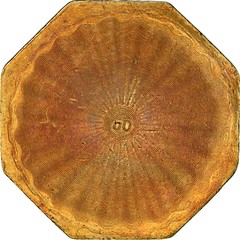
Lettered Edge, 887 THOUS, 50 on Reverse 1851 Augustus Humbert $50. Lettered Edge. K-4. Rarity-5. 50 DC, 887 THOUS., 50 on Reverse. MS-61 (PCGS). A highly significant offering for the specialist, and even more so as one of the finest Lettered Edge Humbert "slugs" known to PCGS. Handsome surfaces display pleasing deep honey-olive gold color with iridescent reddish-rose highlights. Surprisingly well preserved with mostly small, singularly inconspicuous handling marks scattered about - far from serious and far less obtrusive than typically seen for the issue. We're certain that in-hand inspection will convince you this specimen is entirely deserving of the coveted Mint State rating assigned by PCGS. The edge of this elusive variety reads AUGUSTUS HUMBERT UNITED STATES ASSAYER OF GOLD CALIFORNIA 1851, while the reverse exhibits a sunken 50 at the center of the design.
James Wilson Marshall's discovery of gold in California's American River on January 24, 1848 kicked off one of the largest, and certainly the most romanticized gold rush in United States history. As news of this discovery spread, 300,000 people from both the Eastern United States and abroad would eventually make their way to California seeking wealth and prosperity. Some did strike it rich, although the majority bettered themselves little, either financially or otherwise. A small settlement of 200 souls in 1846, San Francisco had grown exponentially into a city of 36,000 people by 1852.
Such a tremendous surge in population in a short period of time resulted in an acute shortage of circulating currency. Gold dust, which was quickly adopted as a medium of exchange, proved difficult to work with in this regard and little more than a stopgap measure. Then there was the additional problem of what to do with all of the gold that was being mined. Clearly it needed to be converted into a form that was universally acceptable so that it could not only be used in commerce in California, but could also be transported to major economic centers so as to contribute to the nation's larger economy.
As early as 1849 proposals were introduced both in the California Legislature and United States Congress calling for the establishment of an assay office or branch mint in California. Competing political interests delayed action on the federal government's part, and most Californians wanted more than simply a state-run assay office. To meet the immediate economic needs of Gold Rush California while final action on the part of the state and/or federal government was awaited, various private minting firms sprang up in and around San Francisco. The firm of Moffat & Co., however, became the most important private minter serving the California Gold Rush; its successors Curtis, Perry and Ward eventually sold their facility to the United States government, which reopened it as the San Francisco Mint in March 1854.
While still under the auspices of Moffat & Co., the firm's reputation caught the eye of the federal government when the latter was finally able to take action in the establishment of a local coinage facility to service the Gold Rush. Unfortunately, however, Californians did not initially get the branch mint they desired, due to competing political interests. Rather, a compromise bill passed through Congress on September 30, 1850, and established the United States Assay Office, to be located in San Francisco. Moffat & Co. received the contract to operate as the United States Assay Office, with New York watchmaker Augustus Humbert appointed as United States Assayer. Humbert arrived in San Francisco on January 30, 1851, bringing with him the first dies for coinage that had been prepared by Charles C. Wright. The first coins - $50 gold pieces - were issued under Humbert's authority the following day, with ingots following on February 14. The United States Assay Office continued to operate with these principals until the dissolution of Moffat & Co. in early 1852, after which the federal contract was assumed by Curtis, Perry & Ward under the name of the United States Assay Office of Gold. Humbert remained as assayer under the successor firm until it ceased operations on December 14, 1853.
Nearly a branch mint in its own right, the operations of the United States Assay Office in 1851 and 1852 represent an important and defining chapter in the coinage history of the California Gold Rush and, indeed, the nation as a whole. One of Humbert's $50 gold pieces from his first year as assayer in California, this virtually About Uncirculated coin offers the advanced collector with an important opportunity to own a truly memorable memento of this widely studied and avidly collected era in United States frontier history.
While all Lettered Edge slugs are early productions of Humbert's United States Assay Office of Gold, the 2023 Kagin and McCarthy book suggests the Kagin-4 variety represented here was actually struck earlier than its K-2 counterpart. This variety, like Kagin-1, includes the denomination 50 at the center of the reverse. Kagin and McCarthy suggest, sensibly, that the slugs with a denomination were likely struck during the first two months of 1851 when the assay office was manufacturing ingots of substantially higher values. Once the U.S. Assay Office was out of that business, "sometime before March 1," they could safely leave off the denomination and likely struck the $50 slugs after that date with no reverse denomination. This explains why some slugs have the stamped 50 and some lack it; it also explains why this variety is so rare while the 880 THOUS / No 50 variety (Kagin-2) is somewhat more common.
Provenance: Property from an Alabama Family. Earlier from Heritage's sale of the Bob R. Simpson Collection, Part III, January 2021 FUN Signature Auction, lot 3053.
To read the complete item description, see:
Superior Quality 1851 K-4 Humbert Octagonal $50 "Slug"
(https://auctions.stacksbowers.com/lots/view/3-1XFMPO/1851-augustus-humbert-50-lettered-edge-k-4-rarity-5-50-dc-887-thous-50-on-reverse-ms-61-pcgs)

ARCHIVES INTERNATIONAL SALE 118 SELECTIONS
Here are some selected lots from the November 17-18 sale by Archives International Auctions. -Garrett


Bermuda, 20th October 1952. British Administration, £1, Pick# 20a, Issued Banknote, blue and multicolor, Hamilton harbor view at left, portrait of Queen Elizabeth II at right, back with arms, Wmk: Bank Title, S/N P/1 370667. PMG graded Choice About Unc 58 with comment "Minor Rust." Printer: BWC.
To read the complete item description, see:
Bermuda British Administration 1952 1 Banknote PMG Choice About Unc 58
(https://auction.archivesinternational.com/Bermuda-British-Administration-1952-1-Banknote-PMG-Choice-About-Unc-58_i61504116)


Quebec, Canada, 1922. $50, P-S874s, 5102208S, Specimen Banknote, Black and brown with portrait of G. E. Amyot at center, Back is green with Quebec City arms at center, Pin punched Specimen, S/N None pp B, Bottom right corner is cut short, PMG graded Uncirculated 61 EPQ with comment "Miscut," BABNC.
To read the complete item description, see:
Canada Banque Nationale 1922 Specimen Banknote
(https://auction.archivesinternational.com/Canada-Banque-Nationale-1922-Specimen-Banknote_i61504129)

Great Britian...., 1810 and 1819. Lot of 2 satirical promissory notes, each mounted on paper, Includes: Ten Centimes, August 16, 1810, Made out to Sir Rich'd Pillup and Sir Jonathan Crazy, Knights, mocking knighthoods given to lottery insurers and city tradesmen, signed Horatio Hardbattle; Two Pence note, Puff Ward, London, April 12, 1819, made out to Ald'n Puff and Deputy Puff, mocking lottery puffs and swindlers, signed Old Tom Puff. Both are designed as parodies of Bank of England notes, with an engraved Royal Exchange vignette. Issuer and printer not identified. VF to XF condition mounted on gray paper. (2). Sold "AS IS" no returns accepted.
To read the complete item description, see:
Great Britian London Satirical Lottery Notes 1810 and 1819 I U Mounted Pair
(https://auction.archivesinternational.com/Great-Britian-London-Satirical-Lottery-Notes-1810-and-1819-I-U-Mounted-Pair_i61504240)


Russia, 1898 (ND 1909-12). State Credit Note, 100 Rubles, Pick# 5c, Issued Banknote, multicolor, portrait of Catherine II at left, Catherine II watermark, back with large denomination and arms, S/N KA130360, signature A. Konshin. PMG graded Choice Fine 15 (Tears).
To read the complete item description, see:
Russia State Credit Note 1898 100 Rubles Banknote PMG Choice Fine 15
(https://auction.archivesinternational.com/Russia-State-Credit-Note-1898-100-Rubles-Banknote-PMG-Choice-Fine-15_i61504292)

Italy. Kingdom of Italy, Umberto I, 1895 R, 20 Centesimi, KM-28.2. Bright, lustrous surfaces with a sharply struck crown and wreath. Reportedly the only example so graded by PCGS. Composition: copper-nickel, 4 grams. PCGS graded MS 64. PCGS certification #48927122.
To read the complete item description, see:
Italy Umberto I 1895 R 20 Centesimi KM 28 2 PCGS MS64
(https://auction.archivesinternational.com/Italy-Umberto-I-1895-R-20-Centesimi-KM-28-2-PCGS-MS64_i61504407)

Ottawa, Canada....., July 17th–22nd, 1916. This oblong, cord-tied souvenir album has 23 pages, including the front cover. The cover bears an intaglio lion's head within an ornate frame with the Royal Arms, and the script-engraved title page features a beaver vignette with the American Bank Note Co., Ottawa imprint. The highlight is a superb full-page intaglio advertising poster for the British American Bank Note Company, Ottawa, "Incorporated 1866." It is printed in sepia with elaborate lettering, a winged allegorical female holding a torch aloft, and a list of the firm's products, including bank notes, bonds, stock certificates, cheques, drafts, bills of exchange, and postage and revenue stamps, along with its Montreal office at 2 Place d'Armes Square. Other BABNCo intaglio plates include a mountain railway river gorge and "View Westward in Prince of Wales Sound, Hudson's Strait," after a Dr. R. Bell photo of 1884. Also included are Elbert Hubbard's "Loyalty" in engraved script, and photogravures of the Parliament Buildings (the Centre Block burned in February 1916), Quebec City and a habitant weaver at her loom. Cover worn with small tears, foxing and toning; interior AU.
To read the complete item description, see:
Canada 1916 International Steel Copper Plate Printers Union 24th Annual Convention Souvenir Album
(https://auction.archivesinternational.com/Canada-1916-International-Steel-Copper-Plate-Printers-Union-24th-Annual-Convention-Souvenir-Album_i61504508)

Mines in Owyhee Co., Idaho (Offices in San Francisco), 1875. 10 Shares Issued Stock Certificate, No. 2294, Black text with ornate border on green-tinted paper with an underprint of man in a horse drawn chariot, incorporated November 30, 1868, capital $9,000,000, 90,000 Shares, $100 each, issued to Parker & Co., Trustee. Hand-signed by Secretary and President at bottom. VF with light folds visible.
To read the complete item description, see:
ID Golden Chariot Mining Company 1875 I U Stock Certificate
(https://auction.archivesinternational.com/ID-Golden-Chariot-Mining-Company-1875-I-U-Stock-Certificate_i61504686)

WAYNE'S NUMISMATIC DIARY: NOVEMBER 8, 2026
One thing I'd hoped to do in retirement was visit museums, something my wife has little interest in. So on Thursday morning I set out for downtown Washington, D.C. to visit the National Gallery of Art. First I drove a couple miles to the Ashburn Metro station and caught a Silver Line train to Metro Center. It was a cloudy day but it never rained on me. I walked about 20 minutes to my destination, passing other D.C. landmarks including the Old Post Office and Department of Justice. I snapped a ton of photos, and here's a selection.

I'd heard from someone (I think it was Kellen Hoard) that there was a display of medals at the National Gallery. I asked at the front desk and the lady kindly pointed me to the Sculpture Gallery right behind me on the ground floor.


Bela Lyon Pratt signature - "Clara and Lizzie" plaque
I'm always on the lookout for artwork by coin and medal designers.


I needed three photos to capture this display of work by artists including Pierre-Jean David D'Angers, Jean-Baptiste Carpeaux, Augustus Saint-Gaudens, Karl Goetz, Louis-Oscar Roty, Jules-Clement Chaplain, Henry Dropsy, and Ovide Yencesse.

Saint-Gaudens' "Diana"

Saint-Gaudens' The Puritan""

Paul Manship's "Dancer and Gazelles"


Society of the Cincinnati plate
I was floored by this one - I didn't know such a thing existed - a Society of the Cincinnati plate manufactured in China c1784-1785. It pictures the Society of the Cincinnati medal, an example of which had floored me at the recent ANA in Pittsburgh.


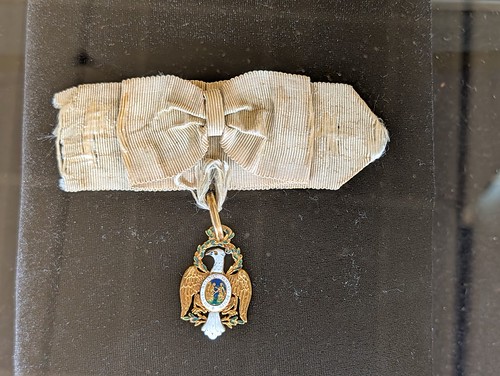
To read the earlier E-Sylum article, see:
WAYNE'S NUMISMATIC DIARY: 2026 ANA, PART 4
(https://www.coinbooks.org/v29/esylum_v29n38a19.html)
Here's some artwork I admired.

Da Vinci's portrait of Ginevra de'Benci c1474/1478

Gerrit van Honthorst's "The Concert"


Vermeer's "Woman Holding a Balance" and Chardin's "Soap Bubbles"
I have a poster of Vermeer's "Girl with a Pearl Earring" in my home office, and for years had a copy of "Soap Bubbles" in my work office. Only about 35 Vermeer works survive - the National Gallery displayed three.
Here are some portraits of people also on coins, medals and paper money.


Gilbert Stuart's George Washington


Houdon's Washington bust and Stuart's Thomas Jefferson
I wish I could say I carefully planned this shot, but I love how the reflection on the glass shows Washington in the large portrait across the room.


Trumbull's "Alexander Hamilton" and Healy's "Abraham Lincoln"

Saint-Gaudens' model for the Shaw Memorial
As a collector of works by "Money Artist" J.S.G. Boggs, I also enjoy works of Tromp L'eiol by predecessors William Harnett and Victor Dubreuil.


Harnett's "Old Violin" and Dubreuil's "Safe Money"

Harnett's signature

Cassatt's "Boating Party"

A copyist studies Cassatt's "Woman with a Sunflower"
Born in my hometown of Pittsburgh, Mary Cassatt began training as a painter in 1861. Beginning in 1865 she travelled and studied in Paris, Rome, and Madrid. Edgar Degas saw her work and asked her to exhibit with the Impressionists. For a stretch in my younger years I bought and read every book I could find about Cassatt and her good friends French artist Berthe Morisot and American art collector and philanthropist Louisine Havemeyer. Cassatt's advice helped build some of the great art museum collections in America.
 I had a wonderful time at the museum, but there was more fun to come. I left around 3pm to walk to my next destination, a 4pm book launch talk at the Cato Institute for Chelsea Follett's history book "The Grim Old Days" about "the harsh reality of preindustrial life—one that most people today would not wish upon their worst enemies." I bought a copy and had a nice time at the reception afterward speaking with the author and Washington Post columnist Dominic Pino.
But wait - there's more - after another walk I met up with my assistant Garrett Ziss. He's working in D.C. on a Fellowship. We had a nice dinner and got caught up with the latest news. Before leaving the restaurant he opened his laptop and showed me some features of the tool he's built to help us put together The E-Sylum. We walked together back to Metro Center and went our ways on separate trains. I checked my pedometer when I got home and I'd walked over 17,000 steps. It was a long but great day.
IRON AGE RULER VERICA WAS FEMALE
David Pickup forwarded this "gender change" article. Thanks. -Editor

I discovered a copy of the original press release. Here's an excerpt - see the complete article online. -Editor
 Bournemouth University (BU) archaeological research has revealed that Iron Age British ruler ‘Verica' who was central to the Roman Invasion of Britain AD 43 was in fact a woman. This discovery re-writes the history of early Roman Britain.
Dr Miles Russell, Director of Archaeological Fieldwork at BU, who led the research said: "Verica is assumed to have been male because of the patriarchal mindset of 19th century, classical historians. Verica was not only critical to the special relationship between Britain and Rome in the early first century AD but was indisputably female."
One obvious clue that Dr Russell points out is that the name ‘Verica' ends with a letter ‘a' which was common for female names at the time, such as Cartimandua of the Brigantes (in Yorkshire) and Boudica of the Iceni (in Norfolk). All three were from the same time period and, although Boudica is certainly the most famous, leading a revolt against the Roman invaders in AD 60, Dr Russell argues that Verica was in fact a more powerful and influential ruler of the period.
Dr Russell said: "People also assume she was a ‘he' because of the term ‘rex' on coins, but rex is a nongender specific title, both male and female kings were recognised by Rome, Cleopatra of Egypt being the most famous." He continued: "The use of the Latin title rex on coins shows that Verica ruled with the full authorisation of the emperor."

The theory is strengthened by the imagery used by Verica on her coins, as Dr Russell explained: "Whilst other coin producing British Iron Age leaders portray obviously male warriors, Verica is depicted as a slender, feminine, bare-breasted figure riding on horseback."
The research for Verica, presented in a new book ‘Caratacus: Great king of Britain', published by Bloomsbury in January (ISBN 9781350477902), is discussed in the latest edition of Current Archaeology.
To read the complete article, see:
New research reveals Iron Age king was female
(https://www.eurekalert.org/news-releases/1148686)
To read an earlier E-Sylum article, see:
CELTIC KING VERICA STATER UNCOVERED
(https://www.coinbooks.org/v25/esylum_v25n12a26.html)

NEW AUSTRALIAN COINS FEATURE NATIVE ANIMALS
Don Cleveland passed along this article about new Australian coins, He adds this context for readers: "The term "gold coins" mentioned here are not gold, but only made of an alloy that looks like gold. All Australian one dollar and two dollar coins look like gold." Thanks. -Editor

The next time you reach for a gold coin, artist Ryhia Dank hopes you'll discover something new about First Nations culture.
The Sunshine Coast-based Gudanji/Wakaja and Kalkadoon artist has illustrated a collection of $1 and $2 coins with six native animals and their names in language.
"I want the kids back home to pick up the coin and say, 'Oh, that's the crocodile that's floating down the river, or the brolgas that are dancing there'," Dank said.
Dank — who creates under the name nardurna meaning "woman" — is from Borroloola in the Gulf of Carpentaria region in the Northern Territory.
She said the collection offered an opportunity to share the Gudanji language, and encourage others to learn about the Country on which they live.
However, her greatest hope is keeping the language alive.
"There aren't many speakers of the Gudanji language left, like a lot of languages all around Australia that are unfortunately dying down."

Six Australian coins featuring animals native to Borroloola Country
The Our Animals, Our Country coins were released as a collection this week with some $2 coins already in circulation.
The project was a collaboration of the Australian Mint, Australia Post and the Indigenous Literacy Foundation (ILF), of which Ms Dank is an ambassador.
To read the complete article, see:
A piece of Gudanji culture is making its way into Australians' pockets
(https://www.abc.net.au/news/2026-11-08/artist-brings-first-nations-language-and-culture-to-gold-coins/107349684)
LOOSE CHANGE: NOVEMBER 8, 2026
Here are some additional items in the media this week that may be of interest. -Editor
Numismatic News published an article on Adolph Weinman's work in medals and sculpture. Here's an excerpt - see the complete article online. -Editor
When numismatists hear the name Adolph Weinman, two of his works immediately come to mind: the Winged Liberty dime and the Walking Liberty half dollar. However, those iconic coins represent only a tiny portion of his creative output over the course of many years as a medalist, figurative sculptor, and monumental sculptor. Two elements found upon those coins were representative themes throughout his career: wings and eagles. In this essay, we shall discuss some of his most important works that include those elements.
To read the complete article, see:
Of Wings and Eagles: The Artistry of Adolph Weinman
(https://www.numismaticnews.net/of-wings-and-eagles-the-artistry-of-adolph-weinman)
A Numismatic News article by Richard Giedroyc discusses privy marks on U.S. coins. Here's an excerpt - see the complete article online. -Editor
 Special privy marks are drawing new collectors to U.S. coins, but extremely limited editions are creating rarities that few collectors may ever own.
There are special privy marks on a plethora of coins marking our celebration of the Semiquincentennial. Both new and seasoned collectors clamor for these specially marked coins.
2026 American Silver Eagle with "250" privy mark
Perhaps the most surprising of all these privy-marked coins are the 2026-P Team USA American Silver Eagle coins. The mintage is only 403 coins, making these an instant rarity. Since 400 of these were presented to Team USA Winter Olympians and Paralympians at a White House ceremony, it is questionable just how many of them will be resold. Many of the recipients will likely treat the coins the same way they would treat an Olympic medal awarded to them.
This is the second time an extremely low mintage privy-marked coin has been issued, the other being the 2024 230th Anniversary Flowing Hair High Relief gold coin. The difference is that all 230 of those coins were auctioned and are now in collectors' hands.
To read the complete article, see:
Privy Marks Gone Wild
(https://www.numismaticnews.net/privy-marks-gone-wild)
Here's an excerpt from a recent CoinWeek article - see the complete article online. -Editor

Twenty-five years after losing an FDNY firefighter at the World Trade Center, one family's encounter with U.S. Mint Director Paul Hollis gave a new American coin an extraordinary personal history.
On September 11, 2026, Daniel Sassa stood at the World Trade Center site, remembering a family member whose life ended there 25 years earlier.
For Sassa and his family, the anniversary was deeply personal. The passing years had not diminished their loved one's sacrifice or the place he continued to hold in their lives.
Yet amid the solemn 25th-anniversary ceremonies, an unexpected encounter would create a remarkable connection between their family, the United States Mint, and a newly issued American half dollar.
Sassa met Paul Hollis, the 41st Director of the United States Mint at the Ceremony. On this encounter Sassa remarked, "Meeting Director Hollis on such a somber day was a profound honor. During our conversation, I made sure to thank him personally for the Enduring Liberty Series and for the deliberate choices he made to honor and remember the lives of everyone we lost that day. It was a moment I won't forget."
Three days later, the Director personally mailed him a special 1776–2026-W Enduring Liberty Half Dollar. Struck at the West Point Mint, the coin carried a distinctive September 11 privy mark , ALWAYS REMEMBER. Those two words spoke directly to the family's loss.
What began as a personal gesture would become an unusual chapter in modern American numismatic history.
To read the complete article, see:
A 9/11 Family, a U.S. Mint Director, and the Half Dollar That Became a Personal Tribute
(https://coinweek.com/a-9-11-family-a-u-s-mint-director-and-the-half-dollar-that-became-a-personal-tribute/)
ABOUT THIS ISSUE: NOVEMBER 8, 2026
My Numismatic Diary article this week covers my main numismatic adventure. Here's a cool license plate I saw along the way.

U.S. numismatists know the initials VDB as those of sculptor Victor David Brenner, creator of multiple medals and plaques but most famous for his design of the Lincoln Cent. Is the car's owner a numismatist? Or do the letters mean something else entirely? Is there a VDB 1 plate somewhere?
Seen online this week:
- "Man introduced his wife to ChatGPT. She used it to plan his murder."
- "Man, 97, dies dancing at his birthday party, to Staying Alive"
And here are some interesting non-numismatic articles I came across this week.
Where's the only royal palace in the U.S.? (https://interestingfacts.com/fact/theres-only-one-royal-palace-on-u-s-soil/)
The earliest U.S. presidents didn't wear pants. (https://interestingfacts.com/fact/the-earliest-u-s-presidents-didnt-wear-pants/)
Delivering Lincoln's Gettysburg Address in Pa. is ‘one of the greatest honors' (https://www.post-gazette.com/life/goodness/2026/11/04/billy-campbell-abraham-lincoln-gettysburg-address-pa/stories/202611080007)
The Rise and Fall of Variety Shows (https://historyfacts.com/arts-culture/article/the-rise-and-fall-of-variety-shows/)
5 Common Table Manners Invented To Stop Fights (https://historyfacts.com/world-history/article/table-manners-invented-to-stop-fights/)
Snap and crackle but no pop: Rice Krispies reformulated due to lack of rice (https://www.theguardian.com/food/2026/nov/03/kelloggs-rice-krispies-coco-pops-reformulated-rice-shortage)
Same as it ever was: David Byrne on why great ideas sometimes fall asleep (https://www.washingtonpost.com/opinions/2026/11/02/talking-heads-david-byrne-why-great-ideas-sometimes-fall-asleep/)
The world capital of atoms (https://rationaloptimistsociety.substack.com/p/the-world-capital-of-atoms)
The Story Behind Edward Hopper's Iconic Painting, "Nighthawks" (https://lithub.com/the-story-behind-edward-hoppers-iconic-painting-nighthawks/)
Long-Lost Georgia O'Keeffe Landscape Goes to Auction (https://hyperallergic.com/long-lost-georgia-okeeffe-landscape-goes-to-auction/)
-Editor

Editor Wayne Homren, Assistant Editor Garrett Ziss
Wayne Homren
Wayne Homren is the founding editor of The E-Sylum and a consultant for the Newman Numismatic Portal. His collecting interests at various times included U.S. Encased Postage Stamps, merchant counterstamps, Pittsburgh Obsolete paper money, Civil War tokens and scrip, Carnegie Hero Medals, charge coins and numismatic literature. He also collects and has given presentations on the work of Money Artist J.S.G. Boggs. In the non-numismatic world he's worked in artificial intelligence, data science, and as a Program Manager for the U.S. Department of Defense.
Garrett Ziss
Garrett Ziss is a numismatic collector and researcher, with a focus on American paper money and early U.S. silver and copper coins. He is also a part-time U.S. coin cataloger for Heritage Auctions. Garrett assists Editor Wayne Homren by editing and formatting a selection of articles and images each week. When he's not engaged in numismatics, Garrett is pursuing a Master's Degree in Quantitative Economics at the University of Pittsburgh.

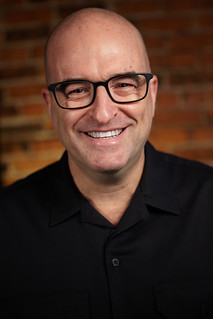
Contributors Pete Smith and Greg Bennick
Pete Smith
Numismatic researcher and author Pete Smith of Minnesota has written about early American coppers, Vermont coinage, numismatic literature, tokens and medals, the history of the U.S. Mint and much more. Author of American Numismatic Biographies, he contributes original articles to The E-Sylum often highlighting interesting figures in American numismatic history.
Greg Bennick
Greg Bennick (www.gregbennick.com) is a keynote speaker and long time coin collector with a focus on major mint error coins and US counterstamps. He is on the board of both CONECA and TAMS and enjoys having in-depth conversations with prominent numismatists from all areas of the hobby. Have ideas for other interviewees? Contact him anytime
via instagram @minterrors.
He can also be reached by email at
minterrors@gmail.com.

Website host John Nebel and webmaster Bruce Perdue
John Nebel
Numismatist, photographer, and ANS Board member and Fellow John Nebel of Boulder, CO helped the ANA and other clubs like NBS get online in the early days of the internet, hosting websites gratis through his Computer Systems Design Co. To this day he hosts some 50 ANA member club sites along with our
coinbooks.org site, making the club and our E-Sylum archive available to collectors and researchers worldwide.
Bruce Perdue
Encased coinage collector (encasedcoins.info) Bruce Perdue of Aurora, Illinois has been the volunteer NBS webmaster from its early days and works each week to add the latest E-Sylum issue to our archive and send out the email announcement.

|
|
The E-Sylum is an electronic publication of the Numismatic Bibliomania Society Copyright © 1998 - 2026 | |